






1930s Leather Sofa
A 1930s leather sofa brings striking Art Deco architecture and rich tactile warmth into a modern room.
1930s Leather Sofa
A 1930s leather sofa is defined by the bold geometric lines or sweeping curved profiles of the Art Deco period. These pieces originate predominantly from 1930 English workshops, capturing an era of bold experimentation in domestic comfort and seating design.
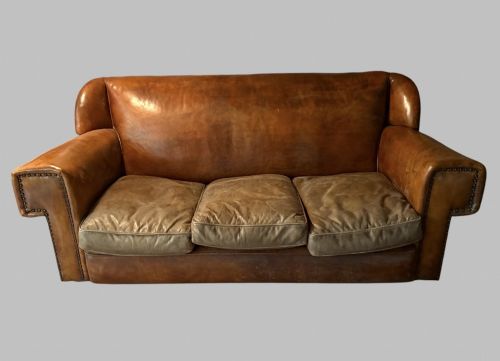
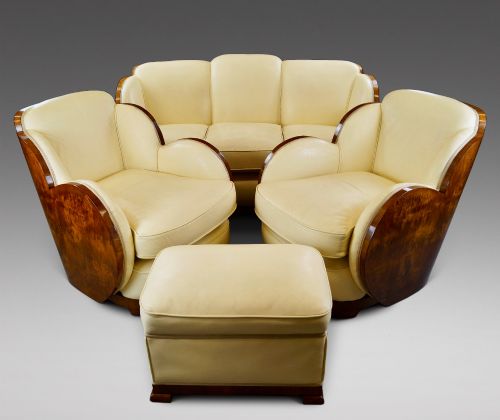
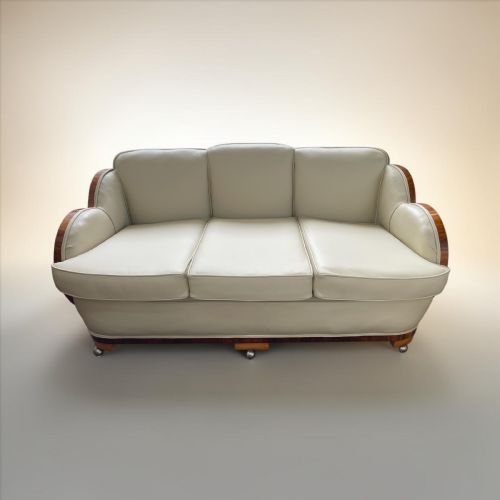
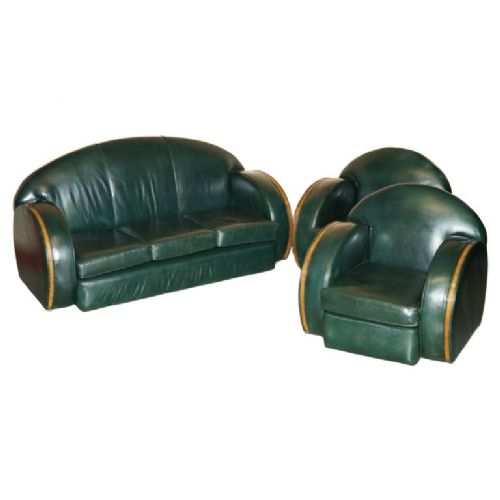
The most common form met on this page is the three-seater sofa, often accompanied by matching armchairs to form a complete lounge suite. Variations range from generous cloud-shaped silhouettes to scroll-ended palisander designs and traditional tufted club sofas.
Buyers also encounter miniature apprentice pieces that replicate full-scale proportions with remarkable precision. Materials span hand-dyed whiskey brown hides, vibrant green leathers, and specialist automotive finishes applied during re-upholstery.
Construction and materials
The structural foundations of these seating pieces rely on robust timber frames built from hardwoods like walnut, burr walnut, maple, and general wood elements. Selected veneers add deep visual grain patterns across exposed wooden panels and scroll arms.
Leather upholstery forms the defining outer layer, shaped tightly over sprung interiors or soft padding to achieve the characteristic cloud and scroll profiles. Metal accents occasionally integrate into the structural design or decorative trim.
1930s Leather Sofa Retail Price Guide 2026
Typical asking prices for 1930s leather sofa among the pieces listed under this phrase on Sellingantiques today, from the lower quarter to the upper quarter. They describe what is for sale here now, not the wider market.
Current listings feature pieces spanning the 1920s and 1930s, utilising materials such as walnut, burr walnut, maple, and diverse leather finishes.
Assessing quality in 1930s seating
Quality separates the finer examples by the integrity of the timber framing and the sophistication of the woodworking. Pieces incorporating burr walnut or palisander veneers display superior cabinet-making skills compared to standard hardwood frames.
The treatment of the leather upholstery dictates the visual distinction at the upper end of the range. Hand-dyed finishes and careful restoration retain the supple character of the hide while preserving the original architectural lines of the maker.
Harry and Lou Epstein
The 1930s Leather Sofa Glossary
- Art Deco
- A design style spanning the 1920s and 1930s characterised by streamlined geometric shapes, curved silhouettes, and rich materials. It represents a sharp departure from traditional Victorian ornamentation.
- Cloud Suite
- A seating arrangement featuring rounded, bulbous upholstered forms reminiscent of soft clouds. These suites typically include a sofa and matching armchairs designed in the 1930s English taste.
- Palisander
- A dense, richly figured exotic hardwood often utilised for decorative veneer work on high-end furniture. Its deep grain enhances the polished surfaces of period seating.
- Chesterfield
- A traditional sofa style distinguished by deep button tufting and rolled arms equal in height to the back. Period examples combine this classic silhouette with Art Deco proportions.
1930s Leather Sofa: Frequently Asked Questions
How do I identify a genuine 1930s leather sofa?
Examine the structural frame underneath and the specific styling cues of the period, such as curved cloud shapes or scroll arm designs. Authentic pieces from this era typically employ walnut, maple, or hardwood frames combined with period-appropriate hide upholstery.
Look closely at the construction methods used in the woodwork and any attribution to known workshops of the decade. The integration of geometric Art Deco lines provides a strong indicator of period authenticity.
Are these sofas comfortable for daily use?
These seating pieces are built with sprung interiors and padded frames designed for substantial domestic comfort. Many surviving examples have undergone careful re-upholstery using quality leathers to ensure they remain functional for everyday living.
Suites configured with deep cushioning and supportive backrests offer ergonomic seating comparable to modern furniture. Their robust hardwood frames provide long-term stability in a contemporary home.
What maintenance does vintage leather require?
Vintage leather benefits from regular conditioning with appropriate balms to keep the hide supple and prevent cracking. Keeping the material away from direct heat sources and strong sunlight preserves the hand-dyed colour and natural grain.
Gentle dusting with a soft cloth removes surface particles without damaging the finish. Professional restoration should be consulted for deeper structural or leather repairs.
How do I style a 1930s sofa in a modern room?
Pair the bold curves of an Art Deco sofa with minimalist surroundings to let the architectural silhouette stand out. The rich tones of whiskey brown or green leather anchor the room and complement natural wood and metal accents.
Combine the sofa with simpler lighting and neutral textiles to balance the decorative weight of the period seating. Matching armchairs can be arranged to create a defined and conversational seating zone.