




1930s Leather Settee
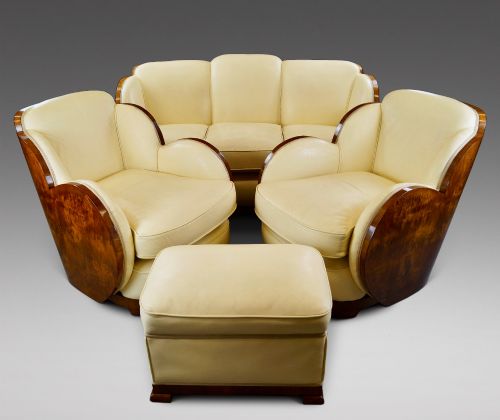
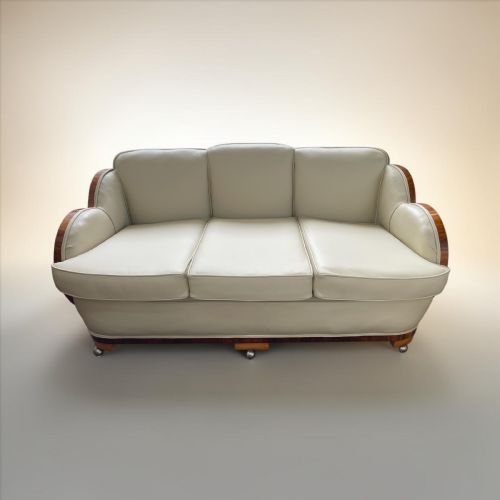
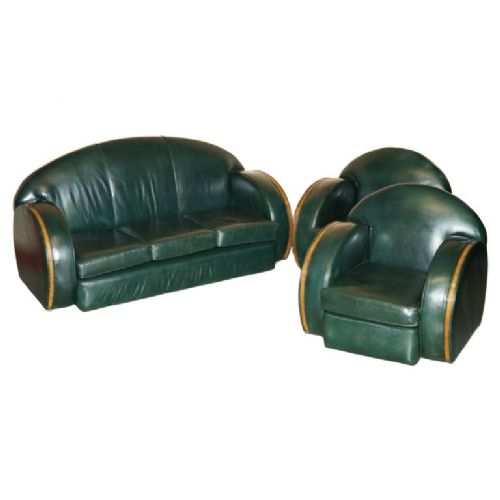
These 1930s leather settees combine bold Art Deco forms with rich hides, offering a striking centrepiece for any reception room.
1930s Leather Settee
A 1930s leather settee represents the distinct design sensibilities of the interwar period, combining heavy, rounded silhouettes with tactile upholstery. When searching for a 1930s leather settee, buyers encounter substantial three-seater sofas, club suites, and scroll-shaped day pieces.
The most common forms on this page include iconic Cloud suites and Chesterfield configurations. These pieces frequently emerge in rich tones such as whiskey brown or antique green leather, often accompanied by matching armchairs.
Originating largely from English workshops and European makers, these settees demonstrate the shift towards streamlined comfort during the 1930s. Miniature apprentice examples also appear, showing the same stylistic ambition on a smaller scale.
Materials and construction
Makers built the foundational frames of a 1930s leather settee using robust hardwoods such as walnut, burr walnut, maple, and palisander. Selected veneers added decorative grain patterns to the exposed wooden elements of the frame.
Upholstery relied on traditional hand-tufting and springing techniques, finished with premium hides that acquired patinas over decades of use. Workshops utilised specialised hand-dyeing methods to achieve deep colour variations across the leather surfaces.
The furniture spans distinct forms including full-scale lounge suites, individual sofas, and miniature apprentice models.
Assessing quality
Quality in these settees rests on the architectural integrity of the wooden frame and the grade of the timber veneer. Pieces utilising figured walnut or exotic palisander stand apart from simpler hardwood constructions through their bolder grain patterns.
The sophistication of the upholstery work dictates the upper tier of the range. Deep buttoning, precise tufting, and the depth of the hand-dyed finish distinguish master-workshop output from standard commercial production.
Harry and Lou Epstein
The 1930s Leather Settee Glossary
- Art Deco
- A design style characterised by sleek lines, rounded volumetric forms, and modern materials that dominated the interwar period.
- Chesterfield
- A traditional sofa style featuring deep button tufting and rolled arms of equal height to the back.
- Cloud suite
- An influential 1930s seating form with bulbous, rounded upholstery segments resembling stacked clouds.
- Palisander
- A dense, dark exotic timber with striking grain patterns frequently utilised in high-end cabinetwork and furniture frames.
1930s Leather Settee: Frequently Asked Questions
What defines a 1930s leather settee?
These pieces combine the curvaceous, volumetric silhouettes of the Art Deco movement with durable leather upholstery. They emerged from an era that favored dramatic shapes and substantial comfort.
Buyers typically find them styled as large club sofas, scroll shapes, or distinct cloud configurations that anchor a room's interior design.
How do I style a 1930s settee?
A settee from this era works best as the visual anchor of a room, paired with minimalist surroundings that let the curved lines stand out. Placing it alongside complementary walnut or exotic wood furniture ties the period aesthetic together.
Consider the surrounding lighting to highlight the rich tones of the dyed leather and the polished wooden veneers.
Are these settees comfortable for daily use?
Interwar seating prioritised deep, supportive cushioning and substantial proportions for lounging. The sprung interiors and generous padding make them well-suited for everyday living spaces.
Their robust hardwood frames provide the structural foundation necessary for continuous, long-term use in a busy home.
How can I tell a 1930s sofa apart from later reproductions?
Authentic pieces rely on period construction methods, including traditional frame joinery and period-appropriate timber veneers like walnut and palisander. The weight of the hardwood frame and the specific styling of the Cloud or Chesterfield forms point directly to the interwar period.
Furthermore, the natural ageing of the leather and the hand-finished details offer clear indicators of genuine period manufacturing.