
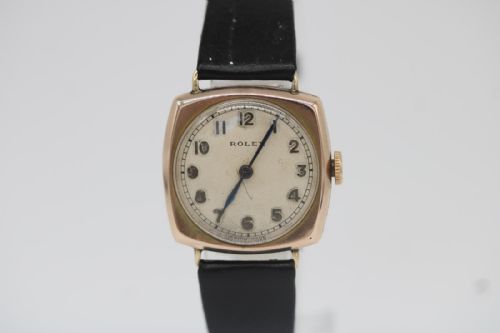

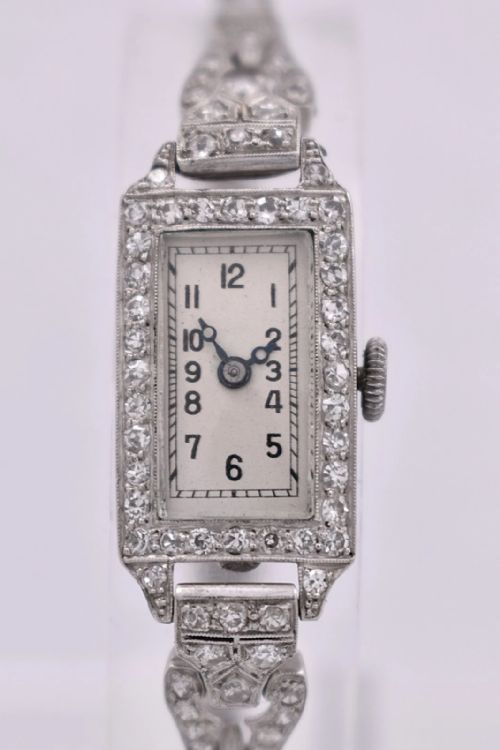


1930s Ladies Watch
These 1930s ladies watch pieces combine geometric Art Deco design with precious metals and diamonds, offering both everyday elegance and intricate craftsmanship.
1930s Ladies Watch
The pieces appearing on this page originate predominantly from the 1930s, showing notable examples from 1930 up to 1938. The selection ranges from robust manual wind wristwatches in rose gold or stainless steel to dazzling cocktail watches adorned with platinum and diamonds.
Swiss movements and manufacturers frequently shape these items, alongside contributions from American and British makers. Collectors find both practical daytime wristwatches and evening cocktail pieces that double as fine jewellery.
Materials and construction methods
Metals such as platinum, 18ct white gold, 14ct white gold, and 9ct rose gold form the structural cases and mesh bracelets of these watches. Alongside precious metals, durable stainless steel and chrome appear in utility or everyday designs.
Gemstones, notably diamonds totalling from small accents up to several carats, are meticulously flush-set or pavé-set into the platinum and white gold bezels. Glass crystals protect the dial faces, while leather straps or integrated metal mesh bracelets secure the pieces to the wrist.
The documented objects span wristwatches, standard watches, and elaborate diamond-set cocktail watches tied to the Art Deco style.
Evaluating quality and craftsmanship
The presence and carat weight of diamonds significantly distinguish standard wristwatches from high-end cocktail pieces. Pieces featuring substantial diamond encrustation set in solid platinum or white gold represent the upper echelon of the period's production.
The reputation of the maker and the complexity of the movement, such as Swiss jewelled lever mechanisms, elevate a watch's standing. Condition also plays a part, particularly whether delicate mesh bracelets and manual wind movements remain intact and operational.
Rolex·Bucherer·Asprey·Elgin·Vertex·Tissot·Bulova
The 1930s Ladies Watch Glossary
- Art Deco
- A design style spanning the 1920s and 1930s characterised by geometric shapes, stylised motifs, and sleek lines. It heavily influences the architecture and casing of these timepieces.
- Manual wind
- A mechanical watch movement that requires the wearer to manually turn the crown to tighten the mainspring. Most watches from this decade operate via this traditional method rather than automatic self-winding.
- Cocktail watch
- A dress watch designed primarily for evening wear, heavily decorated with precious stones and precious metals. These timepieces function as much as pieces of fine jewellery as they do instruments for telling time.
- Tank style
- A rectangular watch design inspired by military tanks viewed from above, featuring parallel vertical brancards. This geometric form is a hallmark of 1930s wristwatch design.
- Mesh bracelet
- A flexible, finely woven metal band made of gold or other precious metals. They drape fluidly around the wrist, complementing the sleek contours of Art Deco watch heads.
1930s Ladies Watch: Frequently Asked Questions
How do I wind a manual watch?
Gently rotate the crown clockwise between your thumb and forefinger until you feel gentle resistance. Stop immediately at that point to avoid overwinding and damaging the vintage internal spring.
Perform this action daily at a consistent time if you wear the watch regularly. Handling the crown with care preserves the historic components inside.
Can I wear a cocktail watch daily?
Cocktail watches were created for evening social events and feature delicate gemstone settings and intricate mesh bands. Wearing them daily exposes fragile platinum and small diamonds to unnecessary knocks and wear.
Reserve these ornate pieces for special occasions to protect their historical structure. A simpler steel or gold wristwatch suits daily routines much better.
How accurate are 1930s movements?
Mechanical movements from this era operate with tolerances different from modern quartz technology. They can gain or lose a small number of minutes over the course of twenty-four hours.
Professional servicing helps keep the internal jewelled lever mechanism running as close to its original specification as possible. Regular maintenance ensures the vintage gears mesh smoothly without undue friction.