


1930s Glass Ceiling Pendant
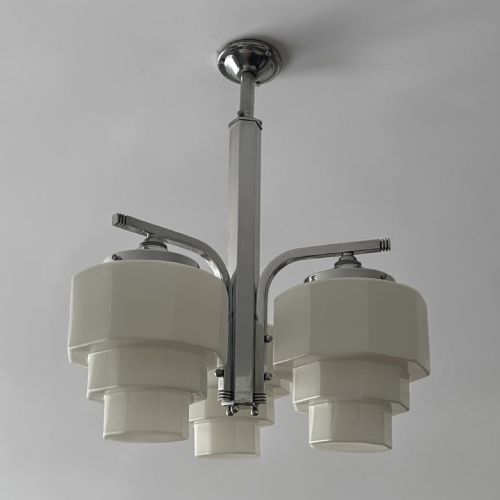
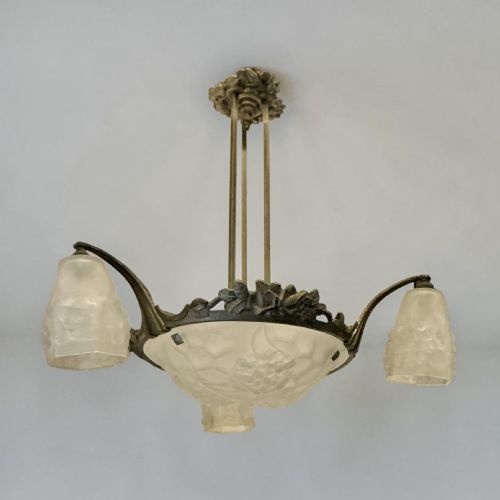
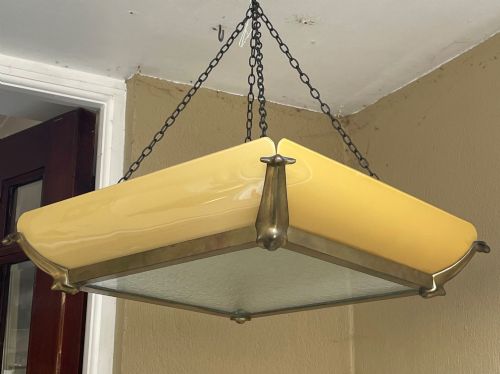
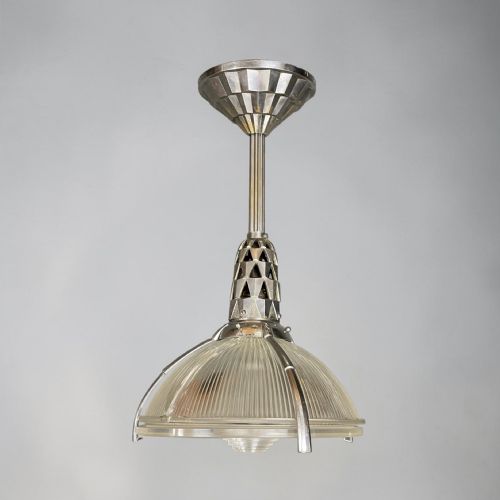
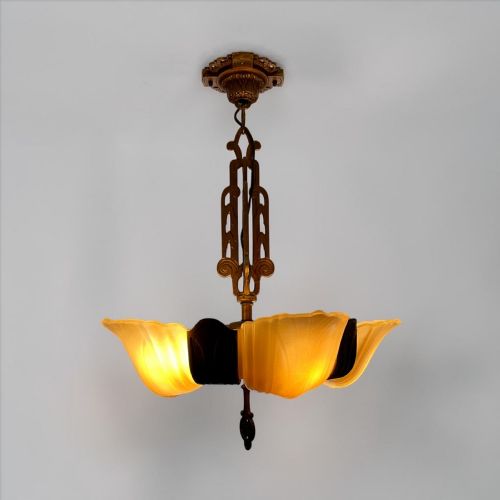
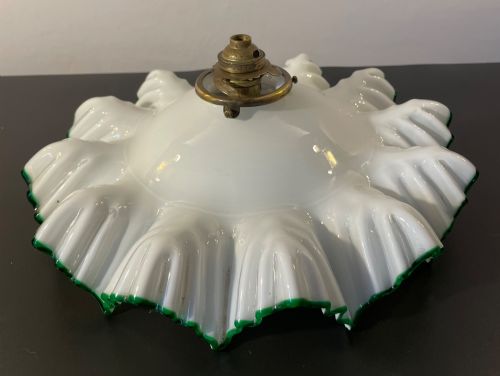
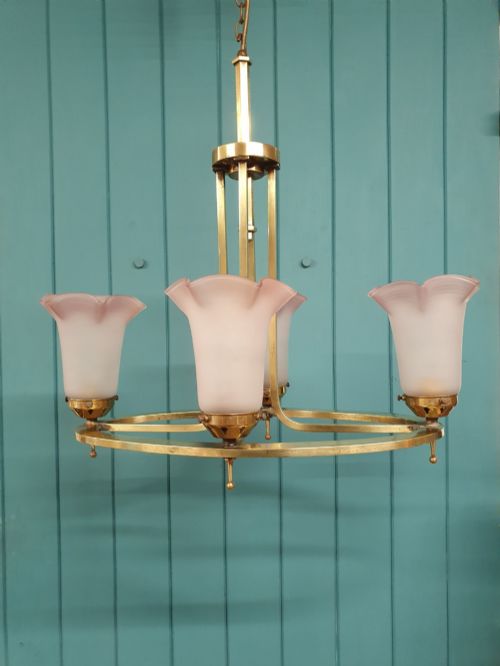
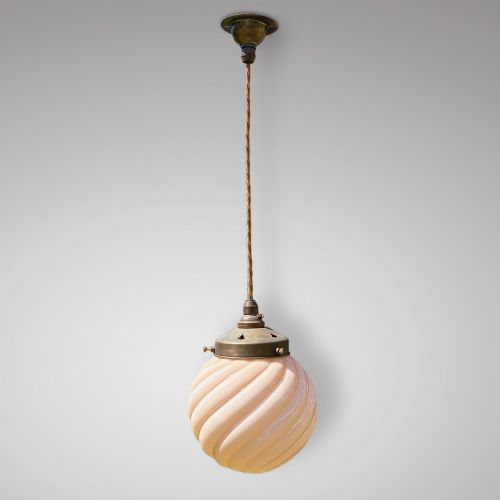
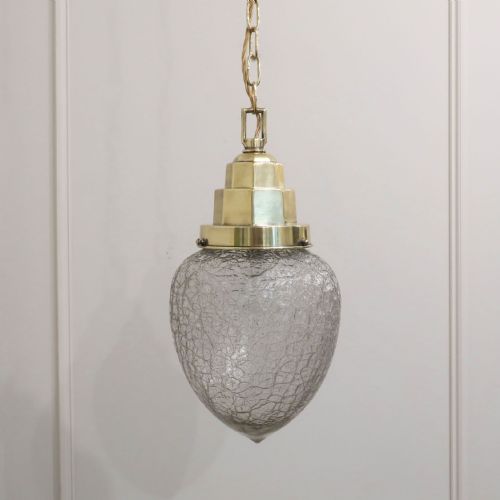
These 1930s glass ceiling pendant lights bring geometric form and diffused illumination straight to your interior.
1930s Glass Ceiling Pendant
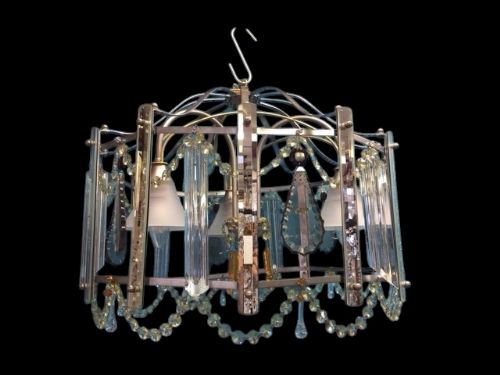
A 1930s glass ceiling pendant sits close to the ceiling or hangs on suspension chains, illuminating rooms with period character. When searching for a 1930s glass ceiling pendant, you will encounter diverse forms ranging from single frosted globes to multi-light brass chandeliers.
Most examples found here date from the Art Deco era, showcasing styles like French Empire, Odeon, and American slip shade designs. These fixtures serve as central lighting focal points in hallways, living spaces, and dining rooms.
Materials and construction
Makers combined pressed, frosted, crackle, or opaline glass shades with durable metal frameworks made of brass, chrome, copper, and bronze. Glass components were frequently moulded into geometric shapes, clam shell contours, or pear profiles to diffuse light evenly.
Metal mountings secured the heavy glass elements using custom galleries, bands, and chains. The fusion of polished chrome or warm brass with textured glass defined the period technique.
Deer antlers occasionally joined the Art Deco brass and glass lineup for a surprisingly rustic Highland Lodge touch.
Distinctions in quality
Quality rests in the weight of the glass, the crispness of the moulding, and the integrity of the metalwork. Superior pieces feature thick, heavy slip shades or deeply etched crystal rather than thin, plain pressed panes.
The sophistication of the mounting hardware separates standard commercial items from exceptional architectural commissions. Original matching metal patination and robust internal framing elevate a fixture above simpler replacements.
Émile-Jacques Ruhlmann·Jean Gauthier
The 1930s Glass Ceiling Pendant Glossary
- Plafonnier
- A bowl-shaped ceiling light fixture that mounts flush or semi-flush against the ceiling. It typically directs light upwards or diffuses it directly downwards through patterned glass.
- Slip Shade
- A moulded piece of glass that slides or slips directly into a metal frame or basket. These shades were widely utilised in American lighting design.
- Opaline Glass
- A milky, semi-translucent glass that softens bulb glare and produces an even glow. It appears frequently in period pendants and wall lights.
- Chandelier
- A branched decorative ceiling fixture designed to hold multiple light sources. Period examples here incorporate tiered glass panels and metal arms.
1930s Glass Ceiling Pendant: Frequently Asked Questions
What is an opaline pendant?
Opaline glass pendants use milky, opaque glass to soften harsh electric bulb glare into a gentle, diffuse ambient glow. This material was favoured for its ability to brighten spaces evenly without creating harsh shadows.
They appear in various forms on this page, from simple spherical globes to fish scale patterns.
How do I clean vintage glass shades?
Remove delicate glass shades from their metal mounts and wash them gently in warm soapy water using a soft cloth. Avoid harsh chemical cleaners that might strip the original surface or antique patination.
Dry thoroughly before reassembling the pendant to protect internal metal components from moisture damage.
Are these lights wired for modern use?
Most vintage lighting requires rewiring by a professional to meet modern electrical safety standards and regulations. Electricians can easily adapt old brass and chrome fittings to take contemporary lamp holders.
Retaining the original metal galleries and chains preserves the historic exterior while ensuring safe household operation.