




1930s Flapper Figurine
These 1930s flapper figurine pieces capture Art Deco styling in porcelain and spelter, bringing period charm to any dressing table.
1930s Flapper Figurine
A 1930s flapper figurine represents the iconic modern woman of the interwar years through decorative figures and functional objects. These pieces emerge predominantly from the Art Deco period, spanning the nineteen twenties and nineteen thirties.
Buyers encounter numerous practical iterations of the form on this page rather than standalone statues alone. Half dolls, powder boxes, trinket jars, hatpin holders, and table lamps dominate the selection.
Origins stretch across Europe, with specific examples originating from French and Austrian makers. Ceramic and porcelain half dolls often double as dresser accessories or cigarette strikers.
Materials and construction methods
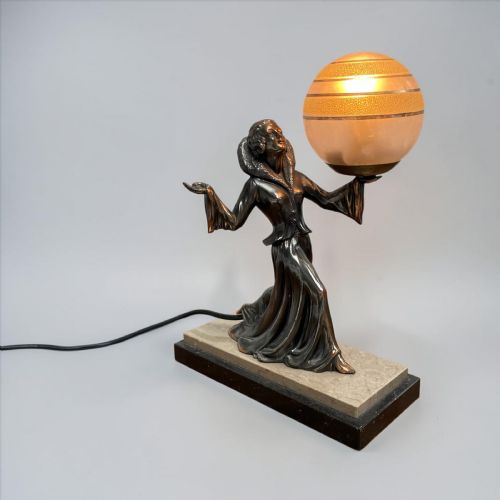
Metal figures rely on spelter casting combined with patinated finishes. These metal sculptures frequently sit mounted upon heavy stone bases formed from onyx or marble.
Some flapper figures double as cigarette strikers, ensuring the modern woman kept a light close at hand.
Distinctions in craftsmanship
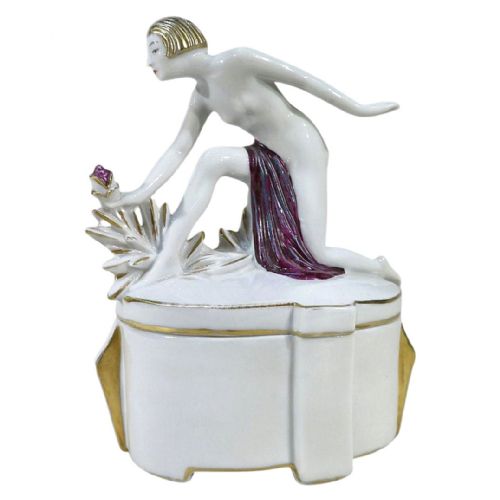
Quality rests upon the precision of the moulding and the delicacy of the hand-painted enamel decoration. Finer ceramic and porcelain pieces display crisp facial expressions and neatly articulated garments.
Metal castings vary in the crispness of their surface detail and the quality of the patination. Heavy bases cut from genuine onyx or marble provide stability and indicate superior material selection.
Fasold & Stauch
The 1930s Flapper Figurine Glossary
- Half doll
- A ceramic figure modelled from the waist up, originally designed to sit atop a powder puff, pincushion, or dresser box. These decorative items became immensely popular during the Art Deco era.
- Spelter
- An alloy of zinc and lead used as a cheaper alternative to bronze for casting decorative figures. It takes patination well to simulate bronze or other metals.
- Hatpin holder
- A ceramic or porcelain vessel pierced with holes around the rim to store long hatpins. They often take the form of bathing belles or flapper figures.
- Powder box
- A lidded ceramic or porcelain container intended for dusting powder on a dressing table. The lids frequently feature moulded female figures.
- Cigarette striker
- A novelty ceramic table accessory featuring a rough striking surface for matches alongside a figural element. These functional smoking accessories date to the interwar period.
1930s Flapper Figurine: Frequently Asked Questions
What is a half doll used for?
Half dolls serve primarily as decorative ornaments attached to powder boxes, pincushions, and dresser jars. They represent the upper torso of a stylish woman.
Collectors often find them mounted on fabric skirts or ceramic receptacles designed for the dressing table.
How do I identify a 1930s piece?
Pieces from this era display distinct Art Deco styling through stylised clothing and geometric motifs. Materials commonly include glazed porcelain and patinated spelter.
European origins, particularly French and Austrian manufacturing, frequently appear in the moulded details and glaze application.
Were these figures purely decorative?
Many objects combined decoration with practical functions for the dressing table and smoking room. Powder boxes, trinket jars, and hatpin holders served daily household needs.
Cigarette strikers and table lamps integrated sculptural figures directly into functional items.
What metals were used for figures?
Spelter served as the primary metal for casting figural sculptures and bases during this period. The alloy allowed manufacturers to produce detailed decorative items economically.
Finished metal pieces often received patinated coatings and were mounted upon heavy onyx or marble plinths.