




1930s Fitted Bedroom Cupboard
A 1930s fitted bedroom cupboard offers striking Art Deco geometry and clever storage, bringing period character and practical depth to a modern home.
1930s Fitted Bedroom Cupboard
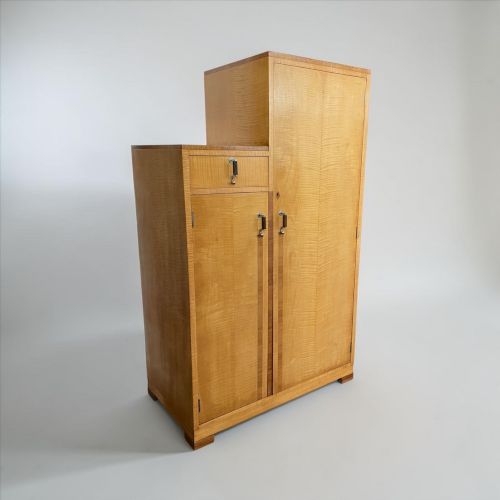
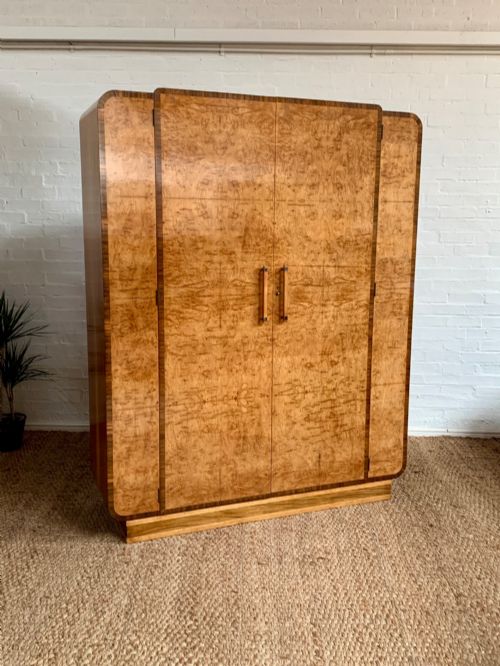
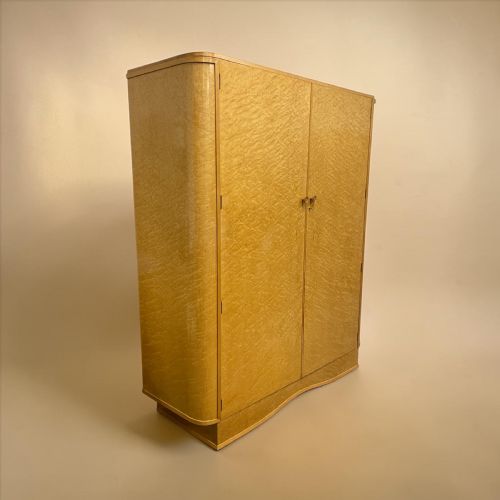
A 1930s fitted bedroom cupboard typically takes the form of a compactum, tallboy, or triple wardrobe designed to maximise storage efficiency within domestic spaces. These pieces emerge predominantly from the Art Deco period, displaying the characteristic architectural lines and geometric emphasis of the era.
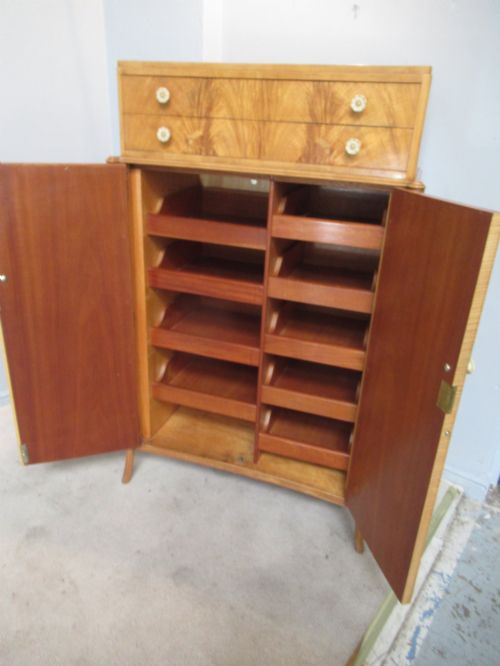
The versions most commonly met on this page combine hanging space with internal shelving and drawers, often arranged as split side units. Their origins trace to the 1930s and 1940s, capturing a distinct shift towards fitted bedroom furniture that prioritised streamlined organisation.
Makers utilised various formats, from ladies compactums to large triple wardrobes, all sharing a commitment to practical internal compartmentalisation. Buyers searching for a 1930s fitted bedroom cupboard find themselves choosing between tallboys, compactums, and comprehensive wardrobe configurations.
How they were made
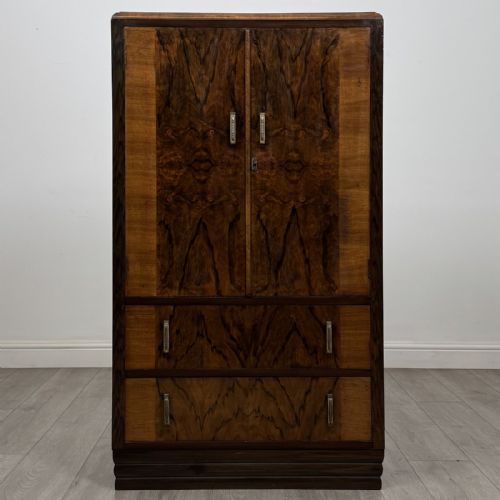
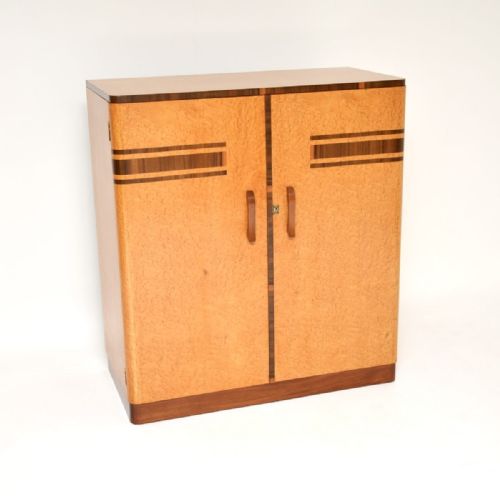
Craftsmen built these pieces using solid timbers like mahogany and maple alongside intricate veneer work, notably walnut and burr walnut. The application of decorative veneers allowed workshops to create striking grain patterns across large surfaces.
Metal hardware plays a functional and decorative role, with brass and Bakelite appearing on handles, locks, and closures. These materials reflect the industrial aesthetics and manufacturing techniques of the 1930s.
1930s Fitted Bedroom Cupboard Retail Price Guide 2026
Typical asking prices for 1930s fitted bedroom cupboard among the pieces listed under this phrase on Sellingantiques today, from the lower quarter to the upper quarter. They describe what is for sale here now, not the wider market.
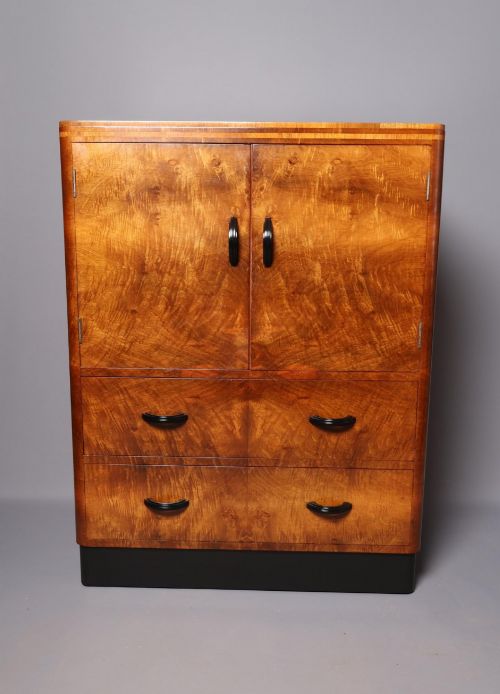
Bakelite handles on a burr walnut door bring tactile 1930s charm to your morning routine.
What varies in quality
The standard of a 1930s fitted bedroom cupboard rests heavily on the selection and matching of its wood veneers. Superior pieces display deliberate grain alignment, particularly across burr walnut doors, whereas lesser examples show random or mismatched patterns.
Internal engineering and the integration of fitted compartments also separate standard items from finer works. Robust construction of internal drawers, smooth door alignment, and the quality of brass and Bakelite fittings indicate the original tier of manufacture.
Harry and Lou Epstein
The 1930s Fitted Bedroom Cupboard Glossary
- Compactum
- A multi-functional wardrobe combining hanging space, shelves, and internal drawers within a single unit. It provides comprehensive storage tailored for bedroom use.
- Tallboy
- A tall, upright chest of drawers or wardrobe variant designed to save floor space while offering vertical storage capacity. These pieces are typical of the 1930s bedroom repertoire.
- Veneer
- A thin layer of superior wood glued over a base timber to create decorative surfaces. Burr walnut and standard walnut veneers define the visual appeal of many Art Deco pieces.
- Bakelite
- An early synthetic plastic utilised for durable handles and decorative trim. Its presence marks pieces tied to 1930s industrial design.
1930s Fitted Bedroom Cupboard: Frequently Asked Questions
What is a compactum?
A compactum is a multi-functional piece of bedroom furniture that combines hanging space with dedicated internal drawers and shelving. This layout was designed to house a complete wardrobe in one tidy unit.
These pieces reflect the practical storage demands of the 1930s, offering structured compartments for various garments.
How do I spot Art Deco style?
Art Deco furniture is characterised by geometric symmetry, streamlined silhouettes, and the use of striking wood veneers. Pieces often feature stepped cornices and contrasting grain patterns.
Hardware made from brass or Bakelite further reinforces the modernist aesthetic typical of this era.
Are these wardrobes easy to dismantle?
Many wardrobes from this period were built as substantial single pieces or split sections rather than modern flat-pack furniture. Moving them requires careful measurement of stairwells and doorways.
Larger triple wardrobes and compactums often necessitate professional removal to protect the timber and joints.
What is burr walnut?
Burr walnut is a decorative wood veneer harvested from the growth deformity on a walnut tree, yielding complex, swirling grain patterns. It was favoured by cabinet makers for creating focal points on door panels.
This material requires careful polishing to highlight the natural depth and movement within the grain.