




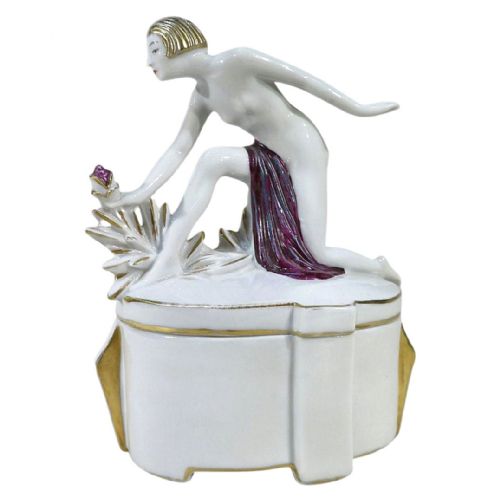
1930s Dressing Table Jar
These 1930s dressing table jar examples bring unmistakable Art Deco character to a dressing table, combining practical vanity storage with striking period design.
1930s Dressing Table Jar
A 1930s dressing table jar encompasses vanity accessories, trinket boxes, and powder bowls designed to hold cosmetics and personal items. These objects sit neatly on dressing tables and vanity sets, serving both a functional purpose and a decorative role in the bedroom.
The pieces appearing here include ceramic powder boxes featuring flapper girls and bathing belles, alongside glass jars with sterling silver lids. Originating from workshops in Britain, France, Germany, and Austria, these items capture the distinct modernist tastes of the interwar period.
Art Deco styling dominates the selection, expressed through geometric lines, stylised ceramic figures, and vibrant enamelling. Buyers will find everything from lidded bowls depicting pierrots to cut glass containers topped with precious metals.
How they were made
Makers utilised moulded glass, porcelain, and ceramic bodies to form the core containers, frequently pairing them with solid sterling silver mountings. Metal components often received decorative treatments such as guilloche enamel in shades of blue and pink.
1930s Dressing Table Jar Retail Price Guide 2026
Typical asking prices for 1930s dressing table jar among the pieces listed under this phrase on Sellingantiques today, from the lower quarter to the upper quarter. They describe what is for sale here now, not the wider market.
Several powder boxes feature half-doll figures of flappers and bathing belles peering out from the vanity, ready to powder a nose.
What varies in quality
The refinement of the hand-painted details on ceramic figures and the crispness of the guilloche enamel patterns distinguish finer examples. Superior pieces display intricate metalwork and well-preserved surface finishes across both the ceramic bodies and silver mounts.
Material combination also defines the grade of a piece, with heavy cut glass bases and hallmarked solid silver tops representing high standards of period manufacture. The complexity of the figural sculpture, particularly on half-doll powder boxes, indicates the skill of the original maker.
Fasold & Stuach·Goldsmith's and Silversmith's Co.
The 1930s Dressing Table Jar Glossary
- Guilloche enamel
- A decorative technique where a precise, repetitive pattern is mechanically engraved into metal beneath a translucent enamel layer. This creates a shimmering, light-catching depth often seen on silver vanity lids.
- Half-doll
- A ceramic upper torso figure, popular in the interwar period, designed to sit atop a powder puff skirt or bowl. These figures typically depict stylised flappers or theatrical characters.
- Sterling silver
- An alloy consisting of silver and other metals, standardised for quality in British manufacturing. It forms the durable, polished lids found on many glass dressing table jars.
- Powder bowl
- A vessel specifically formed to hold loose cosmetic powder on a dressing table. They frequently feature a matching lid and sometimes incorporate a figurine or decorative handle.
1930s Dressing Table Jar: Frequently Asked Questions
What were 1930s dressing table jars used for?
These containers held loose face powder, trinkets, and cosmetics on dressing tables during the interwar period. They kept vanity items neatly organised while adding a decorative touch to the room.
Many designs incorporated powder puffs or specialised stands, allowing women to apply cosmetics directly from the jar. Their placement on a vanity surface reflected the personal grooming habits of the era.
How do I identify an Art Deco dressing table jar?
Look for geometric motifs, stylised figural representations like flapper girls, and clean architectural lines. The materials often combine brightly coloured enamel with polished silver or moulded glass.
European pieces from this era frequently utilise moulded ceramics or half-doll figures. Hallmarks on silver components can also confirm a 1930s date of manufacture.
Are these jars suitable for everyday use?
While these items were originally made for daily cosmetic storage, surviving examples require careful handling due to their age. Enamel, delicate ceramics, and glass are susceptible to damage if dropped.
Collectors generally use them for gentle display or storing lightweight modern trinkets. Regular cleaning should be done with soft, dry cloths to protect fragile surfaces.
Where were these vanity items made?
The pieces originate from various European centres, with British makers producing many of the silver and enamel combinations. Workshops in France, Germany, and Austria also contributed significant ceramic and porcelain designs.
Birmingham assay office hallmarks are common on British silver-topped jars from this decade. Continental pieces often rely on distinctive regional ceramic moulding and painting styles.