


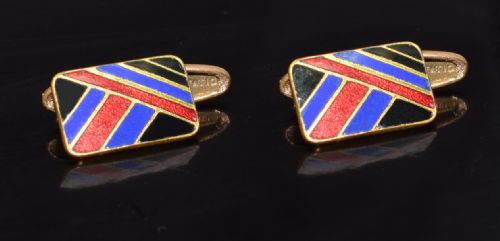


1930s Cufflinks
These 1930s cufflinks bring sharp geometric lines and vibrant enamel work to formal cuffs, offering a tangible piece of interwar design for everyday wear.
1930s Cufflinks
When you search for 1930s cufflinks, you are looking at small fastenings for men's shirt cuffs from the interwar period. These accessories belong to the Art Deco style, defined by clean geometry and modern aesthetic sensibilities.
The most common versions on this page are matching pairs of gents cufflinks decorated with enamel. Many items display a modernist approach to pattern, alongside select examples rendered in solid nine carat gold or silver.
Beyond the standard silver and metal variants, the selection includes pieces housed in leather boxes made of pig skin. These items capture the transitional taste bridging the decades from 1930 into 1940.
How they were made
Metals form the structural foundation of these pieces, utilising silver, silver plate, brass, and nine carat gold. Silver-tone metal and vitreous enamel provide the colourful faces that catch the eye on formal wear.
Enamelling techniques apply coloured glass paste to metal surfaces, which is then fired to create a durable, glossy finish. This method allows for sharp contrast in green, black, and geometric patterns typical of the period.
1930s Cufflinks Retail Price Guide 2026
Typical asking prices for 1930s cufflinks among the pieces listed under this phrase on Sellingantiques today, from the lower quarter to the upper quarter. They describe what is for sale here now, not the wider market.
Keep your cuffs secure while channelling a brisk interwar commuter dash to catch the morning steam train.
What varies in quality
The choice of base metal creates a fundamental division in quality, ranging from plated base metals and silver-tone alloys up to solid nine carat gold. Heavier metal weights and precious materials generally indicate higher manufacturing standards.
Enamel condition and precision of the geometric lines distinguish finer examples from simpler output. Crisp application of vitreous enamel without chipping preserves the intended modernist aesthetic.
Payton Pepper & Co
The 1930s Cufflinks Glossary
- Art Deco
- A design style dominant in the interwar period characterised by sleek geometric shapes, streamlined forms, and modern industrial motifs.
- Vitreous Enamel
- A material made by fusing powdered glass to a substrate by firing, producing a durable and brilliant coloured surface.
- Silver-Tone Metal
- An alloy finished to resemble silver without containing the precious metal itself.
- Interwar
- The period between the end of the First World War in 1918 and the start of the Second World War in 1939.
1930s Cufflinks: Frequently Asked Questions
What materials are used in 1930s cufflinks?
These accessories utilise a range of metals including silver, silver plate, brass, and nine carat gold. Vitreous enamel and silver-tone metal frequently provide the colourful decorative faces.
Enamel work is often applied in geometric patterns, creating the signature look associated with the period.
How do I identify Art Deco cufflinks?
Art Deco pieces display sharp geometric lines, modernist motifs, and contrasting enamel colours. They reflect the design sensibilities of the interwar years.
Most examples are matching pairs intended for men's dress shirts, often showing English origin.
Are these cufflinks made of solid gold?
Some pieces utilise solid nine carat gold, while others are formed from silver, silver plate, brass, or silver-tone metal. Each material offers a different weight and finish.
Descriptions specify the exact metal used for individual pairs.
How should I store vintage cufflinks?
Vintage cufflinks benefit from being kept in dedicated compartments or small boxes to protect the enamel surfaces from scratching. Pig skin leather boxes from the period serve as appropriate storage.
Keeping pairs separated prevents the metal and enamel faces from rubbing together during storage.