

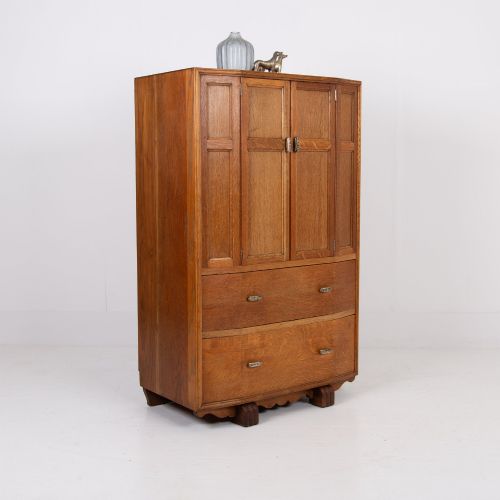


1930s Clothes Cabinet
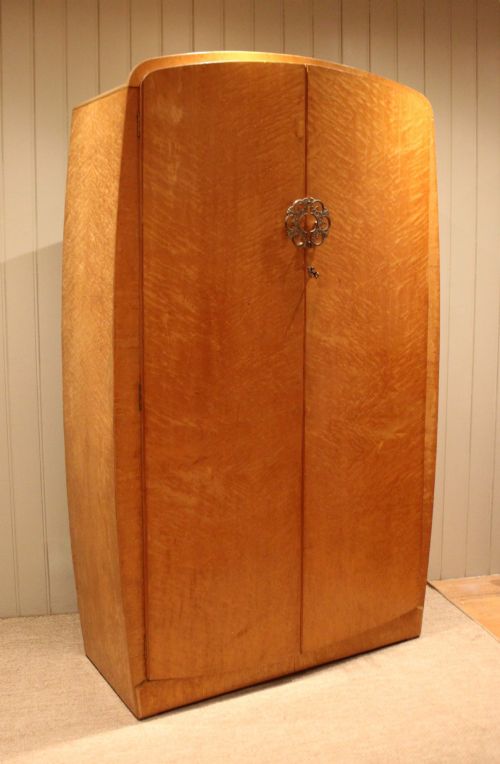
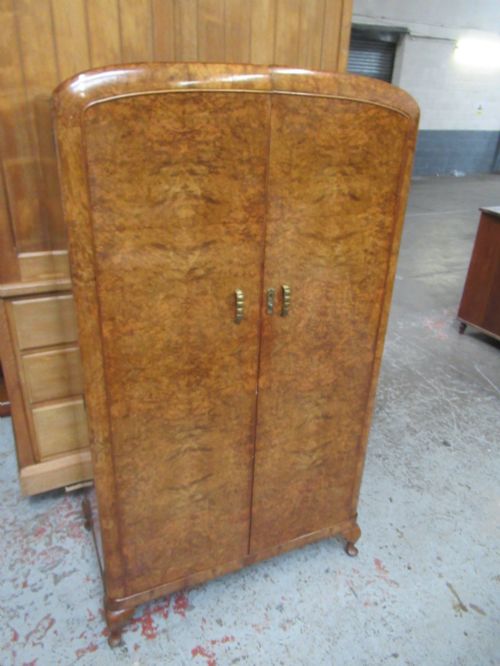
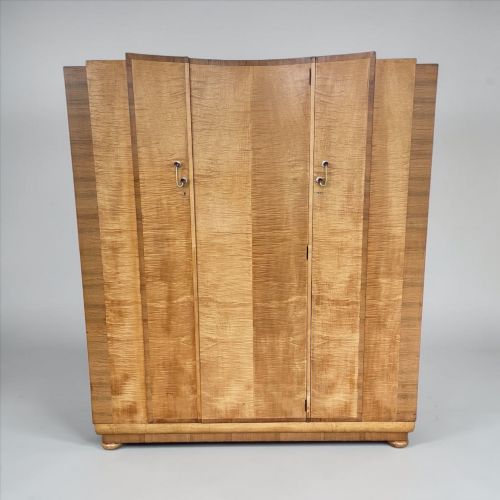
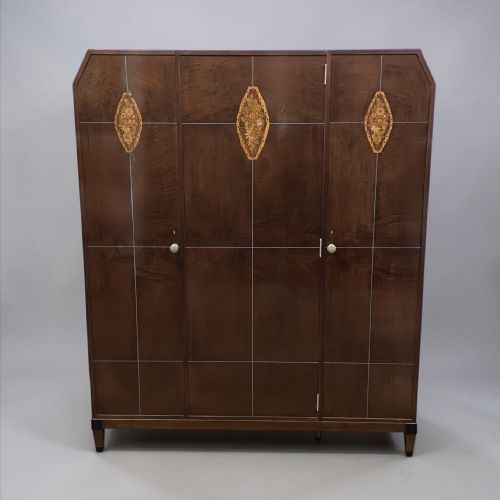
A 1930s clothes cabinet brings proper Art Deco presence to a bedroom, offering substantial storage behind figured timber doors.
1930s Clothes Cabinet
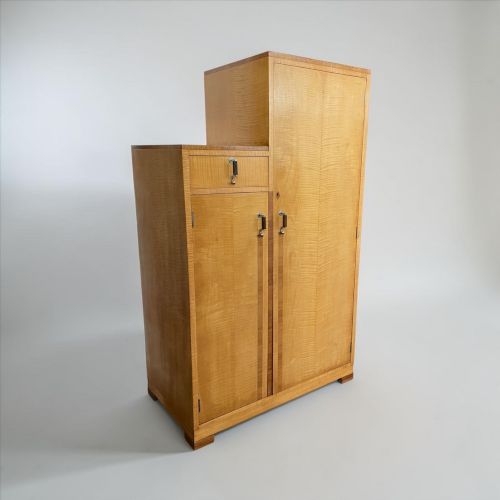
A 1930s clothes cabinet encompasses large wardrobes, compactum designs, and tallboys from the Art Deco period. These pieces provide tall storage capacity, often combining hanging space with internal drawers and shelving.
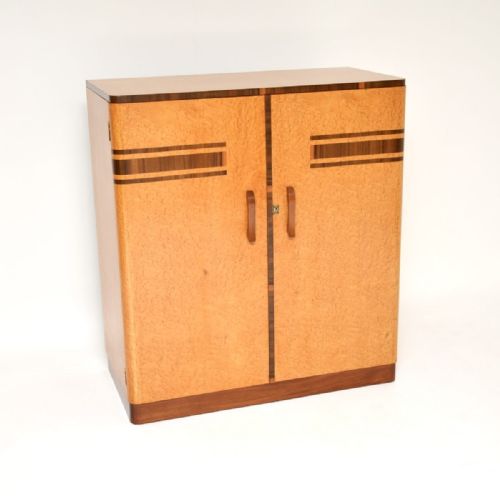
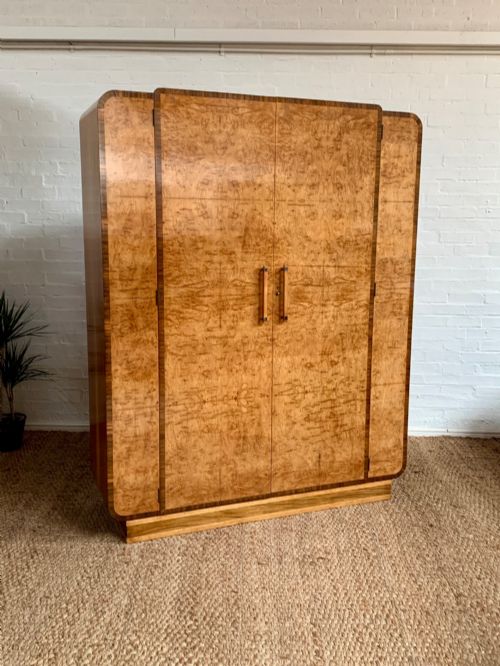
Buyers will most frequently encounter walnut and burr walnut double wardrobes on this page. Birds eye maple veneer and oak also appear, reflecting the characteristic palette of the decade.
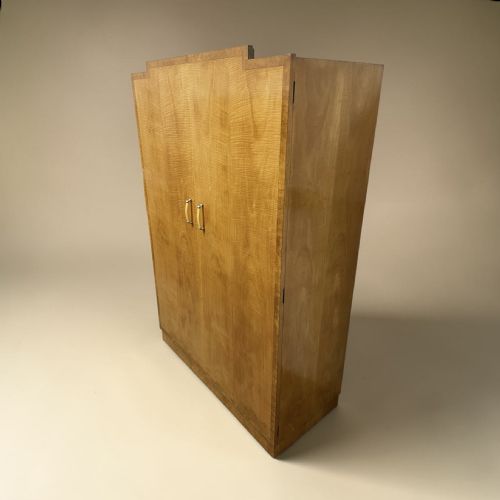
Forms range from simple double doors to fitted compactums and tallboy cabinets. Each example demonstrates the distinct architectural lines and curved profiles associated with thirties design.
How they were made
Cabinet makers applied decorative veneers such as burr walnut, cloud walnut, and birds eye maple over timber carcasses. This technique created striking grain patterns across large cabinet doors.
Metal fittings, including brass details and occasionally bakelite handles, completed the construction. These hardware elements were chosen to complement the linear geometry of the Art Deco style.
1930s Clothes Cabinet Retail Price Guide 2026
Typical asking prices for 1930s clothes cabinet among the pieces listed under this phrase on Sellingantiques today, from the lower quarter to the upper quarter. They describe what is for sale here now, not the wider market.
Bakelite handles on a walnut wardrobe offer a tactile reminder of early plastics in the bedroom.
What varies in quality
The choice of veneer sets the visual standard for each piece, with matched burr walnut and birds eye maple representing the finer end of production. Simpler oak surfaces offer a more restrained appearance.
Interior configuration dictates utility, as compactum models with integrated drawers and shelving require more complex internal joinery than standard hanging wardrobes. The integration of maker attributions also distinguishes individual pieces.
Waring and Gillow·Harry and Lou Epstein
The 1930s Clothes Cabinet Glossary
- Compactum wardrobe
- A fitted wardrobe that combines hanging space with internal drawers, shelves, and compartments in a single cabinet. This multi-purpose design maximises storage efficiency.
- Burr walnut
- A highly figured timber veneer taken from the growth excrescence on a walnut tree. It produces swirling, organic patterns across cabinet doors.
- Tallboy
- A tall storage cabinet that positions drawers above or beside cupboard space. It provides vertical capacity for smaller rooms.
- Birds eye maple
- A figured maple veneer featuring small, circular patterns resembling birds eyes. It offers a pale, contrasting surface within Art Deco furniture.
1930s Clothes Cabinet: Frequently Asked Questions
What is a compactum wardrobe?
A compactum wardrobe is a fitted piece that combines hanging space with internal drawers and shelves within one unified cabinet. This layout provides comprehensive storage without needing separate chests of drawers.
The design makes efficient use of floor space while keeping garments and accessories organised behind matching doors.
How do I care for walnut veneer?
Walnut veneer requires protection from direct sunlight and excessive moisture to prevent fading and lifting. Regular dusting with a soft, dry cloth preserves the polished surface.
Applying a traditional beeswax occasionally helps nourish the timber and maintain its natural depth of colour.
Where should I place a tallboy cabinet?
A tallboy cabinet suits bedrooms or dressing rooms where floor space is limited but vertical capacity is needed. Its height allows it to fit into corners or narrow wall spaces.
Ensure the room has sufficient clearance for the cabinet doors to open fully and reveal internal drawers.
How do I identify Art Deco furniture?
Art Deco furniture is characterised by clean geometric lines, symmetrical forms, and symmetrical veneer patterns. Pieces from this era often feature stepped cornices and contrasting timber grains.
Hardware in brass or bakelite further marks pieces from the nineteen thirties.