
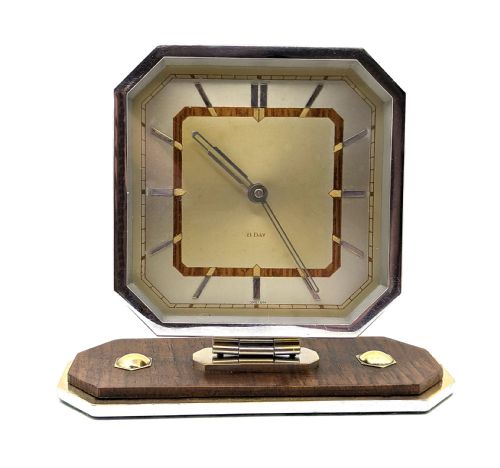


1930s Chrome Table Clock
A 1930s chrome table clock brings sharp modernist lines and gleaming metal to a desk or mantelpiece.
1930s Chrome Table Clock
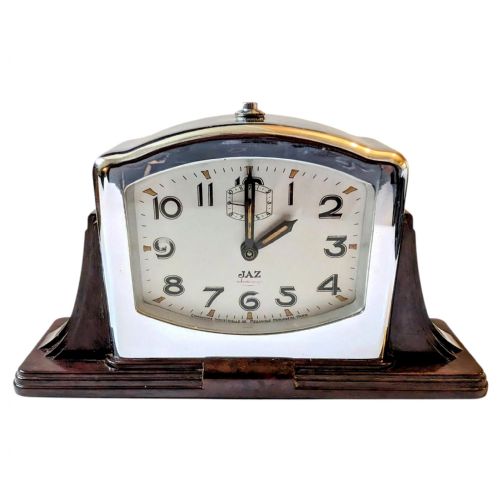
When searching for a 1930s chrome table clock, buyers encounter timepieces that embody the bold geometric ethos of the Art Deco period. These objects span compact travel alarms designed for portability to substantial mantel clocks meant to anchor a room.
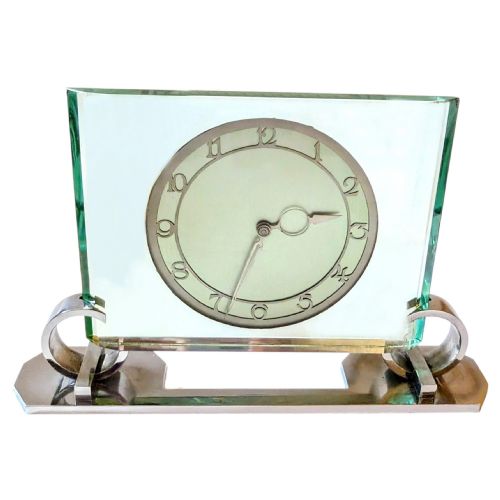
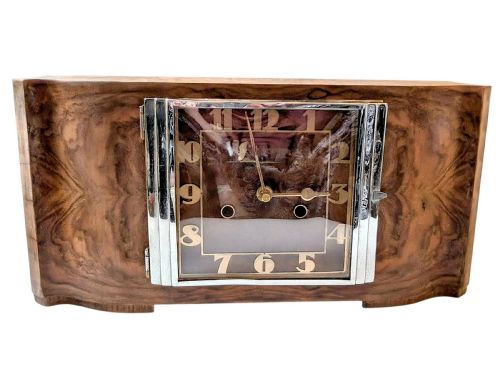
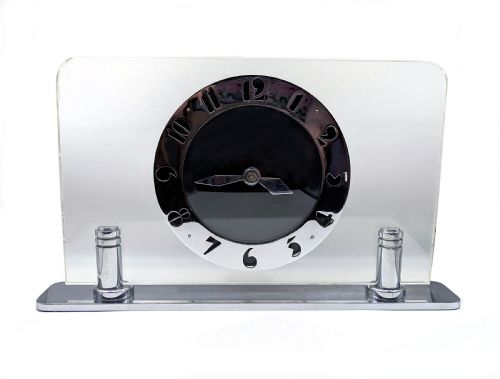
The version most commonly found on this page combines polished chrome plating with contrasting materials such as walnut, bakelite, or coloured glass. Makers produced both desk and mantel variants, often housing reliable eight-day movements or electric mechanisms.
Origins stretch across England, France, and Germany, reflecting a pan-European modernist movement in horology. Pieces range from streamlined skyscraper forms to minimalist Bauhaus designs, satisfying diverse interior tastes.
Materials and construction methods
Makers applied chrome plating over base metals to achieve a durable, mirror-like finish that resisted tarnish and captured ambient light. This metalwork was frequently paired with moulded bakelite, contrasting wood veneers like walnut, or sections of peach and opaline glass.
Clockmakers integrated specialised movements, ranging from traditional wind-up eight-day calibres to early electric and mystery clock mechanisms. Cases were constructed using precise geometric assembly, combining metal bezels with stone bases such as marble or onyx.
Materials utilised across the selection include walnut, marble, bakelite, opaline uranium glass, and polished chrome.
Distinguishing quality factors
The refinement of the movement and the integrity of the plating establish the primary tier of quality. Superior examples feature fully serviced, high-count jewel movements alongside unblemished chrome surfaces that retain their original deep lustre.
Material combination and maker reputation further divide the standard range from exceptional pieces. Clocks incorporating specialised glass dials, intricate pivoting stands, or signed movements by notable makers command greater interest among collectors.
Smiths Clockmakers·Mappin and Webb·Harrods of London·Jaeger LeCoultre·Junghans
The 1930s Chrome Table Clock Glossary
- Chrome plating
- The electrolytic deposition of a thin layer of chromium onto a base metal object. This process provides a bright, reflective finish and protects the underlying material from corrosion.
- Bakelite
- An early synthetic thermosetting plastic formed from phenol and formaldehyde. It appears frequently in bezels, bases, and cases due to its durability and rich colour depth.
- Eight day movement
- A mechanical clock movement designed to run for approximately eight days on a single winding. This reduces the frequency of winding required by the owner.
- Mystery clock
- A timepiece where the hands appear to move without any visible mechanical connection to the movement. Often achieved using transparent glass dials.
- Skyscraper style
- An architectural and decorative form inspired by early twentieth-century high-rise buildings. It emphasises vertical tiers and stepped geometric outlines.
1930s Chrome Table Clock: Frequently Asked Questions
How do I wind an eight day clock?
Insert the appropriate key or turn the integrated winding arbor gently until resistance is felt. Take care not to overwind the mainspring, as this can damage the internal mechanism.
Allow the key to turn smoothly and stop immediately when the spring reaches full tension. Regular handling ensures the movement maintains accurate timekeeping.
Were these clocks electric or mechanical?
Both types were produced during the period, reflecting a transition in domestic technology. Mechanical eight-day wind-up movements are common, alongside electric models powered by mains electricity.
Inspect the back cover or dial markings to determine whether the piece requires a key or a plug. Electric versions often feature synchronous motors designed for domestic AC supplies.
How should I clean a chrome clock?
Wipe the metal surfaces gently with a soft, dry microfibre cloth to remove dust and fingerprints. Avoid abrasive cleaners or harsh chemical polishes that can strip the thin chrome layer.
For glass components, use a mild glass cleaner applied to the cloth rather than directly onto the dial. This preserves both the metal plating and the painted numerals.
What is a mystery clock?
A mystery clock is an inventive timepiece that conceals the mechanism driving the hands. The hands often appear to float against a transparent glass dial without any apparent linkage.
This illusion was achieved by mounting the hands on rotating clear glass discs driven from the base or rim. It represents a pinnacle of novelty engineering from the period.
How do I identify a Bauhaus design?
Bauhaus pieces strip away all applied ornamentation in favour of stark functionalism and clean geometric shapes. These clocks rely on the pure form of chrome tubing, stark dials, and unadorned metal cases.
Designers from this school prioritized utility and industrial manufacturing methods over decorative flourish. The resulting objects look as modern today as they did in the interwar years.