
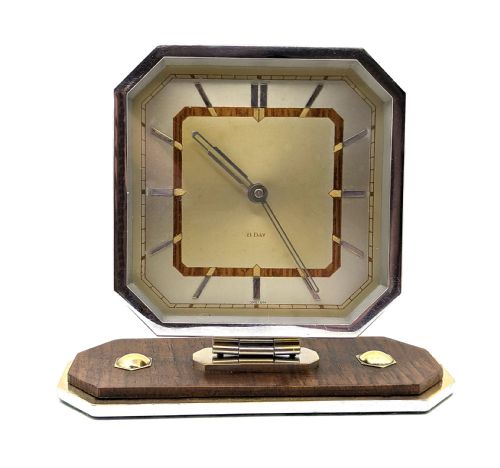


Vintage Chrome Desk Clock
A vintage chrome desk clock brings industrial shine and precise geometry to a room, anchoring a workspace with period design.
Vintage Chrome Desk Clock
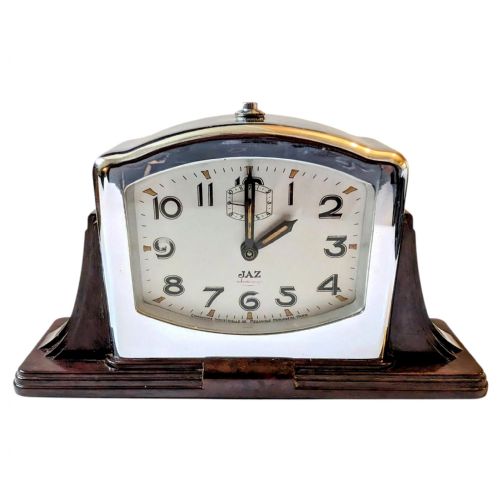
A vintage chrome desk clock combines polished metal housing with mechanical or electrical movements, originating primarily from the Art Deco period of the 1920s and 1930s. These pieces span compact travel timepieces, easel designs, and larger mantel variants that double as desk accessories.
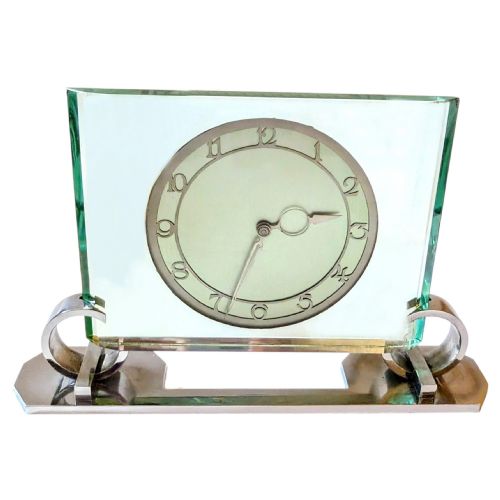
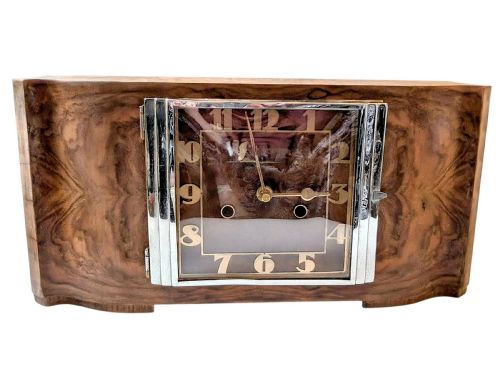
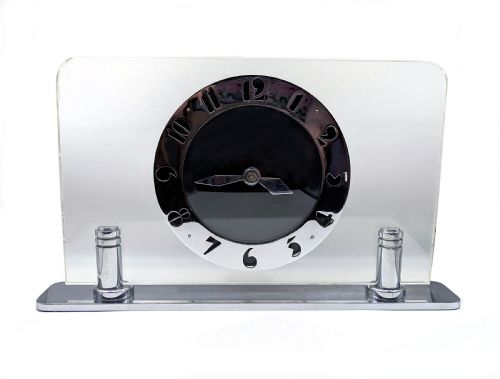
The most common version met on this page is the Art Deco timepiece from the 1930s, often produced by British and French makers. They frequently pair chrome plating with contrasting materials such as walnut, bakelite, or coloured glass.
Forms range from streamlined modernist shapes and skyscraper silhouettes to pivoting desk units and mystery clocks. They serve both practical timekeeping and decorative roles within domestic and commercial interiors.
Materials and construction methods
Manufacturers built these timepieces using a base of brass or base metals finished with a heavy layer of bright chrome plating. This metalwork was frequently combined with moulded bakelite, carved marble, onyx, or polished walnut to create striking visual contrast.
Dials often incorporated peach mirror glass, opaline uranium glass, or geometric numerals typical of modernist design. Movements were mechanical, featuring eight-day or wind-up mechanisms, alongside early electric systems.
Listings feature clocks spanning the 19th century to the 1960s, dominated by 1930s Art Deco designs in chrome, glass, and bakelite.
Assessing quality in period timepieces
Quality rests in the precision of the movement and the integrity of the housing materials. Superior examples retain unblemished chrome plating over solid brass foundations rather than flaking finishes over inferior pot metal.
Pinnacle pieces feature named makers, complex eight-day movements, or unusual configurations such as pivoting stands or mystery clock mechanisms. The harmony between the metal casing and secondary materials like glass or wood dictates overall execution.
Smiths Clockmakers·Mappin And Webb·Harrods Of London·Jaeger-LeCoultre·Garrards
The Vintage Chrome Desk Clock Glossary
- Bakelite
- An early synthetic thermosetting plastic used for clock cases and bezels. It offers durability and deep colouration.
- Eight-day movement
- A mechanical clock movement that requires winding only once every eight days. This feature denotes higher utility in desk clocks.
- Mystery clock
- A timepiece where the hands appear to move without any visible mechanical connection to the movement. The glass dial or concealed gears create this illusion.
- Opaline glass
- A semi-translucent glass type often found in pastel shades on period clock faces. It diffuses light gently behind the numerals.
- Garniture
- A set consisting of a clock flanked by matching decorative objects such as side vases or sculptures. They were designed to sit together on a mantel or desk.
Vintage Chrome Desk Clock: Frequently Asked Questions
How do I wind an eight-day desk clock?
Insert the key into the winding arbor on the dial or back plate and turn it clockwise until resistance is felt. Take care not to overwind the mainspring.
Most mechanical desk clocks of this era use a key or an integrated butterfly key for this purpose.
Were these clocks electric or mechanical?
The selection includes both traditional mechanical wind-up movements and early electric variants. Mechanical versions often utilise eight-day springs.
Electric models plug into mains power or rely on early electrical coils developed during the interwar years.
How do I identify an Art Deco clock?
Look for symmetrical geometric shapes, stepped skyscraper forms, and streamlined metal surfaces. The use of chrome paired with mirror glass or bakelite is definitive.
Fonts on the dial frequently feature stylised sans-serif numerals typical of the 1930s aesthetic.
Where should I place a vintage desk clock?
Position the piece on a stable desk, mantelpiece, or bookshelf away from direct moisture and strong sunlight. Ensure it sits on a level surface to keep the escapement beating evenly.
Many designs include pivoting stands or easel backs to adjust the viewing angle.