

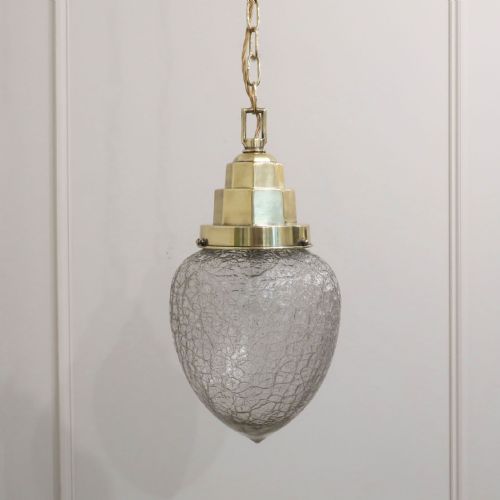


1930s Chandelier
These 1930s chandeliers define a period of geometric forms and modern illumination, bringing striking architectural presence to any ceiling.
1930s Chandelier
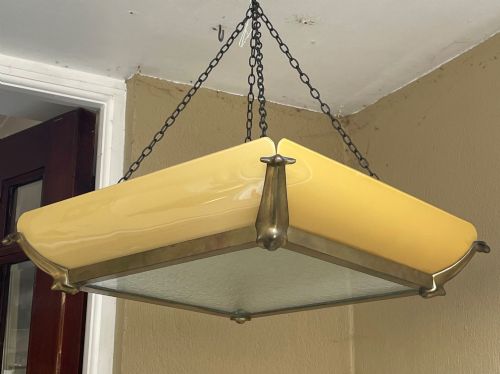
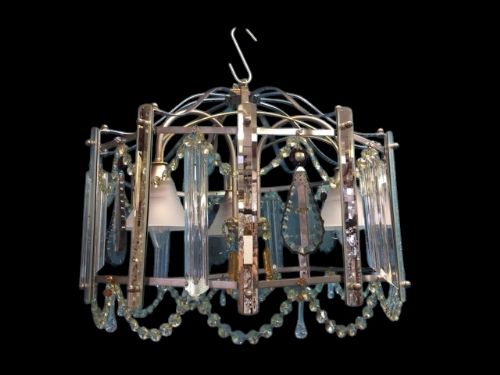
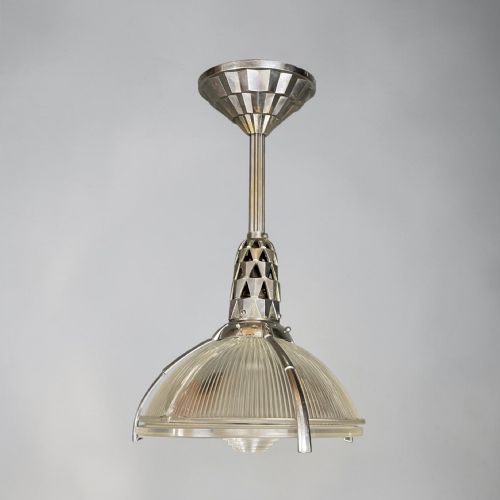
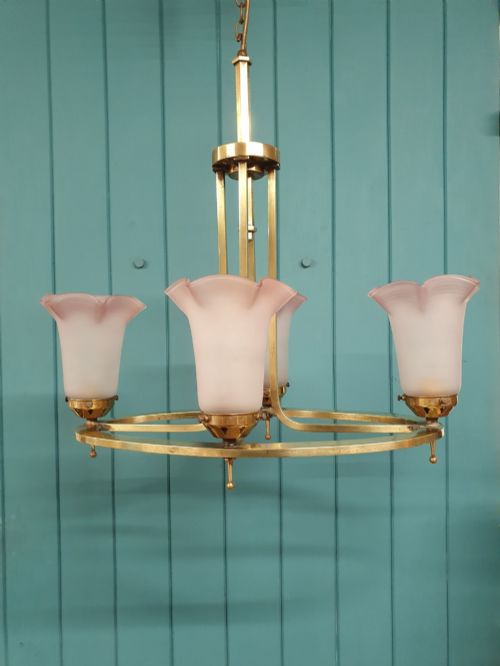
A 1930s chandelier brings together the geometric lines and machine age optimism of the interwar years. When looking for a 1930s chandelier, buyers typically encounter pieces created during the height of the Art Deco movement alongside related interpretations from the same decade.
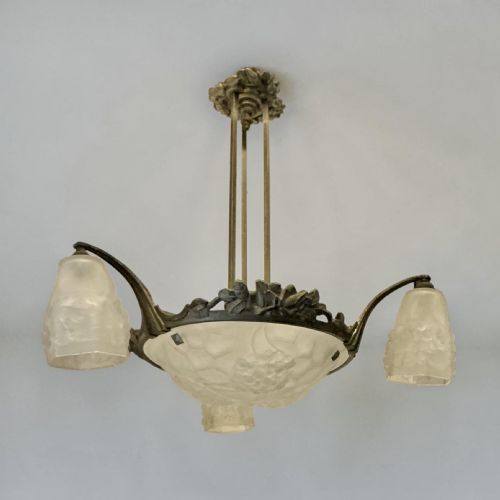
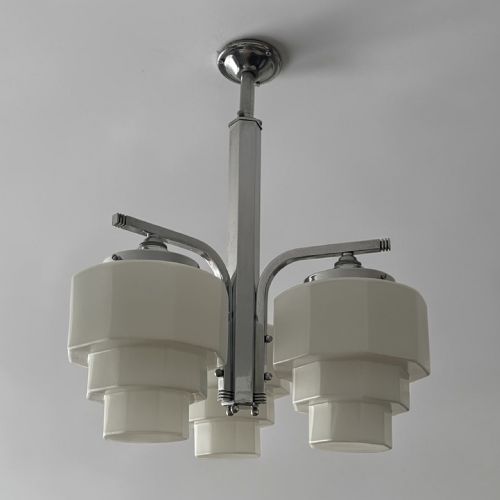
The selection here encompasses ceiling lights, pendant lights, and hanging fixtures in styles ranging from classic French Art Deco to Dutch Revival and Highland Lodge designs. Common material combinations utilise brass, chrome, and wrought iron paired with frosted, crackle, or pressed glass shades.
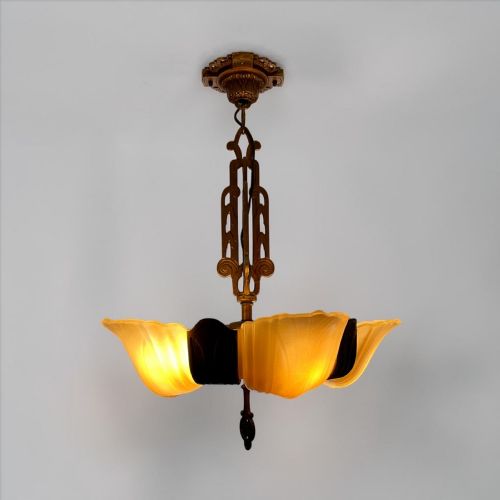
Formats stretch from intimate three arm fittings and single pendant bowls to monumental multi light fixtures suited to larger reception spaces. Occasional variants incorporate alabaster dishes or slip shade glass units secured in metal frames.
Materials and construction methods
Metalwork forms the skeletal framework of these fixtures, relying on cast brass, spun chrome, and hand-forged wrought iron. These metals provide both structural support and the characteristic metallic sheen associated with the period.
Glass elements utilise diverse techniques including moulding, frosting, and acid etching to diffuse light effectively. Slip shades and clam shell bowls are formed through specialised pressing processes that yield uniform thickness and distinct decorative reliefs.
1930s Chandelier Retail Price Guide 2026
Typical asking prices for 1930s chandelier among the pieces listed under this phrase on Sellingantiques today, from the lower quarter to the upper quarter. They describe what is for sale here now, not the wider market.
One exceptional piece incorporates actual red and roe deer antlers into a rustic triangle chandelier, proving the 1930s also leaned into remote highland lodges.
Distinguishing quality across pieces
The sophistication of the metal casting and the precision of the glass shaping separate standard production from superior work. Heavier gauge brass and chrome plating indicate sturdier construction that maintains its finish over decades of use.
Artistic collaboration elevates certain fixtures, particularly when master glassmakers and metalsmiths combine their respective expertise. Signed components and complex multi tiered designs demonstrate a higher level of workshop execution than unbranded utilitarian equivalents.
Degué·Émile-Jacques Ruhlmann·Jean Gauthier
The 1930s Chandelier Glossary
- Slip shade
- A moulded piece of glass that slides or slots directly into a metal frame to form a bowl or shade. These shades often feature geometric or floral relief patterns characteristic of the era.
- Frosted glass
- Glass treated with acid or sandblasting to create a translucent, matte surface that softens bulb glare. This finish was widely utilised in ceiling fixtures to cast an even, diffused glow.
- Art Deco
- A design style characterised by sleek lines, geometric symmetry, and modern industrial materials. It dominates the aesthetic vocabulary of lighting from this decade.
- Crackleglass
- Glass deliberately subjected to thermal shock during production to create an internal network of fine fractures. This technique adds texture and scatters light uniquely across the room.
- Drop chandelier
- A hanging light fixture suspended by rods, chains, or cords rather than mounted flush to the ceiling. This format allows the piece to command vertical space in rooms with high ceilings.
1930s Chandelier: Frequently Asked Questions
How do I wire a vintage chandelier?
Rewiring requires a qualified electrician to remove old perished textile or rubber cabling and install modern heat-resistant flex. The original brass or chrome lamp holders are typically retained while internal components are brought up to current safety standards.
Careful handling of vintage glass shades is essential during this process to prevent accidental chipping or cracking while the metal frame is manipulated.
What ceiling height do I need?
Most hanging fixtures require a clearance of at least two metres from the floor to the lowest point of the chandelier for safe passage underneath. Rooms with standard ceiling heights benefit from flush or semi flush variants, while pendant types suit taller spaces.
Proportion matters as much as vertical clearance, so match the diameter of the chandelier to the overall dimensions of the room rather than just the hanging length.
How do I clean frosted glass shades?
Wash frosted glass elements in warm water with a mild, non-abrasive detergent, avoiding harsh chemical cleaners that might degrade the etched surface. Dry them thoroughly with a lint-free cloth before reassembling them into their metal brackets.
Take care not to submerge metal hardware that retains original patination or delicate lacquering, wiping those surfaces gently with a dry microfiber cloth instead.
Can I use modern LED bulbs?
Modern LED golf ball or tubular bulbs fit most vintage sockets and emit very little heat compared to traditional incandescent alternatives. Lower wattage versions prevent heat stress on older glass shades and coloured finishes.
Select warm white colour temperatures to replicate the softer amber quality of light historically produced by interwar electrical grids.