

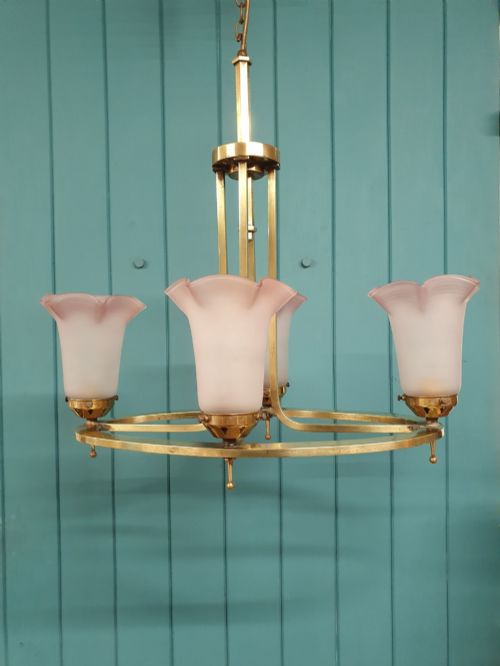


1930s Ceiling Lamp
A 1930s ceiling lamp brings geometric lines and diffused illumination into a room, offering both historical character and functional overhead lighting.
1930s Ceiling Lamp
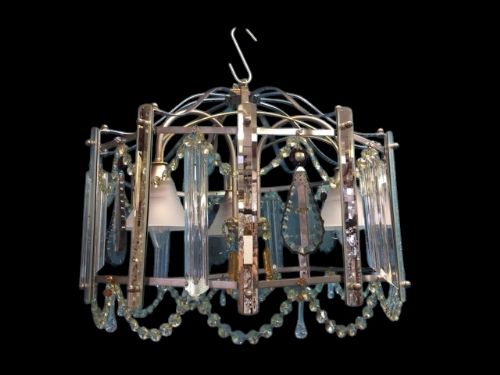
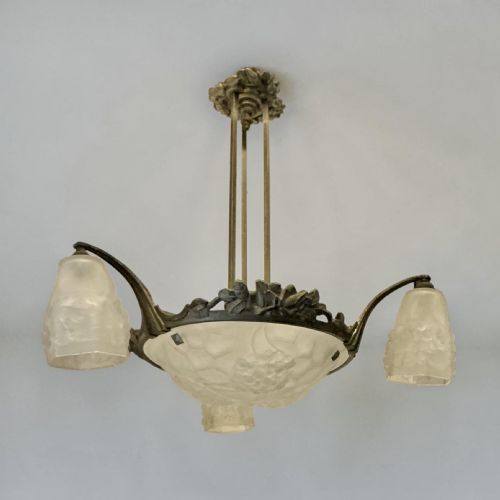
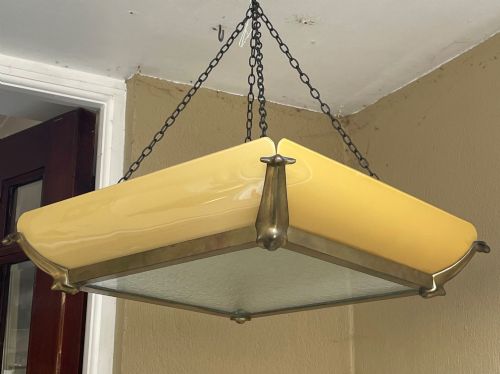
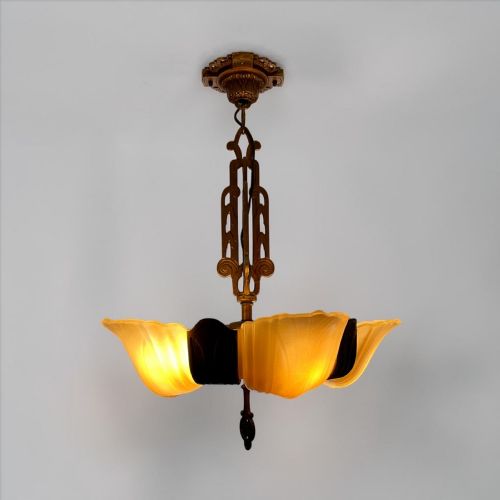
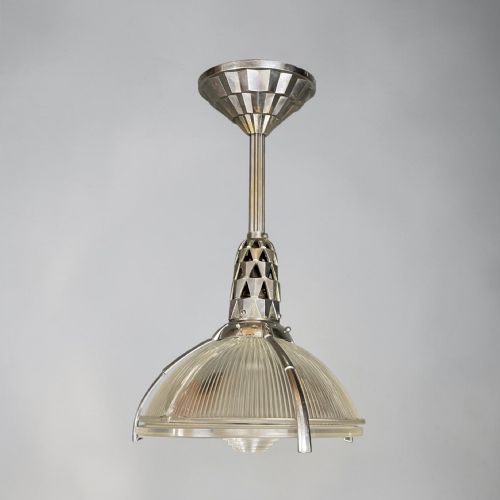
A 1930s ceiling lamp encompasses hanging pendants, flush plafonniers, and multi-light chandeliers designed during the interwar period. The selections here heavily favour the distinct geometric and streamlined vocabulary of Art Deco design.
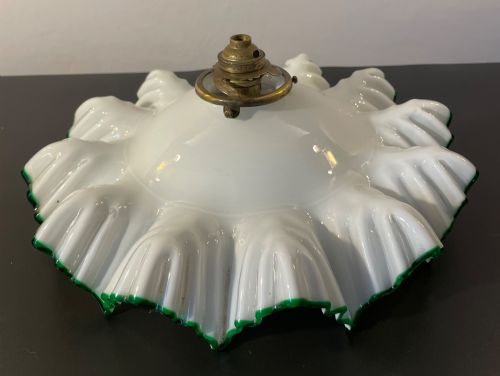
Buyers encounter single-bulb pendants alongside grander fixtures featuring frosted glass shades, slip shades, or heavy metal frames. These fittings originate from domestic spaces, hallways, and larger public interiors of the era.
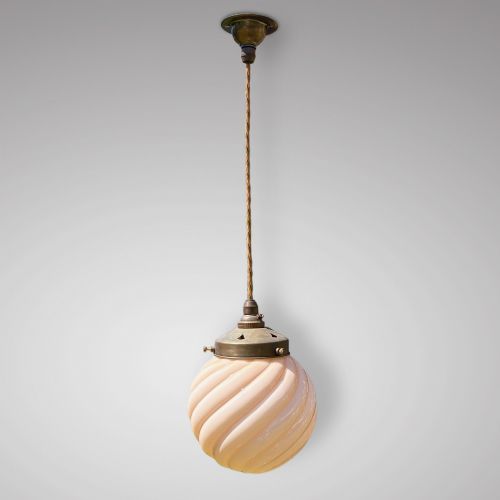
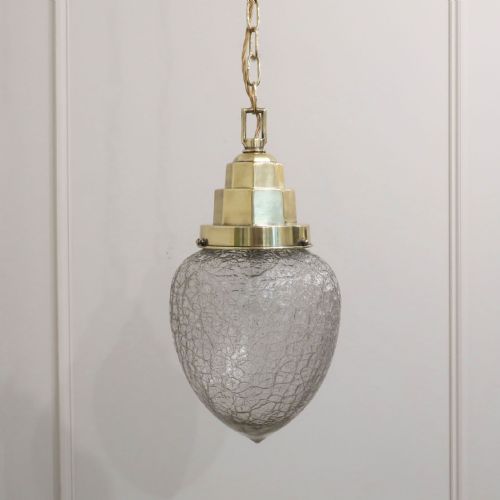
The assortment spans simple glass globes to complex tiered chandeliers utilising brass, chrome, and copper hardware. Pieces range from understated opaque glass fittings to elaborate French moulded glass creations.
Materials and construction
Makers combined heavy cast metals, brass, copper, chrome, and steel to build robust structural frames that supported weighty glass elements. Metal components were polished, patinated, or left with a matte industrial finish depending on the intended style.
Glass production relied on pressing, moulding, acid-etching, and frosting techniques to achieve opaline, crackle, or crystal textures. These methods scattered light effectively while concealing the glaring filament of early electric bulbs.
Specialised workshops utilised specialised metalwork techniques alongside artisan glassblowing and mold-pressed production. Frames incorporated secure screw fittings, chains, and galleries to suspend the heavy glass shades safely.
1930s Ceiling Lamp Retail Price Guide 2026
Typical asking prices for 1930s ceiling lamp among the pieces listed under this phrase on Sellingantiques today, from the lower quarter to the upper quarter. They describe what is for sale here now, not the wider market.
Listings feature periods from 1920 to 1930, utilising frosted glass, brass, chrome, opaline glass, copper, and cast metal.
Assessing quality and craftsmanship
Quality separates simple mass-produced electrical fittings from pieces created by notable designers and premier glassworks. The thickness and clarity of the moulded glass, alongside the weight and finish of the metal mountings, determine the grade of a fixture.
Subtleties in the etching, the crispness of the geometric moulding, and the integration of the metal gallery dictate artistic merit. Superior examples maintain original patination and robust internal wiring structures that support the weight of heavy glass bowls.
Émile-Jacques Ruhlmann·Jean Gauthier
The 1930s Ceiling Lamp Glossary
- Plafonnier
- A ceiling light that sits flush or semi-flush against the plasterwork without a hanging drop. This form directs light downwards into the room.
- Slip Shade
- Individual moulded pieces of glass that slide into a metal frame to form a segmented bowl or shade. These are typical of American Art Deco lighting design.
- Opaline Glass
- A milky, semi-translucent glass that diffuses light softly across its surface. It was widely utilised in pendant and globe light production.
- Chandelier
- A branched hanging light fixture designed to hold multiple bulbs. These fixtures often feature elaborate metal frames and crystal or glass drops.
- Frosted Glass
- Glass treated by acid-etching or sandblasting to create a textured, non-reflective surface. This finish softens the glare from electric illumination.
1930s Ceiling Lamp: Frequently Asked Questions
How do I hang a heavy 1930s ceiling lamp safely?
These vintage fixtures often carry substantial weight due to thick moulded glass and cast metal components. Installation requires securing the mounting directly into ceiling joists or using appropriate structural fixings.
Consulting a qualified electrician ensures the antique wiring is safely adapted to modern standards and supports the physical load of the pendant.
What rooms suit a 1930s ceiling lamp best?
Pendant lights and flush plafonniers work well in hallways, dining spaces, and bedrooms where ambient overhead illumination is desired. Their distinct geometric profiles anchor period interiors effectively.
Larger multi-light chandeliers and lanterns fit high-ceilinged entrance halls or principal reception rooms requiring a strong decorative focal point.
How do I clean vintage frosted or opaline glass?
Wash the glass shades gently in warm water using a mild, non-abrasive detergent and a soft cloth. Avoid harsh chemical cleaners that might strip historic patination or damage delicate etched surfaces.
Ensure glass components are completely dry before reassembling them into their metal frames and turning the power back on.
Can I use modern LED bulbs in these fixtures?
Modern LED bulbs function well in vintage fittings provided the wattage and physical dimensions match the original socket requirements. Selecting warm white bulbs preserves the soft atmospheric glow intended by the maker.
Checking the internal lamp holders during rewiring ensures compatibility with contemporary screw or bayonet bulb bases.