





1930s Bronze Statues
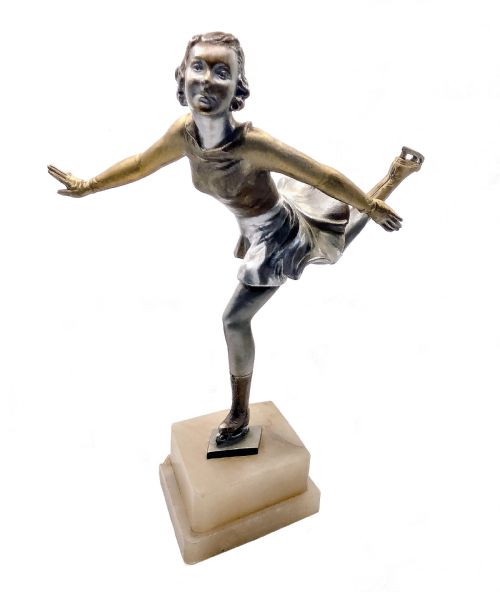
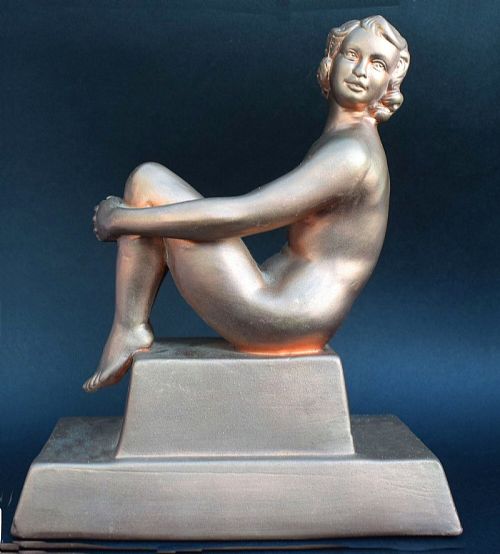
These 1930s bronze statues combine stylised human figures and dynamic animals with the distinctive geometry of the period.
1930s Bronze Statues
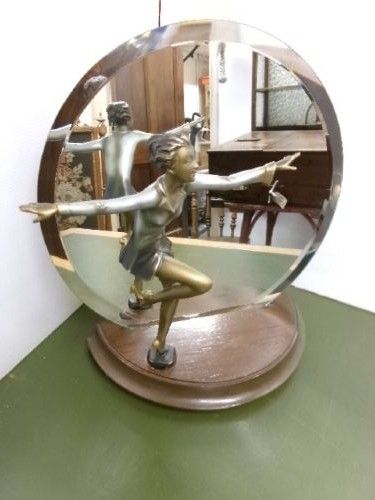
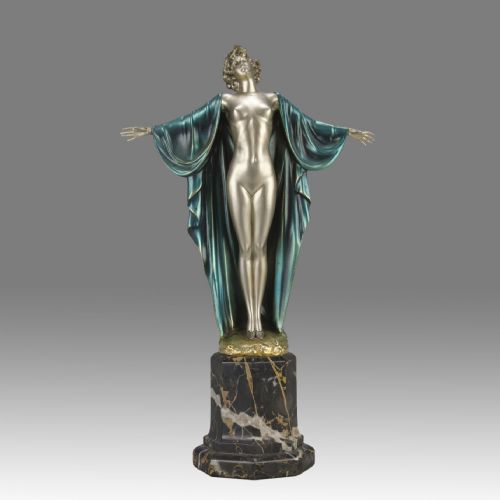
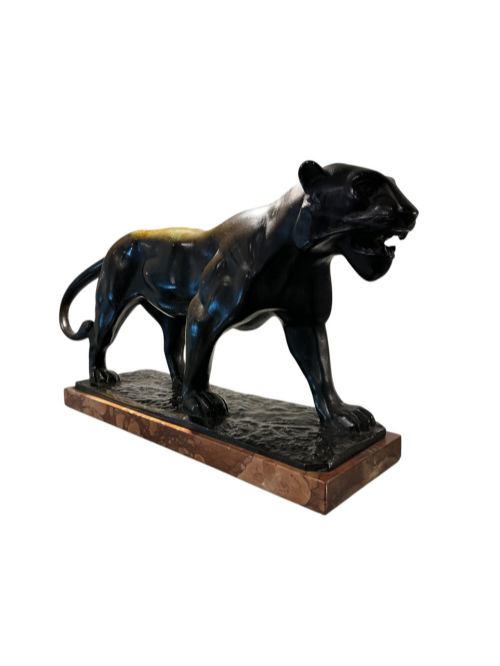
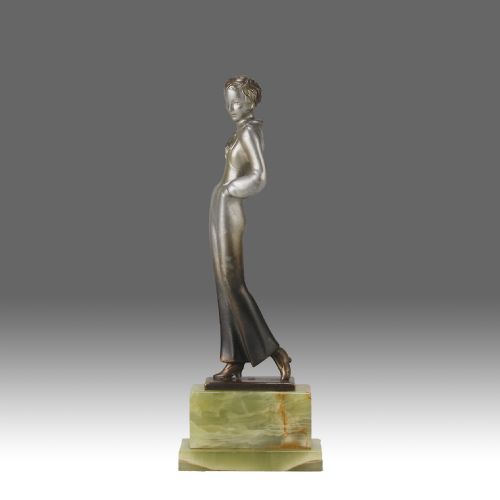
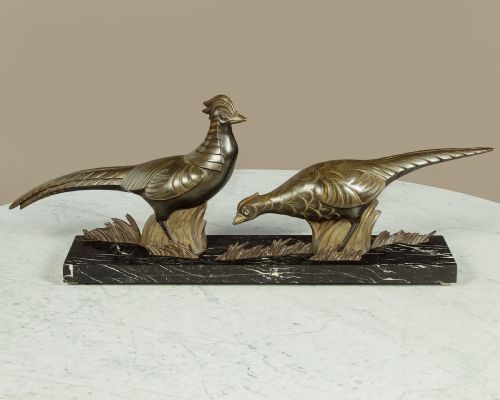
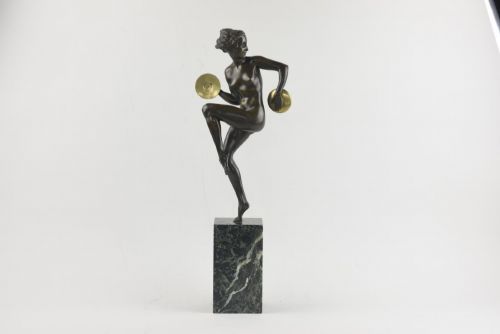
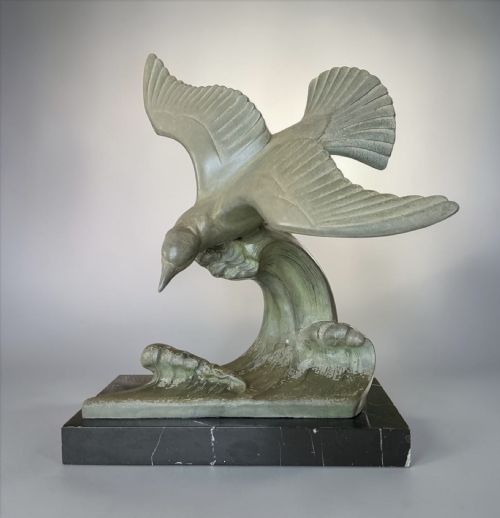
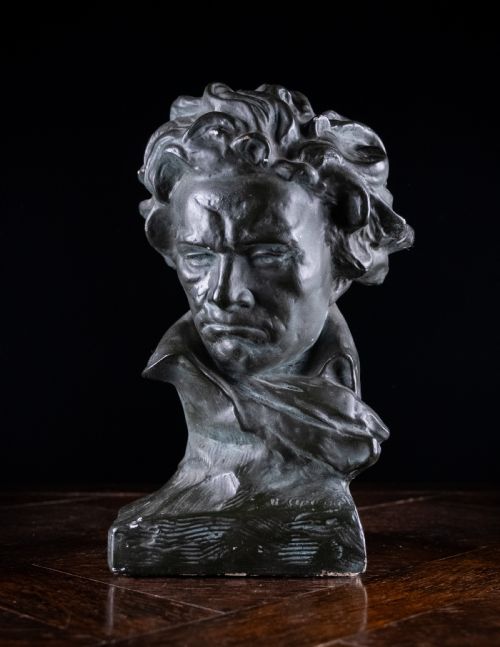
When you search for 1930s bronze statues, you encounter figurative works dominated by the Art Deco style. The subjects range from female dancers and athletes to wild cats, dogs, and birds.
Many of these sculptures incorporate heavy marble or onyx bases to anchor the metal work. You also find practical objects such as bookends, table lamps, and figural groups sharing the same aesthetic.
Materials and casting methods
Foundries cast these pieces primarily in bronze or spelter, often finishing the metal with patination, silvering, or cold painting. Spelter served as a more accessible metallic alternative to pure bronze during the period.
Makers mounted the metal figures onto contrasting plinths of polished marble, onyx, or wood. Some works also integrated materials like carved glass or ivory elements in chryselephantine compositions.
Listings feature materials including marble, bronze, spelter, onyx, patinated metal, wood, silvered bronze, and glass.
Distinguishing quality in the work
Quality rests upon the crispness of the casting detail and the finish applied to the surface. Finer examples display meticulous hand-chasing on the metal and polished, substantial stone bases.
Signatures from established sculptors and identifiable foundry marks elevate a piece above unsigned commercial castings. The naturalism of the anatomy and the precision of the stylisation also separate the top tier from simpler variants.
Ferdinand Preiss·Josef Lorenzl·Sibylle May·Demetre Chiparus·Alexandre Kelety
The 1930s Bronze Statues Glossary
- Spelter
- A zinc-based alloy commonly used as a substitute for bronze in decorative figures. It takes patination well but is softer than true bronze.
- Patinated
- Treated with chemical solutions to colour the metal surface. This process adds depth and simulates age or specific metallic tones.
- Plinth
- The solid base block, frequently made of marble or onyx, that supports the sculpture. It provides stability and visual contrast to the metal above.
1930s Bronze Statues: Frequently Asked Questions
How do I tell bronze from spelter?
Bronze is heavier, colder to the touch, and rings with a clear tone when tapped lightly. Spelter is softer and may show a grey or white metal underneath if the surface patina is worn.
Many 1930s statues utilise spelter as a cost-effective alternative while retaining the same dynamic sculptural forms.
Where were these statues displayed?
Owners placed these sculptures on mantelpieces, desks, and dedicated display cabinets within contemporary interiors. Functional versions also served as bookends, table lighters, and reading lamps.
The heavy stone bases ensured the figures remained stable on furniture surfaces.
Are these pieces signed?
Some sculptures carry the artist's signature incised directly into the bronze or cast into the base. Others bear foundry marks or remain completely unsigned.
Attributions are often made based on stylistic similarities to known works from the period.