


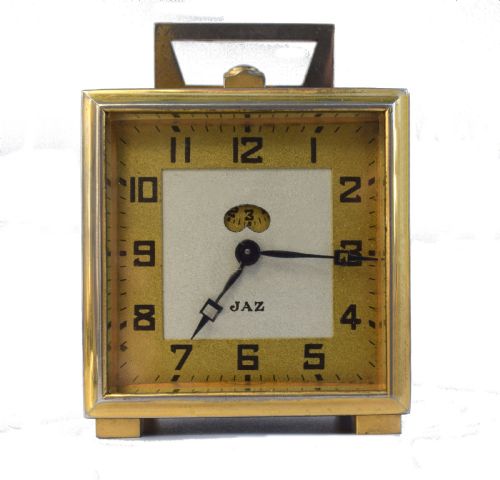


1930s Bedside Clock
These 1930s bedside clocks bring sharp Art Deco geometry and mechanical ingenuity to a nightstand, built to keep time with style.
1930s Bedside Clock
A 1930s bedside clock is typically a compact timepiece designed for domestic use, drawing heavily from Art Deco aesthetics. The selection on this page shows pieces originating from around 1920 to 1930, capturing an era of bold design.
Most examples found here present as travel clocks, desk clocks, or miniature alarm clocks, alongside combined forms like a lamp and clock. These objects use materials typical of the interwar period to sit neatly on a night surface.
How they were made
Maker workshops constructed these timepieces using a combination of metal, chrome-plated metal, and brass for structural integrity and a polished finish. Accents of green marble, blue glass, leather, and ebonised wood introduced texture and colour to the metal frames.
Movements ranged from standard mechanisms to eight-day systems, with some electric options and miniature alarm functions housed inside the decorative casings. Makers such as Harrods of London, Blangy, Smiths, Garrards, Jaz, and Bayard applied distinct engineering approaches to their dials and pivoting structures.
1930s Bedside Clock Retail Price Guide 2026
Typical asking prices for 1930s bedside clock among the pieces listed under this phrase on Sellingantiques today, from the lower quarter to the upper quarter. They describe what is for sale here now, not the wider market.
Listings feature periods from 1920 to 1930, showcasing materials such as green marble, ebonised wood, and chrome-plated metal.
What varies in quality
Quality differences rest primarily in the sophistication of the materials used, such as the depth of green marble or the finish of the chrome-plating versus plain metal. The presence of specialised housing materials like ebonised wood or blue glass distinguishes standard models from more ambitious designs.
The reputation of the maker and the complexity of the internal mechanics, including fully serviced movements or eight-day capability, elevate a piece. Better examples integrate functional lighting or pivoting stands smoothly into the overall Art Deco design.
Harrods of London·Blangy Clockmakers·Smiths·Garrards·French Clockmakers Jaz·Bayard
The 1930s Bedside Clock Glossary
- Art Deco
- A design style spanning the 1920s and 1930s characterised by streamlined geometric shapes, modern materials, and symmetrical patterns. This aesthetic heavily influences the housing and dial layouts of these clocks.
- Chrome-plated metal
- A base metal coated with a thin layer of chromium for a bright, reflective finish and corrosion resistance. It provides the signature metallic sheen seen on many interwar timepiece frames.
- Ebonised wood
- Timber treated to resemble ebony, offering a deep, dark black finish that contrasts sharply with metal bezels and dials. It appears frequently in modernist and Art Deco decorative objects.
- Eight-day clock
- A mechanical timepiece designed to run for eight days on a single wind before requiring attention. This functional upgrade reduced the frequency of winding required for daily use.
1930s Bedside Clock: Frequently Asked Questions
What defines a 1930s bedside clock?
These pieces are compact timepieces produced during the interwar period, heavily influenced by the Art Deco style.
They utilise materials like chrome, brass, glass, and marble to combine practical timekeeping with striking geometric design.
How were these clocks powered?
The mechanisms include traditional mechanical movements, eight-day systems, and electric options.
Portable variations often featured travel cases or folding struts for convenient movement between rooms.
Where were these timepieces made?
The listings show origins from English and French makers, reflecting diverse European design preferences.
Prominent retailers and dedicated clockmakers contributed distinct regional styling to the dials and cases.
How should I care for a vintage clock?
Keep the mechanical movements clean and consult specialists for servicing to preserve the internal gears.
Protect delicate components like glass panels, leather wraps, and marble bases from sharp impacts.