



1920s Small Desk
These 1920s small desk options provide compact writing surfaces and accessories suited to modest spaces while bringing period craftsmanship into a room.
1920s Small Desk
When you search for a 1920s small desk, you encounter compact writing furniture, bureaus de dame, and lowboys alongside coordinating chairs and accessories like magnifying glasses and carriage clocks. The selection spans distinct aesthetic revivals and modernist directions from the era.
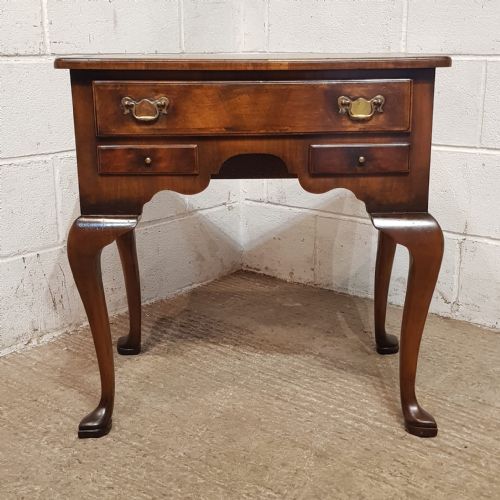
Bureau de dame forms and small burr walnut desks dominate the furniture offerings, often featuring serpentine fronts or Queen Anne revival lines. These pieces serve functional writing roles while maintaining a diminutive footprint suited to smaller rooms.
Accompanying items such as beech and green leather revolving armless chairs, table lamps in lacquer or celluloid, and brass boxes complete the workspace ensemble. The variety reflects both traditional revival tastes and early twentieth-century modernity.
How they were made
Cabinet makers utilised burr walnut and standard walnut veneers over timber carcasses, frequently applying figured grain patterns to prominent surfaces like bureau flaps and table tops. Beech served structural roles in seating frameworks, paired with leather upholstery.
Decorative finishes include hand-painted chinoiserie lacquer in mandarin orange and metalwork applications involving brass, ormolu, and silver alongside shagreen and celluloid. Woodwork often incorporates curved serpentine fronts and period revival leg forms.
1920s Small Desk Retail Price Guide 2026
Typical asking prices for 1920s small desk among the pieces listed under this phrase on Sellingantiques today, from the lower quarter to the upper quarter. They describe what is for sale here now, not the wider market.
What varies in quality
The sophistication of the timber selection dictates the visual merit of wooden items, with richly figured burr walnut surfaces holding greater presence than plain walnut or beech. Hand-painted details on lacquer pieces and the precision of silver and shagreen work separate standard utility items from finer decorative pieces.
Structural integrity depends on the original joinery of the carcase and the condition of revolving mechanisms on office chairs. Mechanical reliability in carriage clocks and table lamp wiring also influence the overall standard of individual items.
Mappin & Webb
The 1920s Small Desk Glossary
- Bureau de dame
- A small lady's writing desk, typically featuring a sloping fall-front lid that conceals pigeonholes and small drawers.
- Lowboy
- A small kneehole dressing table or side table with drawers, popular during revival periods referencing earlier eighteenth-century designs.
- Burr walnut
- Wood sliced from the abnormal growth knots of a walnut tree, highly prized for its swirling, decorative grain patterns on furniture surfaces.
- Serpentine front
- A furniture front characterised by a concave central section flanked by two convex curves, creating an undulating profile.
- Shagreen
- Undyed rough skin from a shark or ray, used as a luxurious covering material for small decorative and desk objects during the art deco period.
1920s Small Desk: Frequently Asked Questions
What is a bureau de dame?
A bureau de dame is a compact writing desk designed specifically for domestic correspondence rather than heavy administrative work. These pieces usually incorporate a hinged writing flap and internal compartments.
Their smaller scale allows them to fit easily into sitting rooms and bedrooms without dominating the floor plan.
How do I identify a lowboy?
A lowboy is a small table equipped with one or more rows of drawers beneath the work surface, standing on relatively tall legs. They function equally well as writing tables or sideboards.
In this period, lowboys often replicate earlier Queen Anne revival proportions using walnut and burr walnut veneers.
What materials are typical for these desks?
Walnut and burr walnut form the primary timber choice for desks and side tables, valued for their decorative grain patterns. Beech frequently appears in structural chair frames alongside leather inserts.
Accompanying accessories introduce brass, ormolu, silver, shagreen, glass, and painted lacquer to the workspace.
Where should I place a small desk?
Small desks and bureau forms suit corners, alcoves, or wall spaces where standard furniture proves too large. Their finished backs and compact dimensions mean they can sit comfortably within living areas.
Pairing them with appropriate seating, such as a revolving armless chair, maintains the correct ergonomic scale.
How do art deco pieces differ from revivals?
Art deco items favour geometric simplicity, modern materials like celluloid and shagreen, and clean lines. Revivals look backward to Queen Anne or Louis XV aesthetic vocabulary.
Both styles coexisted during the period, offering contrasting visual options for a domestic interior.