



1920s French Chandelier
A 1920s French chandelier brings brilliant illumination and refined historic style to a room, offering grand crystal or polished metal form.
1920s French Chandelier
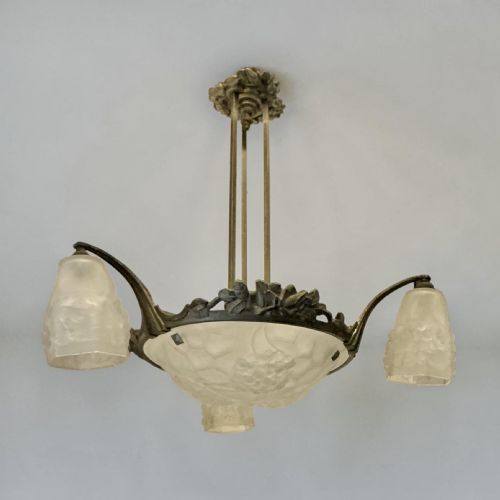
A 1920s French chandelier represents an era of diverse design, encompassing both traditional revival aesthetics and modern decorative movements. When searching for a 1920s French chandelier, buyers encounter grand multi-light fixtures designed for high ceilings alongside more intimate table and hanging variations.
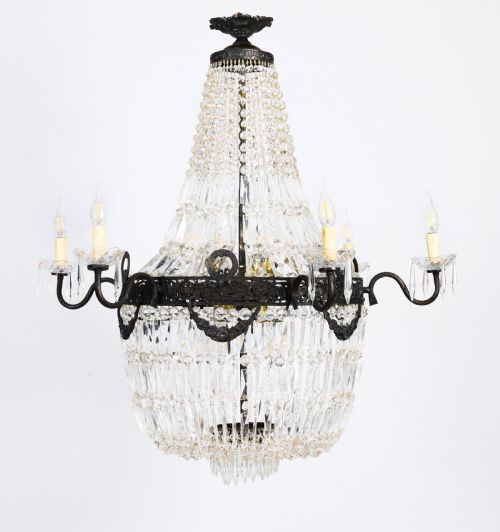
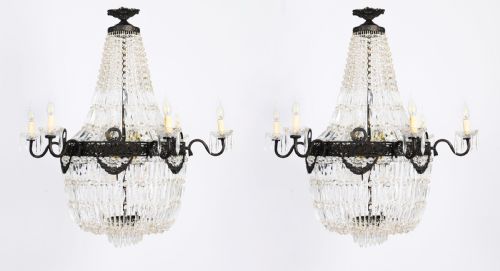
The selections on this page demonstrate a strong preference for large ballroom pieces featuring numerous lights and extensive glass drops. Alongside these monumental works, simpler branch configurations and pendant designs appear, reflecting the varied domestic architecture of the period.
Stylistic influences range from Louis Revival and French Chateau grandeur to sleek Art Deco geometric forms and softer Art Nouveau curves. This variety ensures that pieces suit both traditional interiors and spaces requiring a distinct period focal point.
Materials and Construction
Makers constructed these fixtures using robust metal frameworks of brass, gilt bronze, patinated bronze, and nickel-plated metal. These structural elements often display cast ornamentation such as acanthus leaf mounts, providing a sturdy foundation for numerous branching arms.
Hanging elements and bodies utilise cut crystal, cut glass, moulded glass, and beaded crystal arms to refract light effectively. Artisans suspended these components in tent configurations or drop clusters, combining heavy metal casting with delicate glasswork.
1920s French Chandelier Retail Price Guide 2026
Typical asking prices for 1920s french chandelier among the pieces listed under this phrase on Sellingantiques today, from the lower quarter to the upper quarter. They describe what is for sale here now, not the wider market.
Listings feature major periods and styles from 1920, including Art Deco, Louis Revival, Art Nouveau, and French Chateau designs.
Assessing Quality and Craftsmanship
Superior examples distinguish themselves through the crispness of metal casting and the depth of surface finishing on bronze and brass components. Finer work exhibits sharply defined leaf mounts and substantial metal weight rather than thin stamped construction.
The quality of the glass and crystal components creates a marked difference across the range, with hand-cut drops providing superior light refraction compared to simpler moulded alternatives. The integration of complex multi-light arrangements and beaded arm assemblies also indicates higher ambition from the maker.
Émile-Jacques Ruhlmann·Schneider
The 1920s French Chandelier Glossary
- Art Deco
- A design style characterised by sleek geometric shapes, streamlined forms, and modern industrial materials that emerged during the interwar period. It represents a sharp departure from ornate historical revivals.
- Gilt Bronze
- Bronze metal coated with a thin layer of gold or gold-coloured alloy to impart a rich, reflective surface finish. This material was frequently cast into decorative mounts for high-end lighting.
- Tent Chandelier
- A lighting form featuring a dense upper canopy of crystal beads arranged in a tent-like canopy above the main body. Strings of drops cascade outward to create a dramatic pyramidal silhouette.
- Louis Revival
- An aesthetic drawing inspiration from the ornate decorative arts of the French royal courts under Louis XIV, XV, and XVI. It relies heavily on symmetrical curves, acanthus foliage, and lavish ornamentation.
- Moulded Glass
- Glass formed by pressing molten material into a metal or ceramic mould to achieve specific patterns and relief designs. This technique allowed for consistent production of decorative shades and bodies.
1920s French Chandelier: Frequently Asked Questions
What styles define a 1920s French chandelier?
These fixtures bridge historical revivals and modern design movements, encompassing grand Louis Revival pieces alongside geometric Art Deco works and softer Art Nouveau curves.
Buyers also find French Chateau influences and interwar classic styles represented across the various branches and pendant lighting formats.
How many lights do these chandeliers usually have?
Light counts vary widely depending on the intended scale of the room, ranging from intimate three-branch table and pendant configurations to massive ballroom fixtures holding over forty lights.
Larger multi-tier examples often feature tent crystal arrangements designed to illuminate expansive spaces with high ceilings.
What metals were used in their construction?
Frameworks rely primarily on brass, gilt bronze, and patinated bronze for structural branches and decorative mounts. Nickel-plated metal also appears on specific pieces, offering a brighter, more industrial metallic finish.
These metals are frequently cast with decorative motifs like acanthus leaves to enhance the visual appeal of the arms.
How do cut crystal and moulded glass differ?
Cut crystal and cut glass feature facets ground and polished by hand or machine to maximise light refraction and brilliance. Moulded glass is shaped within a form to create consistent raised patterns and sculptural body elements.
Both materials are often combined on a single fixture to create varied textures and optical effects.