



1920s Dining Cabinet
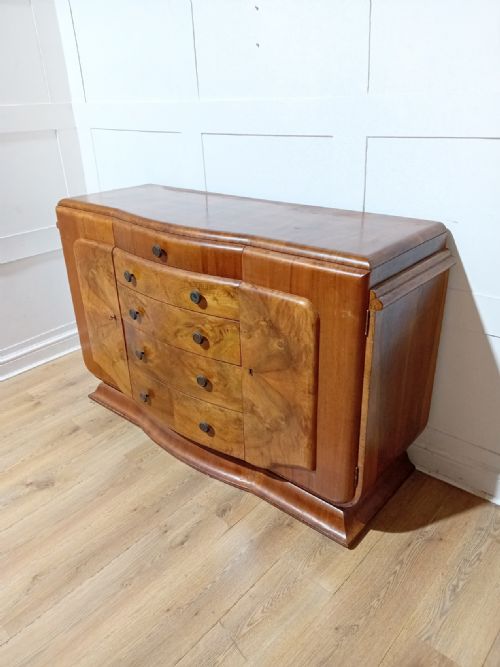
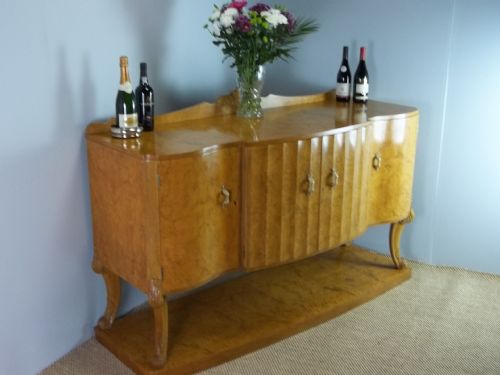
A 1920s dining cabinet brings striking architectural form and rich timber to the room, offering substantial storage for modern living.
1920s Dining Cabinet
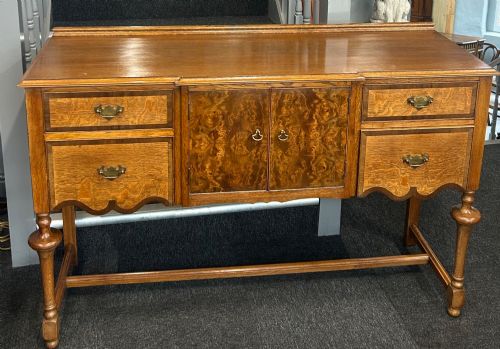
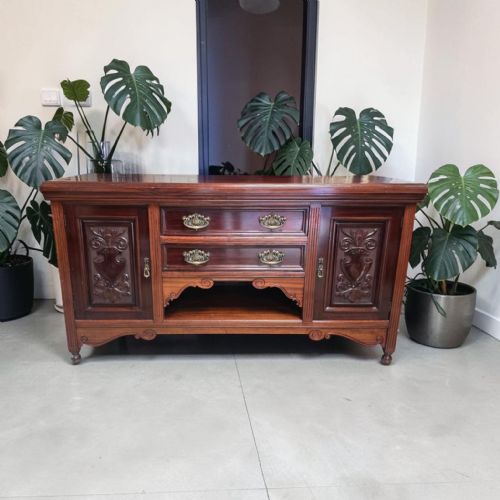
A 1920s dining cabinet primarily takes the form of a sideboard or serving table designed to anchor the dining room. These pieces provide functional storage for tableware while establishing a definitive period aesthetic.
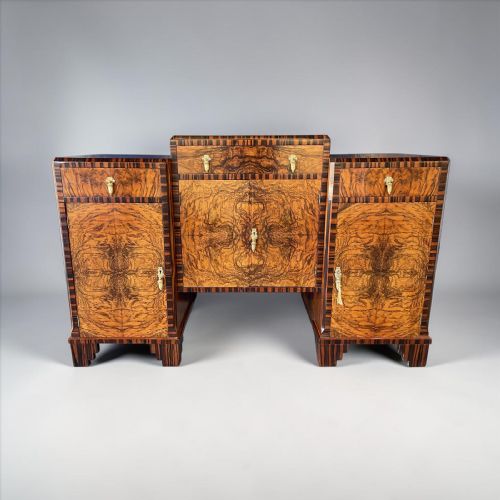
Most examples you encounter fall into the Art Deco style or draw upon Edwardian Revival and Neo-Classical traditions. They combine practical cupboards and drawers with the bold geometric lines characteristic of the interwar period.
Origins span the Edwardian era through to 1930, capturing a transitional design phase where traditional craftsmanship meets emerging modernist sensibilities.
How they were made
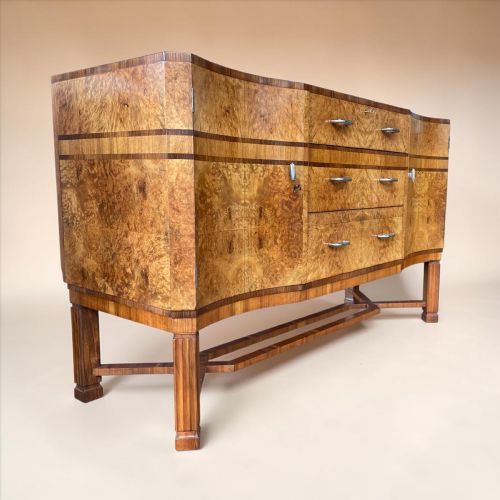
Construction relies heavily on solid oak and mahogany for structural integrity, complemented by decorative veneers such as burr walnut and sycamore. Cabinet makers applied these timbers with meticulous attention to grain patterns.
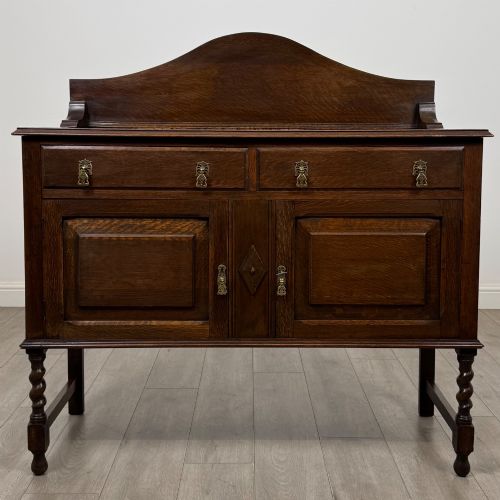
Metal components, including brass and chrome hardware, provide functional contrast and period-specific detailing. Artisans also incorporated distinctive turned elements like barley twist legs on earlier iterations.
1920s Dining Cabinet Retail Price Guide 2026
Typical asking prices for 1920s dining cabinet among the pieces listed under this phrase on Sellingantiques today, from the lower quarter to the upper quarter. They describe what is for sale here now, not the wider market.
Harry and Lou Epstein ensured their clients dined in supreme confidence by stamping their surname on cabinets destined for the most stylish interwar homes.
What varies in quality
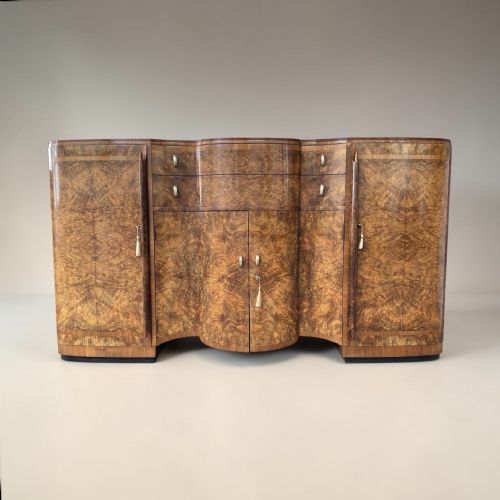
The sophistication of the timber selection largely determines the standing of a piece, particularly the symmetry and depth of burr walnut veneers. Master workshops achieved superior visual impact through careful matching of grain.
Attribution to known makers or notable firms elevates a piece, as does the integration of specialised hardware and refined proportions. Lesser examples rely on simpler solid woods and straightforward joinery without distinctive decorative accents.
Maurice Adams·Bath Cabinet Makers·M. D. Miller And Sons·Heals Of London·Harry And Lou Epstein
The 1920s Dining Cabinet Glossary
- Art Deco
- A design style emerging in the interwar period characterised by sleek geometric shapes, stylised motifs, and modern industrial materials. It dominates the aesthetic of many 1920s dining cabinets.
- Burr Walnut
- A prized timber harvested from the warted growths of walnut trees, yielding intricate, swirling grain patterns. Cabinet makers frequently used burr walnut veneers on principal surfaces to create decorative impact.
- Barley Twist
- A turned wood detail resembling a spiralling rope, commonly found on the legs of Edwardian and early twentieth-century furniture. This traditional technique adds tactile texture to upright supports.
- Sideboard
- A long, low piece of furniture placed in a dining room to store crockery and serve food. It represents the primary form for dining storage in this period.
1920s Dining Cabinet: Frequently Asked Questions
What defines an art deco sideboard?
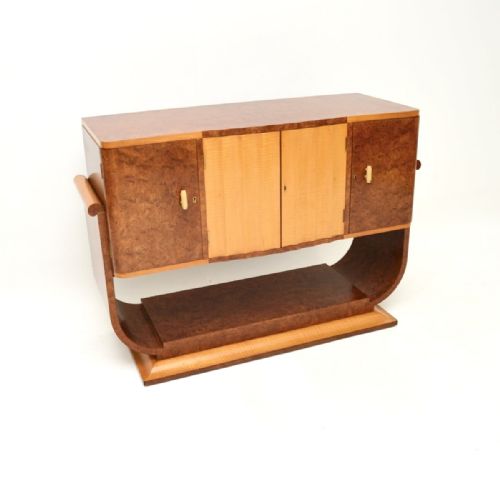
An Art Deco sideboard utilises geometric forms, symmetrical arrangements, and contrasting veneers such as burr walnut and sycamore. The style focuses on clean lines and decorative impact rather than historical revivalism.
These pieces often feature curved carcases, specialised metal hardware in chrome or brass, and a distinct lack of fussy carving, reflecting the modernist shift of the 1920s and 1930s.
How do I care for burr walnut veneer?
Burr walnut veneer requires stable indoor humidity and protection from direct sunlight to prevent drying and fading. Regular dusting with a soft, dry cloth preserves the polished surface.
Avoid silicone-based polishes and excessive moisture, using instead a micro-layer of quality wax periodically to nourish the historic timber and maintain its natural lustre.
Were sideboards used only for dining?
While primarily designed for the dining room to store linen, cutlery, and serving dishes, these large cabinets frequently transitioned into principal living spaces. Their generous surface area also functioned well as a serving table during gatherings.
Today, their substantial storage capacity and striking appearance make them versatile enough to serve as media consoles or hallway storage in contemporary homes.
How to tell edwardian from 1930s cabinets?
Edwardian and early 1920s pieces often retain traditional details such as barley twist legs, darker solid oak or mahogany construction, and Edwardian Revival motifs. They lean towards classic, comforting proportions.
By contrast, 1930s designs embrace the full expression of Art Deco, featuring streamlined silhouettes, lighter sycamore contrasts, and gleaming chrome hardware that point firmly toward modernism.