





1920s Diamond Band
When you search for a 1920s diamond band, you are looking for geometric jewellery shaped by the Art Deco period and the Edwardian era.
1920s Diamond Band
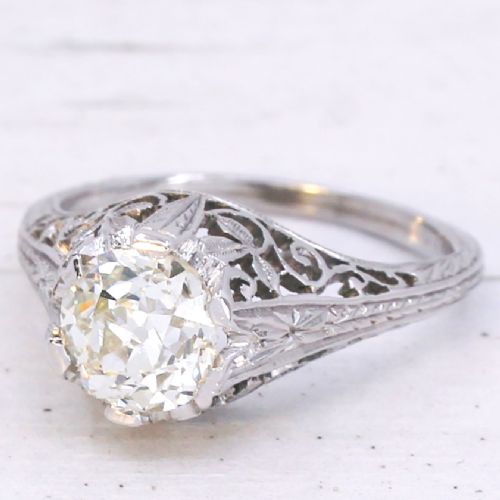
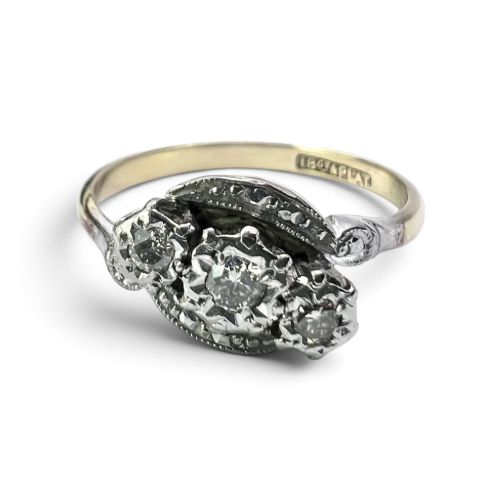
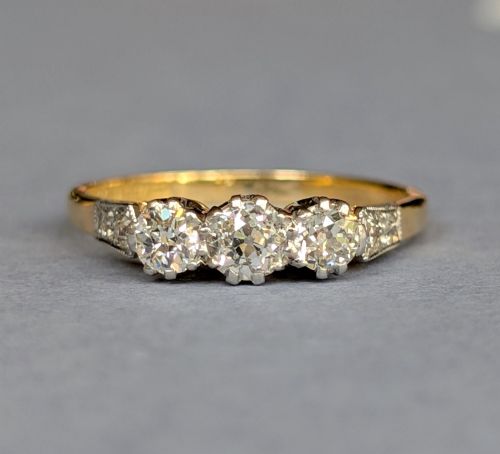
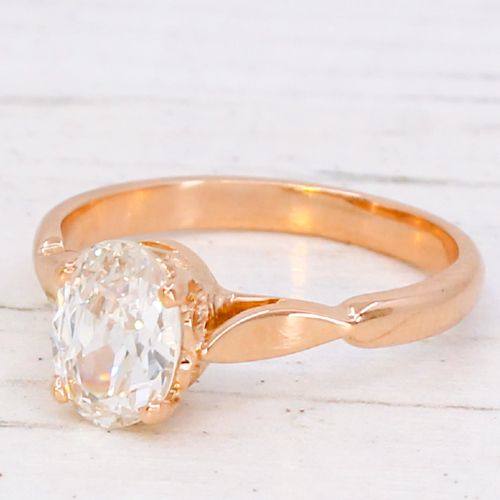
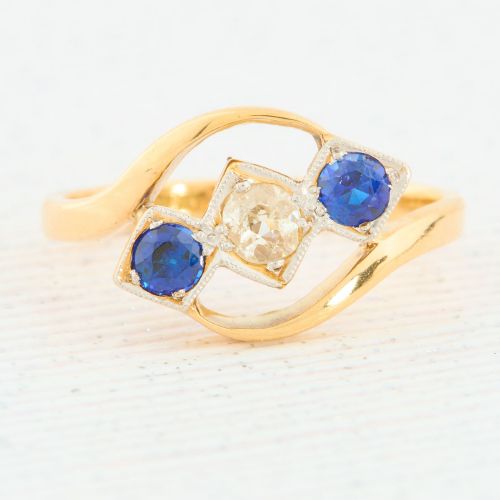
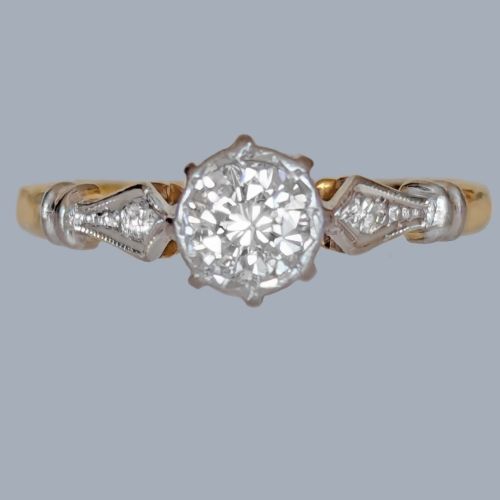
A 1920s diamond band typically takes the form of a ring, engagement ring, or bracelet, reflecting the prominent designs of the Art Deco period and the Edwardian era. These pieces arrive in varied configurations, from solitaire rings and trilogy arrangements to multi-stone cluster settings and pavé bracelet designs.
The objects stem predominantly from the 1920s and 1930s, though occasional examples date to the 1940s or stretch back to the nineteenth century. Most surviving examples are rings, built to sit low on the hand with symmetrical motifs.
Alongside plain diamond configurations, many incorporate coloured gemstones such as natural sapphire, emerald, and ruby. White metals dominate the visual field, frequently paired with yellow gold details.
How they were made
The construction relies heavily on platinum and various grades of gold, including 18ct yellow gold, 18ct white gold, and 14k white gold. Platinum provides the structural strength needed for fine, secure settings around old cut diamonds without adding excessive bulk.
Goldsmiths combined yellow gold shanks with platinum settings, a dual-metal approach that highlights the stones while keeping the warmth of gold on the finger. Enamel details occasionally supplement the metalwork, adding contrasting colour to geometric shoulders.
1920s Diamond Band Retail Price Guide 2026
Typical asking prices for 1920s diamond band among the pieces listed under this phrase on Sellingantiques today, from the lower quarter to the upper quarter. They describe what is for sale here now, not the wider market.
Listings span the periods of 1920, 1930, 1940, and the 19th Century, uniting Art Deco and Edwardian aesthetics.
What varies in quality
Quality differences emerge in the precision of the metalwork and the integration of secondary stones like sapphires, emeralds, and rubies. Finer examples maintain crisp geometric lines and secure claw or grain settings that hold old cut diamonds flush against the finger.
The selection of the central diamond, whether an old oval cut or an old cut solitaire, dictates much of the character. Superior pieces balance the weight of the diamonds with harmonious proportions in the surrounding platinum or gold band.
The 1920s Diamond Band Glossary
- Art Deco
- A design style spanning the 1920s and 1930s characterised by geometric symmetry, clean lines, and stylised motifs. It marks a sharp departure from the flowing curves of earlier eras.
- Old Cut Diamond
- A historic diamond cutting style featuring a small table, high crown, and open culet. These stones catch candlelight differently than modern brilliant cuts.
- Trilogy Ring
- A ring featuring three main stones, typically diamonds, arranged in a row to represent the past, present, and future. They frequently appear in Art Deco settings.
- Pavé
- A setting technique where small gemstones are closely set together with minimal visible metal. This creates a continuous surface of shimmering stones.
- Blister Pearl
- An organic gem formed against the inside shell of a mollusc rather than within its tissue. They feature in select dress rings from the period alongside diamonds.
1920s Diamond Band: Frequently Asked Questions
Are these bands suitable for daily wear?
These historic pieces withstand regular wear if treated with care, given their platinum and gold construction. Many owners wear them daily as engagement or dress rings.
Prongs and settings benefit from periodic inspection by a jeweller to ensure the old cut diamonds remain secure in their mounts.
How do I identify an Art Deco band?
Art Deco bands display geometric patterns, symmetrical arrangements, and straight lines rather than organic floral motifs. Platinum settings combined with 18ct gold shanks are typical of this design vocabulary.
Coloured stones like sapphires or emeralds often accent the central diamonds in these symmetrical layouts.
What is an old cut diamond?
An old cut diamond is a hand-faceted stone shaped before modern cutting machinery standardised proportions. These stones feature smaller tables and deeper pavilions.
They produce a distinct, softer sparkle under ambient light compared to contemporary brilliant cuts.
Can these rings be resized?
Most gold and platinum bands can be altered by a skilled jeweller who understands antique settings. The intricate geometric shoulders require careful handling to preserve the original design.
Consulting a specialist ensures the structural integrity of the metalwork remains intact after adjustment.