
18th Century Mahogany Console
These pieces combine rich timber and classical proportion, offering the practical surface and architectural presence that define an 18th century mahogany console.
18th Century Mahogany Console
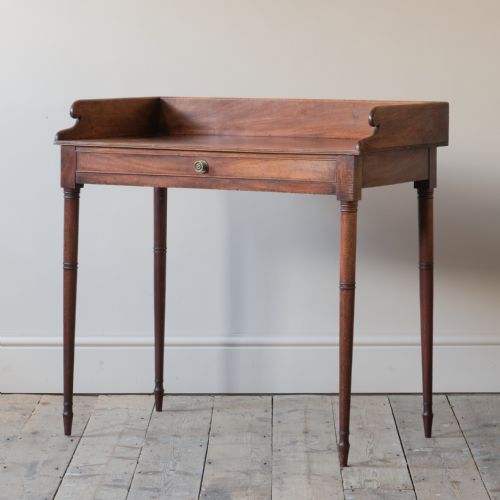
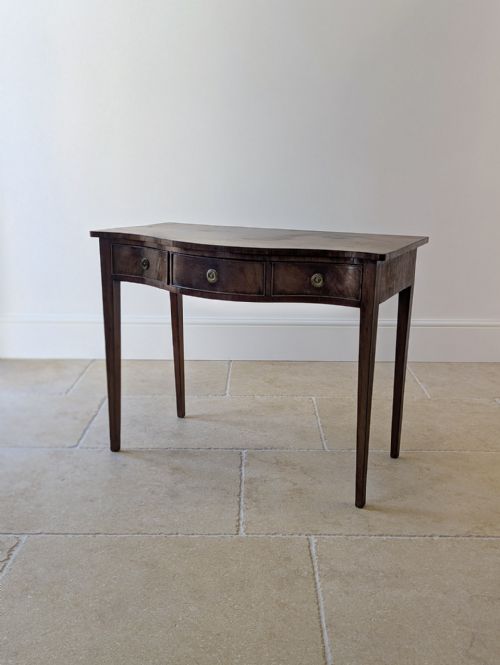
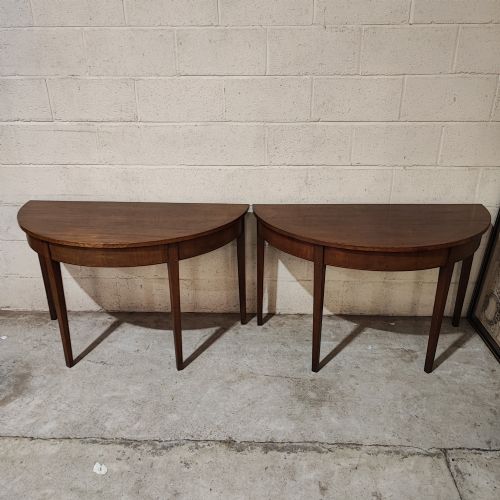
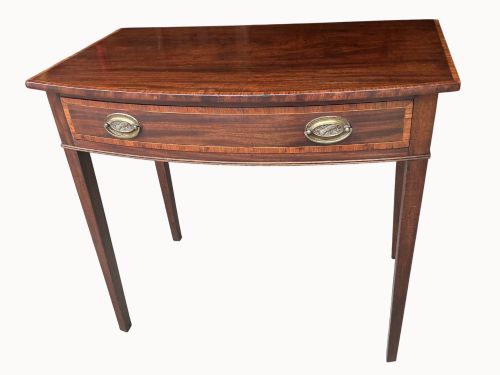
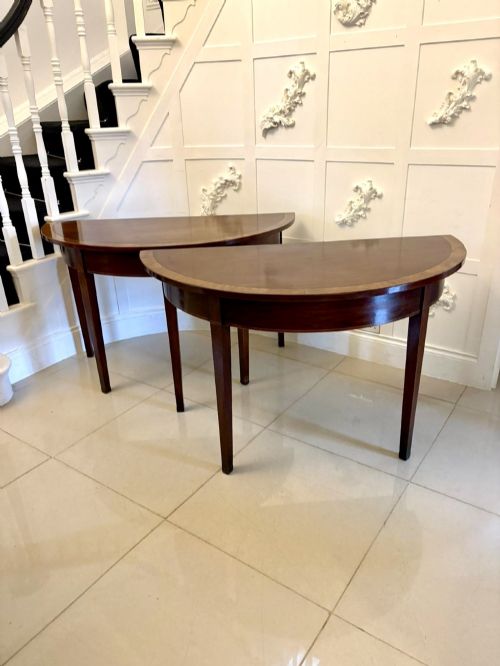
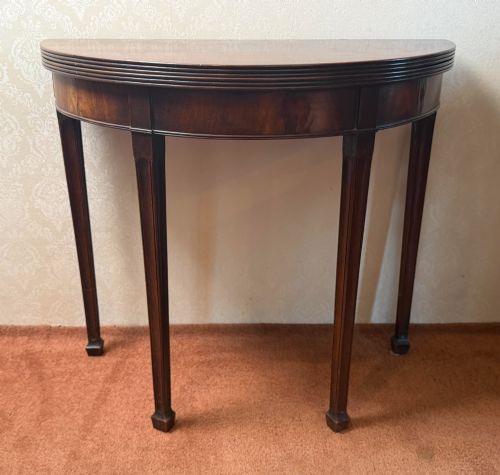
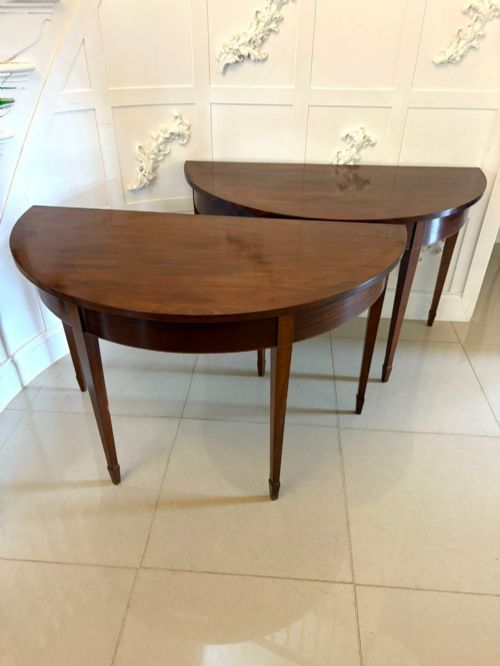
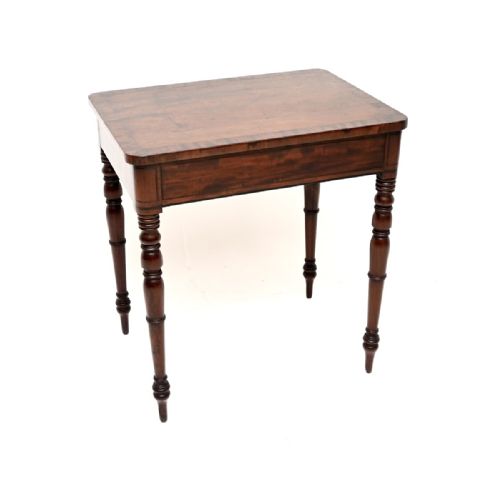
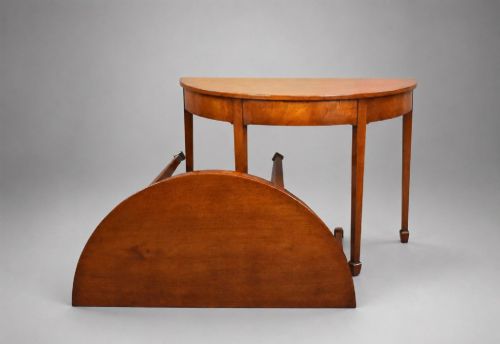
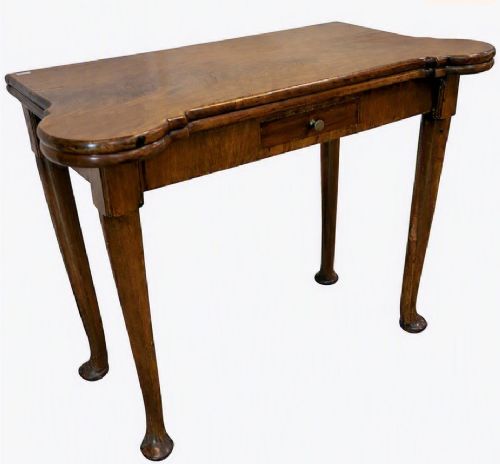
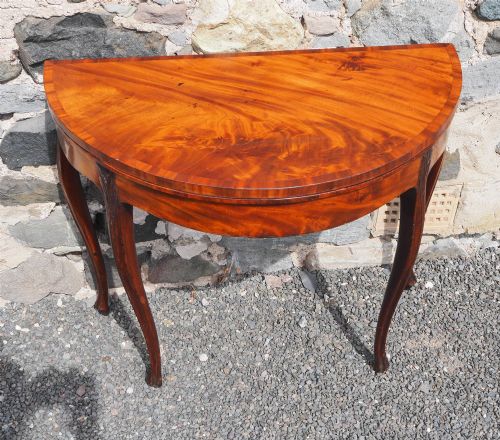
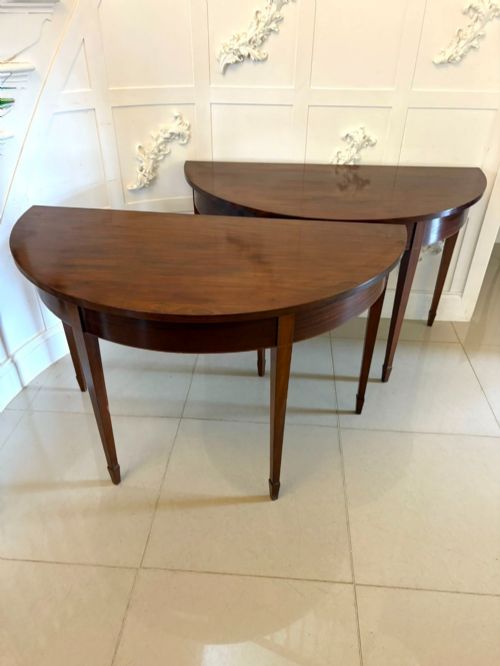
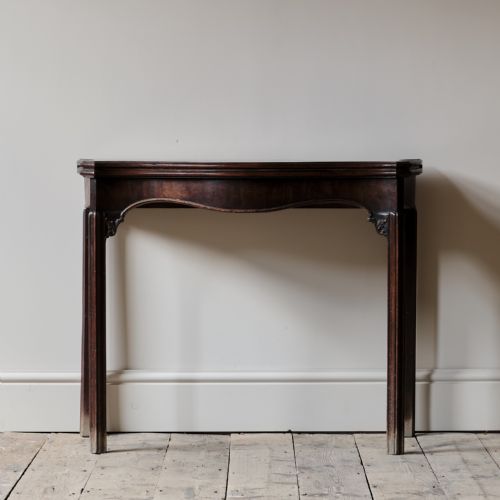
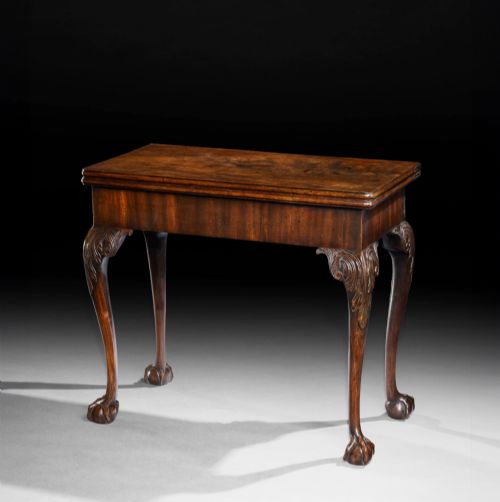
An 18th century mahogany console typically presents as a side or wall table, often appearing in the demi-lune or serpentine forms recorded across Georgian and Sheraton designs. Many examples function dual roles as fold-over card, tea or games tables, opening on concertina or pivoting actions to reveal polished timber surfaces.
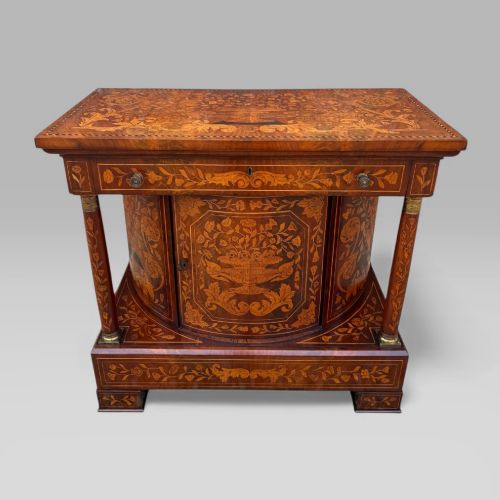
The material palette draws heavily on figured mahogany, accented occasionally with satinwood, boxwood inlay, and fruitwood marquetry. Origins span English workshops of the George I through George III periods, alongside continental Dutch and French variations.
Buyers will frequently encounter pairs of semi-circular console tables that join to form a larger dining or centre table. Proportions vary from compact lowboys and washstands to large serving tables and wall cabinets.
Materials and construction methods
Cabinet makers utilised dense, durable mahogany as the primary structural and surface timber, often selecting highly figured grains for prominent tabletops. Fine detailing relied on contrasting elements such as boxwood and satinwood inlay.
Surfaces were frequently enriched with delicate fruitwood marquetry or enhanced by natural patination and polishing techniques. Brass components appeared on hardware, hinges, and occasional inlaid stringing to punctuate the dark wood.
Materials recorded include solid mahogany, brass hardware, boxwood inlay, and fruitwood marquetry.
Distinctions in grade and execution
The calibre of an 18th century mahogany console rests largely on the choice of timber and the dexterity of the cabinet maker. Highly figured flame mahogany or Cuban mahogany yields a depth of grain and patination that elevates the piece far beyond plain stock.
Structural complexity also dictates worth, seen in intricate concertina actions on folding tables or finely balanced serpentine curves. Crispness in carved details, such as bracket feet or edge mouldings, separates standard workshop output from exceptional examples.
The 18th Century Mahogany Console Glossary
- Demi-lune
- A half-moon shape used frequently for console and side tables designed to stand flat against a wall. This form allows pairs of tables to combine into a full circle.
- Concertina action
- An expanding frame mechanism that supports the folding leaf of a table without obstructing the leg space below. It requires precise joinery to operate smoothly.
- Marquetry
- The art of applying small pieces of veneer to a structure to form decorative patterns or pictures. Craftsmen often utilised fruitwoods and lighter timbers for contrast.
- Patina
- The deep gloss and surface sheen developed on old wood through decades of handling, polishing, and oxidation. Original patination is prized by collectors.
- Lowboy
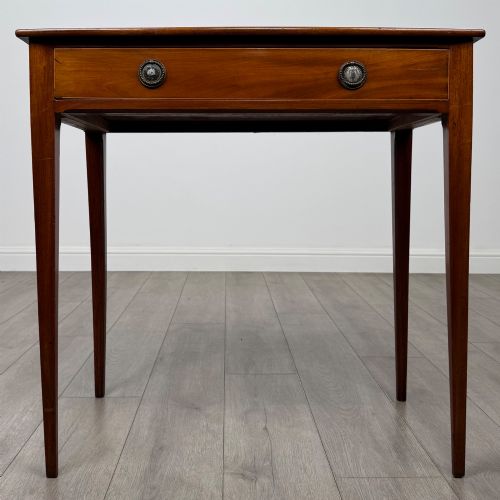
- A small side table or dressing table featuring a low set of drawers beneath the work surface. These pieces typically rest on slender cabriole or straight legs.
18th Century Mahogany Console: Frequently Asked Questions
How were console tables used in homes?
These tables stood against drawing room or hallway walls to display decorative objects, porcelain, or lighting. Many doubled as functional gaming or tea surfaces when unfolded for evening gatherings.
Their placement was primarily decorative and architectural, anchoring large wall spaces beneath mirrors or paintings.
How do I care for mahogany surfaces?
Maintain the wood by applying traditional beeswax rather than modern silicone polishes, buffing gently with a soft cloth. Keep the table away from direct heat sources and strong sunlight to prevent the timber from drying.
Promptly wipe away any liquid spills to protect the original polish and grain.
How do I identify a George III piece?
Look for neoclassical design influences, such as straight tapering legs, subtle satinwood stringing, and balanced serpentine proportions. Cabinet work from this era often exhibits refined carving and substantial figured mahogany.
Construction details like hand-cut dovetails on drawer linings also help confirm the period.