

18ct Gold Opal
An 18ct gold opal piece brings together the brilliant play of colour in natural gemstones and the substantial weight of high-carat gold.
18ct Gold Opal
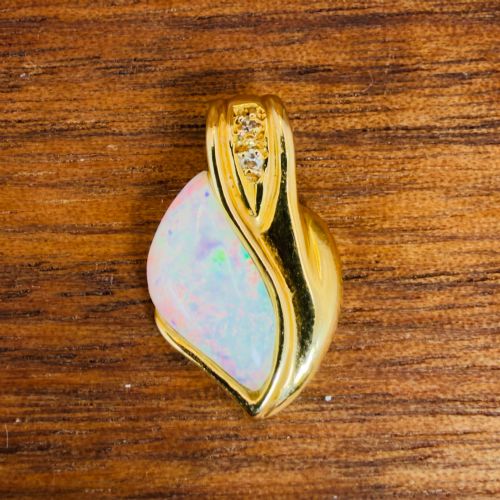
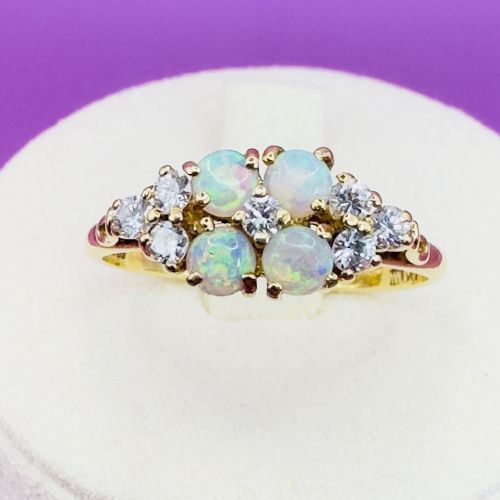
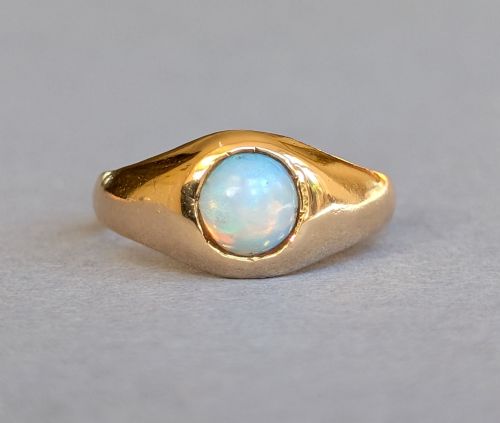
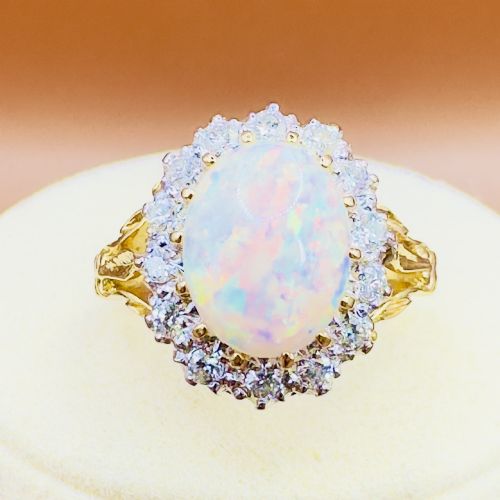
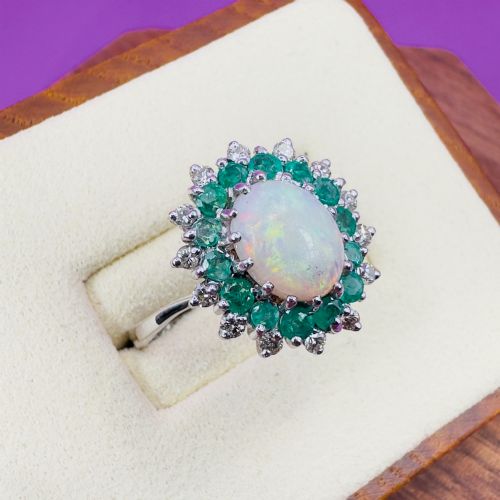
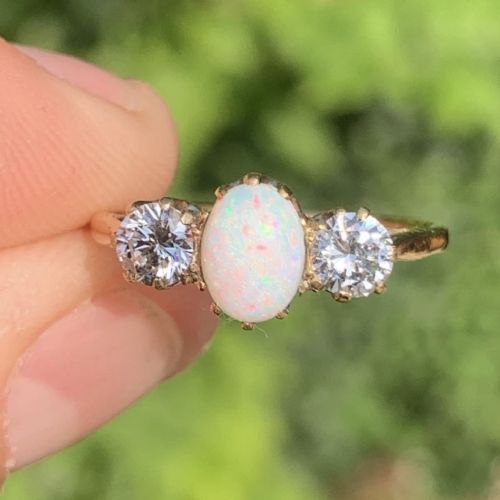
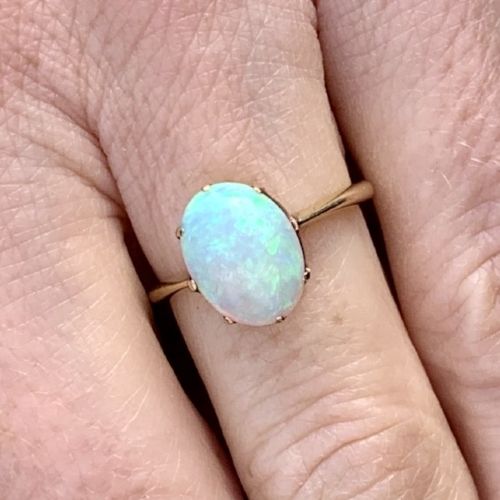
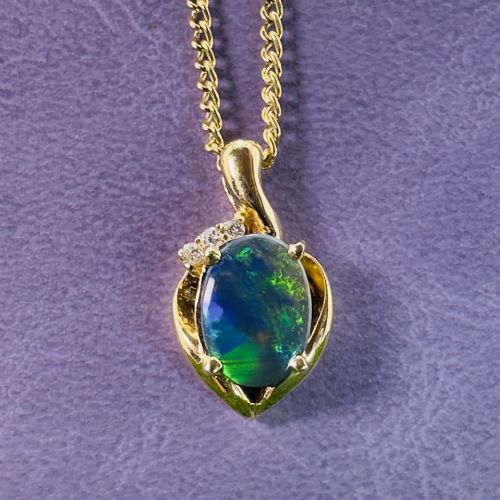
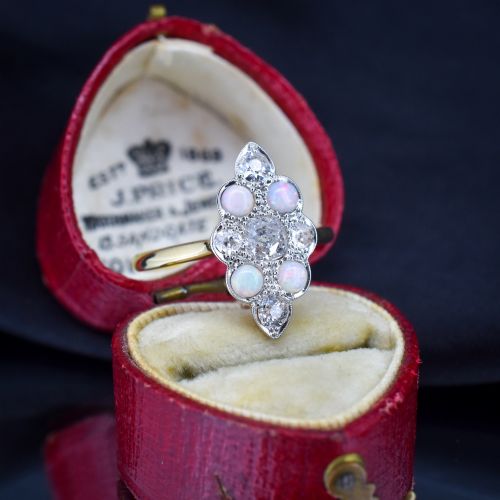
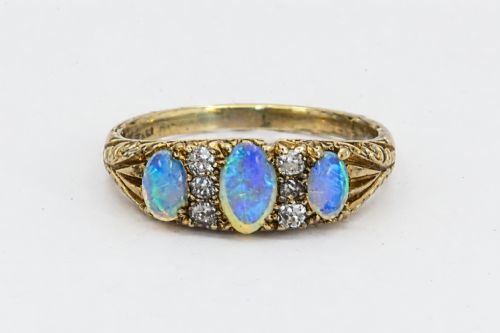
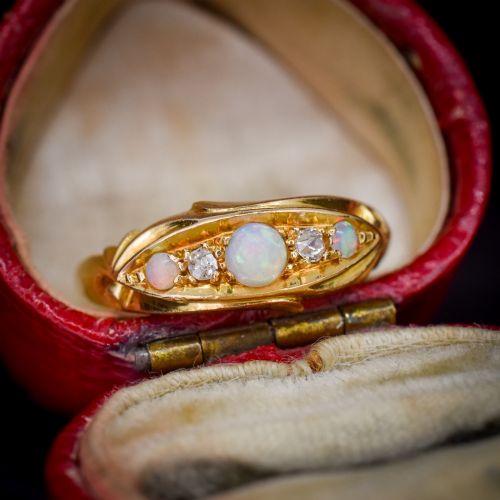
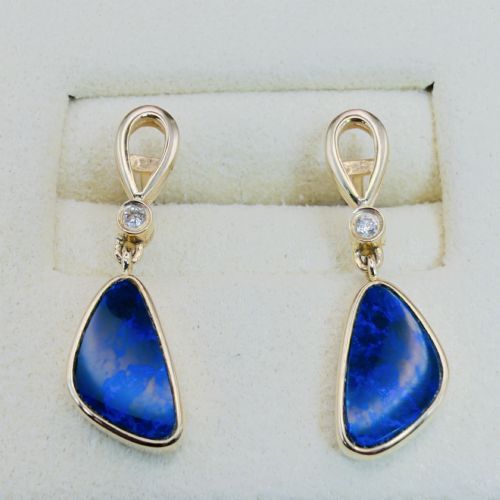
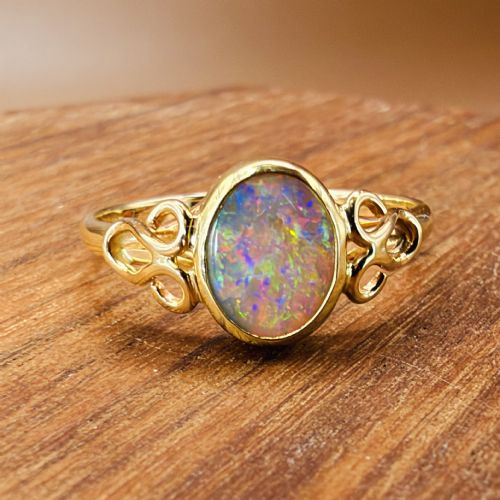
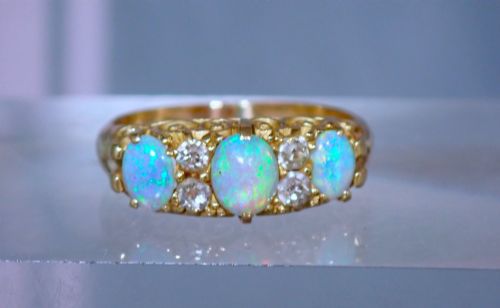
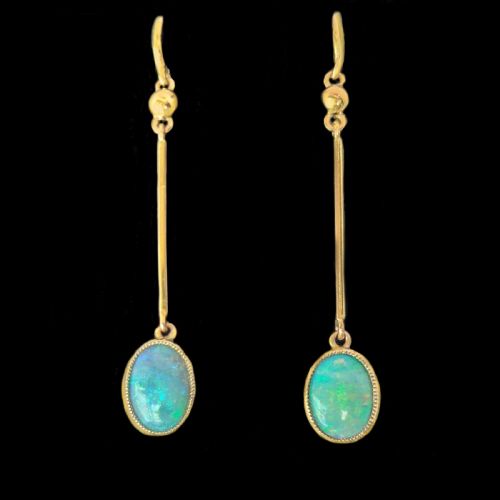
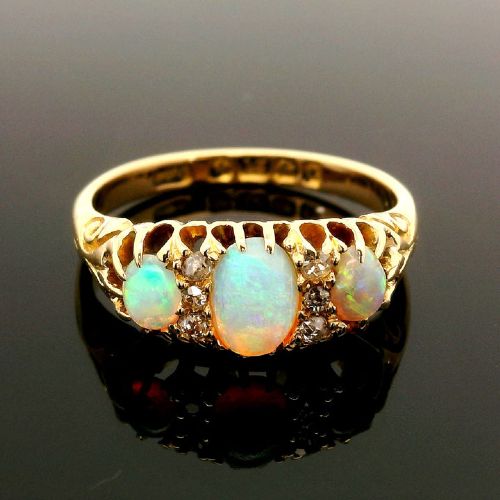
When searching for an 18ct gold opal, collectors encounter a diverse selection of antique and vintage jewellery spanning the Victorian, Edwardian, and mid-century periods. Rings form the vast majority of the inventory, particularly traditional five-stone boat rings, multi-gem clusters, and delicate trilogy settings pairing the gemstone with diamonds. Beyond finger adornments, the selection encompasses drop earrings, pendant necklaces, brooches, and cocktail rings in both yellow and white gold.
The opals featured within these settings display considerable variety, ranging from white and crystal varieties to dark black opals, boulder opals, and fiery specimens. Pieces frequently originate from the late nineteenth century through to the 1960s, reflecting changing aesthetic movements from Art Nouveau curves to Art Deco geometry and modern minimalism. Buyers often select these items for their distinctive optical phenomena, where internal flashes of spectral colours shift under the light.
How they were made
Goldsmiths utilised 18-carat yellow and white gold, occasionally incorporating platinum settings during the Edwardian and Art Deco eras to securely mount accent diamonds. Stones were typically cut en cabochon to maximise the internal play of light, then held firmly in place by traditional claw settings, smooth bezels, or flush mountings.
Construction techniques evolved from handcrafted Victorian filigree and boat-shaped mountings to the refined geometric frameworks of the mid-twentieth century. Master jewellers combined opals with supporting gems such as rubies, emeralds, pearls, and old-cut diamonds, integrating structural metalwork that balanced the delicate nature of the central stone with daily wearability.
18ct Gold Opal Retail Price Guide 2026
Typical asking prices for 18ct gold opal among the pieces listed under this phrase on Sellingantiques today, from the lower quarter to the upper quarter. They describe what is for sale here now, not the wider market.
Listings feature items spanning the Victorian era through to the 1960s, executed in 18ct yellow gold, 18ct white gold, and platinum.
What varies in quality
Quality rests primarily on the optical performance and stability of the opal itself, determined by the intensity and distribution of its spectral flashes across the surface. Stones exhibiting vivid, multi-coloured play of light from all angles command greater appreciation than those with muted or localized colour play.
The standard of the surrounding metalwork and the matching of secondary diamonds also define the tier of a piece. Finer examples display crisp, unrubbed hallmarks, precise claw or bezel work that protects the stone's girdle, and substantial gold weight that prevents distortion of the setting over time.
The 18ct Gold Opal Glossary
- Cabochon
- A gemstone cut with a smooth, rounded, convex upper surface rather than faceted edges. This style is favoured for opals to enhance the internal play of colour.
- Boat ring
- A ring featuring an elongated, curved setting that tapers toward the shoulders, popular during the Victorian and Edwardian periods.
- Trilogy ring
- A ring set with three principal stones, often symbolising the past, present, and future, frequently combining an opal flanked by diamonds.
- Boulder opal
- An opal that remains embedded in its natural ironstone matrix, providing a dark natural backing that intensifies the play of colour.
- Play of colour
- The optical phenomenon where spectral hues shift and flash across the stone as the angle of light changes.
18ct Gold Opal: Frequently Asked Questions
How do I care for an antique opal ring?
Opals contain natural water content and possess a moderate hardness, making them sensitive to sudden temperature changes, harsh chemicals, and ultrasonic cleaning methods. Store the piece away from direct heat and dry environments, and clean it gently with a soft, damp cloth.
Because 18ct gold is softer than platinum or lower-carat alloys, avoid wearing the ring during heavy physical tasks to protect both the metal setting and the stone from impact.
How can I tell a Victorian opal from a mid-century one?
Victorian and Edwardian pieces typically feature hand-wrought yellow gold details, softer organic motifs, and older diamond cuts such as old mine or old European cuts. The mountings often show traditional claw work or boat-shaped configurations.
Mid-century items from the 1950s and 1960s lean toward white gold or platinum combinations, bolder cocktail ring silhouettes, and cleaner, more modern geometric lines alongside brilliant-cut diamonds.
Are these opals natural or treated?
The inventory consists of natural opals sourced from historical mines, displaying the genuine optical phenomena characteristic of unenhanced stones. These encompass white, black, boulder, and fire opal varieties set during their respective periods of origin.
Descriptions note specific geographic origins and natural characteristics where recorded, ensuring buyers understand the authentic makeup of each gemstone.