
18ct Gold Diamond Cluster
Selecting an 18ct gold diamond cluster brings together historic craftsmanship, brilliant gemstones, and lasting wearable heritage.
18ct Gold Diamond Cluster
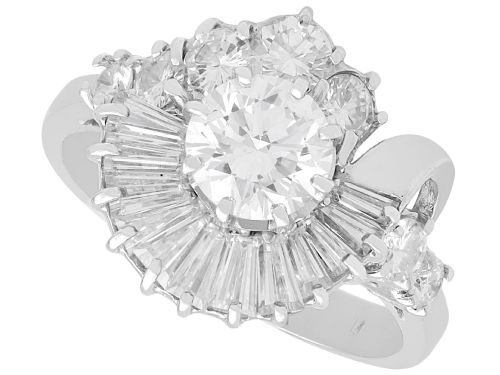
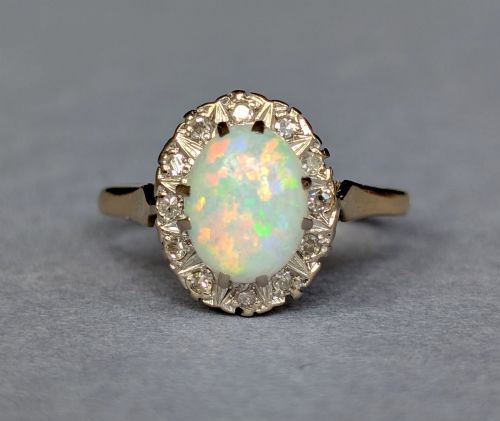
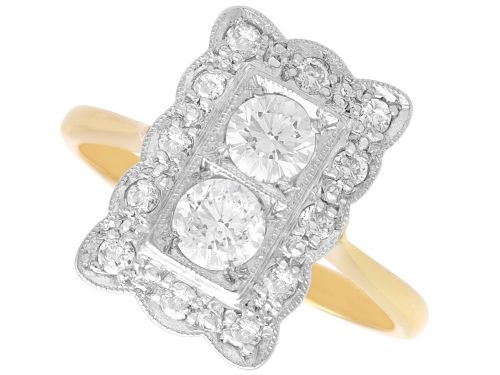
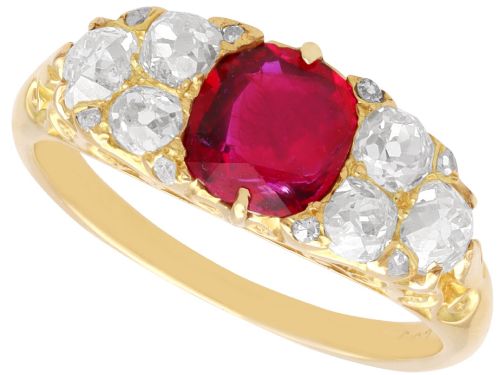
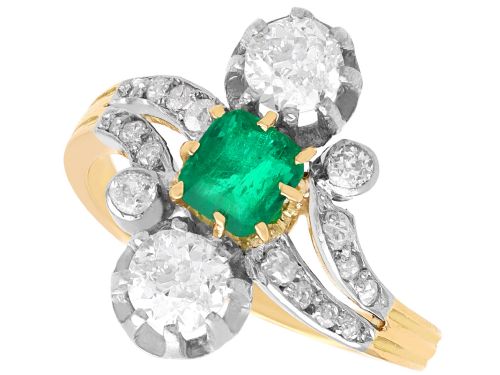
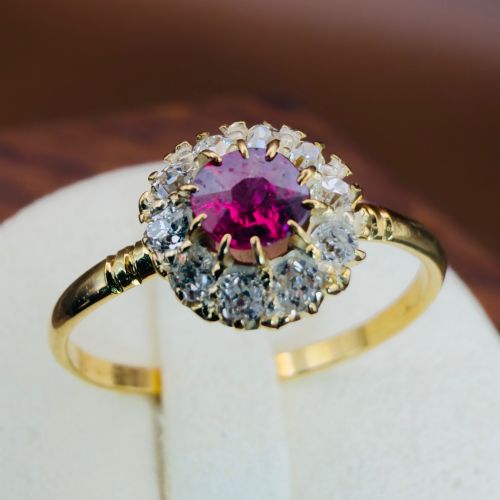
An 18ct gold diamond cluster combines a central stone or central grouping of diamonds surrounded by a halo of smaller gems, set within a durable high-purity gold band.
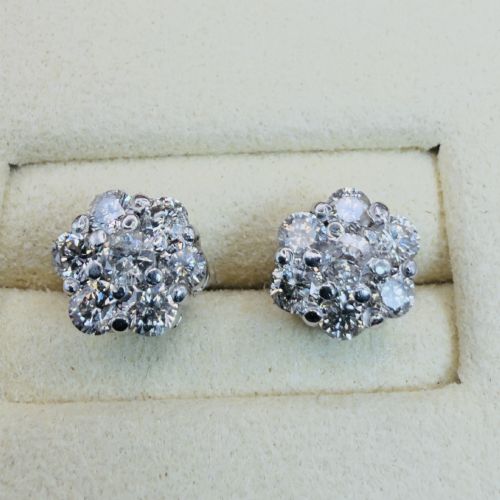
The selections available here span Victorian, Edwardian, Art Deco, and mid-century eras, with ring forms dominating alongside occasional pendants, earrings, and brooches.
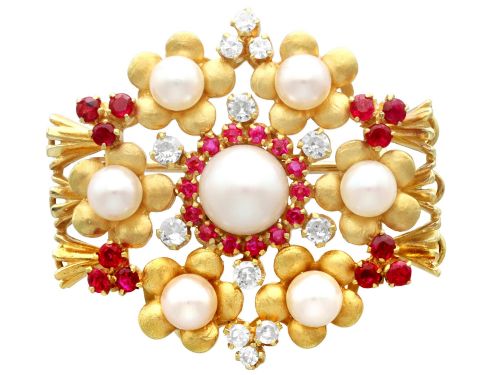
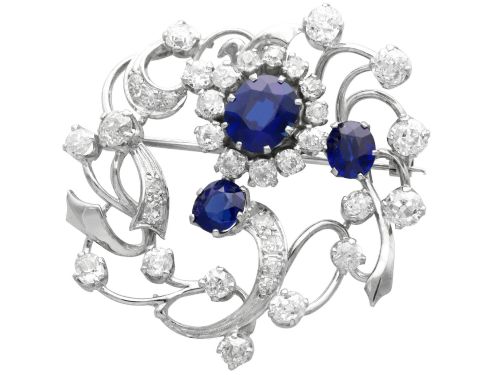
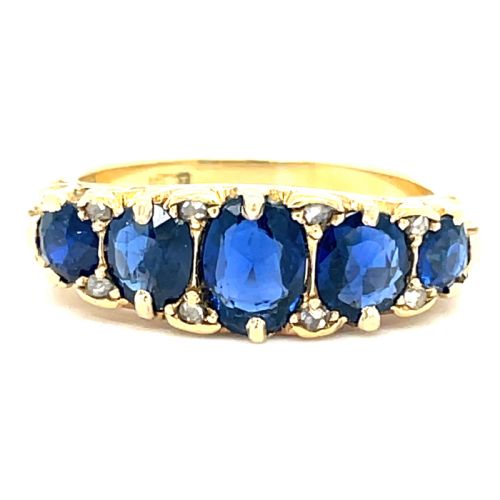
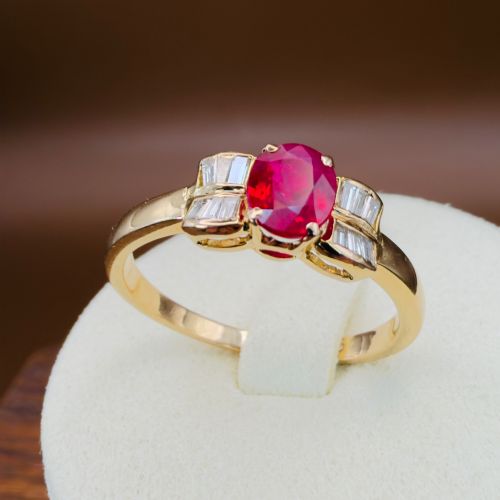
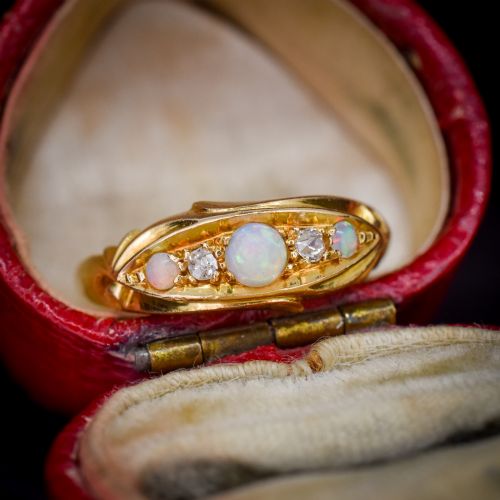
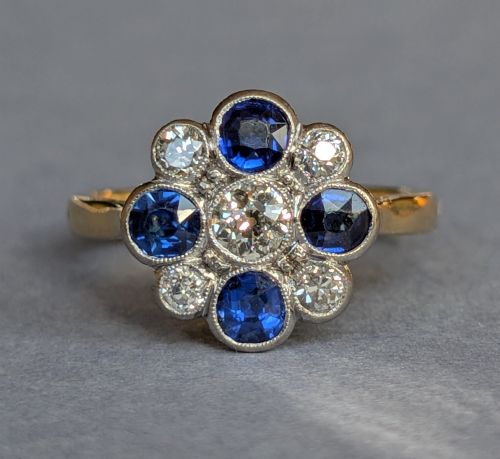
Buyers frequently encounter classic daisy clusters, geometric navette profiles, and colourful gemstone combinations featuring sapphires, rubies, and opals alongside the diamonds.
How they were made
Goldsmiths utilised 18ct yellow and white gold for the structural bands and mounts, frequently pairing platinum settings in Edwardian and Art Deco pieces to enhance the brightness of white diamonds.
Gemstones feature hand-cut facets, including old European, old mine, and transitional cuts in older examples, leading into brilliant and step cuts in later mid-century items.
Cluster formations rely on tight claw, prong, or bezel settings that secure the central stone while maximising light entry through the surrounding gems.
Suffragette rings quietly encoded political allegiance by clustering amethyst, peridot, and diamond gemstones together.
What varies in quality
The standard of an 18ct gold diamond cluster depends upon the symmetry of the stone arrangement, the precision of the metalwork, and the originality of the setting.
Higher quality examples display well-matched gemstone clarity and colour that form a cohesive visual unit, whether framing a diamond with a sapphire halo or creating a multi-stone floral motif.
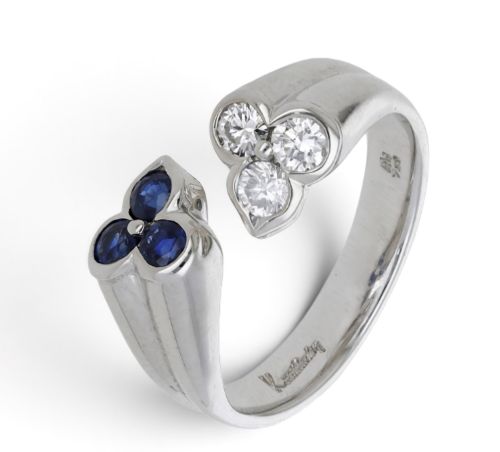
Kutchinsky
The 18ct Gold Diamond Cluster Glossary
- Cluster
- A jewellery arrangement featuring a central gemstone surrounded by a perimeter of smaller stones. This design maximises visual impact and surface brilliance.
- Navette
- A boat-shaped or marquise-shaped cluster design pointed at both ends. It creates an elongated profile across the finger.
- Daisy cluster
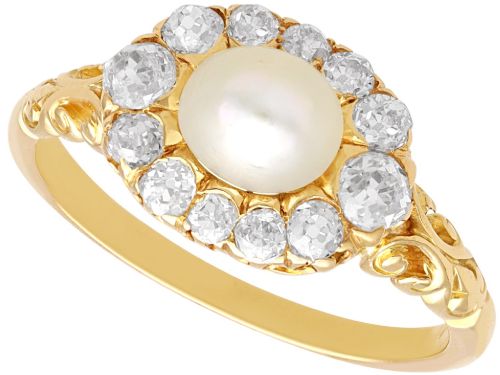
- A central round diamond encircled by a ring of matching stones resembling flower petals. This style remains a staple of Edwardian and Victorian design.
- Old cut
- A diamond facet style hand-polished before modern precision machinery. These stones typically exhibit smaller tables and elevated crowns.
- Platinum
- A dense, durable white metal utilised in jewellery manufacturing. It securely holds small pavé and cluster stones without colour interference.
18ct Gold Diamond Cluster: Frequently Asked Questions
What is an 18ct gold diamond cluster?
An 18ct gold diamond cluster is a piece of jewellery featuring a central diamond or coloured gemstone framed by a ring of smaller stones, mounted in gold containing seventy-five percent pure gold content.
These configurations were produced across the Victorian, Edwardian, and Art Deco periods, combining durability with intricate gemstone arrangements.
How do I style a cluster ring?
Cluster rings work well as standalone statement pieces on the hand due to their broad profile and dimensional gemstone arrangements.
They pair effectively with plain wedding bands or can be worn as signature cocktail rings for evening wear.
How do I date a cluster ring?
Dating relies on observing mounting styles, gemstone cuts, and hallmarking details stamped inside the band.
Edwardian and Victorian pieces often combine yellow gold with platinum-topped settings and old-cut diamonds, while Art Deco examples feature geometric lines and mid-century items display bolder profiles.
Were these rings used as engagement rings?
Many cluster rings from the Edwardian and Art Deco periods served directly as engagement rings, offering substantial finger coverage through grouped smaller stones.
They continue to be chosen for engagements by buyers seeking historic character and distinct geometric designs.