





17th Style Dining Table
A 17th style dining table brings substantial timber and historic character into a modern dining room, offering a robust centrepiece built for daily gatherings.
17th Style Dining Table
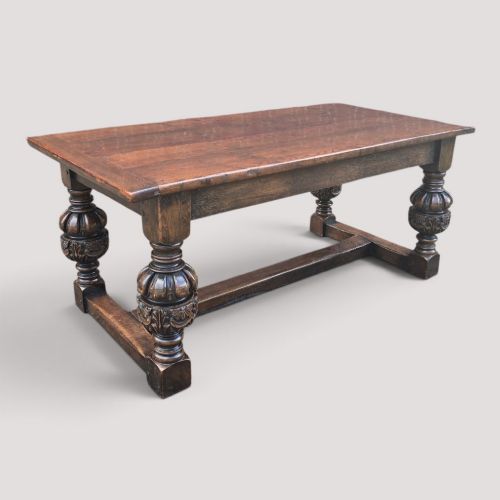
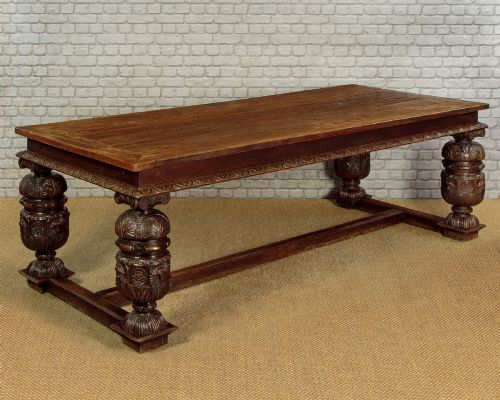
A 17th style dining table typically takes the form of a substantial refectory or gateleg structure designed to anchor a principal room. Buyers searching for this phrase encounter sturdy communal boards intended for heavy use, reflecting centuries of domestic history.
The selections available here span actual 17th century pieces alongside later revival interpretations from the 19th and early 20th centuries. These later revival works, including Jacobean and Cromwellian styles, recreate the architectural presence of the earlier period using traditional forms.
Beyond standard refectory formats, related dining sets, occasional tables, and sideboard dresser bases appear within the broader grouping. Most pieces maintain a strong focus on rectangular proportions supported by trestle bases or sturdy turned legs.
Materials and construction
Oak serves as the primary timber across these pieces, selected for its dense grain and structural endurance. Beech and brass hardware appear selectively, providing support for legs and hinges on gateleg variations.
Makers utilised heavy planks joined with traditional framing techniques to create long tabletops that could withstand daily use. Turning and simple carving decorate the structural supports, employing methods passed down through generations of joiners.
17th Style Dining Table Retail Price Guide 2026
Typical asking prices for 17th style dining table among the pieces listed under this phrase on Sellingantiques today, from the lower quarter to the upper quarter. They describe what is for sale here now, not the wider market.
Evaluating craftsmanship and condition
Quality rests in the integrity of the timber and the honesty of the construction, where tighter grain and heavier scantlings denote a superior build. The balance between original 17th century fabrication and later revival craftsmanship defines the baseline of value.
Surface patination reveals how well a table has aged through centuries of use and maintenance. Refined carving and proportioned trestle bases separate standard utilitarian boards from more ambitious architectural commissions.
The 17th Style Dining Table Glossary
- Refectory table
- A long, narrow dining table traditionally used in monasteries and large halls for communal meals. These forms rely on strong trestle bases or four heavy legs connected by stretchers.
- Gateleg table
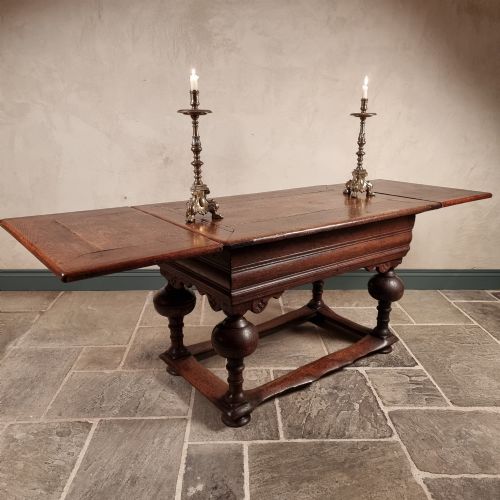
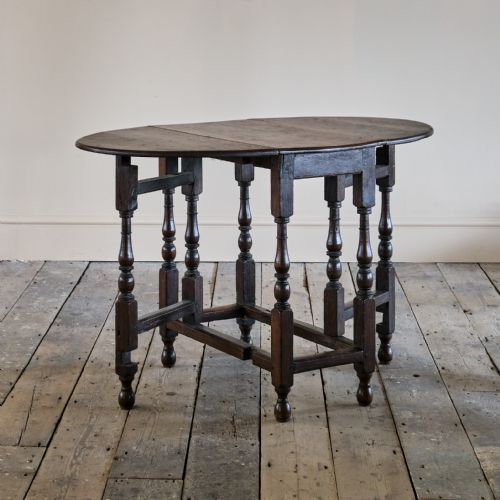
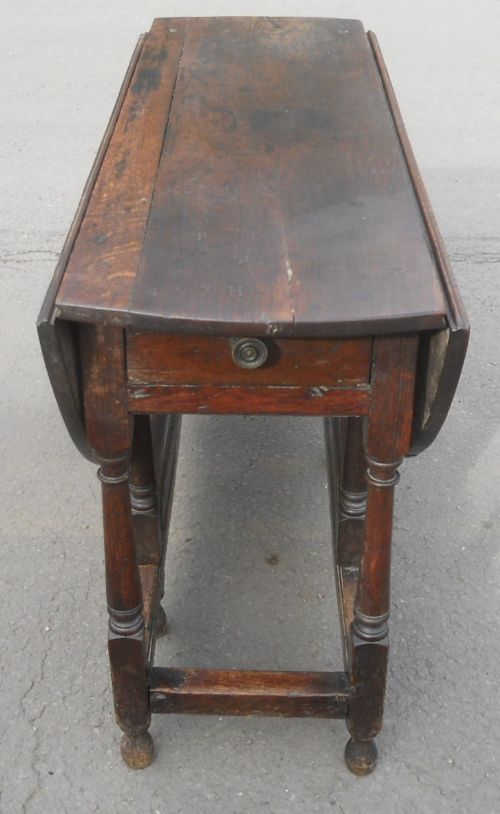
- A drop-leaf table where hinged flaps are supported by swing-out legs resembling a swinging gate. This design allows the table to expand for dining and fold down compactly when not in use.
- Jacobean style
- The architectural and furniture style prevalent during the reign of James I, characterised by heavy proportions, straight lines, and geometric panel carving. It heavily influences later revival dining tables.
- Cromwellian revival
- A style drawing on the austerity and robust functionality of the mid 17th century Commonwealth period. Pieces in this style usually eschew excessive ornamentation in favour of stark, practical joinery.
- Bobbin legs
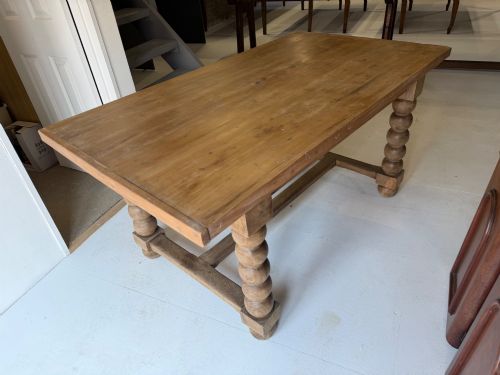
- Furniture supports turned on a lathe to resemble a series of wooden bobbins or spools strung together. This decorative turning appears frequently on 19th century interpretations of earlier tables.
17th Style Dining Table: Frequently Asked Questions
What is a refectory table?
A refectory table is a long, narrow dining table originally designed for communal dining in large institutions and great houses. They typically feature sturdy trestle bases or substantial corner legs linked by low stretchers for added rigidity.
In domestic settings, this form provides generous surface area and knee clearance, making them practical for modern seating arrangements while retaining a historic silhouette.
Are these tables good for daily use?
These tables are built from durable hardwoods like oak, designed originally to withstand generations of heavy communal use. Their robust construction makes them well suited to function as primary dining surfaces in busy contemporary households.
Routine maintenance involves using coasters and avoiding excessive moisture on the timber, preserving the natural finish and historical patination over years of active service.
What chairs match these tables?
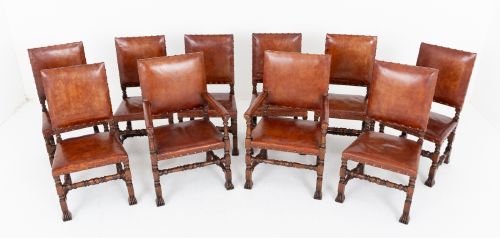
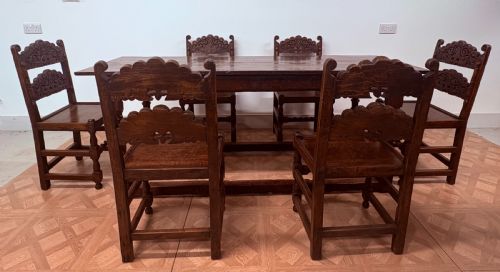
Matching seating often includes heavy oak dining chairs or coordinated sets featuring turned supports and upholstered leather pads. These accompaniments share the dark wood tones and structural heft of the central table.
Mixing period styles is common, though pairing a heavy refectory board with substantial high backed chairs ensures the visual scale remains balanced around the room.