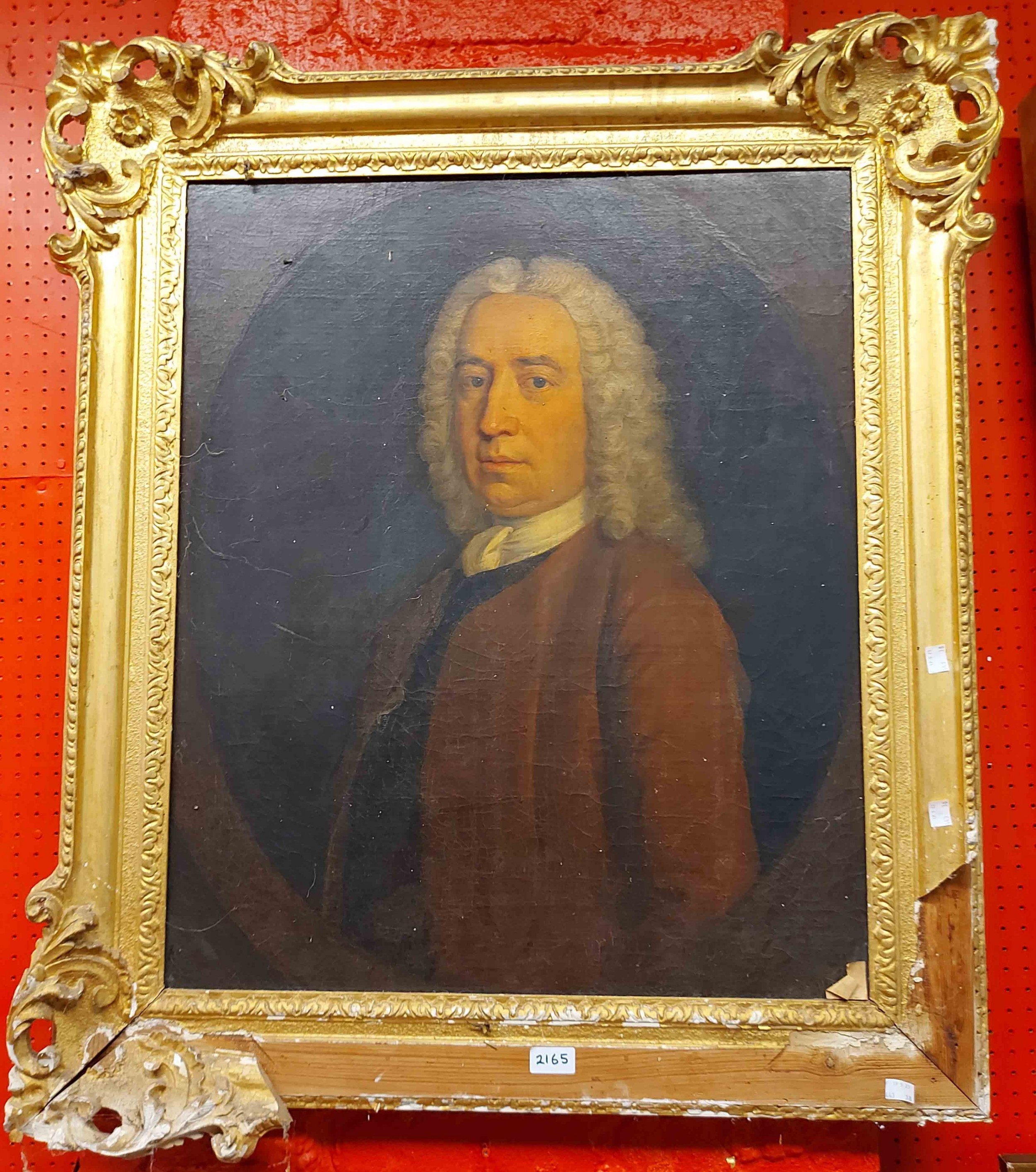
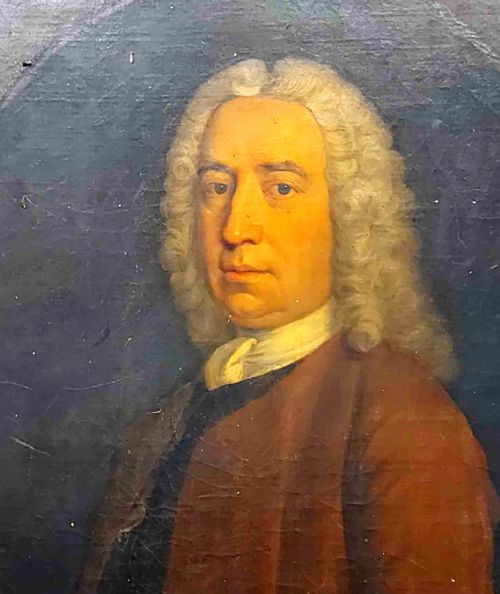
Artware Fineart has dated this Georgian Oil Portrait Painting to the 18th Century.
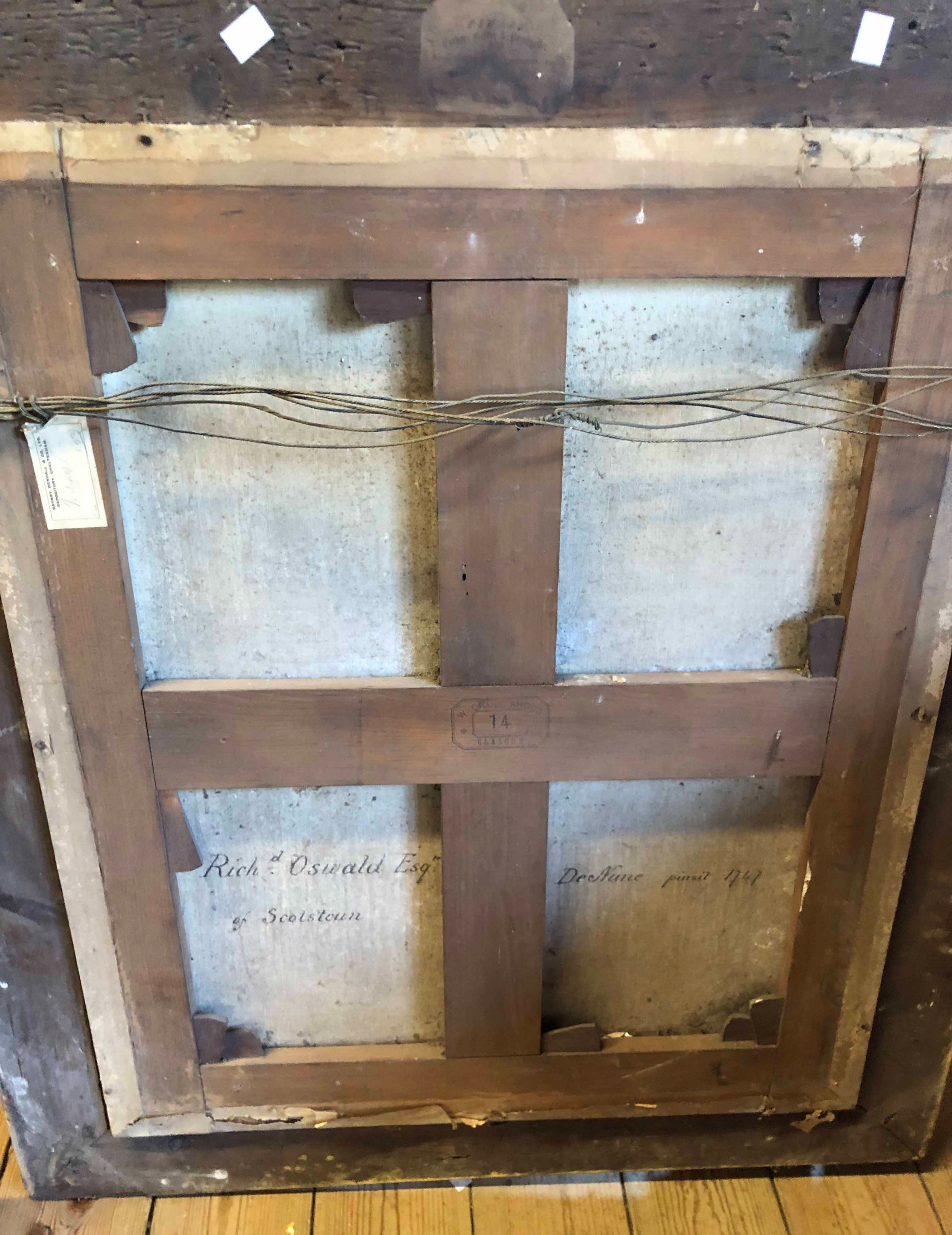
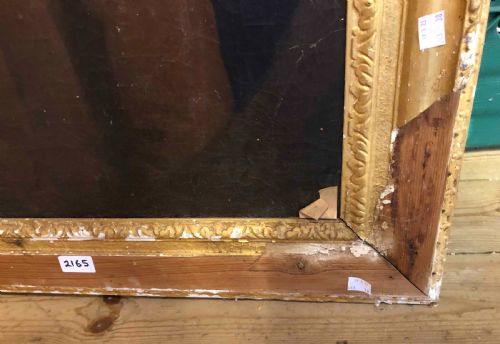
inscribed signed and dated on the reverse " Richd Oswald Esq / of Scotstoun / De Nune Pinxit 1747"
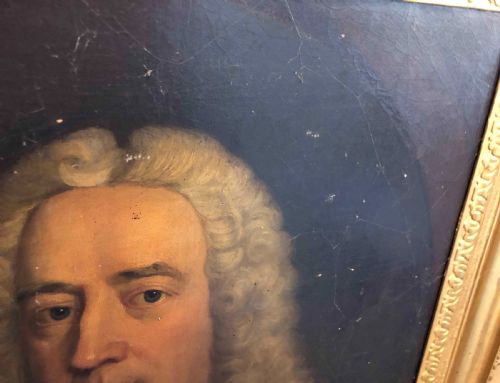
oil on canvas
76.20 x 63.50 cm.
Provenance
By Direct family descent
?
In 1751, Alexander (1694–1766) and Richard Oswald (1687–1763), merchants in Glasgow and slave traders, bought Scotstoun, an estate of 1,000 acres. It included the lands of Balshagray to the west of Partick, stretching from the River Clyde to Great Western Road. The Scotstoun estate contained about 1,000 acres and stretched from the River Clyde to Great Western Road. It included not only the districts which we now know as Scotstoun and Whiteinch, but also Claythorn (Whittingehame Drive area) and lands around the former Knightswood Hospital. In fact by the late 1800’s the estate belonging to the Smiths of Jordanhill was almost surrounded by Oswald lands. In earlier times the Jordanhill Estate had included parts of Scotstoun and Gartnavel but they had been sold off to the Oswalds. Scotstoun Estate had, in the distant past, belonged to the house of Montgomerie but after 200 years they sold it in 1634 to John Hutchison, town clerk of Glasgow (no relation to the George Hutchison who founded Hutchison’s Hospital etc.) A couple of generations later the estate was sold in 1691 to William Walkinshaw, a Glasgow Merchant. William Walkinshaw’s eldest son John, who inherited the estate from his father, held Jacobite views and in 1715 he had to flee the country. As a result, under a recently passed Act, (for encouragement of loyal superiors, vassals, landlords and tenants in Scotland) the ninth Earl of Eglinton claimed and obtained the estate through a final decree from the Court of Session in 1719. In 1729 Lord Eglinton conveyed Scotstoun estate to his grandson Alexander the sixth Earl of Galloway. In 1750 the Earl sold the estate to William Crawfurd, a Glasgow merchant who was the eldest son of Matthew Crawfurd of Balshagray. There is a footnote in the old document to point out that these Crawfurds (with a “u”) of Scotstoun and Balshagray were not related to the Crawfords (with an “o”) of Jordanhill who were Crawfords of Kilbirnie. There is some confusion about this in Jordanhill since the Crawfurd Theatre at the College (Strathclyde University Campus) and Crawfurd House in Jordanhill School are both spelt with the “u”. See the history of the Smiths of Jordanhill at http://www.wsmclean.com/Smiths.htm
After the problems of the 1715 period had blown over, John Walkinshaw reappeared from exile and tried to reclaim his former estate, opposed obviously by Matthew Crawfurd. The matter was referred to arbitration and the estate was conveyed to Matthew’s son William Crawfurd. The Crawfurd family thus owned both Scotstoun and Balshagray estates.
In 1751 Scotstoun estate was sold to Richard and Alexander Oswald, two brothers and Glasgow merchants. In 1759 they acquired Balshagray. The Oswald Family History James Oswald was the son of a well-to-do Burgess of Kirkwall in Orkney, who came over to the mainland in the middle of the seventeenth century and settled in Wick. He had two sons, James and George who were both ministers. James was an Episcopal minister and George was a Presbyterian minister. James (the Episcopalian minister, 1654 –1699) had two sons Richard (1687 – 1766) and Alexander (1694 – 1763) who were rich merchants and shipowners. The brothers built themselves a grand mansion in the Stockwell area of Glasgow called “Oswald’s Land with great cellars below to store tobacco and wines but it was demolished around 1875 to make way for the new bridge being built for the Union Railway Company. They bought Scotstoun estate in 1751. They were bachelors and died at Scotstoun House (which had been built by the above mentioned William Walkinshaw). Th
Artware Fineart has dated this Georgian Oil Portrait Painting to the 18th Century.
You can view the stock and full dealer information on the Artware Fineart Profile Page
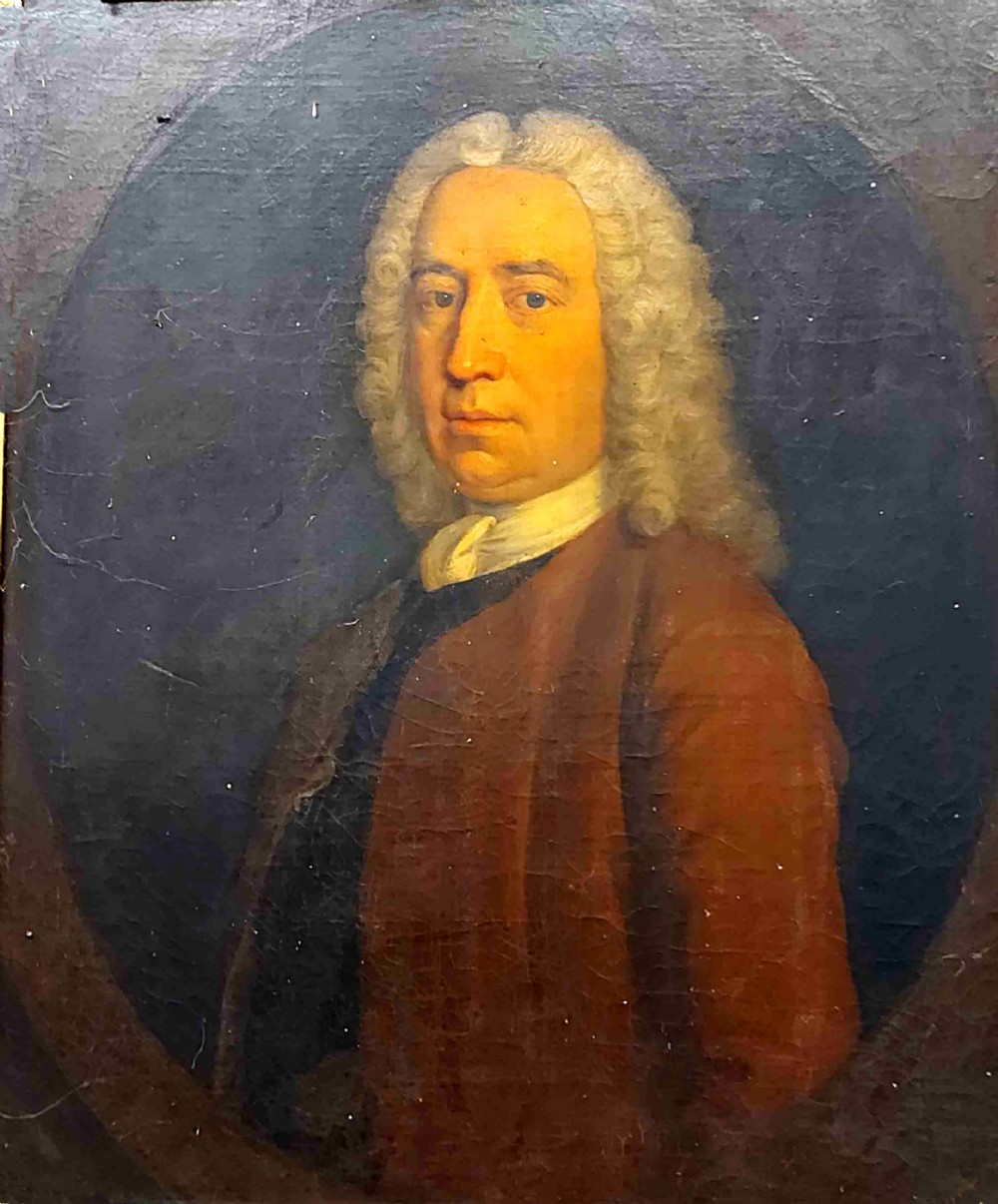
William Denune 1715-1750 Portrait of Richard Oswald 1687–1763 of Scotstoun inscribed Signed and Dated on the Reverse " Richd Oswald Esq / of Scotstoun / De Nune Pinxit 1747"