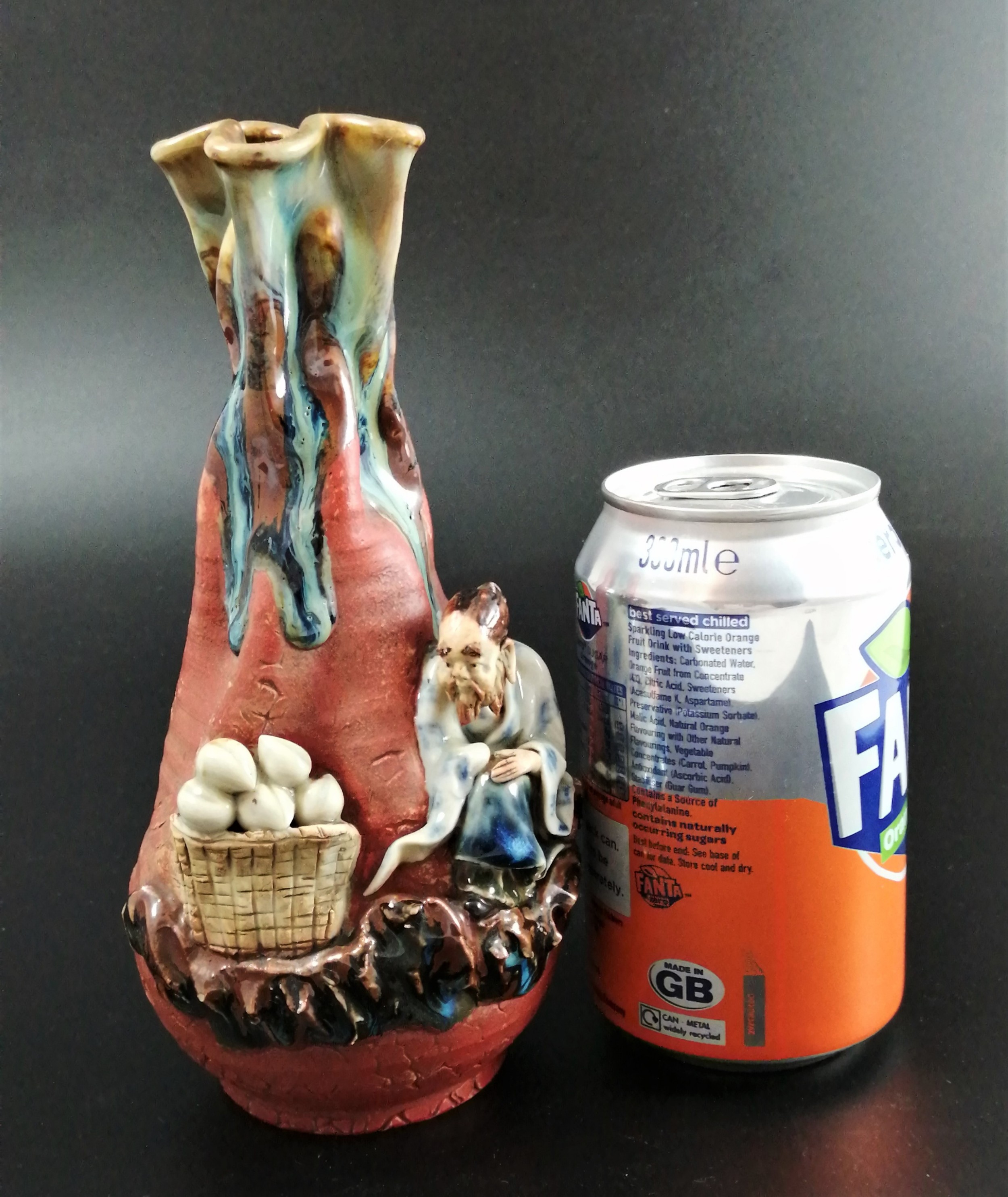
Gillers Antiques Ltd has dated this piece to the 1880s.
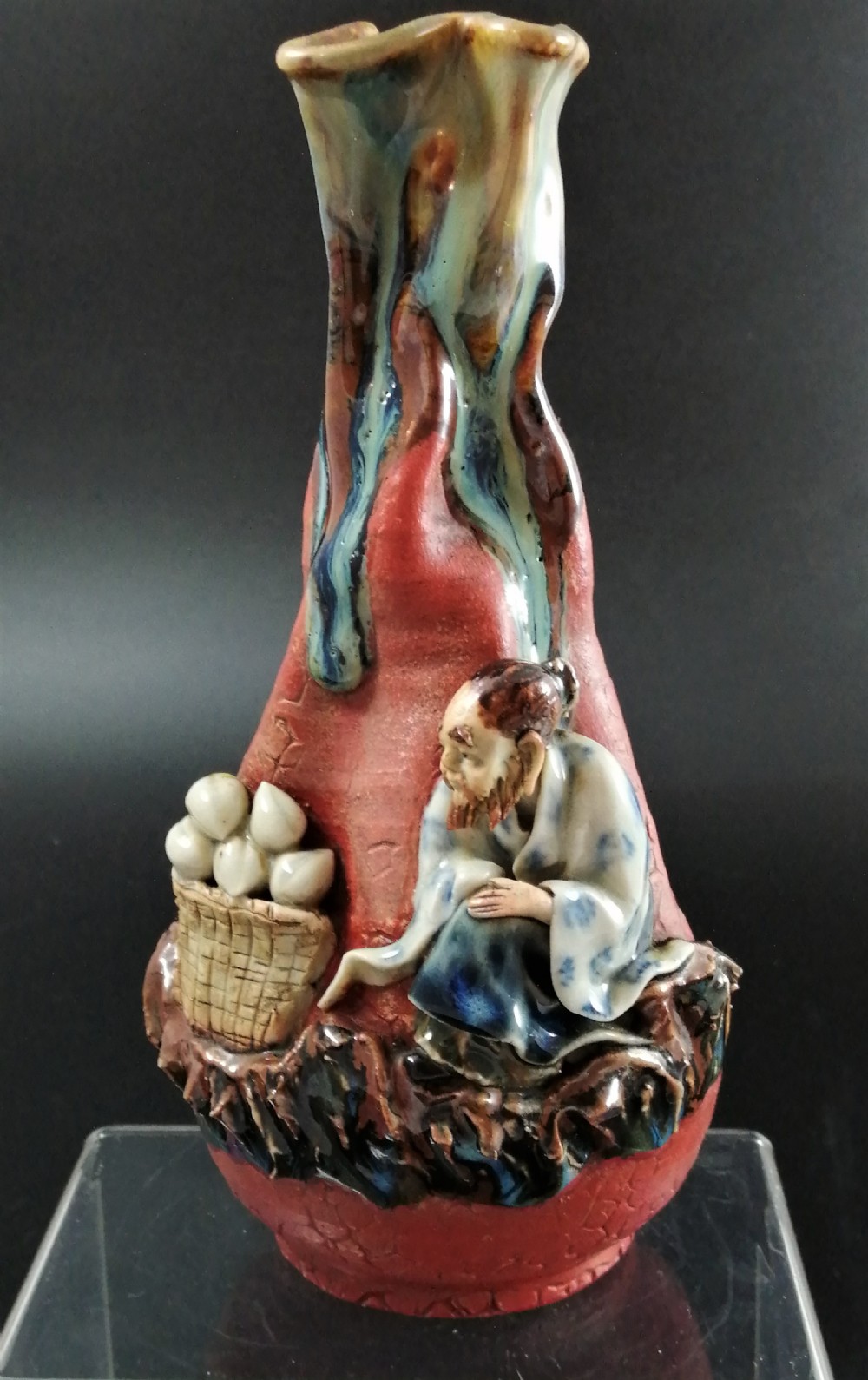
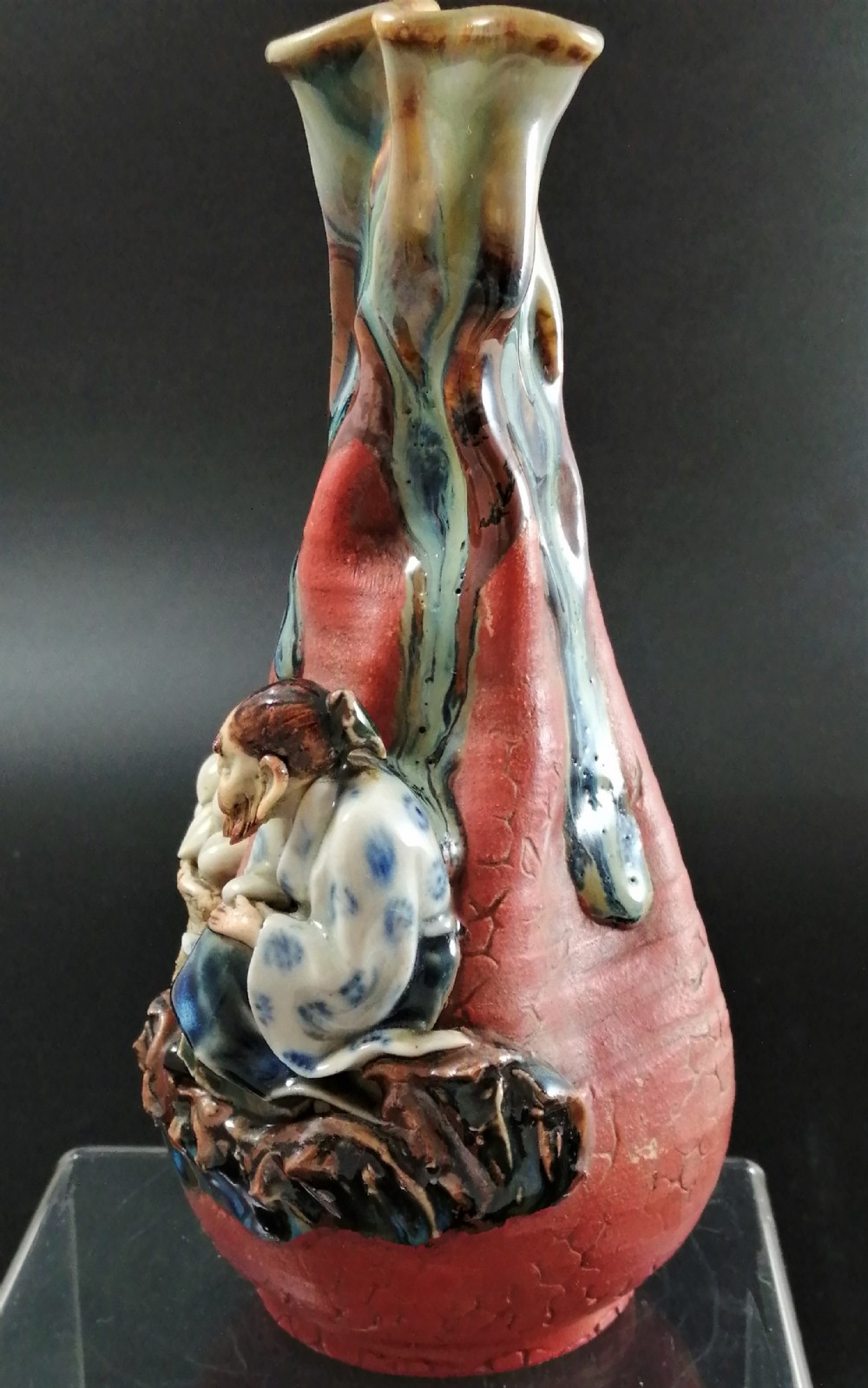
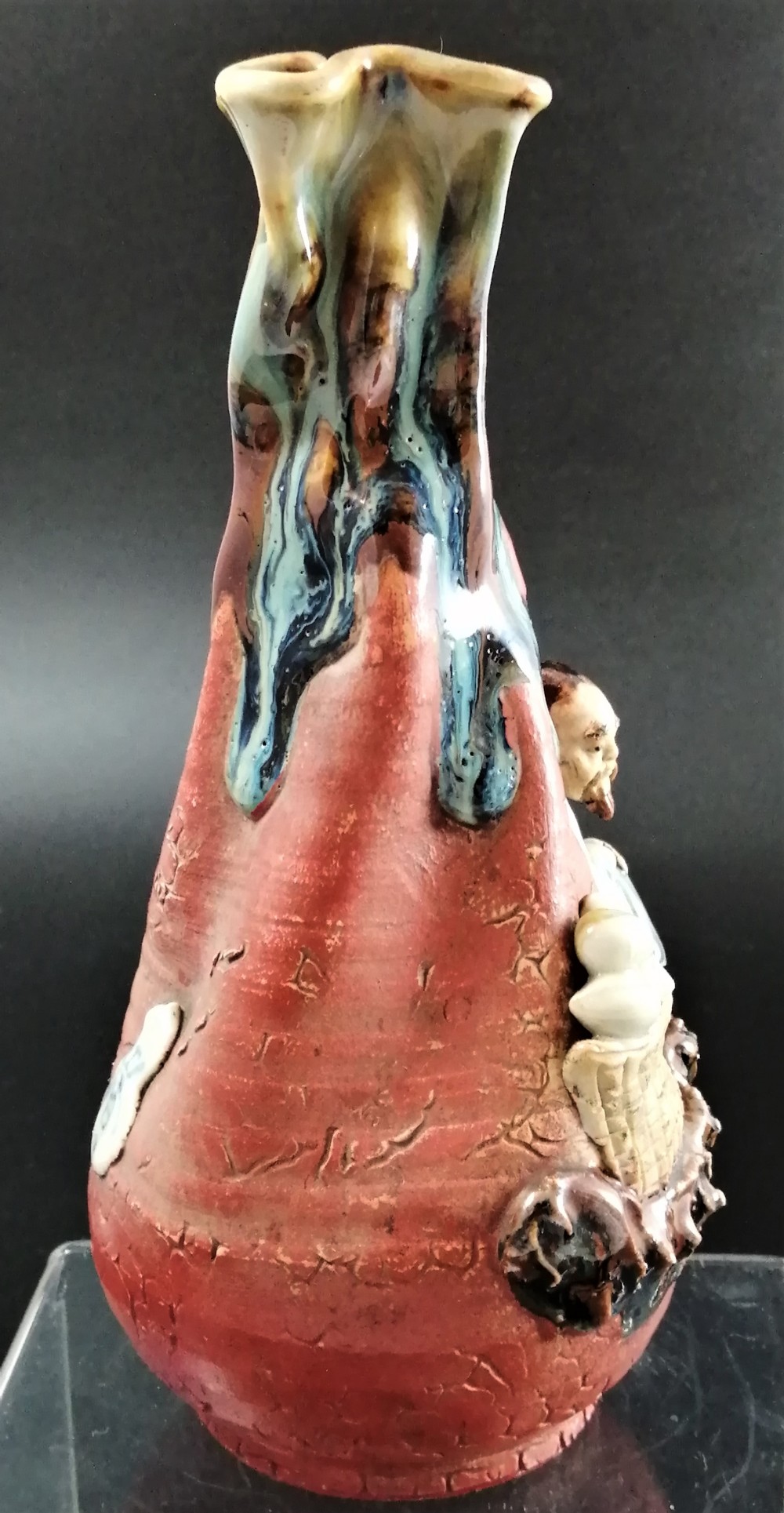
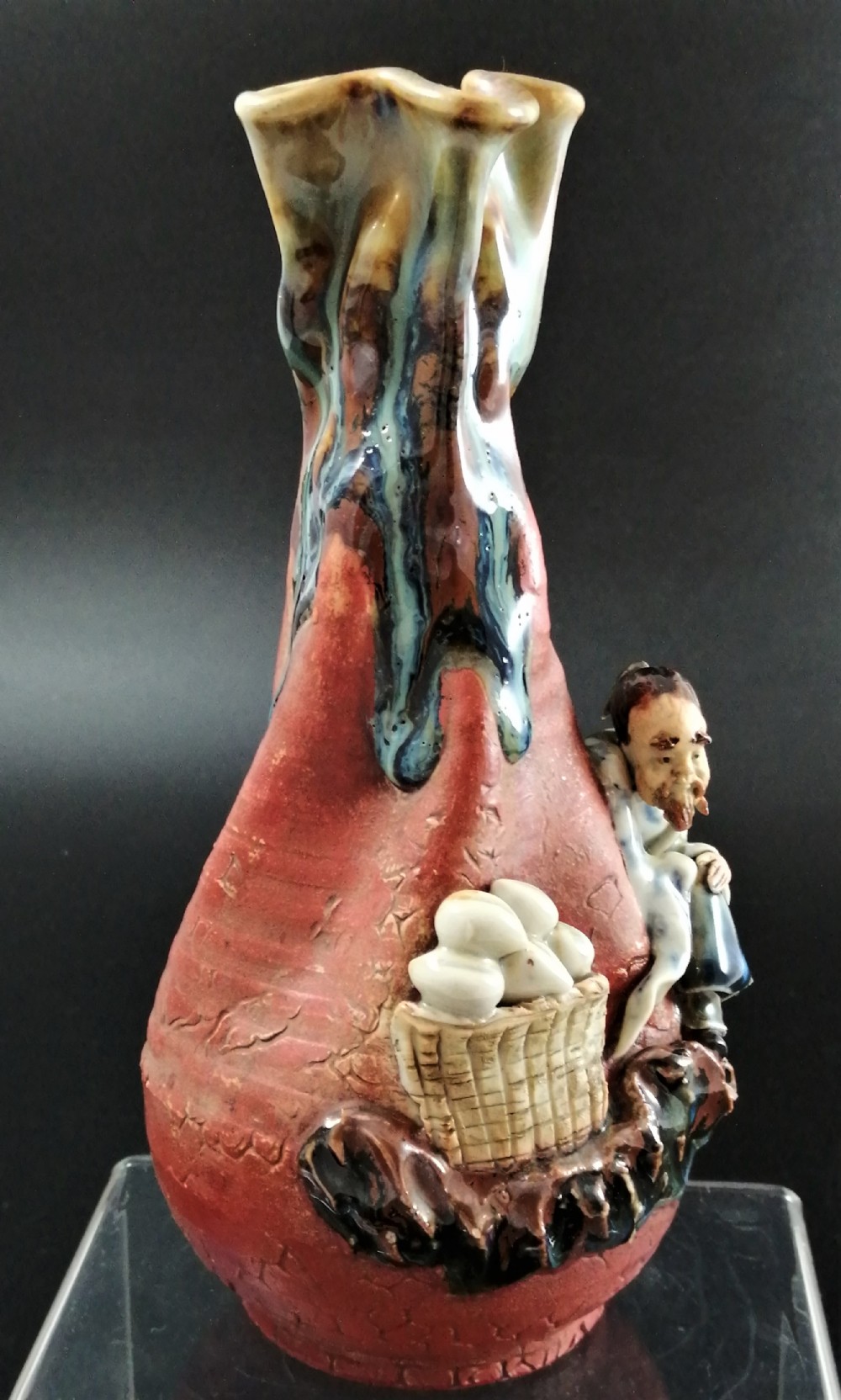
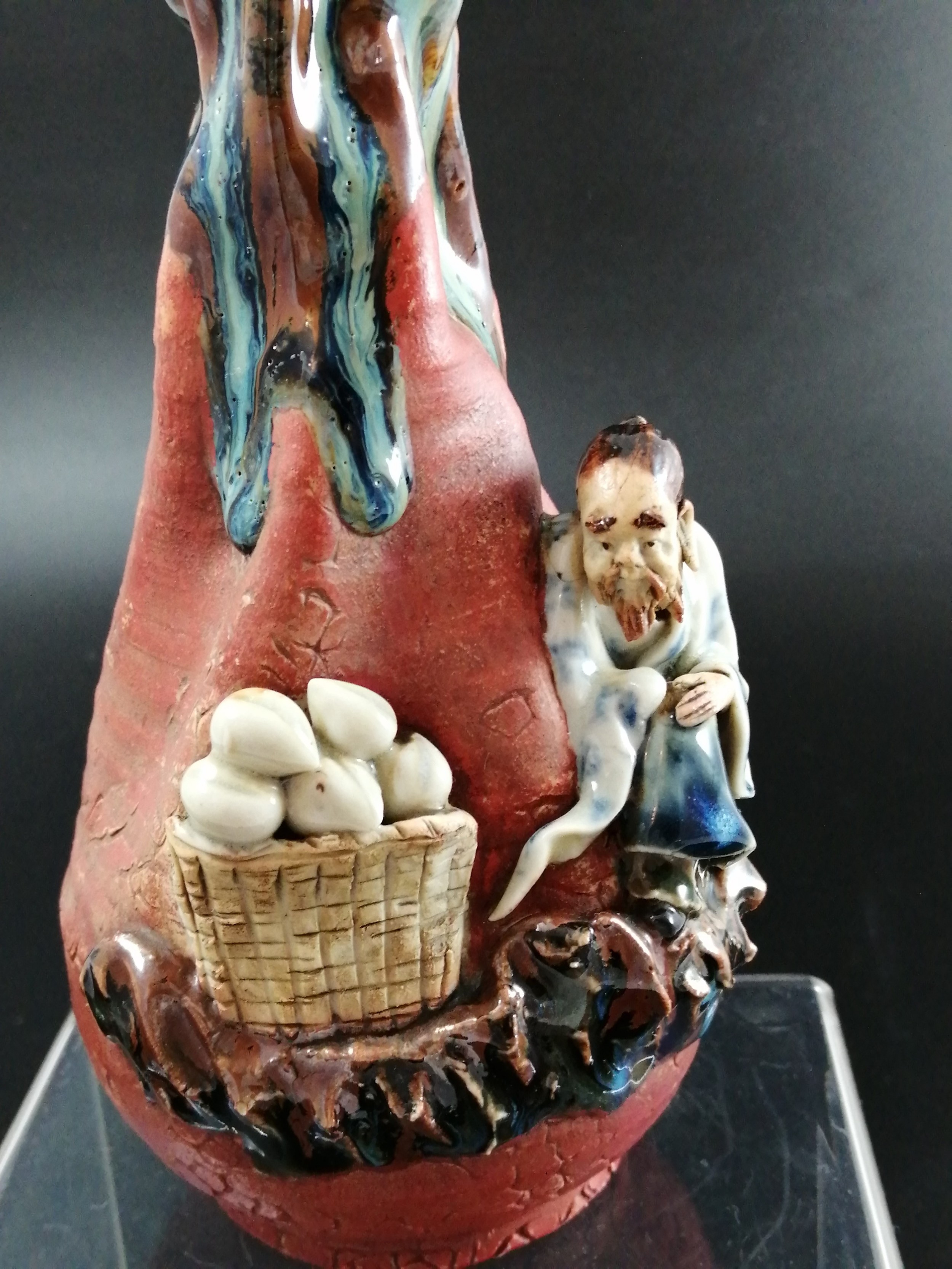
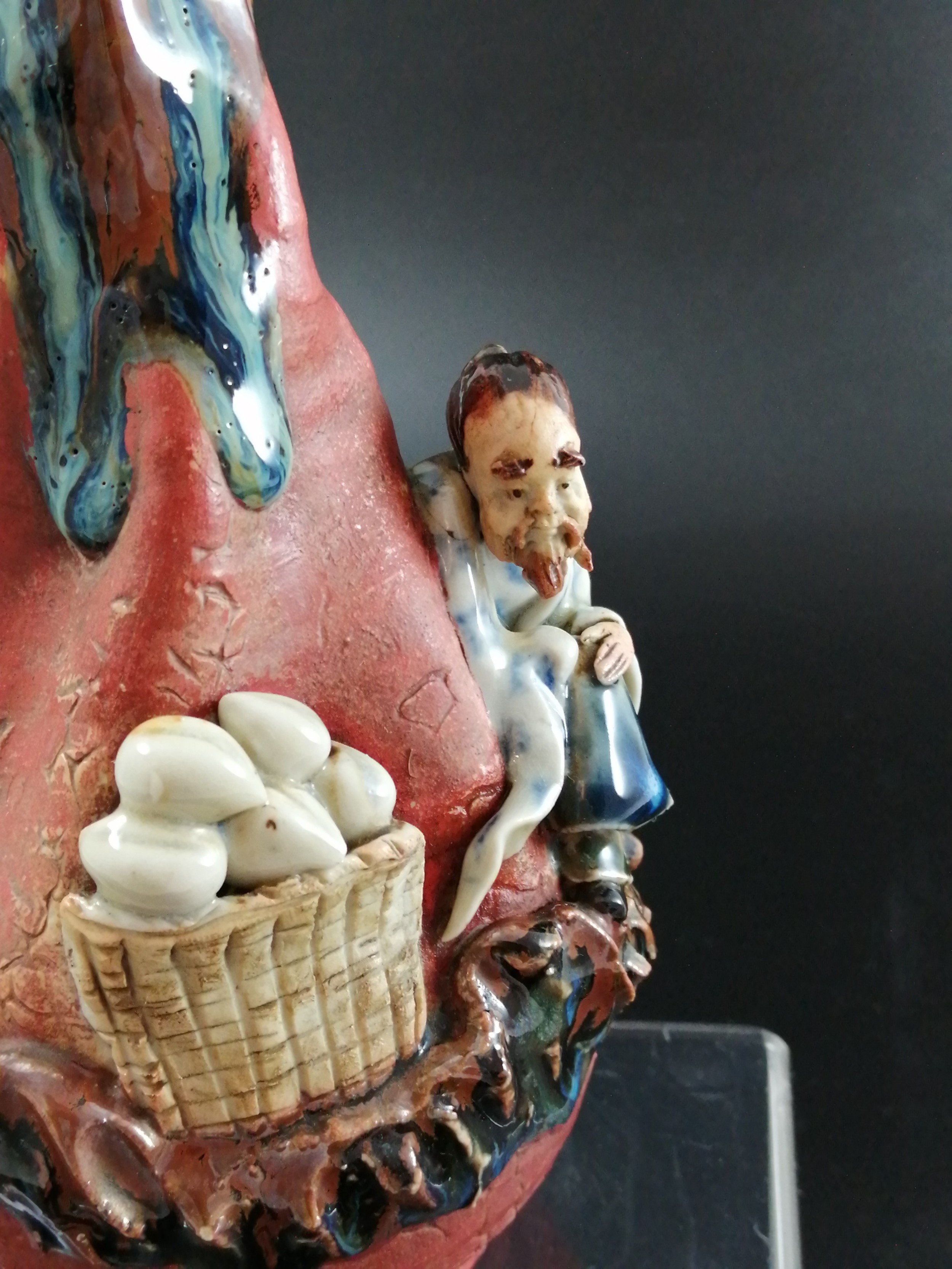
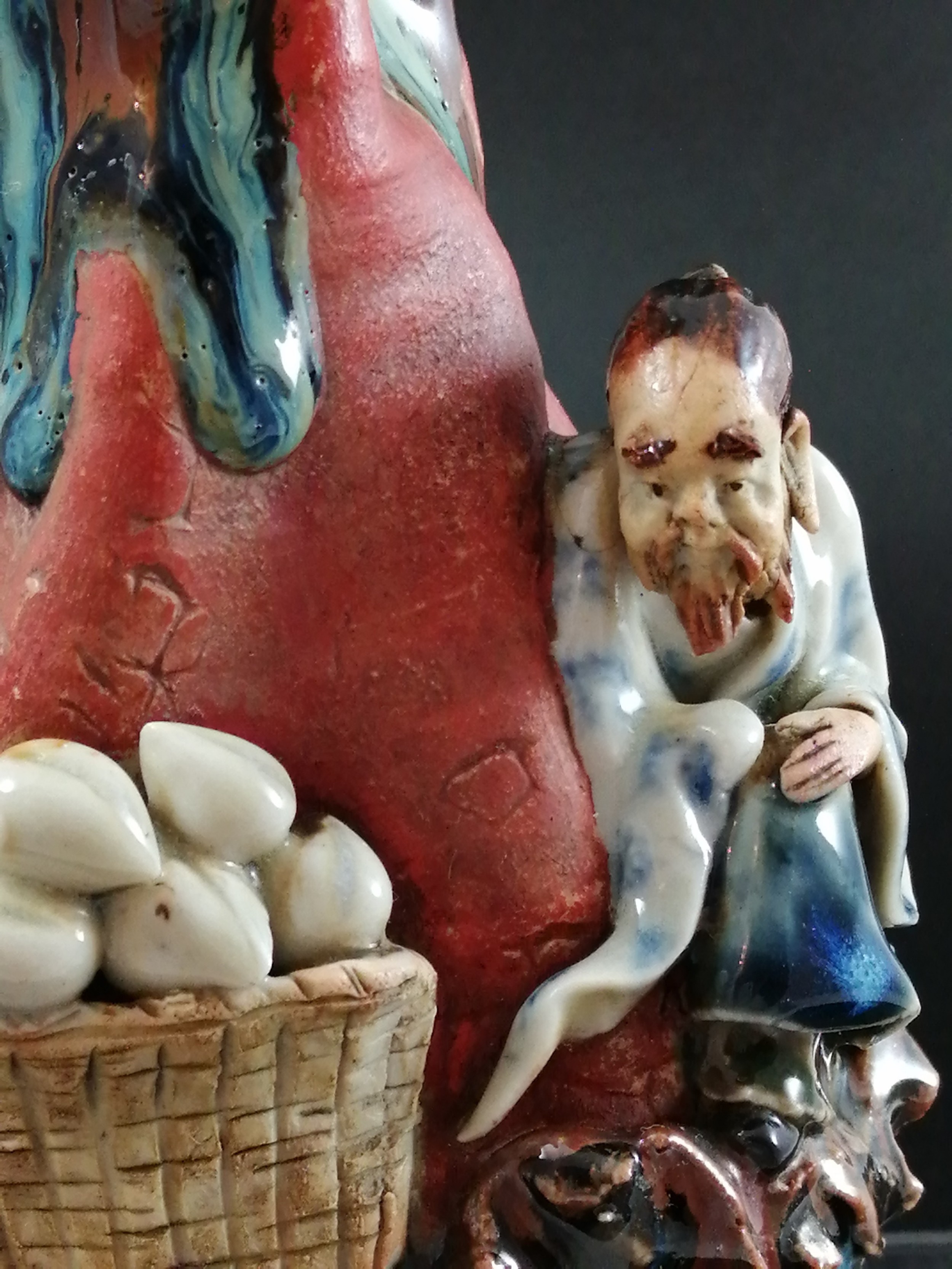
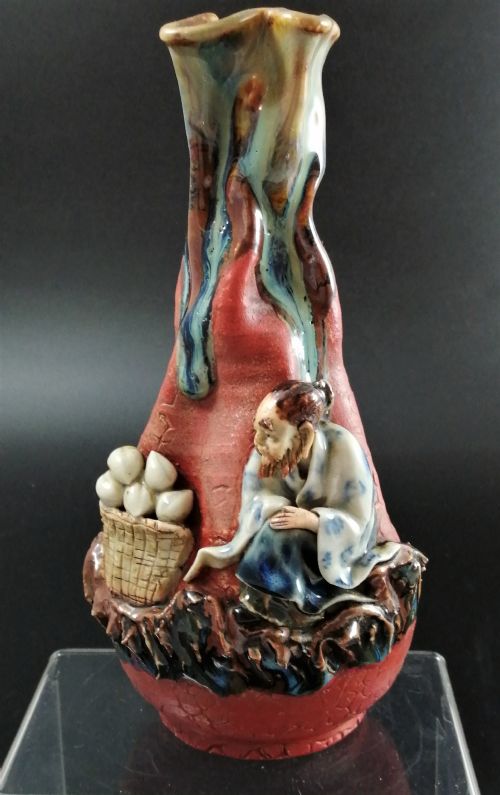
It is a heavy pottery with an applied figure of an old man wearing a beautiful blue and white robe. He sits and looks on the basket filled with white fruit, his facial expression wonderfully detailed. The ceramist carefully constructed the impression of a curious man, deep in thought. Many such scenes we see on Sumida pottery pieces depict fables from Japanese folklore, so this individual seems to be from some Japanese story or myth, and we can only wonder what his thoughts are preoccupied with.
Sumida pottery was created specifically for export between the late 1800s and the 1920s. It was still produced until World War II and briefly after the war. The production is continued up until today.
It was near the banks of this river it was first made. The Japanese word for river is gawa, hence the name Sumidagawa. In 1924 Inuoue Ryosai III (1888-1971) moved the manufacturing site to Yokohama.
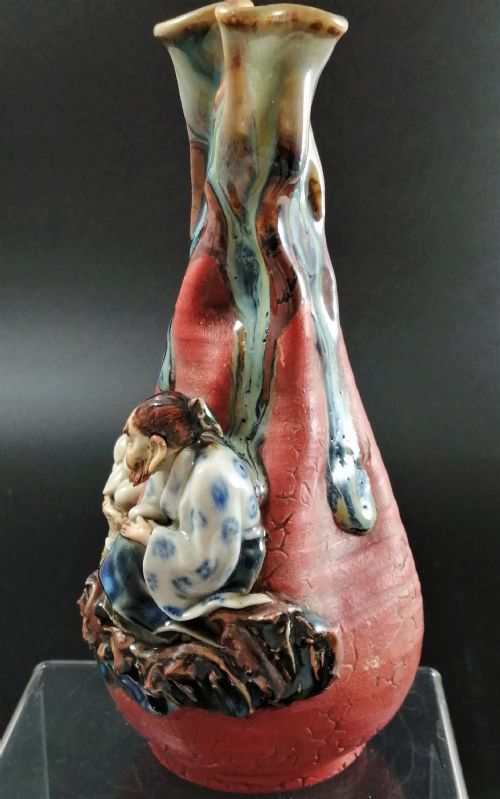
The style of applied figures on a surface with flowing glaze was invented about 1890 by the Seto potter Ryosai I, who worked in Tokyo from about 1875 to 1900.
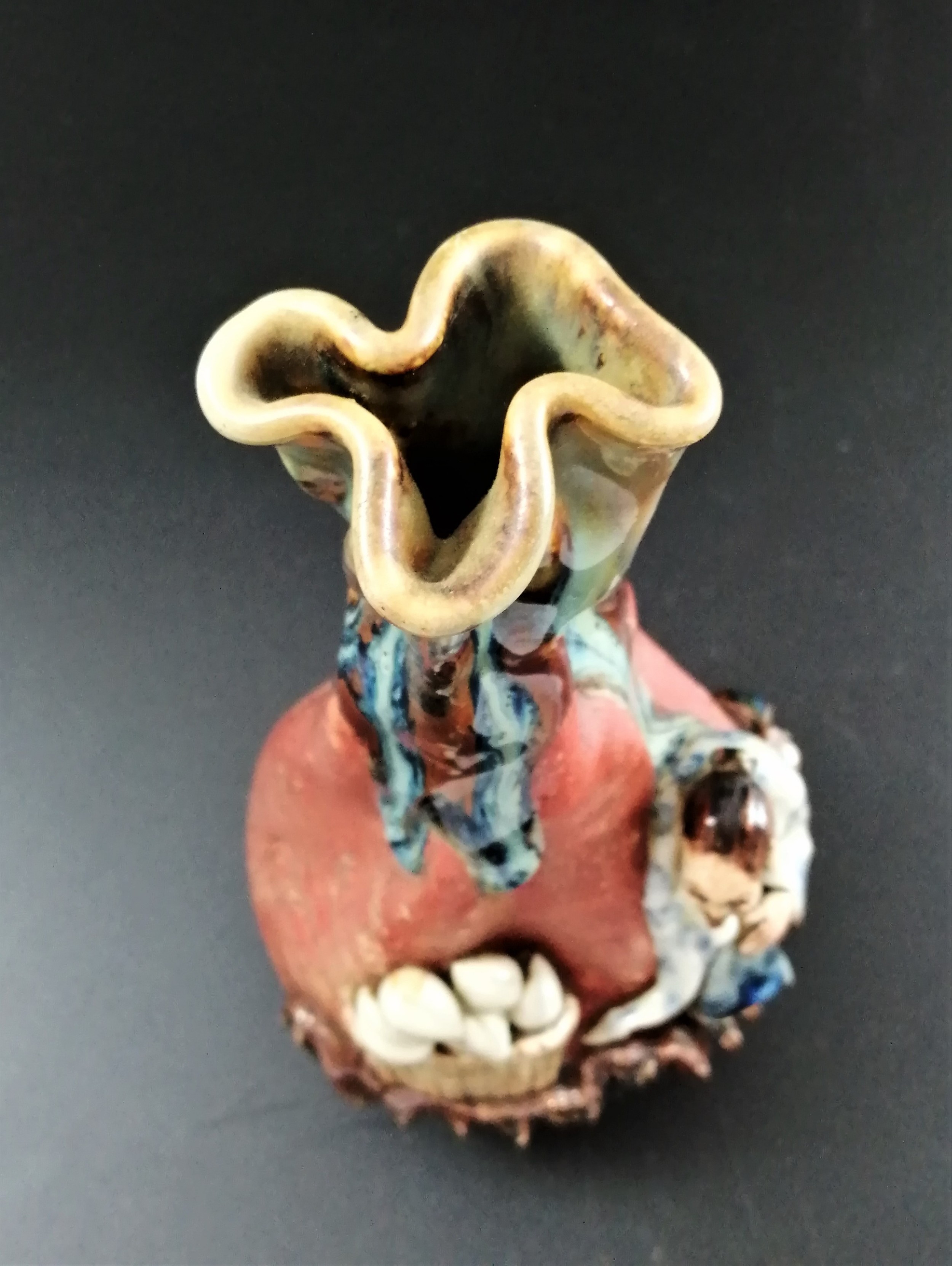
It is is heavy, sculpted and usually has applied three-dimensional figures.
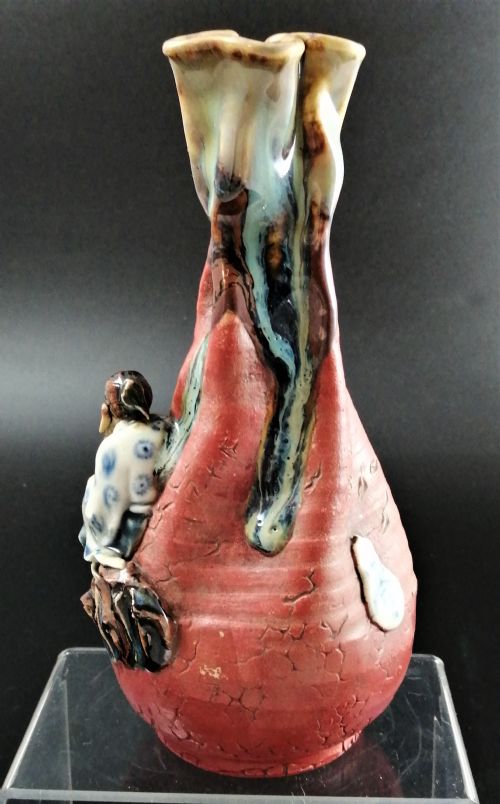
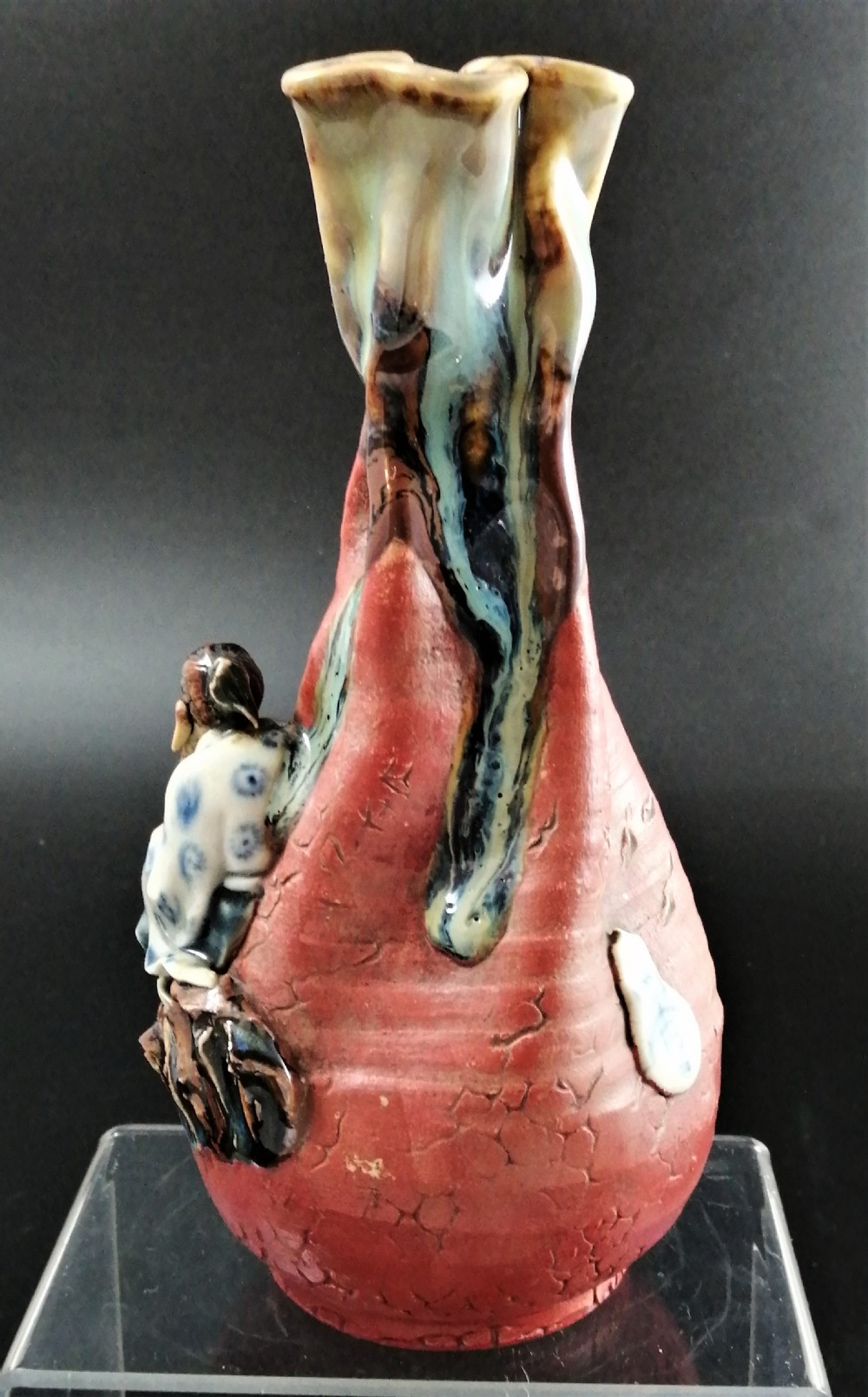
The most common characteristics are items whose upper half (or less) is partially glazed with a flambé glaze or glazed with two or more colors in a splashed application
In the earlier works the intricacy of the applied figures is often amazing, individual features on faces can be seen in detail. Later on, perhaps when demand required mass or faster production, the features were often drawn, with only a line for the mouth, for instance.
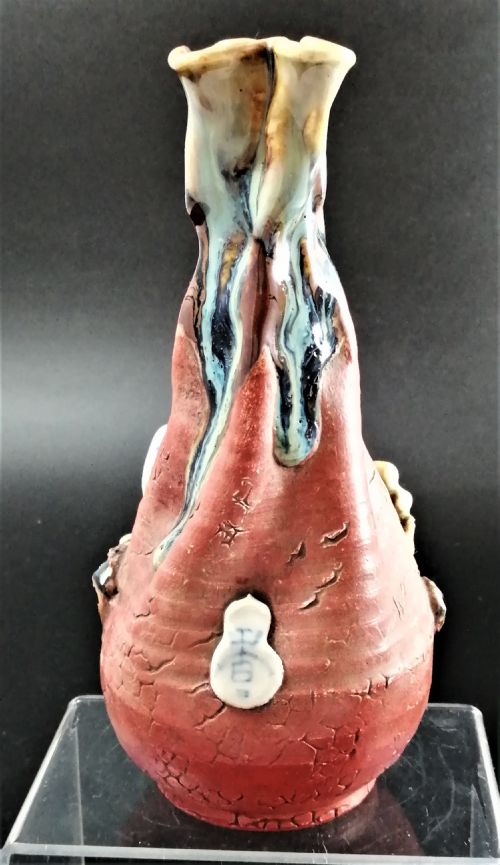
We see how detailed the face of the old man is, down to the finest detail. We can say that this vase harks back to the early period of the manufactory.
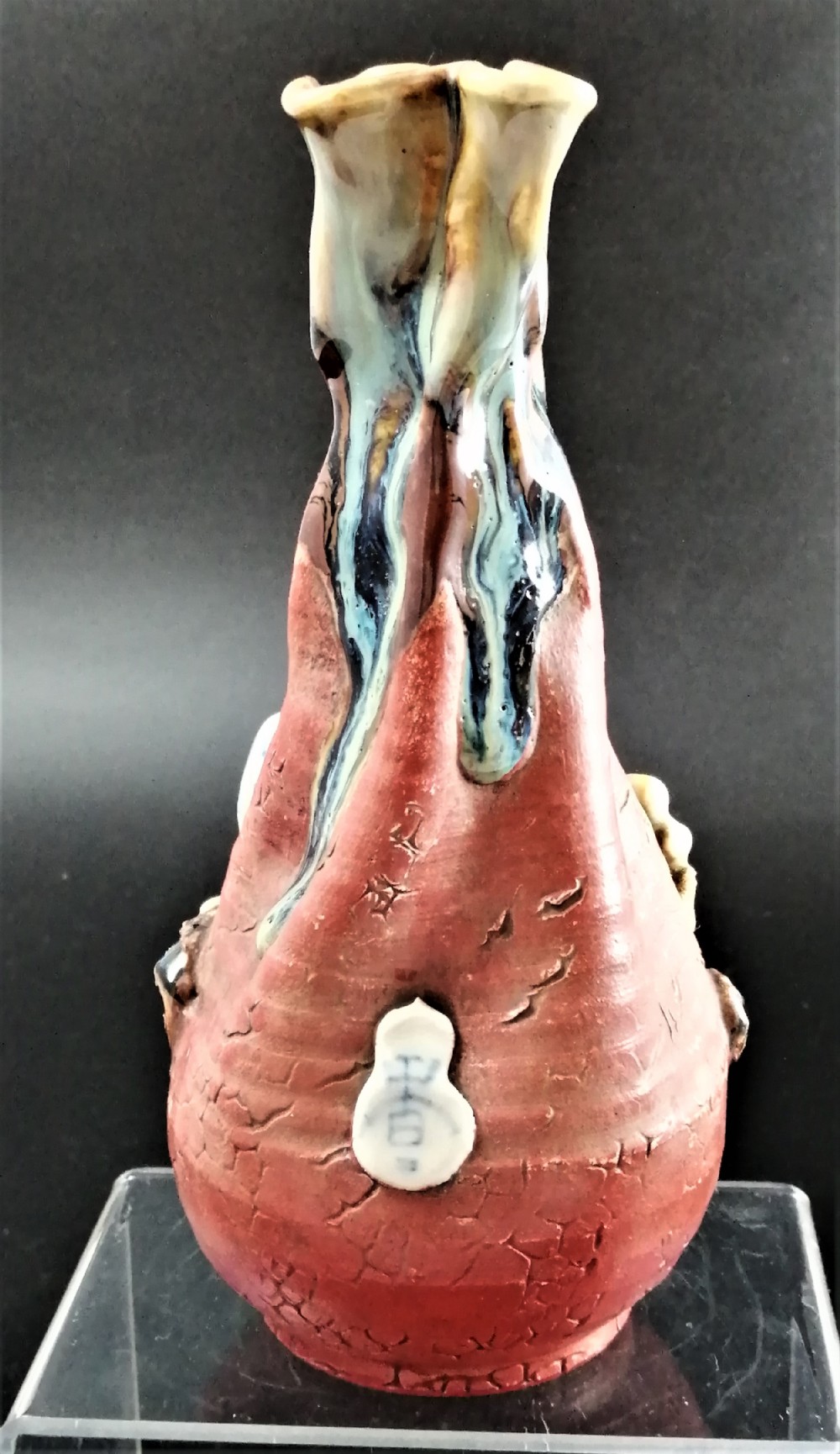
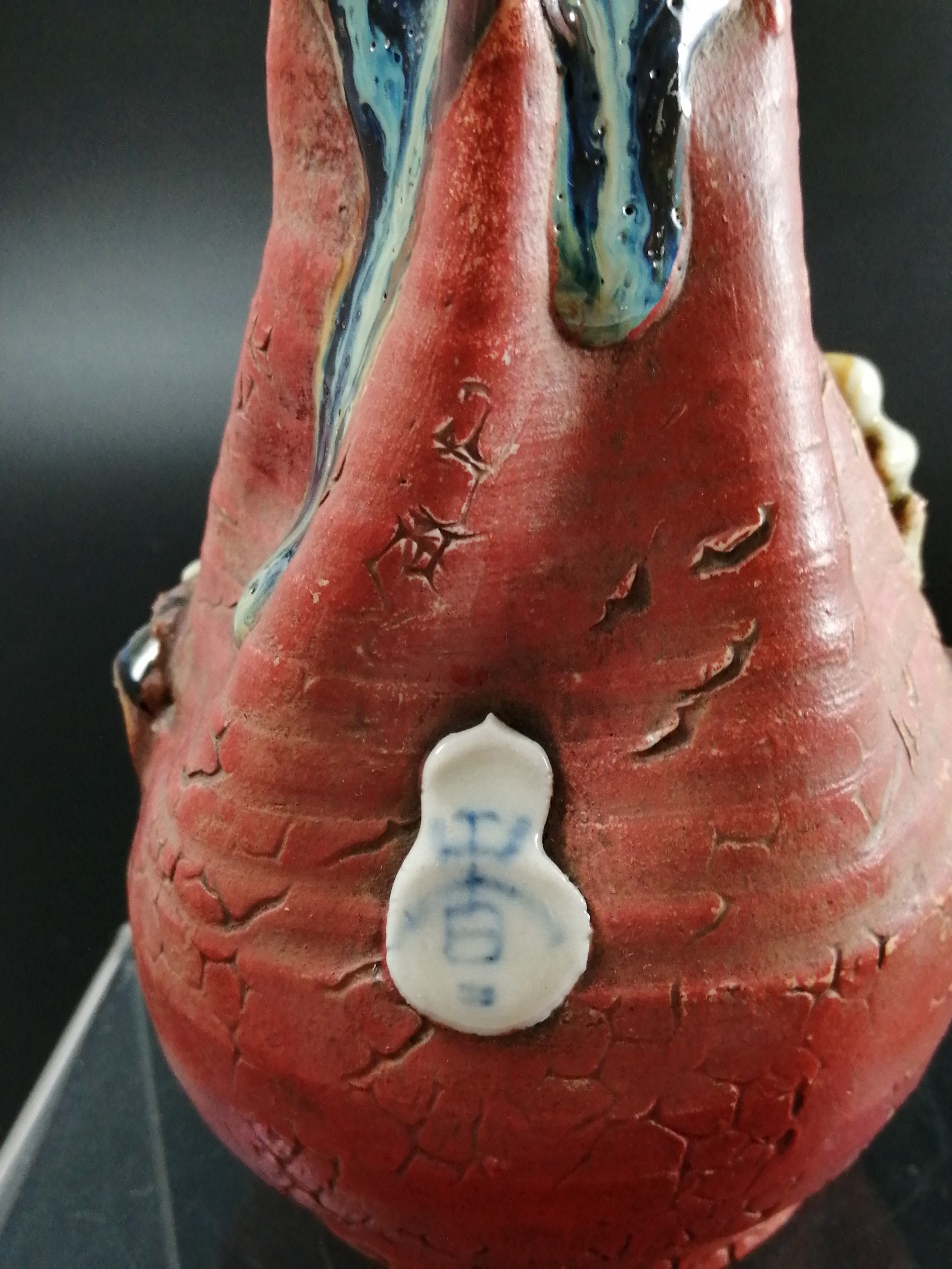
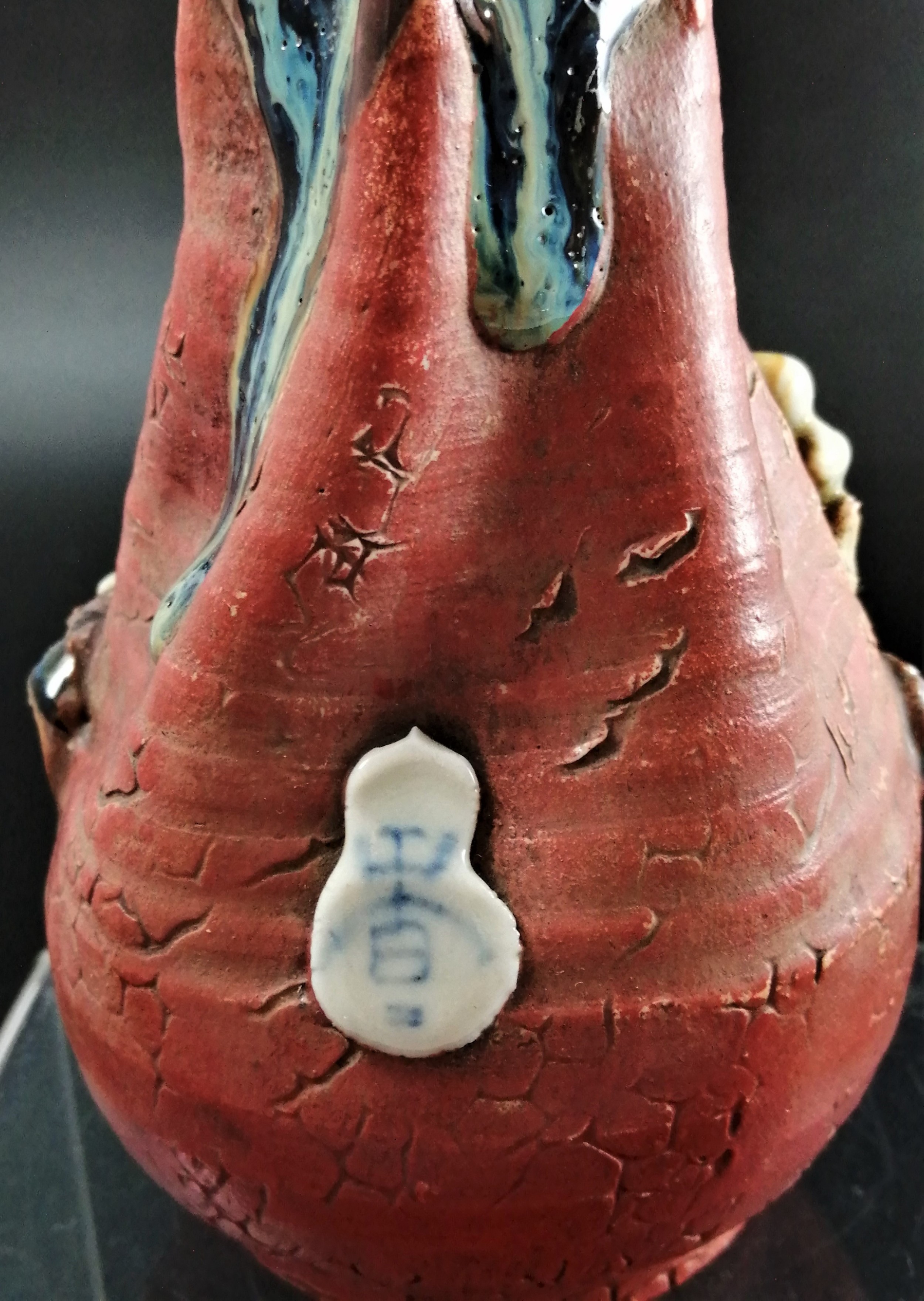
The marks or potters signatures can be found on the base or side of the pottery, or on a white tile affixed to the piece. Over seventy different marks are known. The marks are inscribed in kanji however, not all pieces are marked. In 1890, the McKinley Act required foreign goods to be marked with their country of origin and it was then marked "Nippon". From 1921 the government required all products to be marked in English, so "Made in Japan" for the US market and "Foreign" for the English would appear. Since this could be affixed on paper labels they could also go missing, why in effect the pieces went back to the unmarked state, except for the signatures when found.
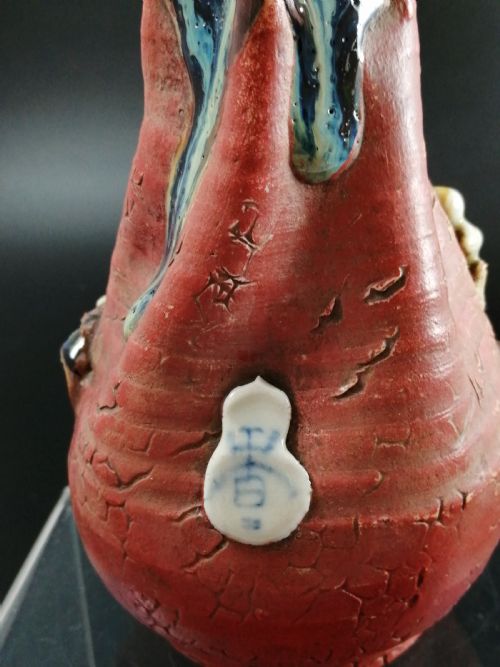
The word “Nippon” is not written on the vase, so it was made before 1890.
19.5 cm in height
422 g
Excellent antique condition, often, some parts of Sumida Gawa Pottery's three-dimensional pieces break off, chips appear. This vase has no damage visible to the naked eye. If you take a magnifying glass, you can see slight paint loss on the glaze below the old man figurine.Please carefully regard all photos.
Item will be sent fully tracked and insured.
Gillers Antiques Ltd has dated this piece to the 1880s.
You can view the stock and full dealer information on the Gillers Antiques Ltd Profile Page

Sumida Gawa Pottery, Japan, Meiji Period, Marked 'Koko' ?? (Ishiguro Koko ????)