22,802  PAGES BROWSED TODAY PAGES TODAY 36  ANTIQUES UPLOADED TODAY NEW ARRIVALS
ID #SA957538
FOR SALE
£4,500
Email
Save
English School 19th Century portrait of Lieutenant-general Sir John Harvey, Kcb Kch 1778 – 1852
Artware Fineart
for sale €5,265     $5,715
£4,500

Artware Fineart

Sellingantiques Verified Since Sep 2008
View Dealers Stock Page
Id #SA957538
PDF SHARE
SAVE

English School 19th Century portrait of Lieutenant-general Sir John Harvey, Kcb Kch 1778 – 1852

19th century
For Sale by Artware Fineart
Description

English School 19th Century

Portrait of Lieutenant-General Sir John Harvey, KCB KCH 1778 – 1852

oil on canvas

43 x 33 cm.

Sir JOHN HARVEY, army officer and colonial administrator; b. 23 April 1778 in England; m. 16 June 1806 Lady Elizabeth Lake, and they had five sons and one daughter; d. 22 March 1852 in Halifax.

Unlike most of his contemporaries in the higher ranks of the British army and the colonial service, John Harvey was not born to the purple; he described himself as the child of an obscure Church of England clergyman of modest means who had persuaded William Pitt the younger to give his son a commission in the army. On 10 Sept. 1794 Harvey became an ensign in the 80th Foot. He was fortunate. The regiment had been raised by Henry William Paget, the future Marquess of Anglesey, a distinguished cavalry officer whose family was part of a widespread and influential military network to which Harvey was to owe much of his future advancement. Yet because he lacked the private resources that would have enabled him to rise through the ranks by purchase, Harvey’s progress was slow and was achieved primarily by hard work, talent, and that quality most prized in the 18th-century British army – personal courage in the face of danger. From 1794 to 1796 Harvey saw active service in the Netherlands and along the coast of France, in 1796 at the Cape of Good Hope, from 1797 to 1800 in Ceylon (Sri Lanka), and in 1801 in Egypt. From 1803 to 1807 he served in India during the campaigns against the Marathas where by an unusual act of daring he brought himself to the attention of the commander-in-chief, Lord Lake, and was invited to join his staff. While in India he married Lake’s daughter, making another connection that would prove useful in later years. Lady Elizabeth also proved to be the perfect consort for a colonial governor. She was a gracious hostess and actively involved herself in charitable activities. Harvey was affectionately described by one of his friends as a “Soldier of Fortune,” and to the extent that his life was to be spent in a perennial search for a high station in an aristocratic society the description is an apt one. Since he lacked private means, Harvey had to live with financial insecurity, but thanks to his wife his domestic life was relatively stable and untroubled.
Harvey returned to England in September 1807. On 15 July 1795 he had become a lieutenant and on 9 Sept. 1803 a captain; on 28 Jan. 1808 he was promoted major. From January to June 1808 he was employed in England as an assistant quartermaster general and in July 1808 he joined the 6th Royal Garrison Battalion in Ireland under the command of the Earl of Dalhousie [Ramsay*]. On 25 June 1812 he was raised to the rank of lieutenant-colonel and appointed to Upper Canada as deputy adjutant general to John Vincent*. In his haste to reach his new post he travelled overland on snowshoes across New Brunswick in the depth of winter and arrived in Upper Canada early in 1813.
For the duration of the War of 1812 Harvey played a conspicuous part in the campaigns along the Niagara peninsula. His greatest triumph was at the battle of Stoney Creek, one of the most decisive encounters of the war. In May 1813 a large American force of more than 6,000 men landed at Fort Niagara (near Youngstown, N.Y.) and drove the British from Fort George (Niagara-on-the-Lake), Upper Canada. Vincent, with 1,600 infantry, retreated to Burlington Heights (Hamilton), pursued by about 3,500 Americans who camped at Stoney Creek on 5 June. Vincent’s position was precarious since his opponents could expect reinforcements and he could not. As senior staff officer, Harvey was responsible for reconnaissance and he suggested a surprise attack at night to disperse the Americans before they could be reinforced. At 2:00 a.m. he led out about 700 men. Fortunately, the night was dark, the Ame

Physical Dimensions
Height
44cm (17.32")
Width
33cm (12.99")
Depth
1cm (0.39")
Declaration

Artware Fineart has dated this 19th Century Military Portrait to the 19th Century.

Reference Numbers
Sellingantiques Reference
SA957538
Dealers Internal Reference
4769
Description
English School 19th Century

Portrait of Lieutenant-General Sir John Harvey, KCB KCH 1778 – 1852

oil on canvas

43 x 33 cm.

Sir JOHN HARVEY, army officer and colonial administrator; b. 23 April 1778 in England; m. 16 June 1806 Lady Elizabeth Lake, and they had five sons and one daughter; d. 22 March 1852 in Halifax.

Unlike most of his contemporaries in the higher ranks of the British army and the colonial service, John Harvey was not born to the purple; he described himself as the child of an obscure Church of England clergyman of modest means who had persuaded William Pitt the younger to give his son a commission in the army. On 10 Sept. 1794 Harvey became an ensign in the 80th Foot. He was fortunate. The regiment had been raised by Henry William Paget, the future Marquess of Anglesey, a distinguished cavalry officer whose family was part of a widespread and influential military network to which Harvey was to owe much of his future advancement. Yet because he lacked the private resources that would have enabled him to rise through the ranks by purchase, Harvey’s progress was slow and was achieved primarily by hard work, talent, and that quality most prized in the 18th-century British army – personal courage in the face of danger.

From 1794 to 1796 Harvey saw active service in the Netherlands and along the coast of France, in 1796 at the Cape of Good Hope, from 1797 to 1800 in Ceylon (Sri Lanka), and in 1801 in Egypt.
Artware Fineart

From 1803 to 1807 he served in India during the campaigns against the Marathas where by an unusual act of daring he brought himself to the attention of the commander-in-chief, Lord Lake, and was invited to join his staff. While in India he married Lake’s daughter, making another connection that would prove useful in later years. Lady Elizabeth also proved to be the perfect consort for a colonial governor. She was a gracious hostess and actively involved herself in charitable activities. Harvey was affectionately described by one of his friends as a “Soldier of Fortune,” and to the extent that his life was to be spent in a perennial search for a high station in an aristocratic society the description is an apt one. Since he lacked private means, Harvey had to live with financial insecurity, but thanks to his wife his domestic life was relatively stable and untroubled.

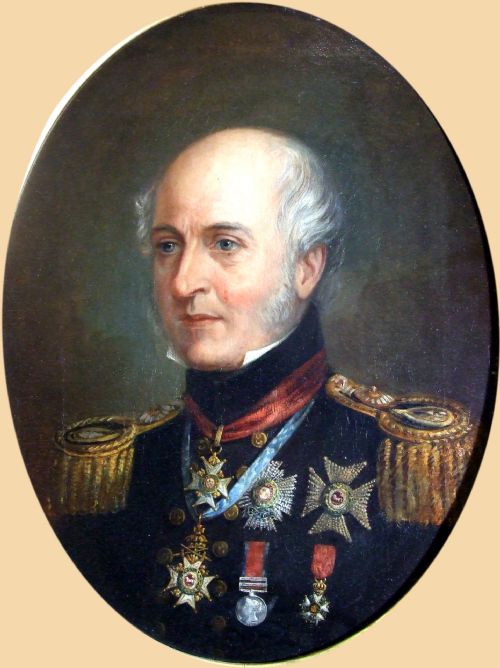
fig 1. An oval nineteenth-century oil portrait depicting a British military officer in a dark uniform with gold epaulettes and medals.
fig 1. English School 19th Century portrait of Lieutenant-general Sir John Harvey, Kcb Kch 1778 – 1852

Harvey returned to England in September 1807. On 15 July 1795 he had become a lieutenant and on 9 Sept. 1803 a captain; on 28 Jan. 1808 he was promoted major. From January to June 1808 he was employed in England as an assistant quartermaster general and in July 1808 he joined the 6th Royal Garrison Battalion in Ireland under the command of the Earl of Dalhousie [Ramsay*]. On 25 June 1812 he was raised to the rank of lieutenant-colonel and appointed to Upper Canada as deputy adjutant general to John Vincent*. In his haste to reach his new post he travelled overland on snowshoes across New Brunswick in the depth of winter and arrived in Upper Canada early in 1813.

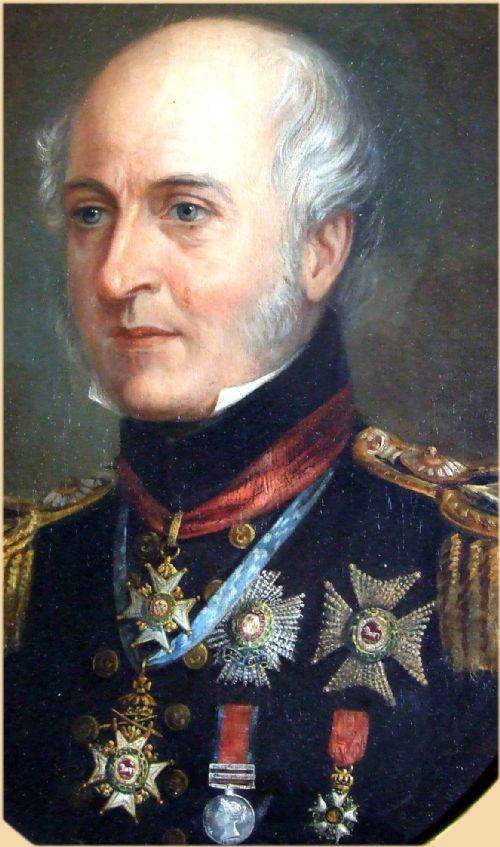
fig 2. An oval nineteenth-century oil portrait depicting a British military officer in a dark uniform with gold epaulettes and medals.
fig 2. English School 19th Century portrait of Lieutenant-general Sir John Harvey, Kcb Kch 1778 – 1852

For the duration of the War of 1812 Harvey played a conspicuous part in the campaigns along the Niagara peninsula. His greatest triumph was at the battle of Stoney Creek, one of the most decisive encounters of the war. In May 1813 a large American force of more than 6,000 men landed at Fort Niagara (near Youngstown, N.Y.) and drove the British from Fort George (Niagara-on-the-Lake), Upper Canada. Vincent, with 1,600 infantry, retreated to Burlington Heights (Hamilton), pursued by about 3,500 Americans who camped at Stoney Creek on 5 June. Vincent’s position was precarious since his opponents could expect reinforcements and he could not. As senior staff officer, Harvey was responsible for reconnaissance and he suggested a surprise attack at night to disperse the Americans before they could be reinforced. At 2:00 a.m. he led out about 700 men. Fortunately, the night was dark, the Ame

Height
44cm (17.32")
Width
33cm (12.99")
Depth
1cm (0.39")
Date of Manufacture

Artware Fineart has dated this 19th Century Military Portrait to the 19th Century.

Reference Numbers
Sellingantiques Ref
SA957538
Dealers Internal Ref
4769
Artware Fineart
Sellingantiques verified Since Sep 2008
Dealer Profile

You can view the stock and full dealer information on the Artware Fineart Profile Page

PDF SHARE
SAVE
An oval nineteenth-century oil portrait depicting a British military officer in a dark uniform with gold epaulettes and medals.
1 / 3
Archive I An oval nineteenth-century oil portrait depicting a British military officer in a dark uniform with gold epaulettes and medals.

English School 19th Century portrait of Lieutenant-general Sir John Harvey, Kcb Kch 1778 – 1852
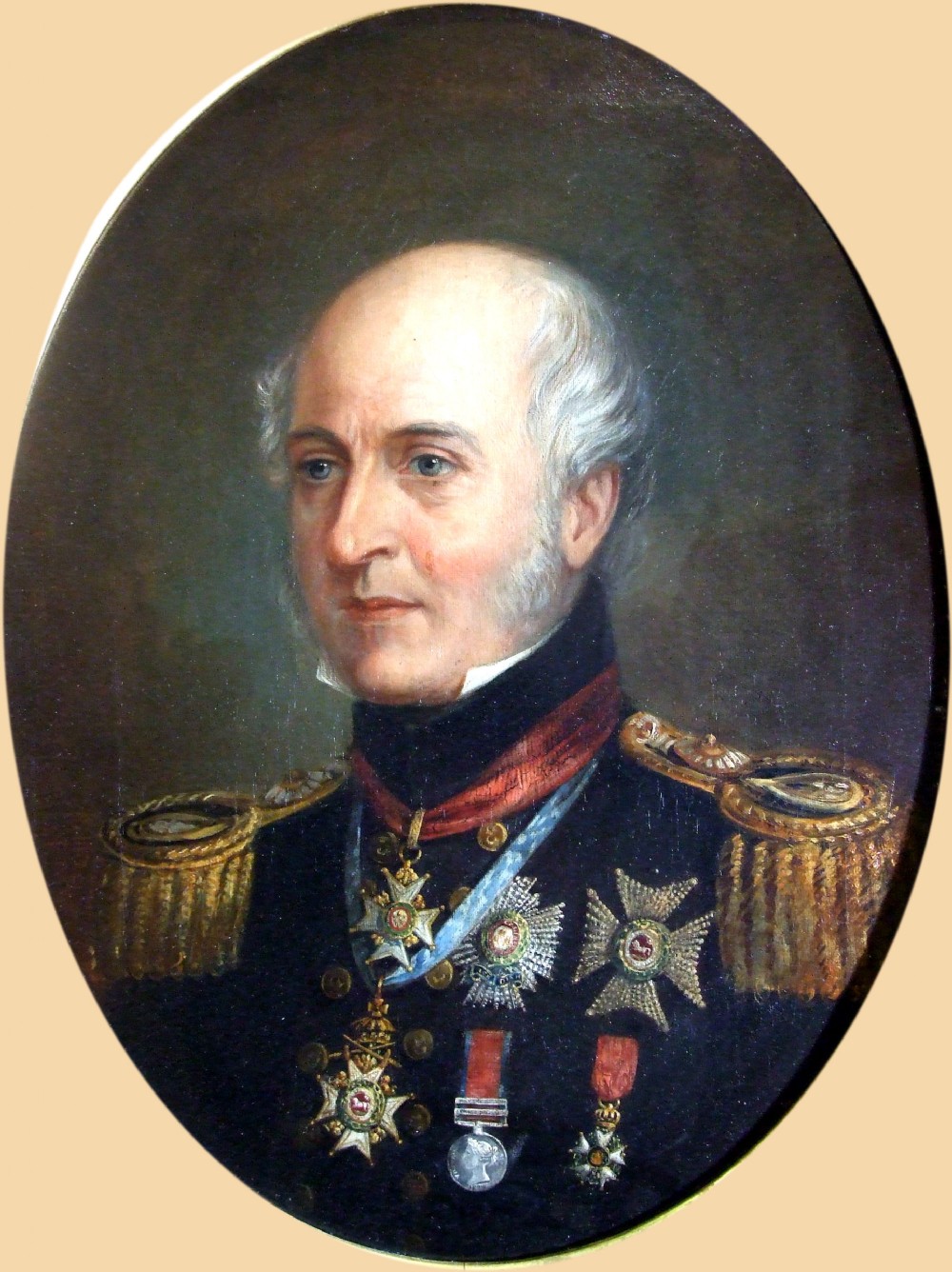
Archive II An oval nineteenth-century oil portrait depicting a British military officer in a dark uniform with gold epaulettes and medals. View II
Archive III An oval nineteenth-century oil portrait depicting a British military officer in a dark uniform with gold epaulettes and medals. View III
FURTHER BROWSING

Visitors also looked at these ⇣

Enlarged Archival View
Telephone 07958 699 645
Location
18 La Gare
51 Surrey Row
London
SE1 0BZ
United Kingdom
Verified Since Sep 2008
Items For Sale 243
Items Sold 223
Artware Fineart
Verified Since Sep 2008
View Dealer Info
Location: 18 La Gare , 51 Surrey Row , London , SE1 0BZ , United Kingdom
Verified
Sep 2008
For Sale
243
Sold
223
An oval nineteenth-century oil portrait depicting a British military officer in a dark uniform with gold epaulettes and medals.
English School 19th Century Portrait of Lieutenant-General Sir John Harvey, KCB KCH 1778 – 1852
Ref: SA957538
An oval nineteenth-century oil portrait depicting a British military officer in a dark uniform with gold epaulettes and medals.
Detail View 1
Detail View 2
Archival Detail
Every single antique dealer on our platform is individually approved by our internal team. We verify their professional trade history, ethical standards, and photographic quality to ensure a secure, high-standard buying environment. Upon joining, every dealer agrees to a strict 9-point code of conduct. While issues can occasionally arise, our dealers typically resolve them swiftly and directly with the buyer. In fact, since our founding in 2002, Sellingantiques has only had to step in to help resolve an issue on roughly five occasions—a true testament to the quality of our dealers and their dedication to your happiness.
Our dealers are highly experienced in packing and shipping fragile, high-value antiques. Because you are in direct contact with the dealer, you will be able to easily go through all available shipping and insurance options together to ensure your item arrives safely.
Antiques are the ultimate green purchase. By choosing historical pieces over newly manufactured goods, you completely eliminate the carbon footprint of modern mass production while preserving exceptional, timeless craftsmanship.

British military portraiture of the 19th century typically features formal depictions of officers in official regalia, detailing regimental uniforms, medals, epaulettes, and honours. These works were painted to record rank, service, and lineage, often executed in oil with structured compositions and dramatic lighting.

Portraits from this era were primarily painted using oil paints on hand-stretched linen or cotton canvas, as well as wooden panels. Frames were commonly constructed from carved wood or moulded gesso finished with gold leaf gilding, frequently incorporating oval spandrel mounts.

Authentic paintings of this period exhibit natural craquelure across the paint surface, historic oxidation on the reverse of the canvas, and hand-cut timber stretcher bars. The precise historical accuracy of military uniforms, medals, and insignia also provides diagnostic evidence of period production.

An antique portrait adds architectural gravitas when displayed against moody, dark-painted walls in a study, library, or dining room. It functions effectively as a focal point above a mantelpiece or integrated into an eclectic gallery wall alongside contemporary line drawings or photography.

Keep the painting away from direct sunlight, heating sources, and areas of high humidity to prevent cracking or warping. Dust the frame gently with a soft, dry brush, and avoid water or chemical solvents; any cleaning or varnish removal should be undertaken by a professional painting conservator.
items
Add keywords to the filter
Price
£100
£250000
Era
Movements
Material
Origin
Stock Location
Freshness
Online Payments
Categories