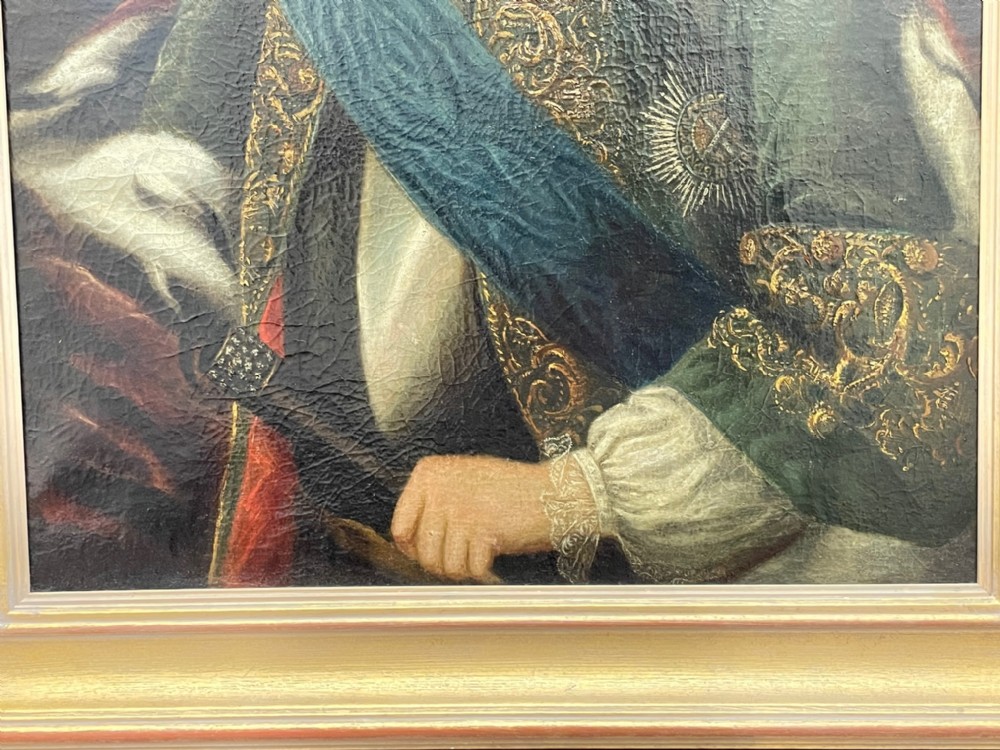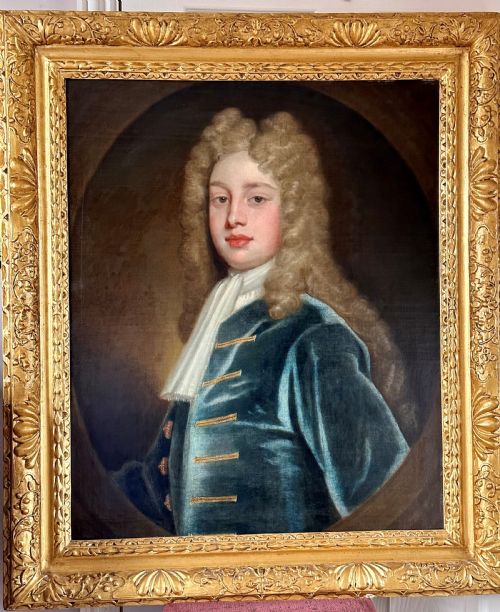
Cheshire Antiques Consultant Ltd has dated this 18th Century Portrait Painting to the 18th Century.
Subject & Medium
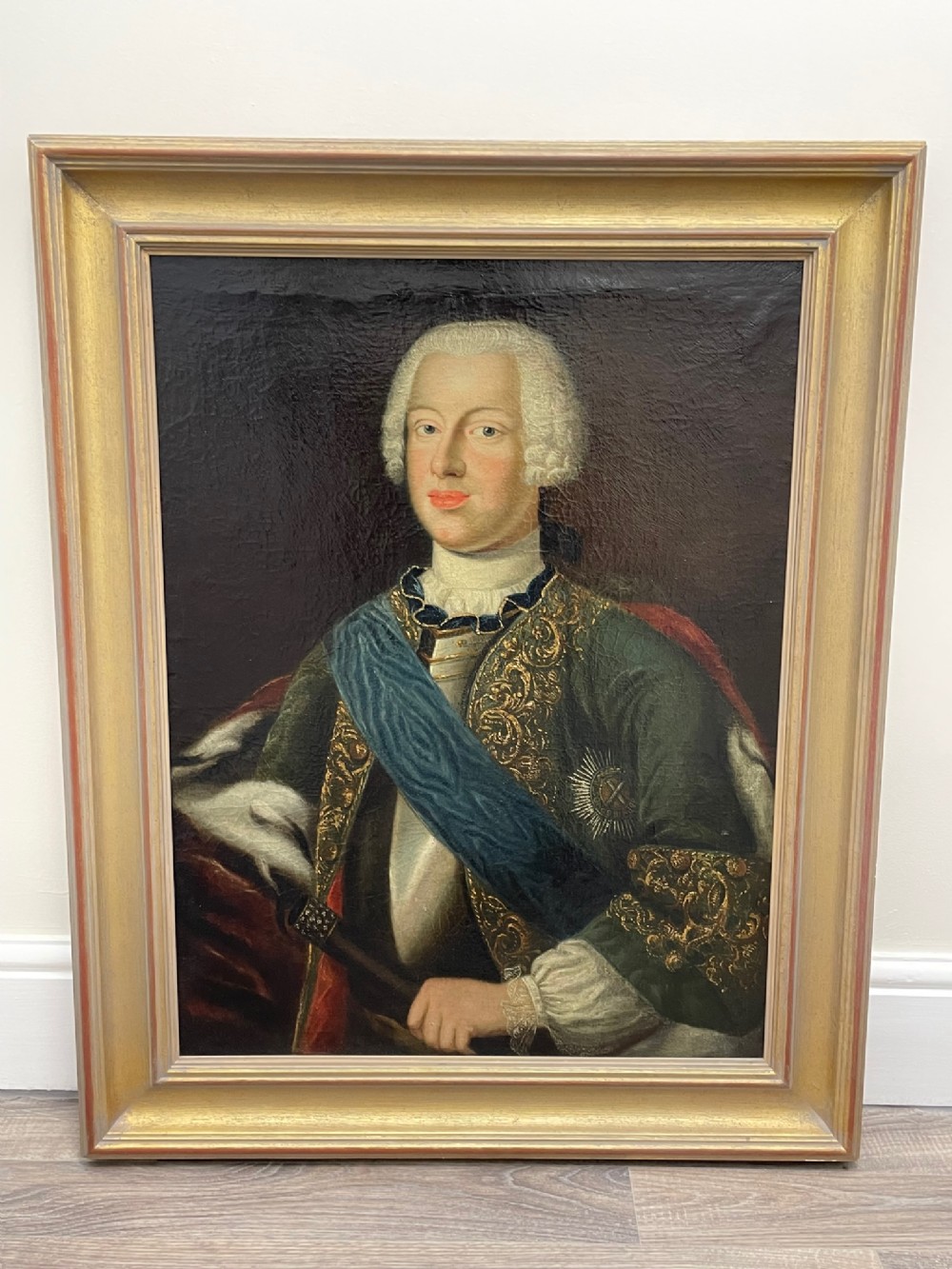
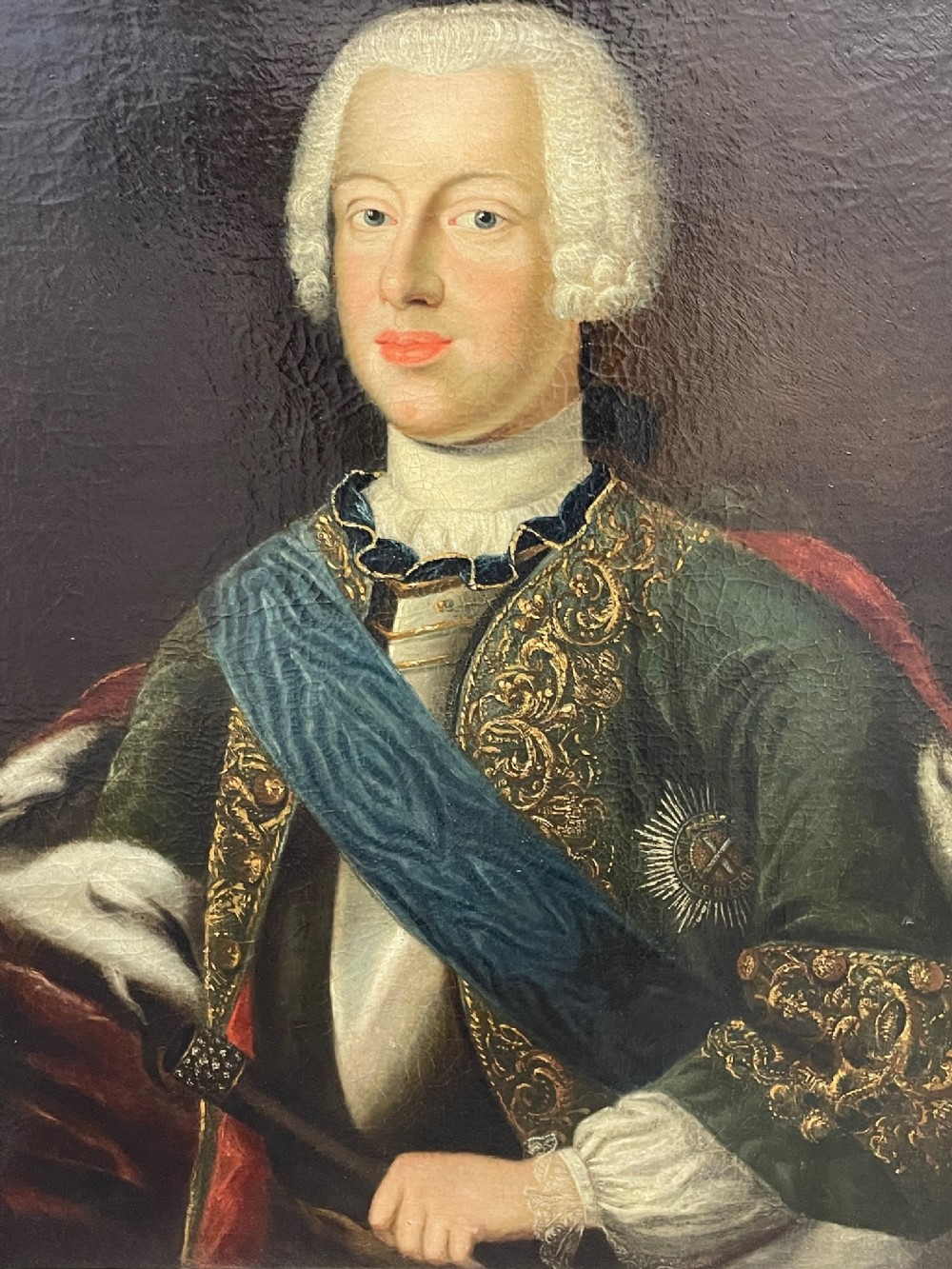
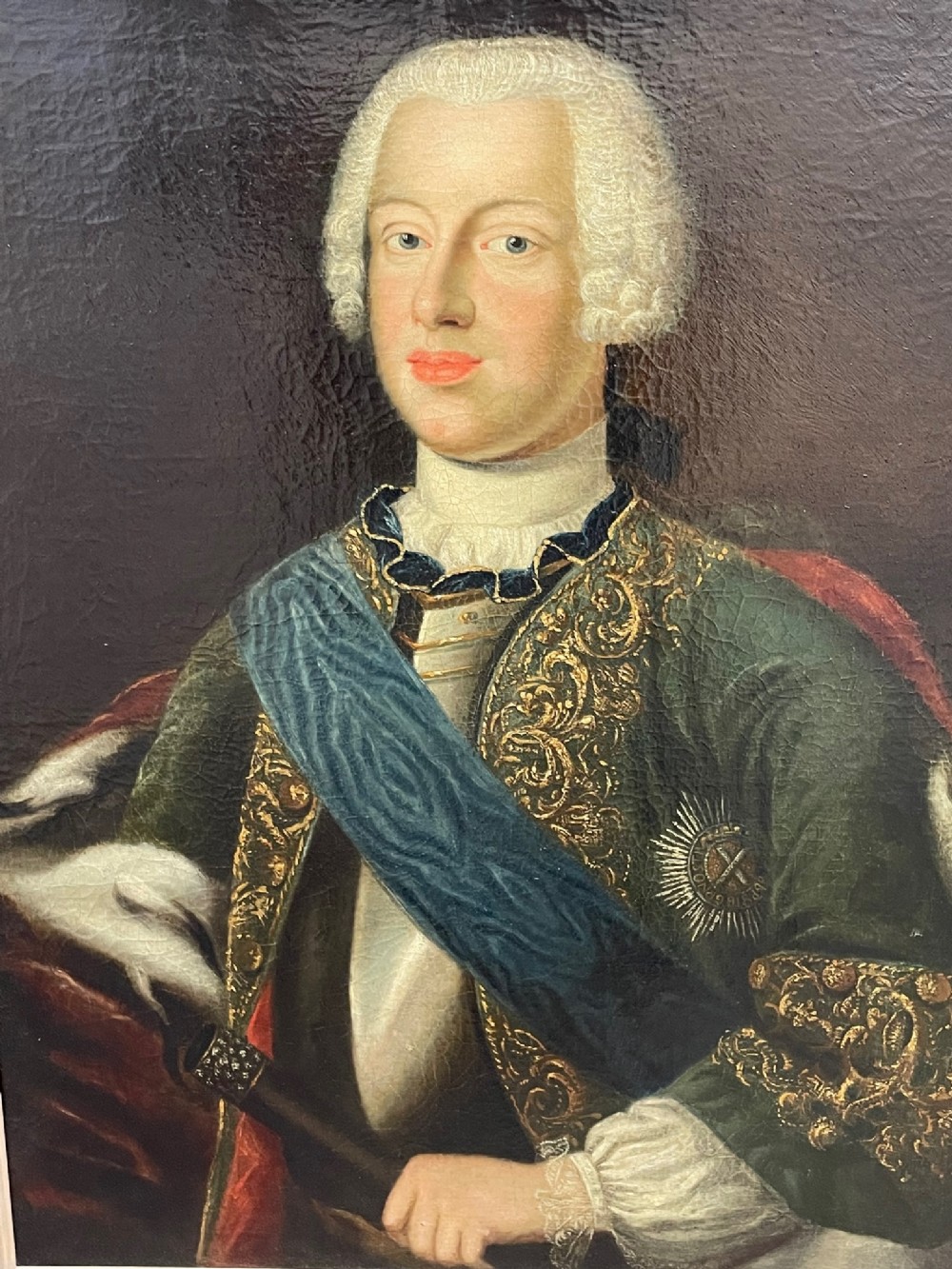
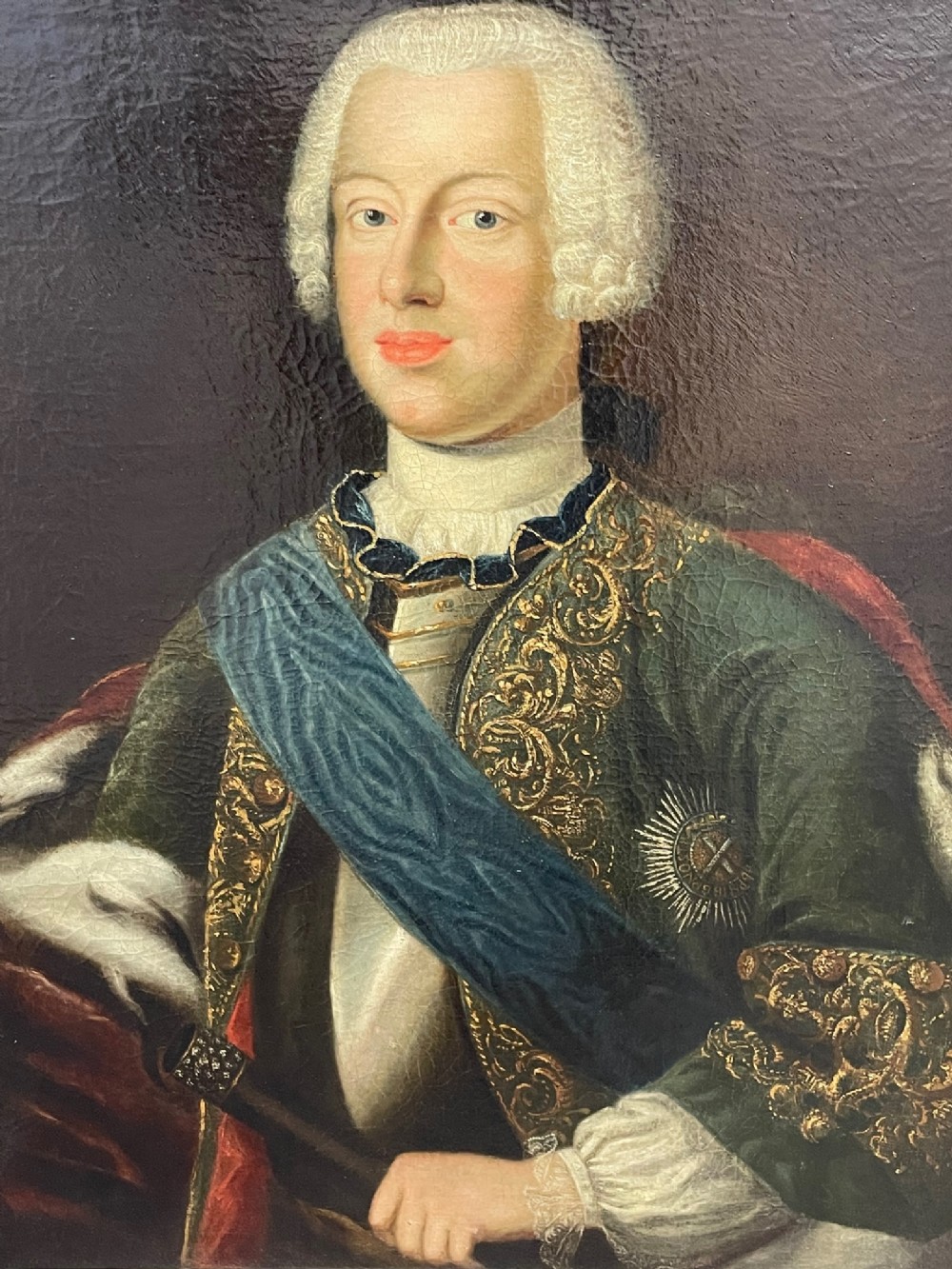
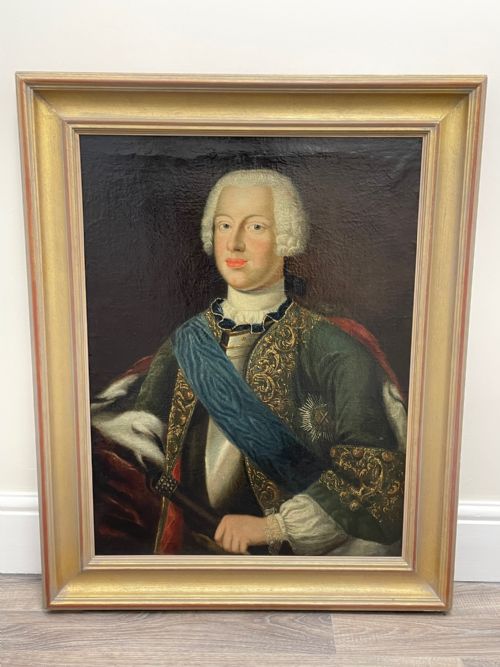
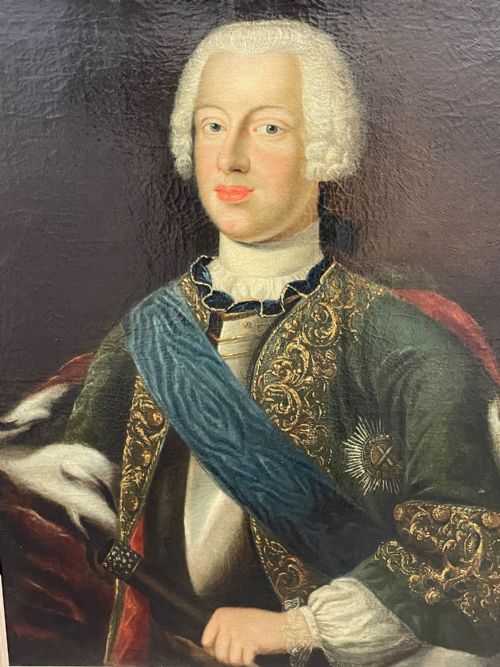
A substantial and finely executed 18th-century court portrait of Duke Anthony Ulrich of Brunswick-Lüneburg (1714–1774), shown half-length, turned three-quarter to the left and meeting the viewer’s gaze with composed assurance. He appears in full ceremonial and military dress, his Russian insignia and rank clearly presented.
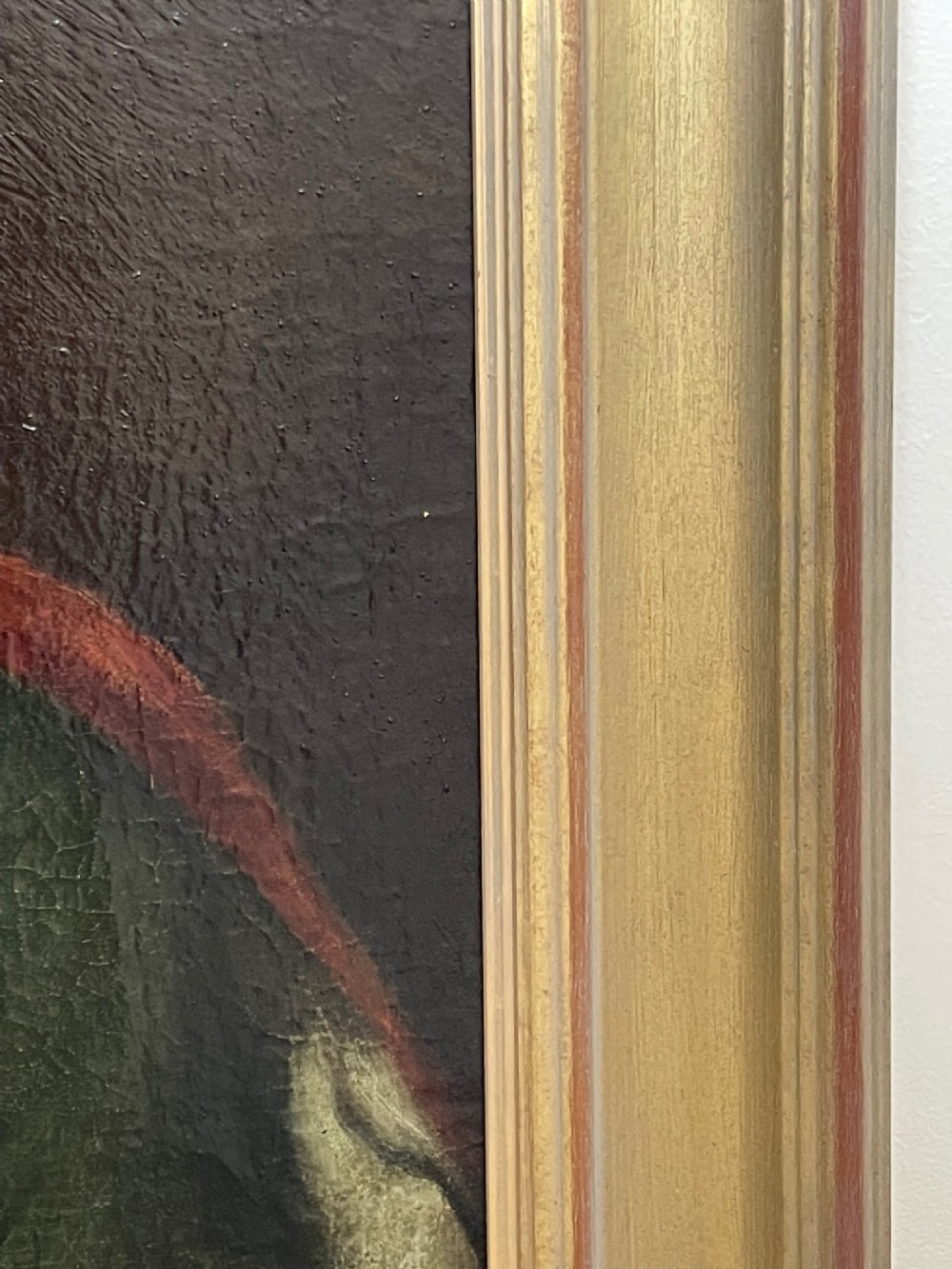
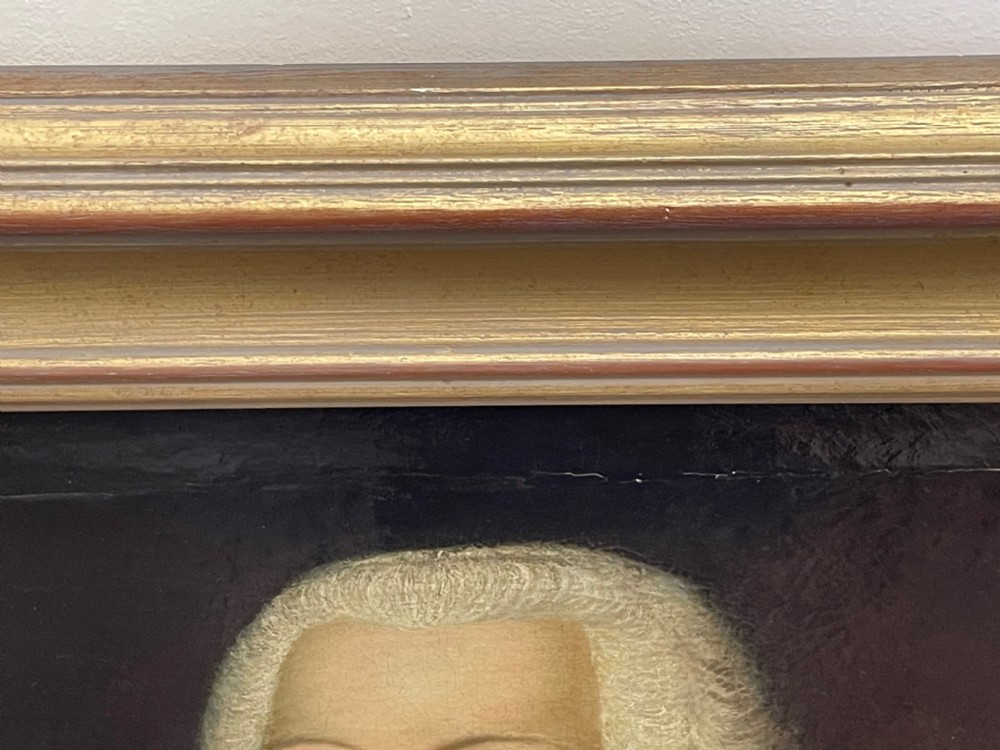
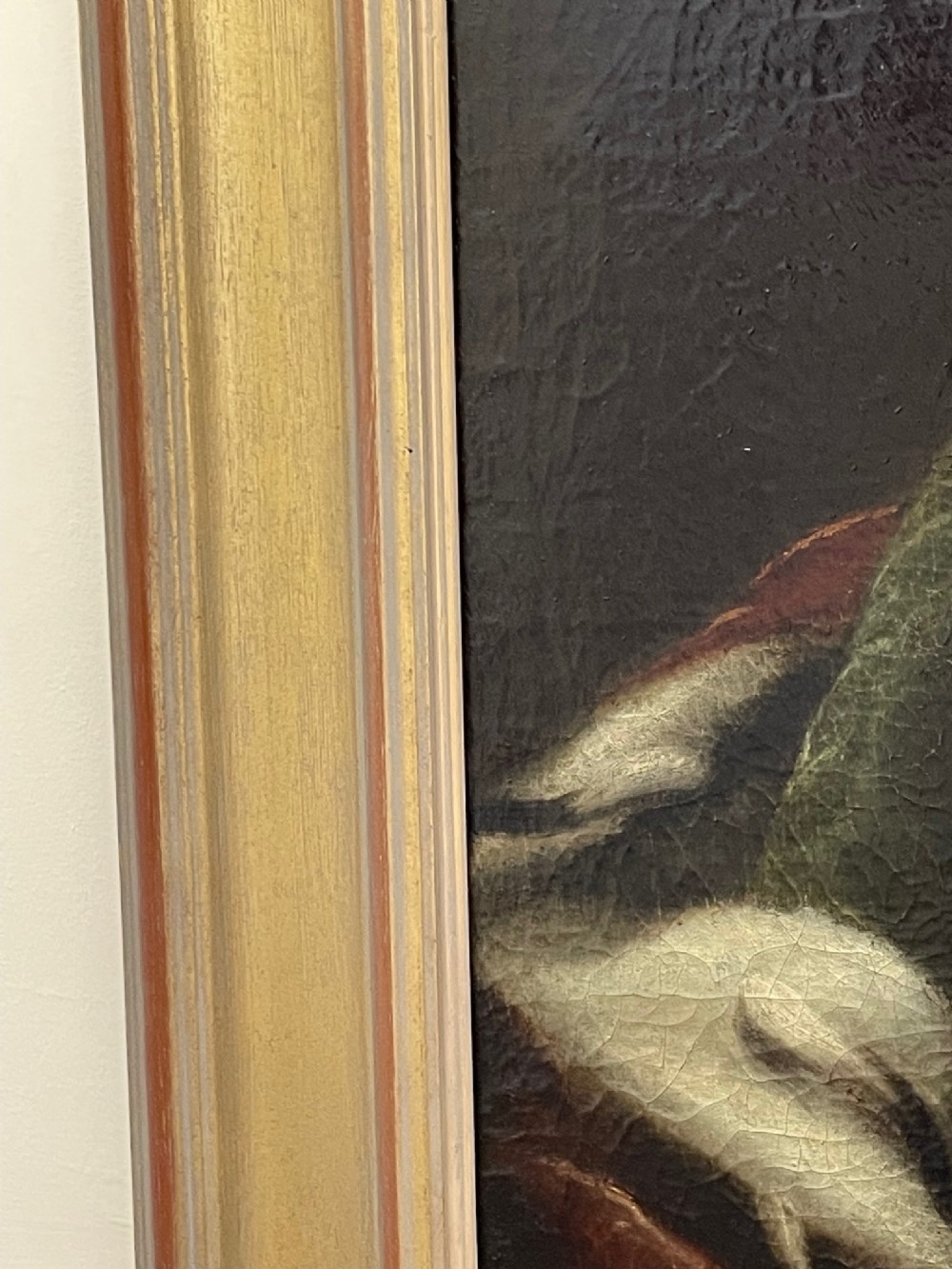
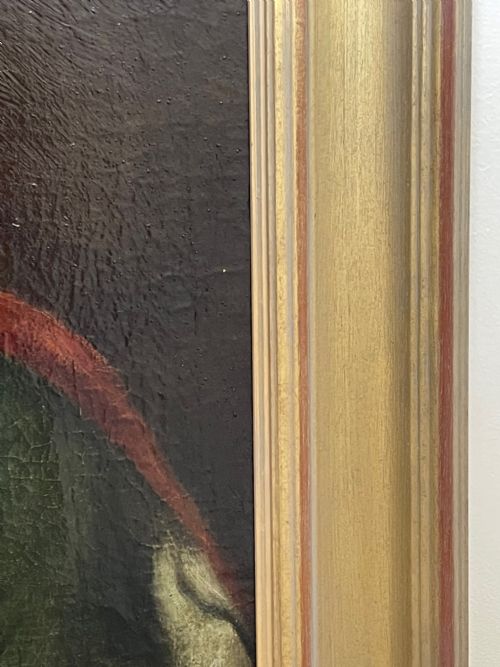
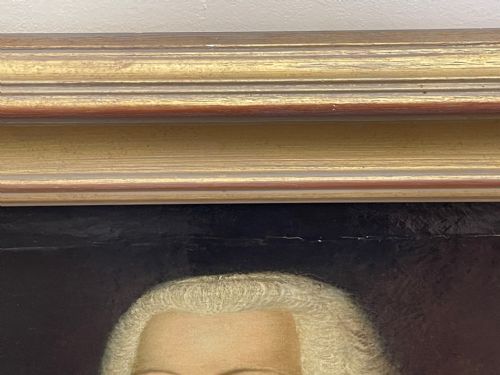
The painting is in oil on canvas, later relined, and set in a sympathetic moulded gilt wooden frame. Framed dimensions are approximately 97 × 78 × 4.5 cm, giving the work real presence on the wall and making it suitable as a focal point in a drawing room, library or stair hall.
On stylistic grounds it is attributed to the circle of Georg Christoph Grooth (1703–1749), a German painter active at the Russian imperial court, and can be dated to around c. 1740–1750, close to the period of the sitter’s elevation to the rank of generalissimo.
Composition & Technique
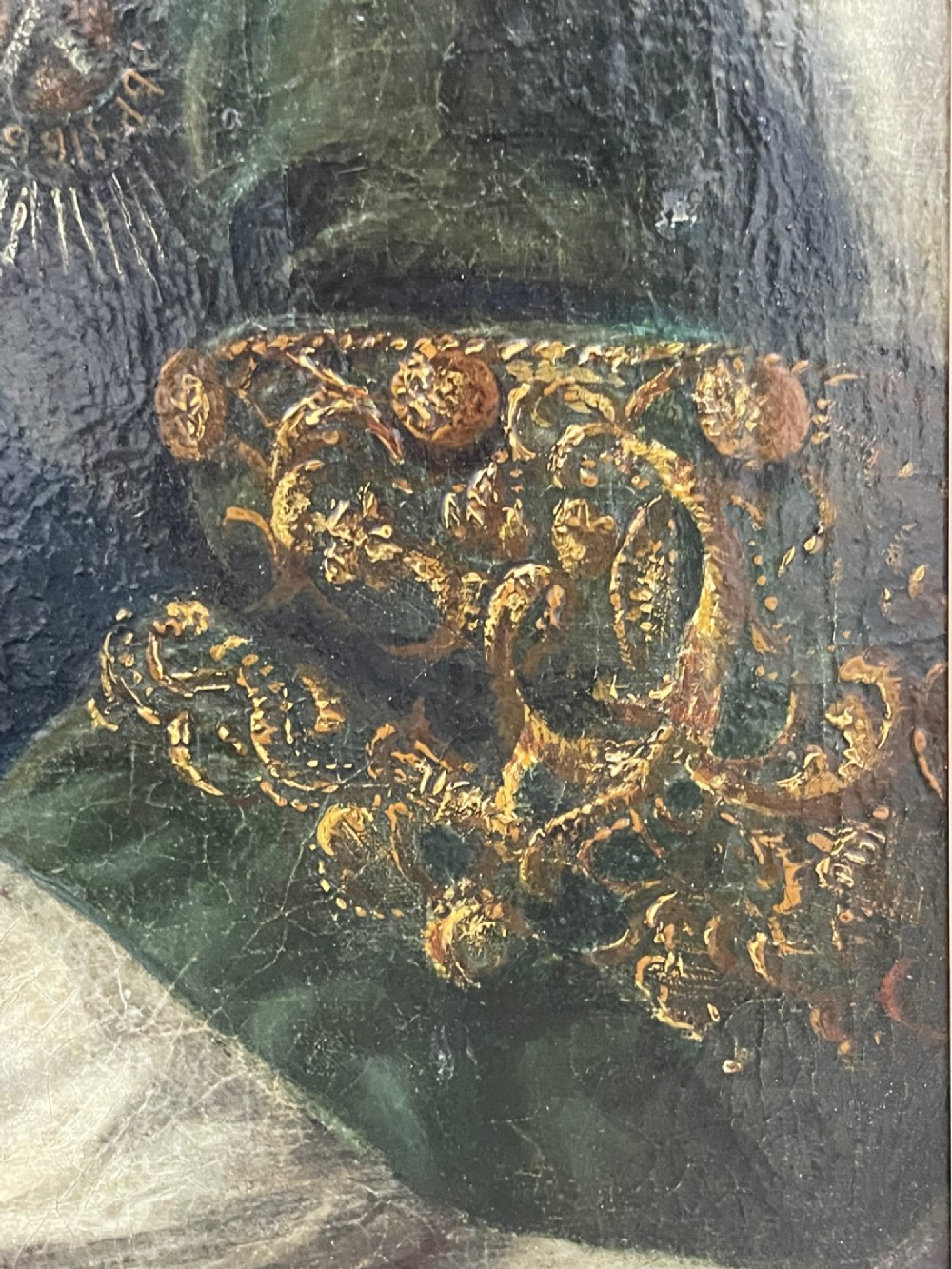
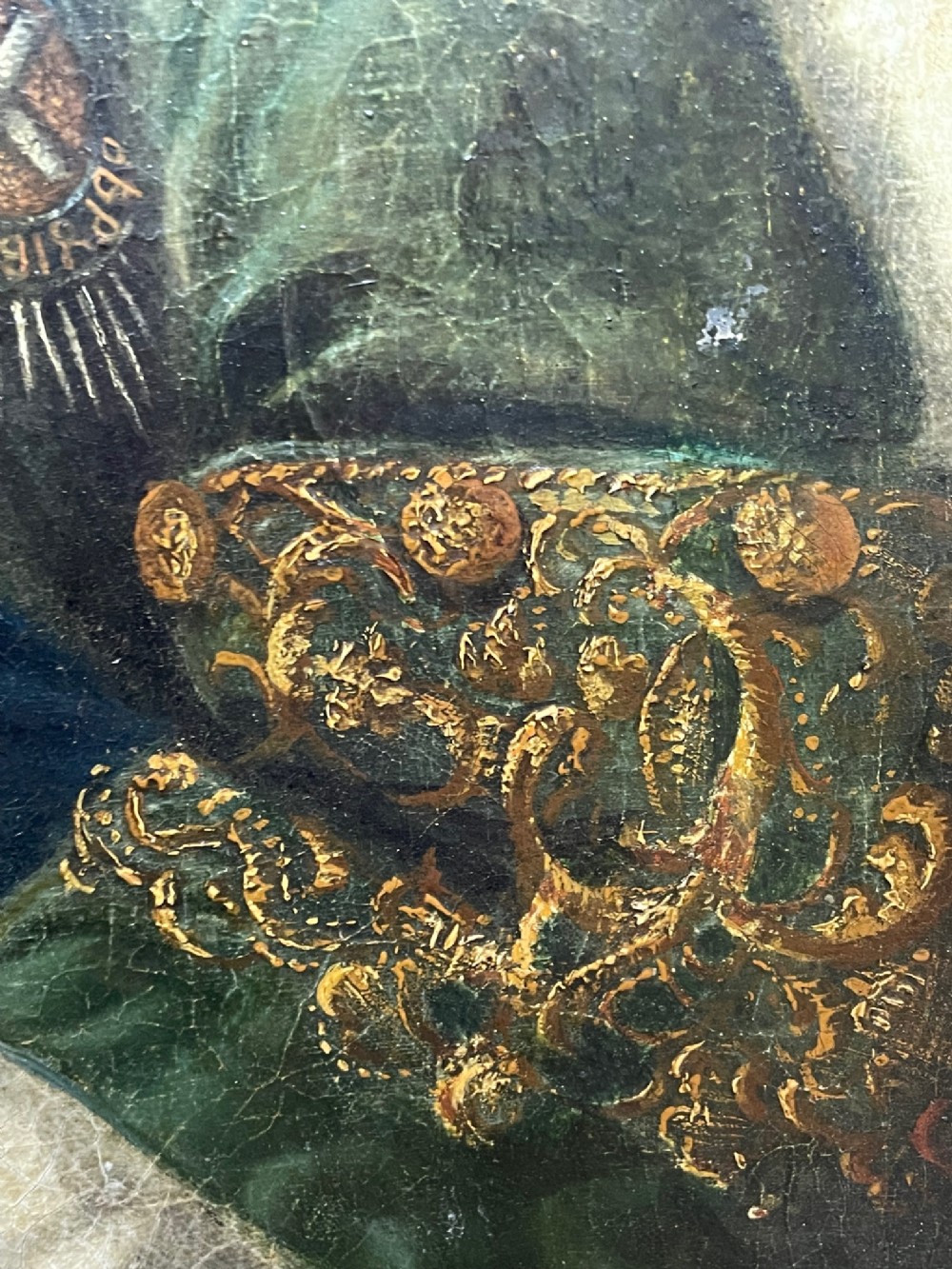
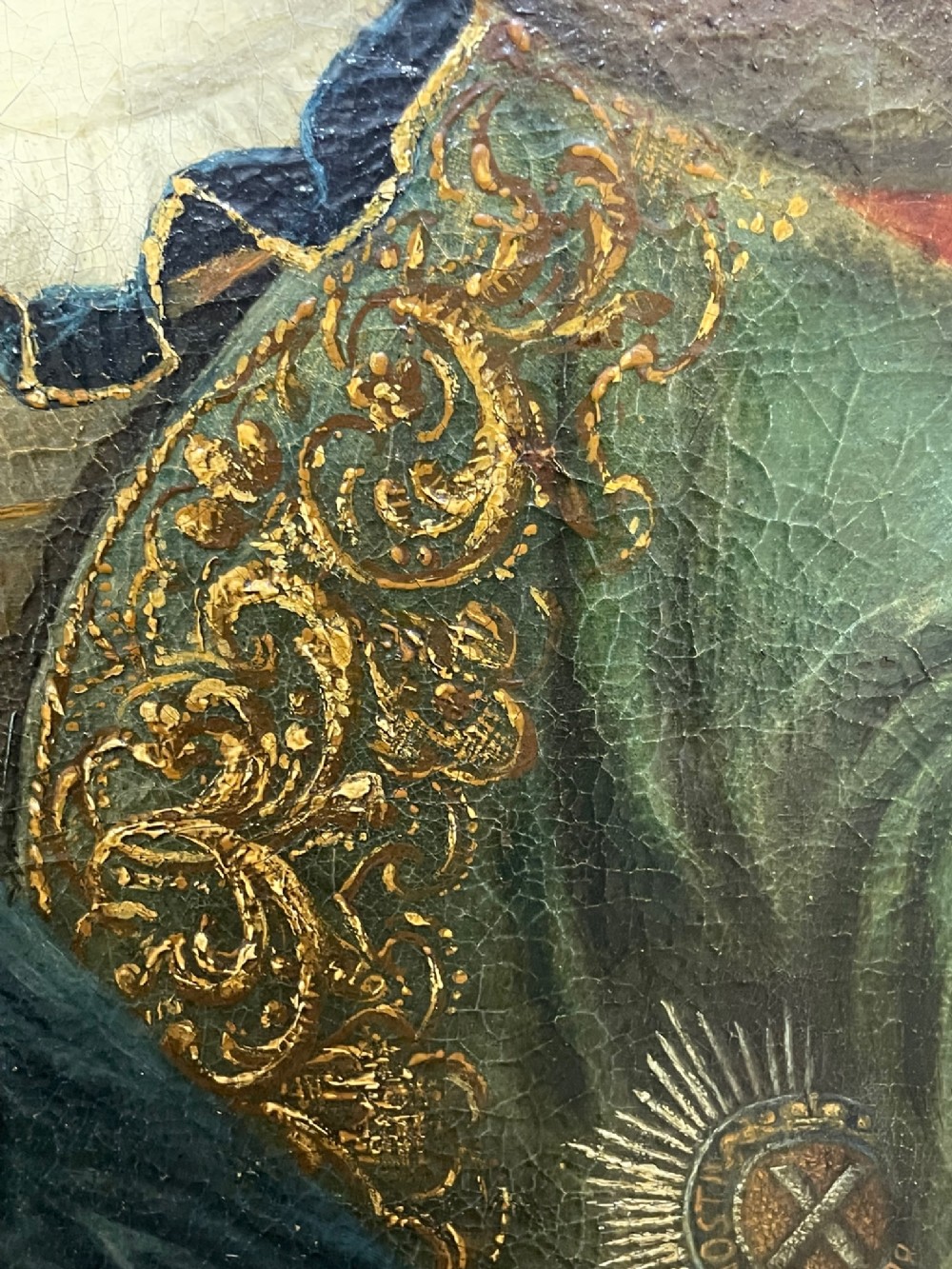
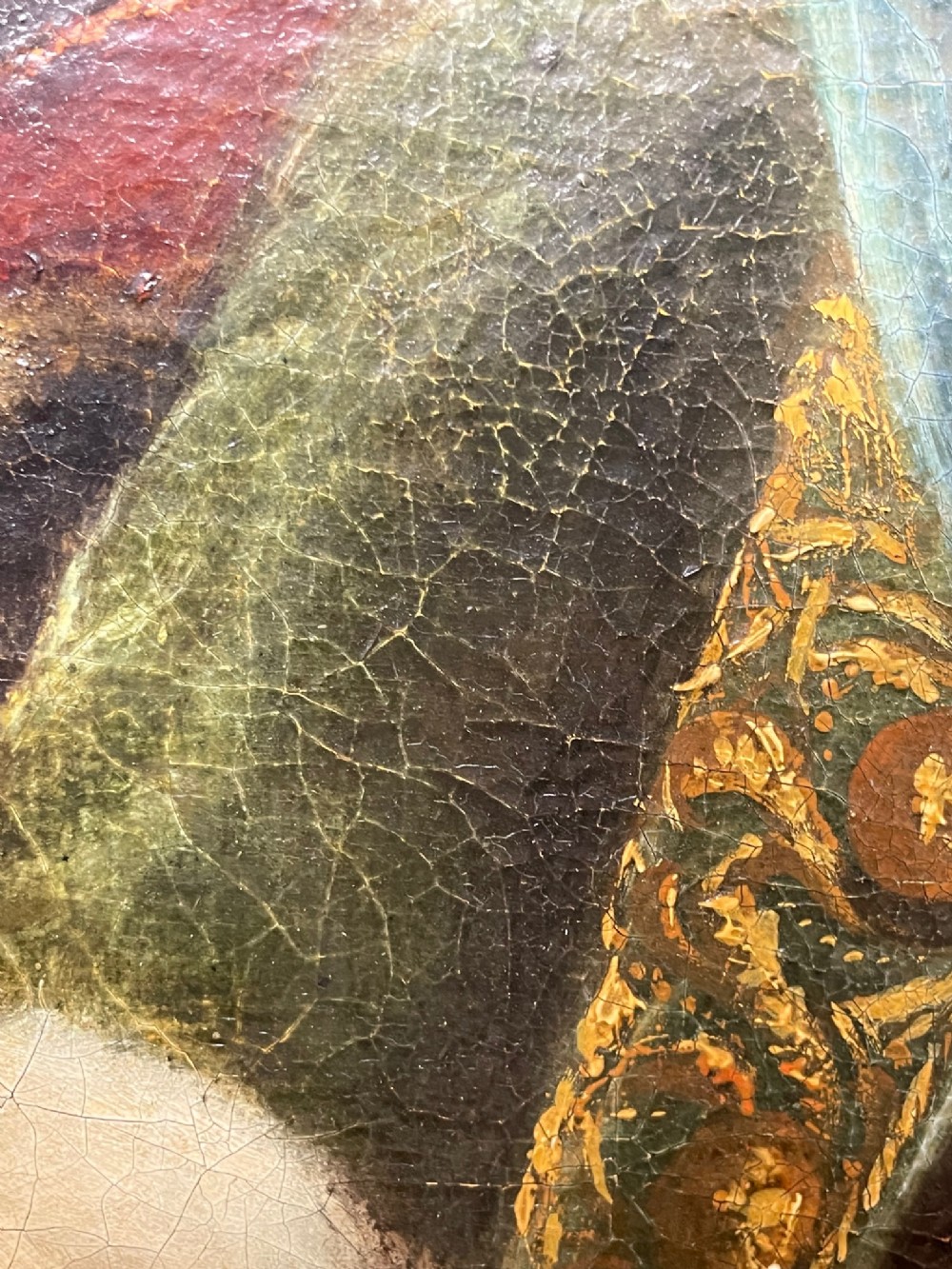
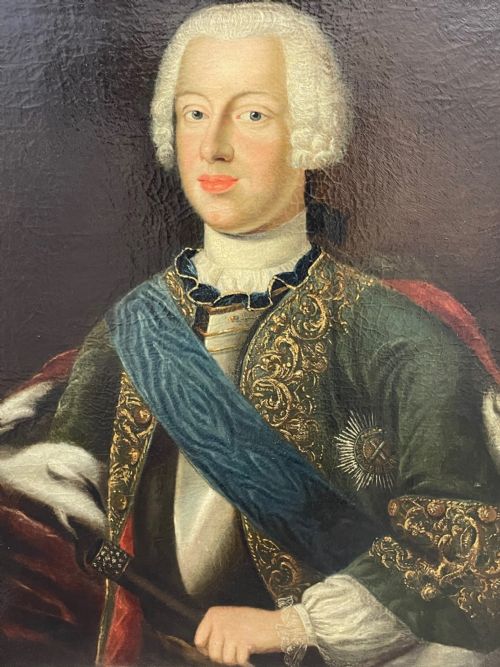
The composition is deliberately restrained and formal. Anthony Ulrich stands out clearly against a dark, unarticulated background, which throws his pale complexion, powdered wig and richly coloured garments into sharp relief. He wears a deep green coat densely embroidered with gold scrollwork, over which is draped a crimson mantle lined with white ermine – the traditional insignia of high princely rank.
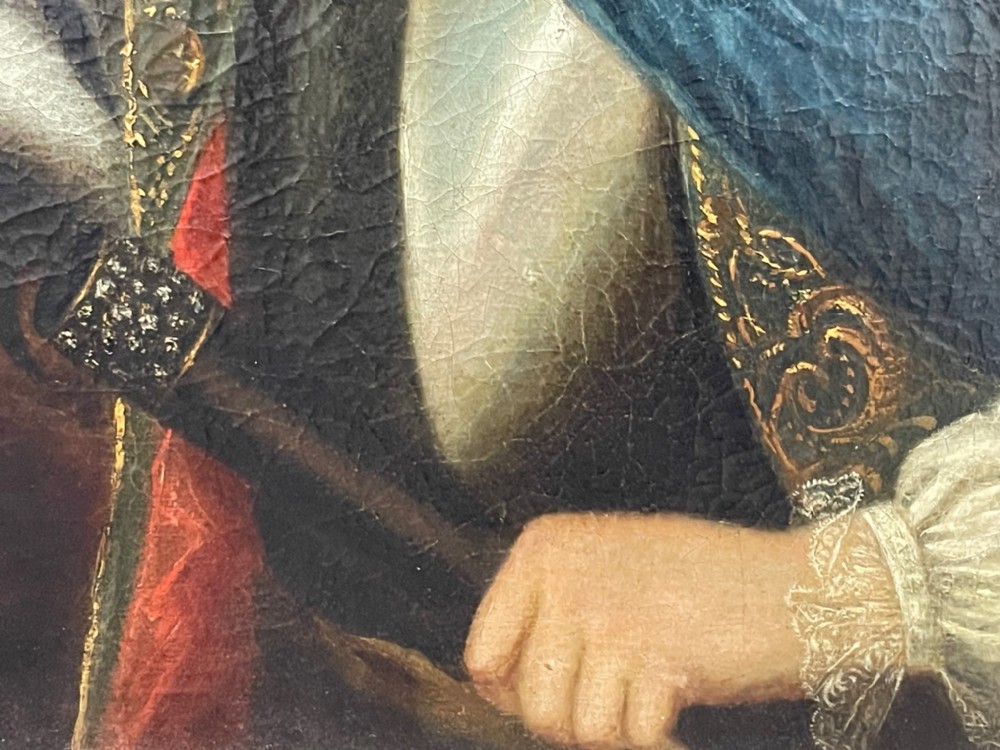
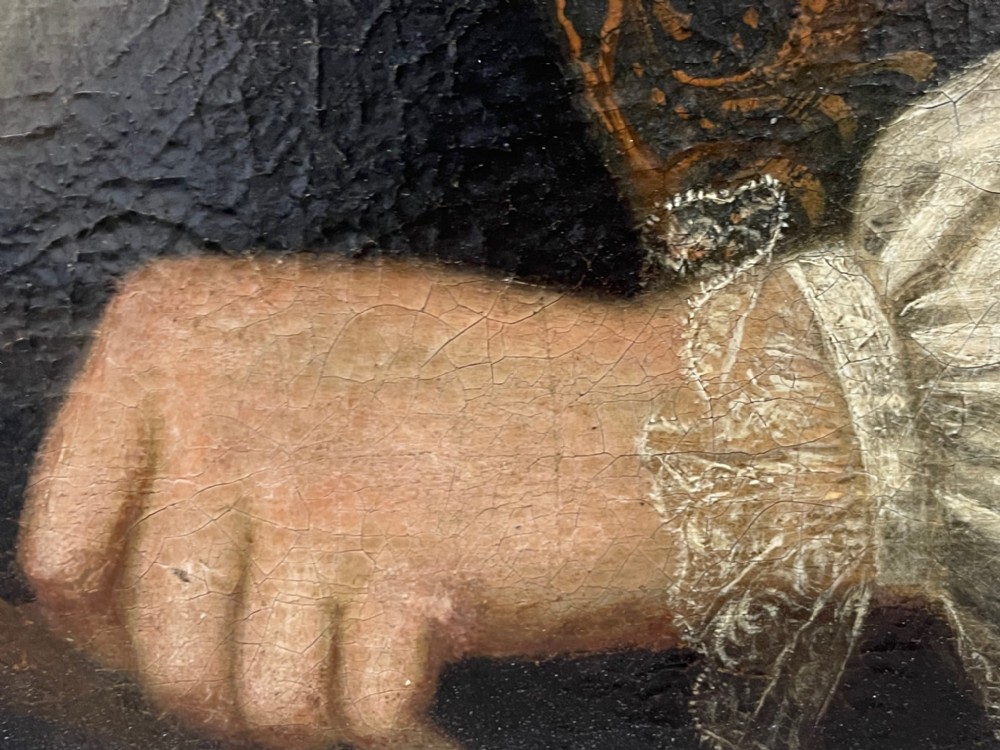
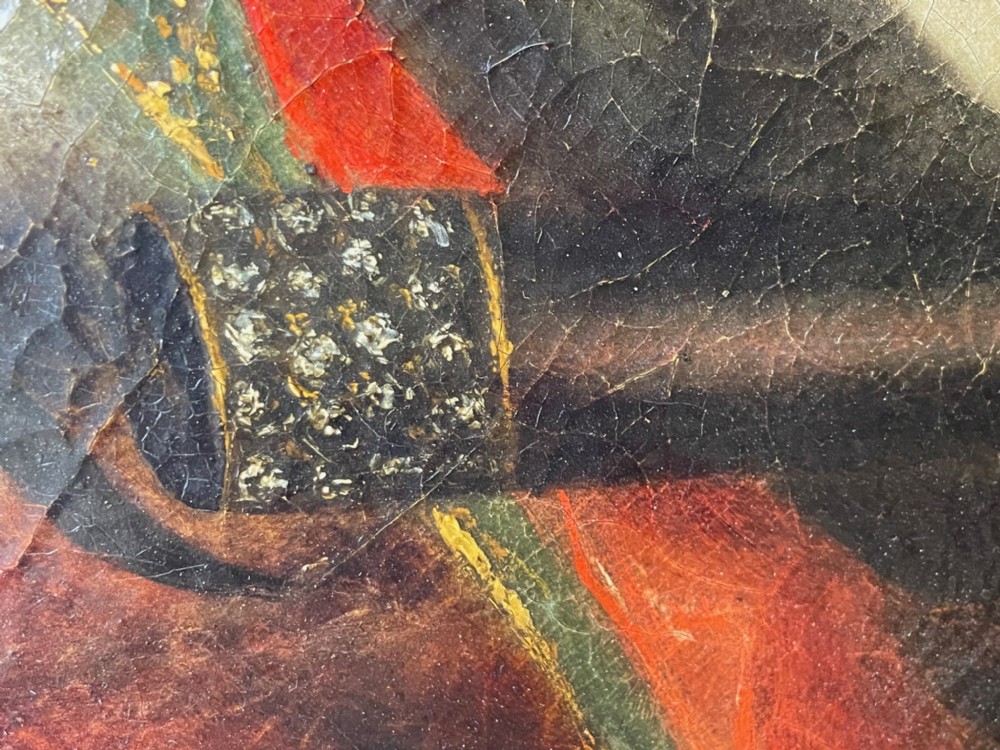
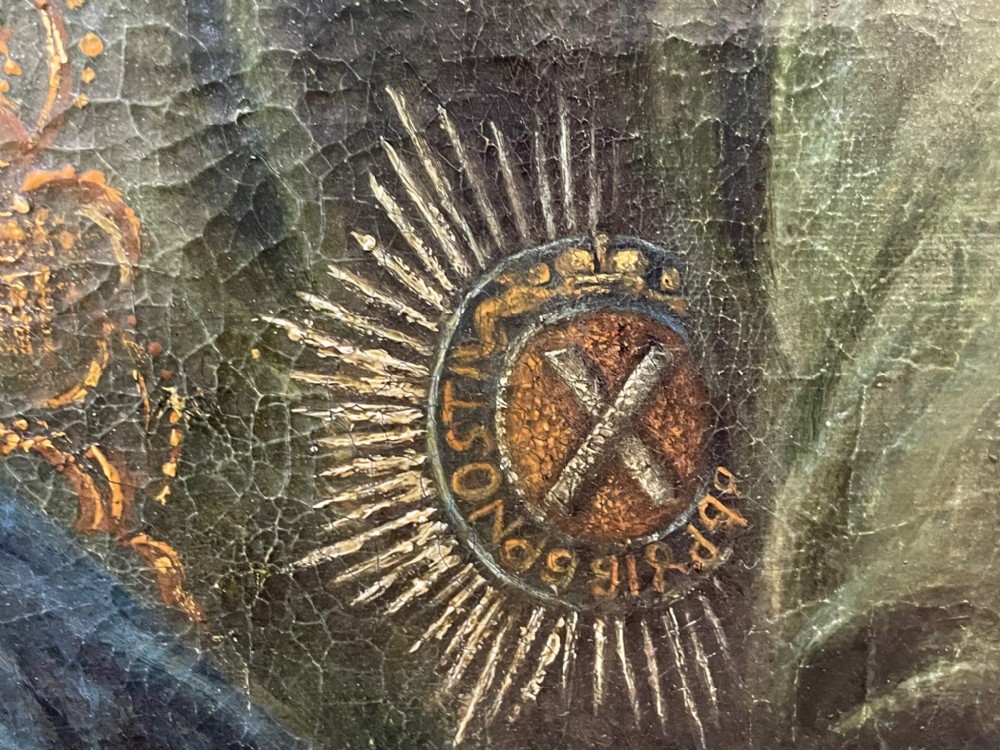
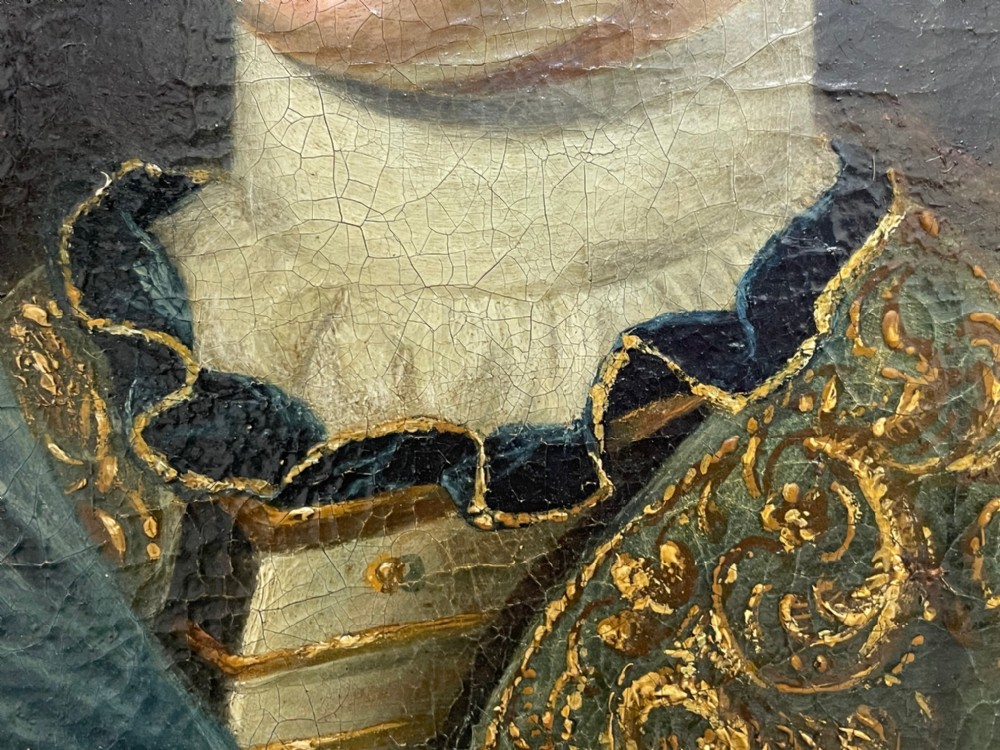
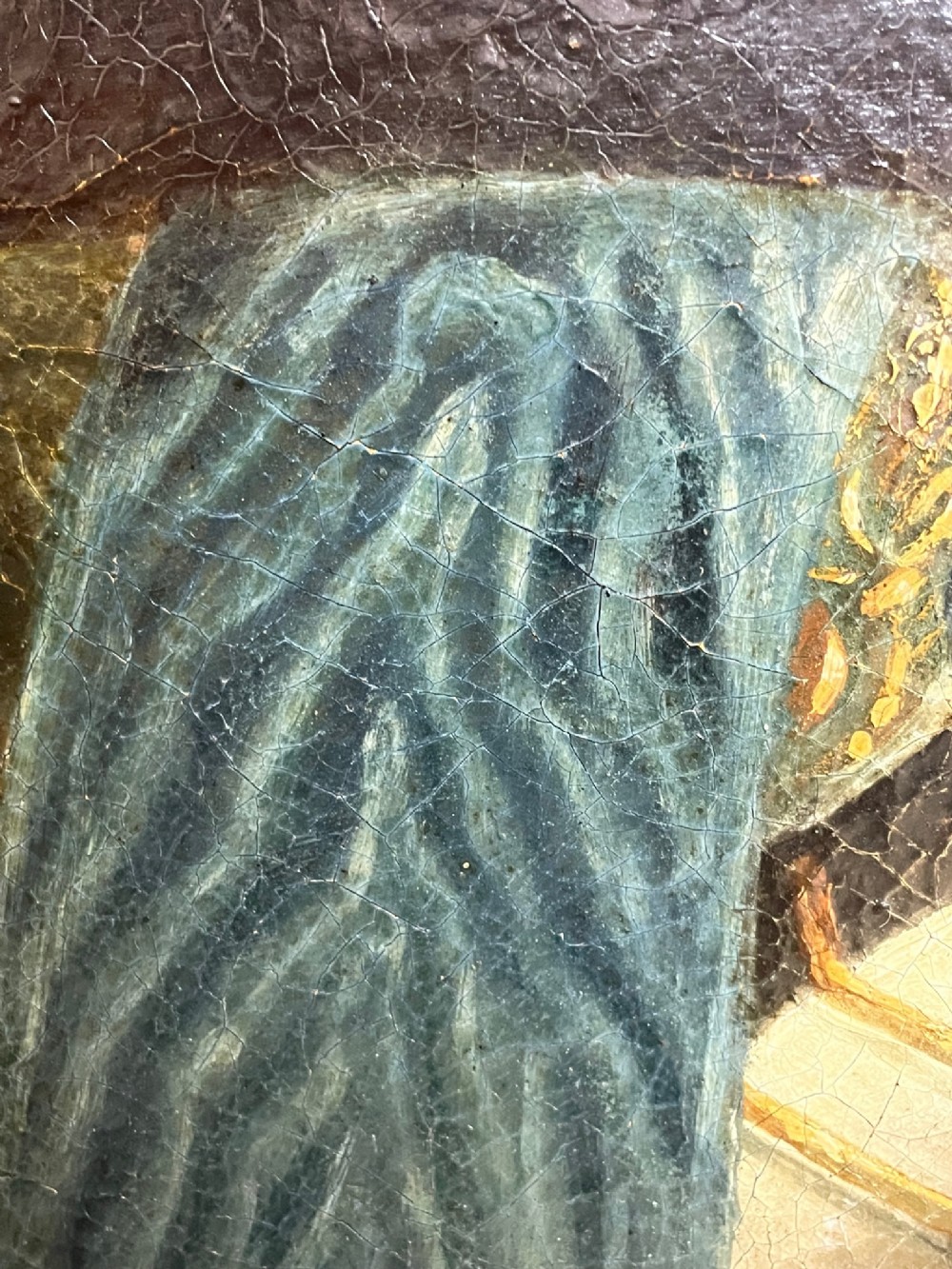
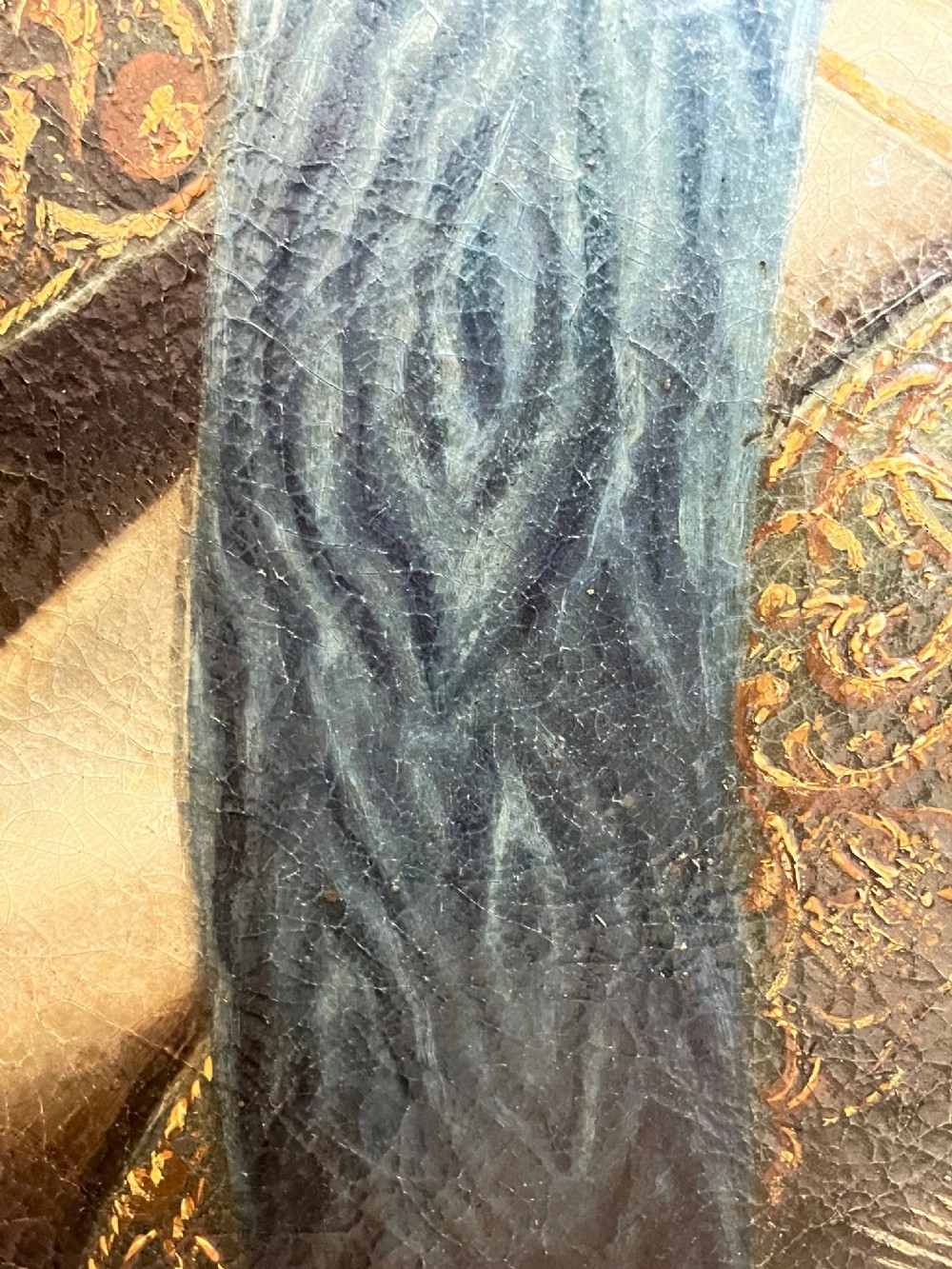
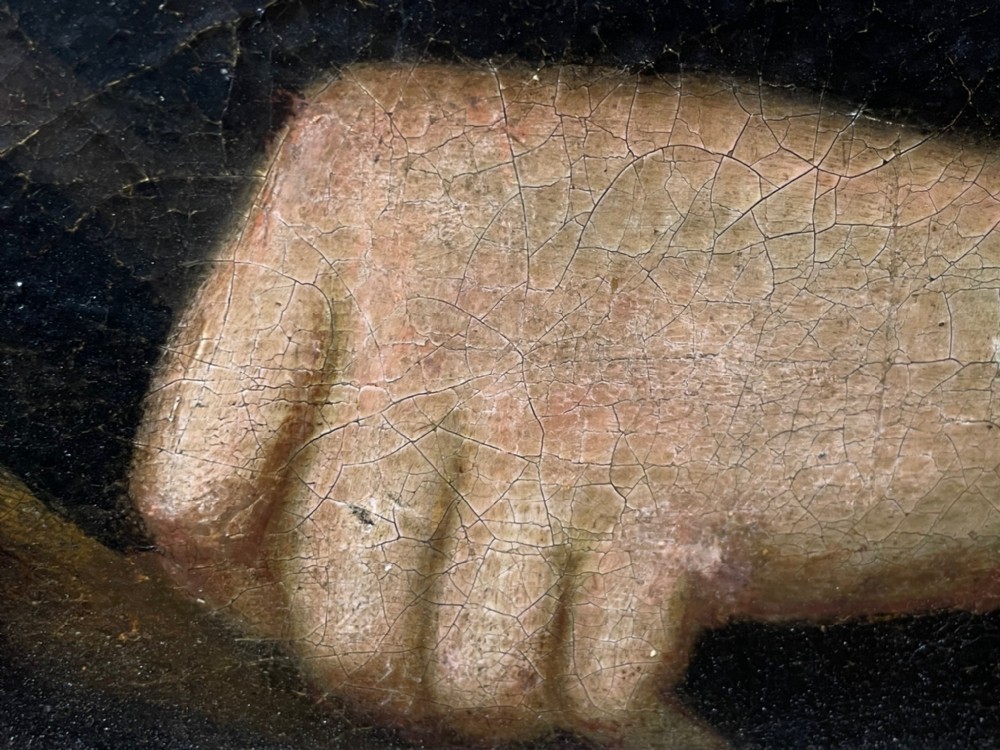
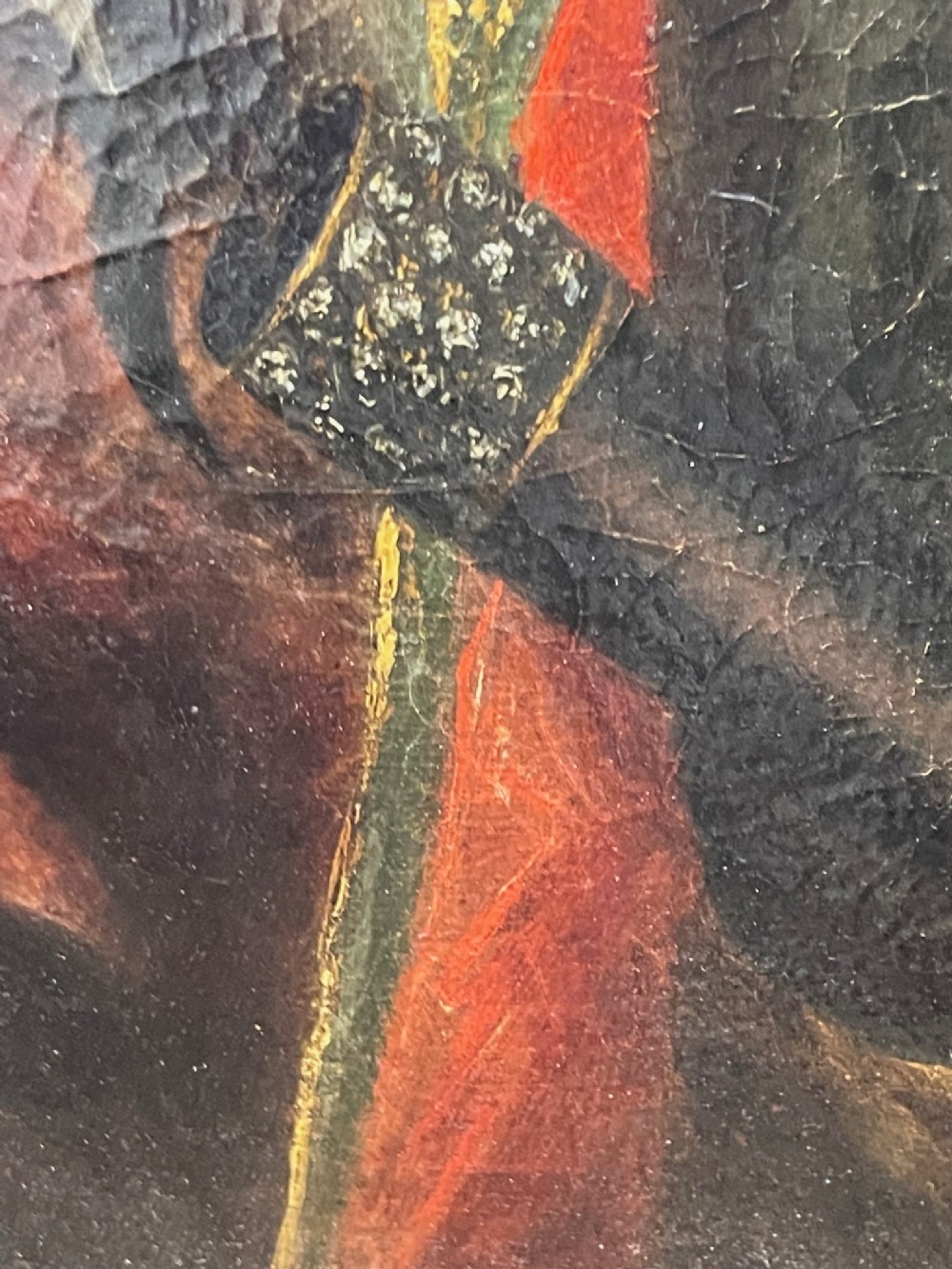
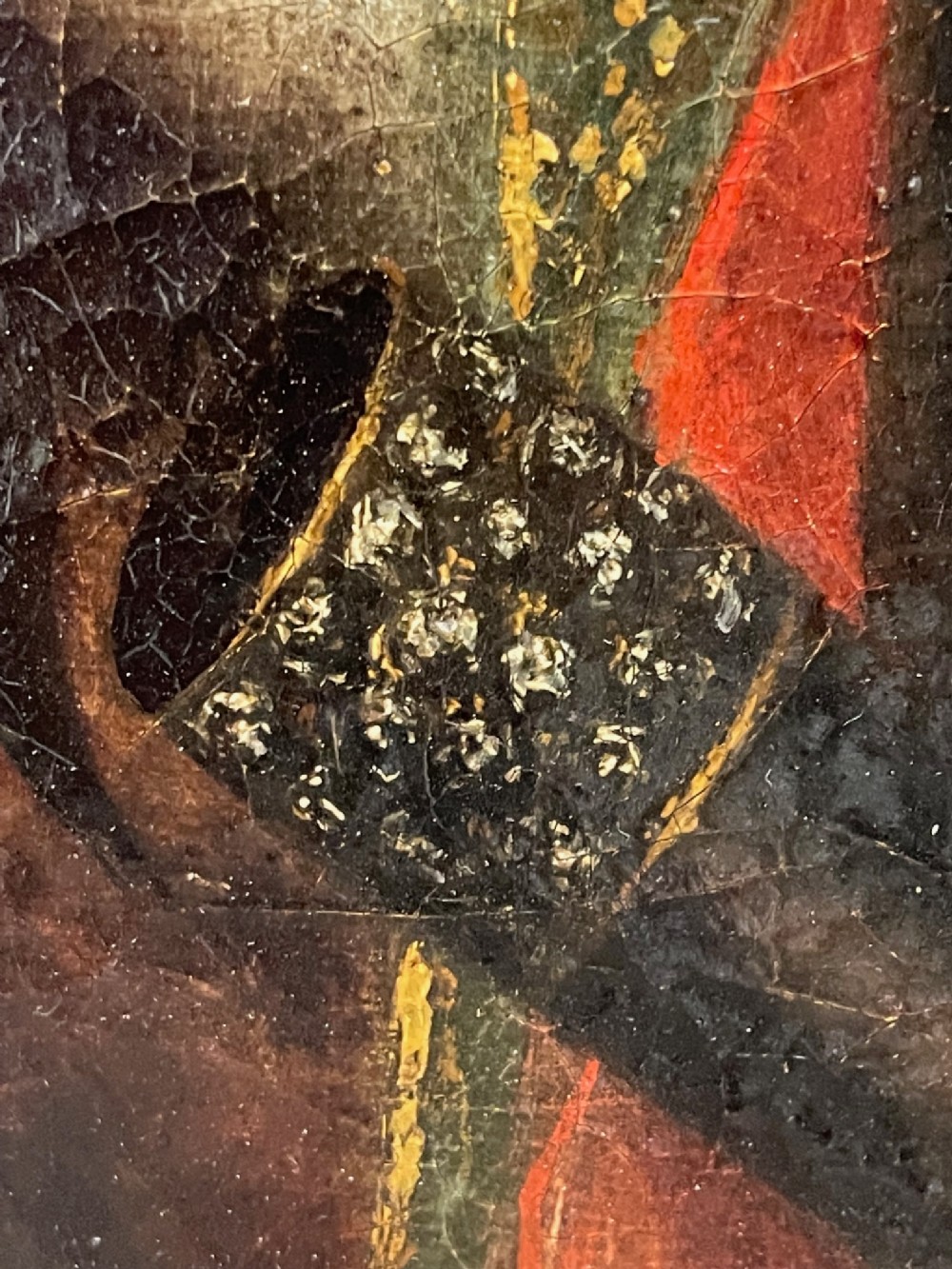
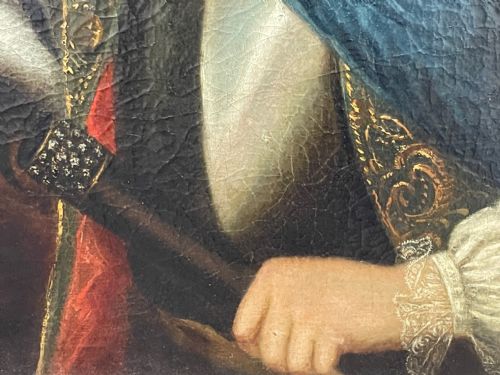
Crossing his chest is the pale blue sash of the Imperial Order of St Andrew, the highest order of chivalry in imperial Russia. Around his shoulders lies the dark blue collar of the order, its links picked out in gold. On his left breast is the radiating star of St Andrew, with the saltire clearly indicated in the central medallion. In his right hand he holds a dark field-marshal’s baton tipped with a jewelled finial, set diagonally so that it echoes the line of the sash and reinforces his military authority.
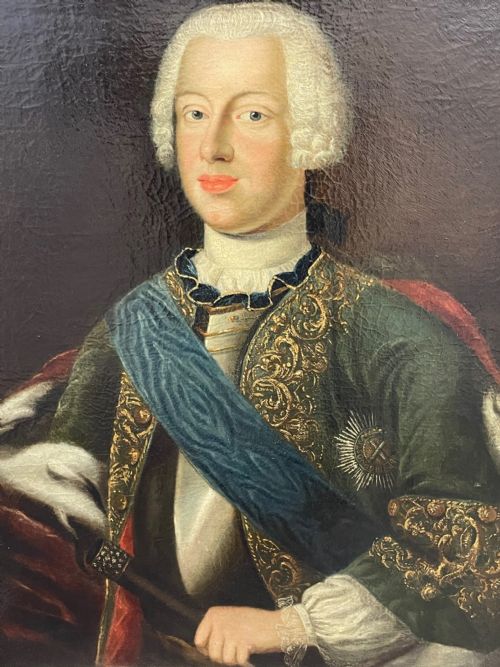
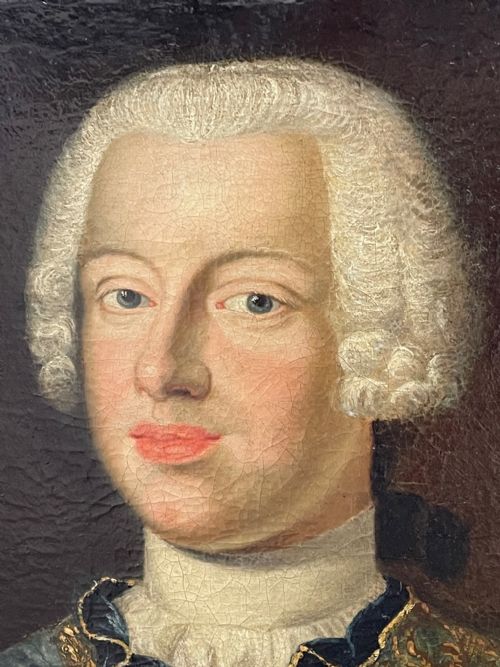
Technically, the work shows the hallmarks of a well-trained mid-18th-century court painter. The head is laid in over a relatively light ground and then built up in thin, carefully modulated layers, producing smooth, cool, porcelain-like flesh with controlled transitions of tone. The modelling of nose, cheeks and chin is crisp, with small highlights on the nose and in the eyes, and a gentle flush in the cheeks and lips that brings life to the face. The powdered wig is described with small, regular strokes, sufficient to suggest texture without becoming fussy.
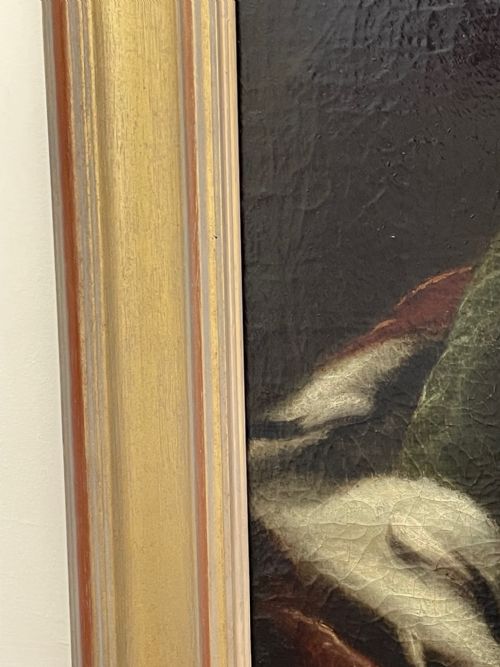
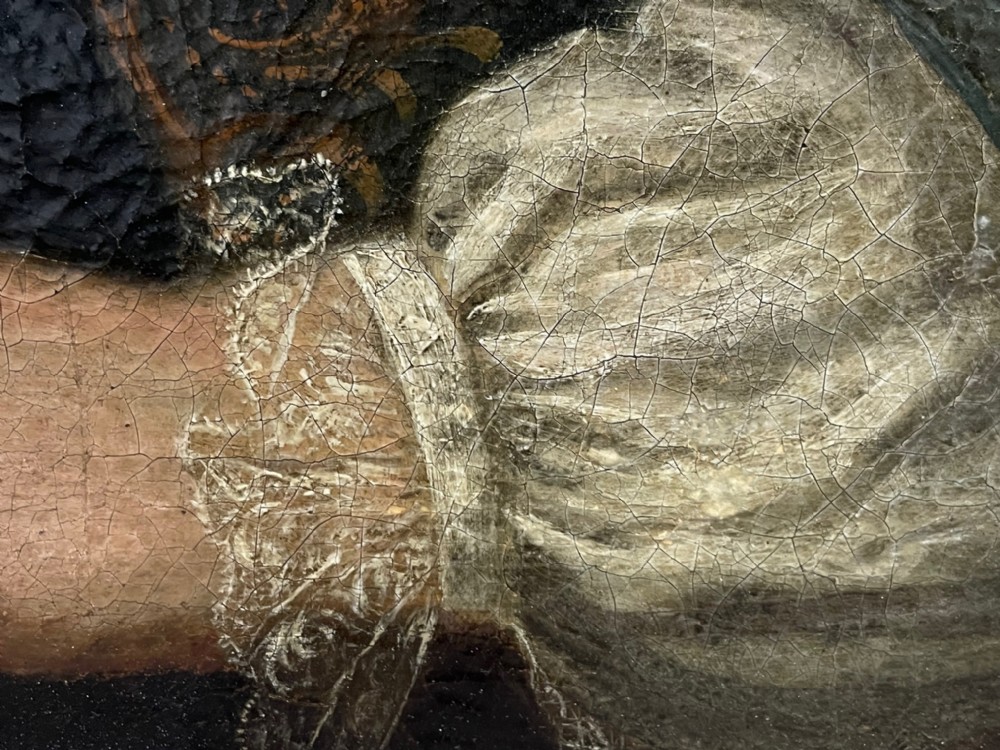
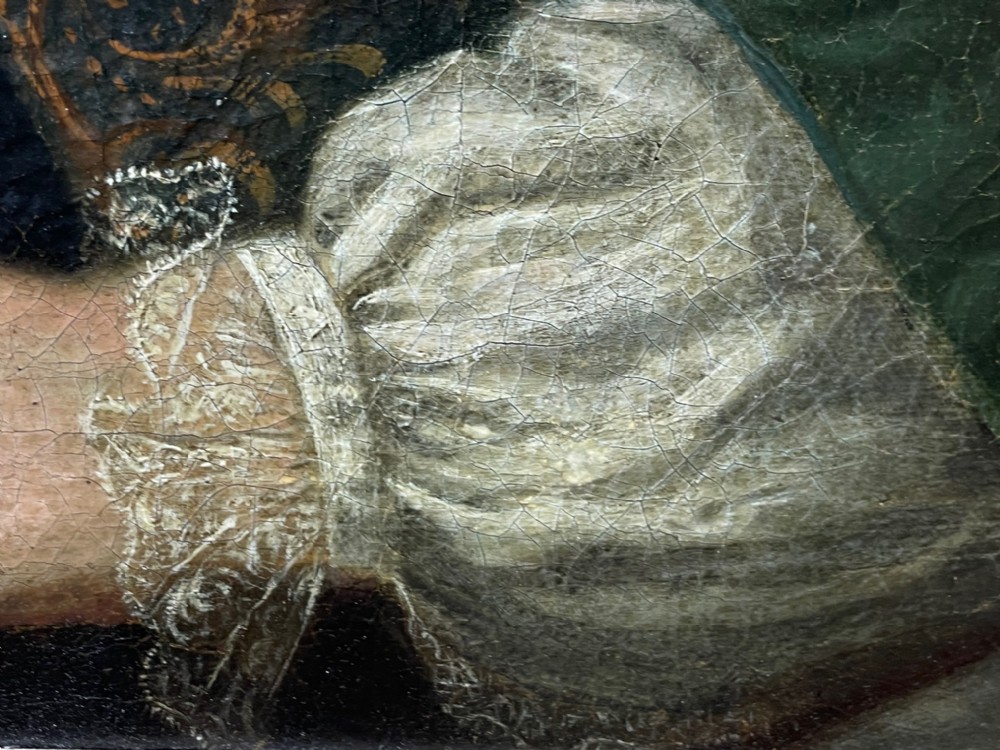
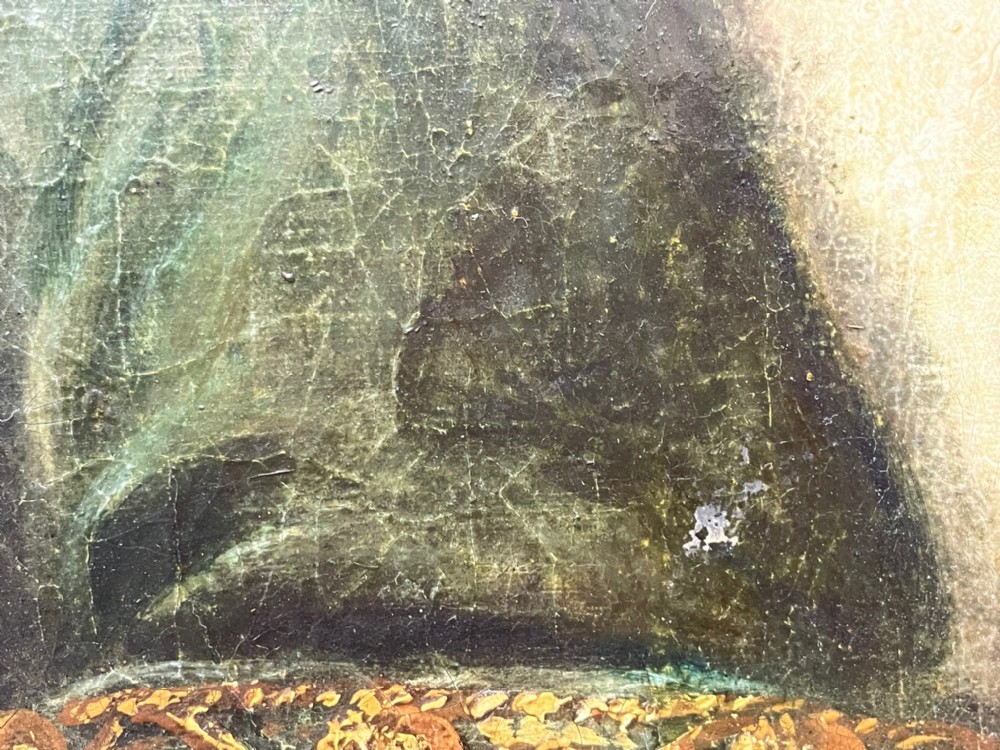
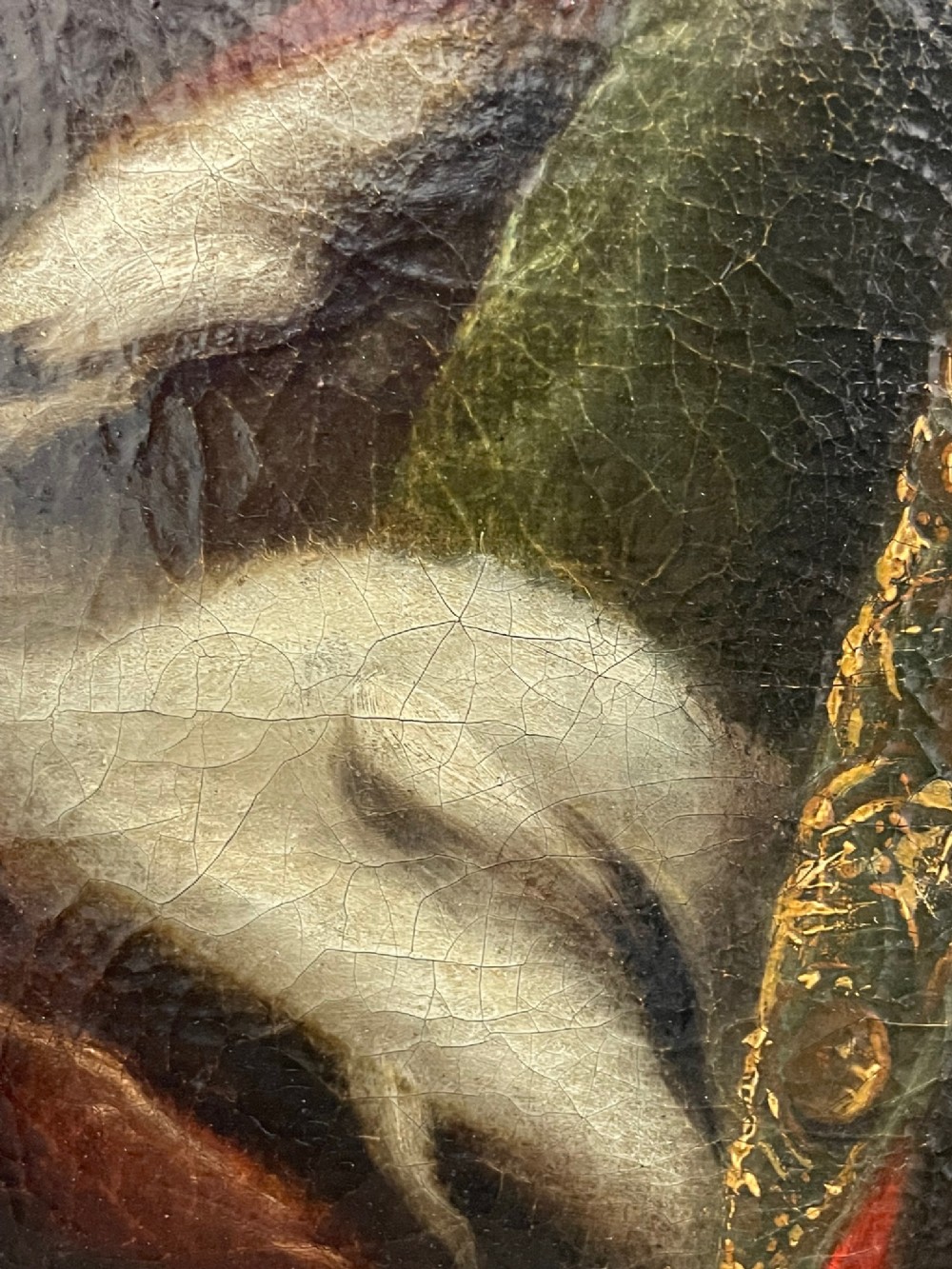
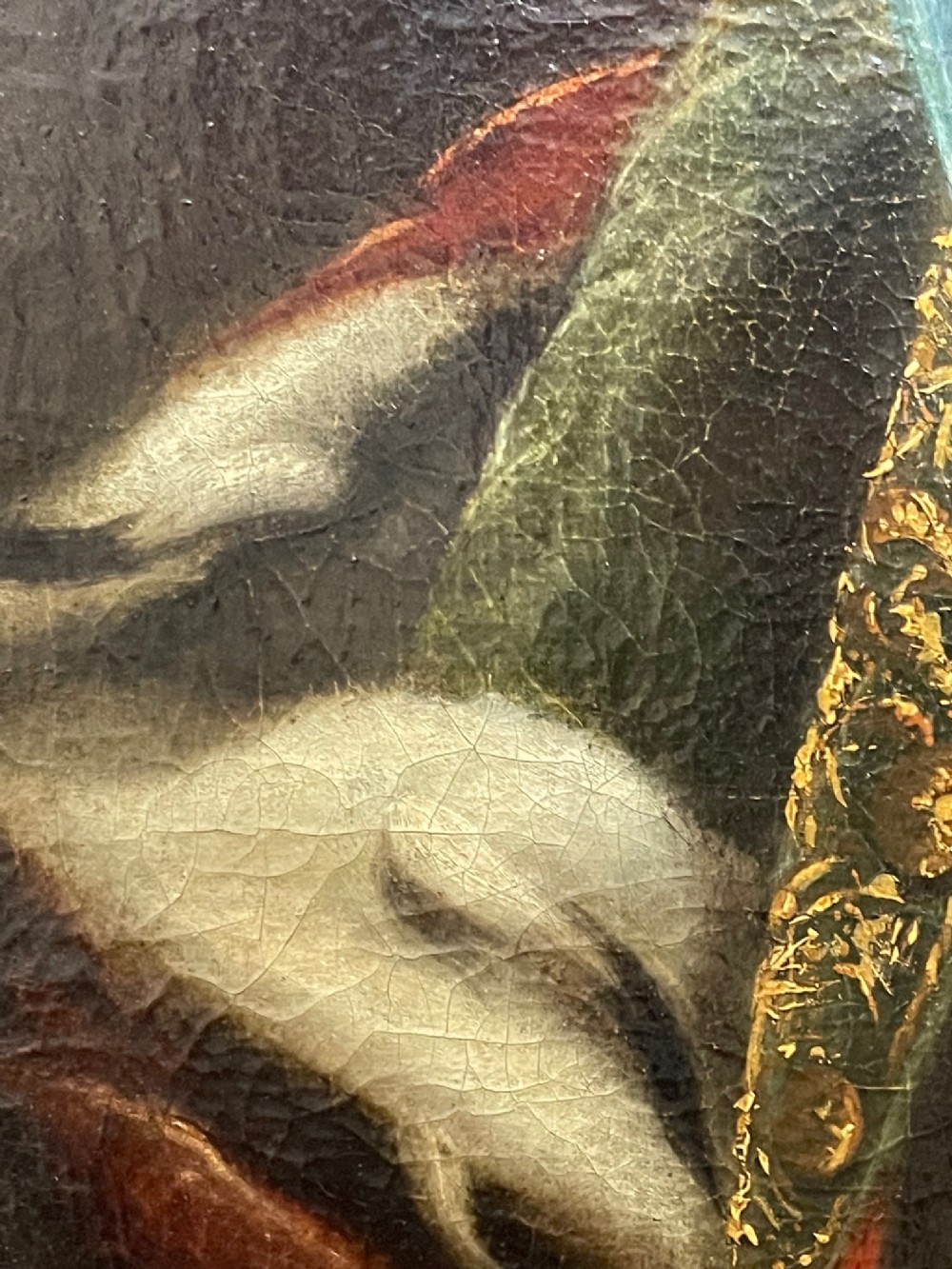
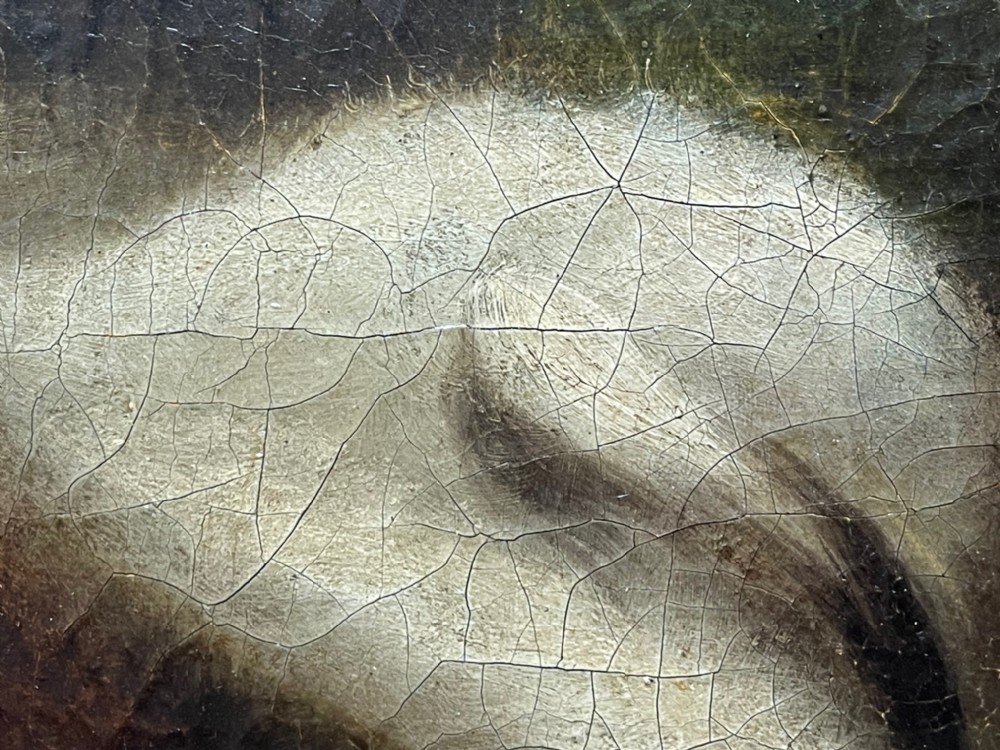
By contrast, the gold embroidery, lace cuff and ermine fur are handled with livelier, more broken touches of paint, catching the light and suggesting texture rather than insisting on every detail. This contrast between the calm surface of the face and the more animated treatment of the costume is typical of high-quality court portraiture of the period. The entire surface is unified by a fine and even craquelure consistent with an 18th-century canvas, which adds to the painting’s character and sense of age.
Artist – Linked Stylistically
Although the painting bears no signature, its style fits securely within the mid-18th-century German–Russian court portrait tradition, and in particular within the orbit of Georg Christoph Grooth (1703–1749).
Grooth, born in Stuttgart and later attached to the Russian imperial court, produced portraits that characteristically use a dark, uncluttered background, cool and carefully blended flesh tones, and a strong emphasis on insignia, sashes and batons as markers of rank. The present work shares those traits: the plain backdrop, the smooth, restrained modelling of the head, the cool palette, and the prominence given to the Order of St Andrew and to the field-marshal’s baton.
At the same time, the slightly idealised but dignified treatment of the sitter, and the balance between rich costume and unforced, calm
Cheshire Antiques Consultant Ltd has dated this 18th Century Portrait Painting to the 18th Century.
Source the historic in 17th, 18th, 19th & 20th century fine arts, painting, sculptures & collectibles
You can view the stock and full dealer information on the Cheshire Antiques Consultant Ltd Profile Page
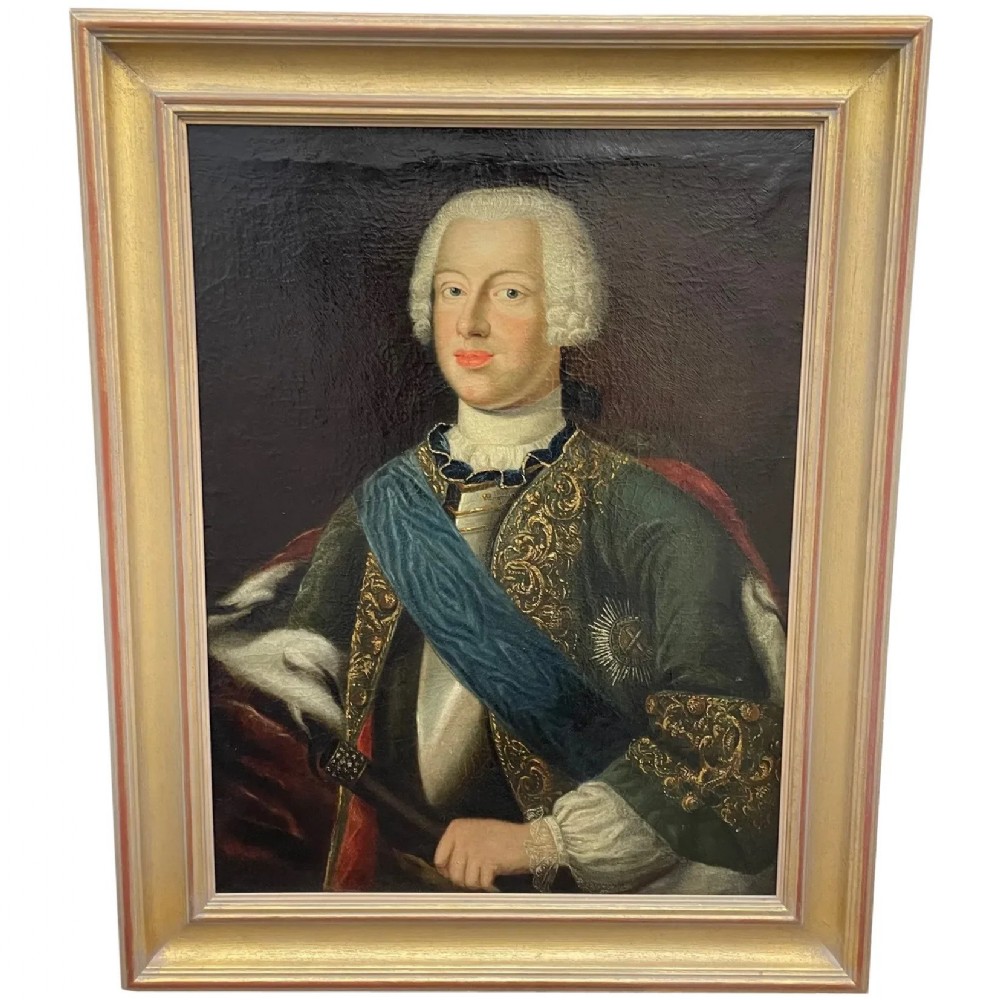
Oil Portrait Duke Anthony Ulrich of Brunswick-lüneburg Wearing Sash of the Imperial Order of St Andrew C1740