34,894  PAGES BROWSED TODAY PAGES TODAY 158  ANTIQUES UPLOADED TODAY NEW ARRIVALS
ID #SA944418
FOR SALE
£1,250
Email
Save
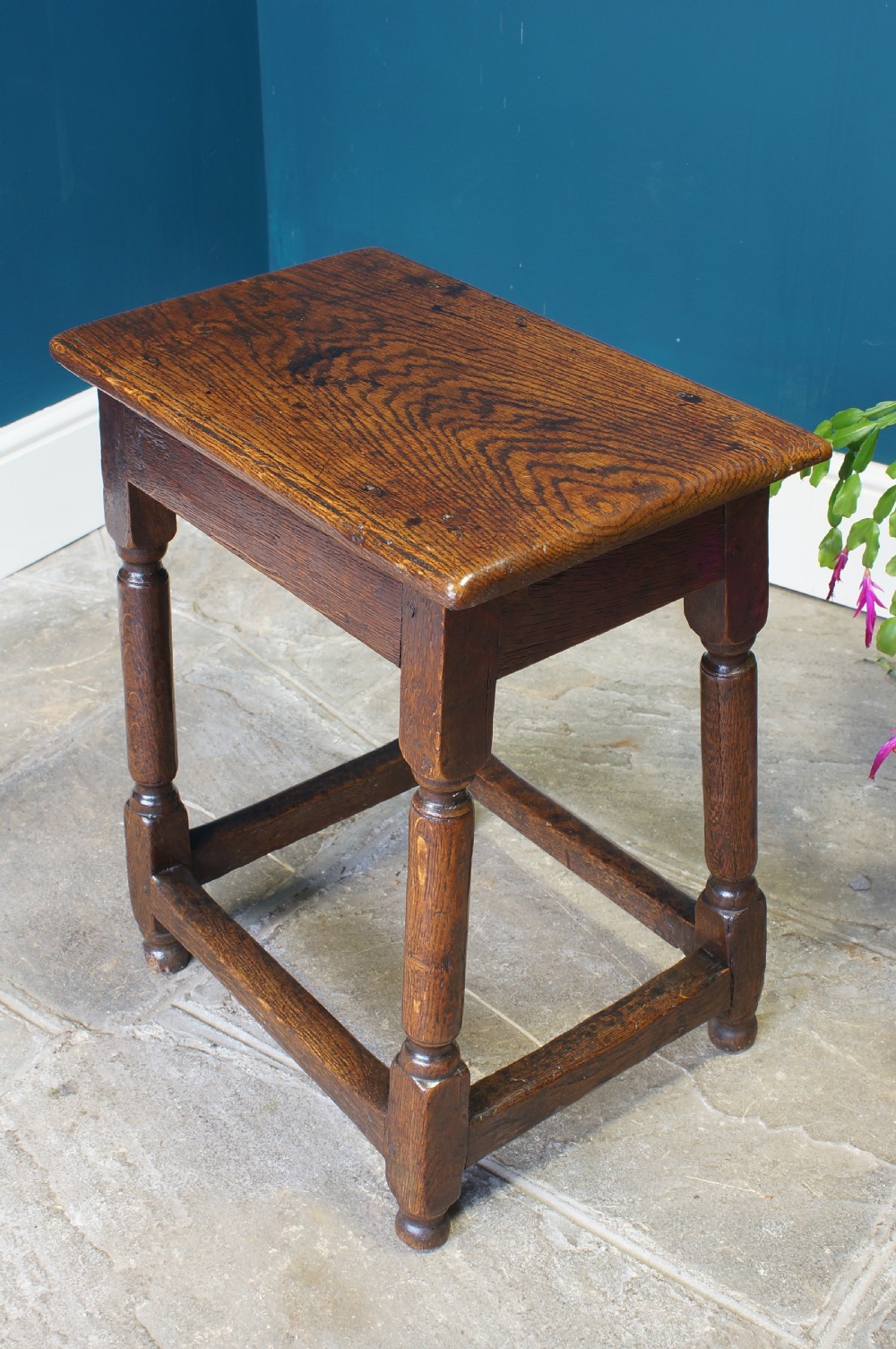
17th Century Oak Joint Stool.
Dickinsons Antiques
for sale €1,463     $1,588
£1,250
Dickinsons Antiques

Dickinsons Antiques

Sellingantiques Verified Since Oct 2020
View Dealers Stock Page
  • About Us
    Dealing in early oak and country furniture since 1958.
Id #SA944418
PDF SHARE
SAVE

17th Century Oak Joint Stool.

17th century
Description

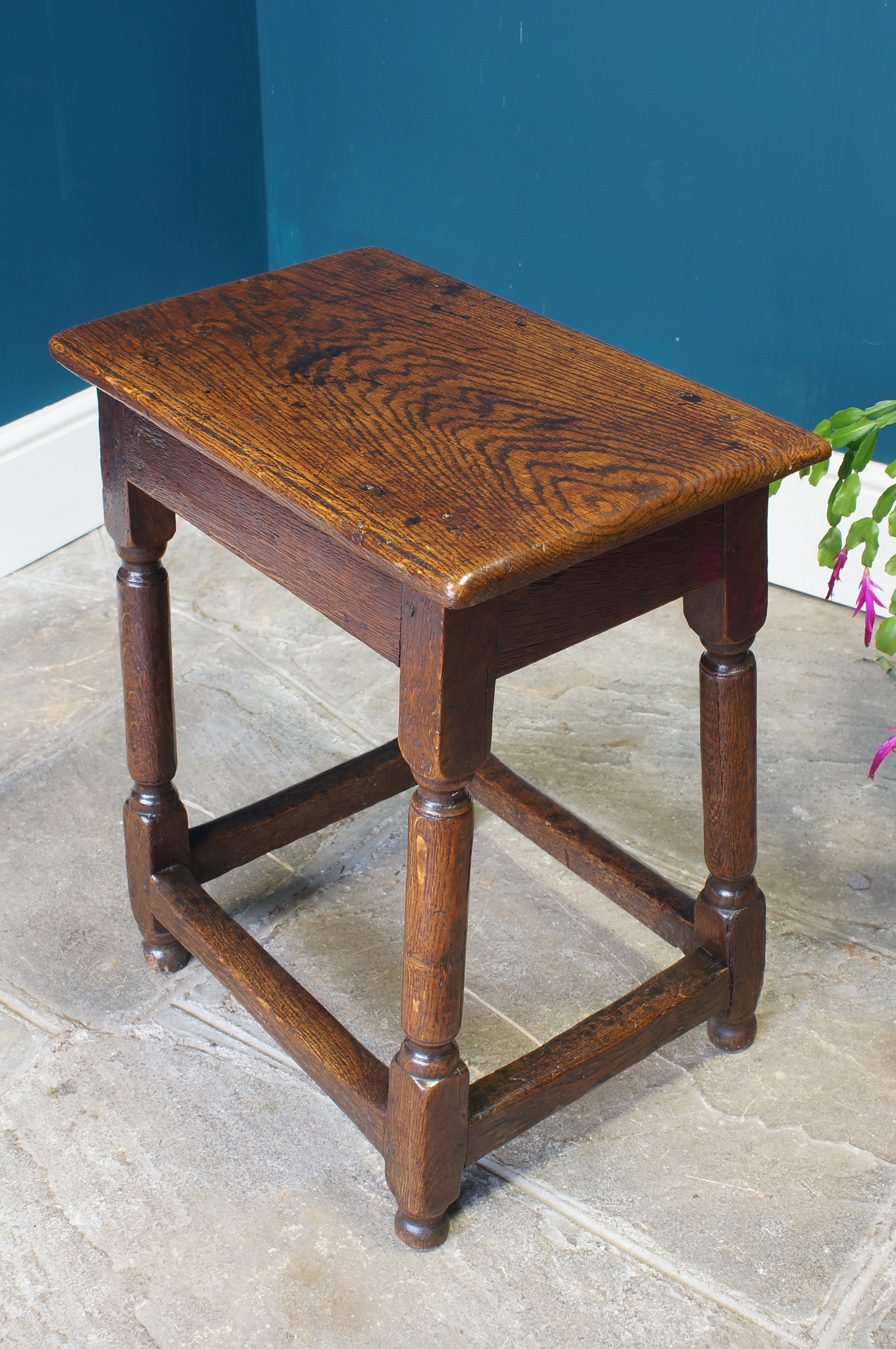
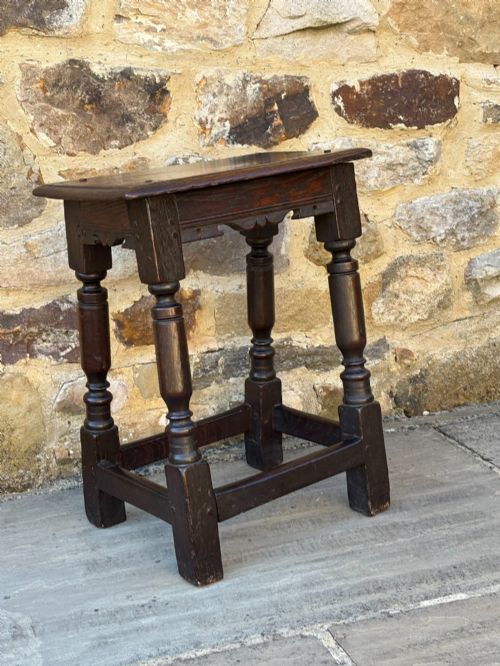
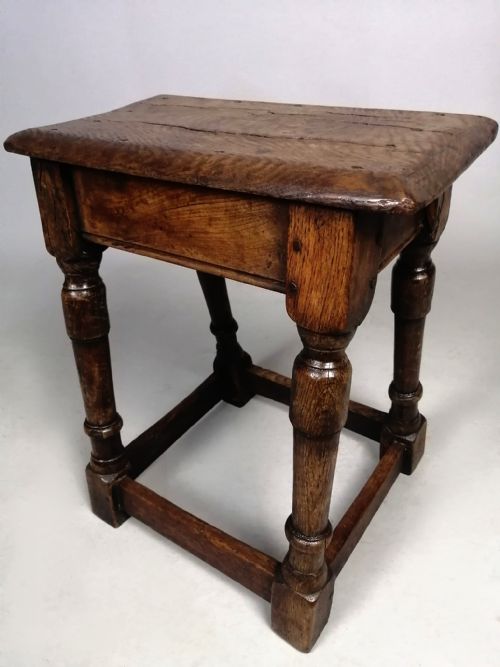
A 17th century oak joint stool of excellent colour and condition. A great example of a refined stool from the Cromwellian period.

Cromwellian/Commonwealth (1648 – 1660).

During the second part of the Jacobean Period, the influence of Oliver Cromwell and the Commonwealth resulted in a very plain style; designers emphasized function above all else. The strict Puritan beliefs were so intertwined with the furniture design that trends in other countries during this time did little to influence the Cromwellian style. Puritans discouraged over-the-top decoration, resulting in the decline of carvings and ornamentation. With carving virtually nonexistent, moldings were applied rather than carved.

Physical Dimensions
Height
55cm (21.65")
Width
47cm (18.50")
Depth
29cm (11.42")
Declaration

Dickinsons Antiques has dated this Antique Oak Joint Stool to the 17th Century.

Reference Numbers
Sellingantiques Reference
SA944418
Dealers Notes

Please don't hesitate to contact us with any queries or to request additional photos.

All items can be viewed in our showrooms in Gargrave. Normally open from 9am to 5pm Monday to Friday or any other time by appointment. Always best to phone or email just to check we are going to be in.

Most items include free mainland UK delivery.

Worldwide delivery available please contact for price.

Description
A 17th century oak joint stool of excellent colour and condition. A great example of a refined stool from the Cromwellian period.

Cromwellian/Commonwealth (1648 – 1660).

During the second part of the Jacobean Period, the influence of Oliver Cromwell and the Commonwealth resulted in a very plain style; designers emphasized function above all else.
Dickinsons Antiques

The strict Puritan beliefs were so intertwined with the furniture design that trends in other countries during this time did little to influence the Cromwellian style. Puritans discouraged over-the-top decoration, resulting in the decline of carvings and ornamentation. With carving virtually nonexistent, moldings were applied rather than carved.

Height
55cm (21.65")
Width
47cm (18.50")
Depth
29cm (11.42")
Date of Manufacture

Dickinsons Antiques has dated this Antique Oak Joint Stool to the 17th Century.

Reference Numbers
Sellingantiques Ref
SA944418
Dickinsons Antiques
Dickinsons Antiques
Sellingantiques verified Since Oct 2020

Dealing in early oak and country furniture since 1958.

Dealer Profile

You can view the stock and full dealer information on the Dickinsons Antiques Profile Page
PDF SHARE
SAVE
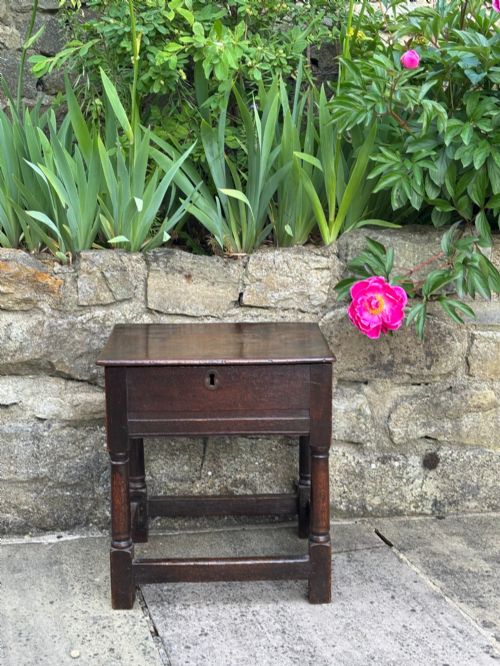
A dark oak rectangular joint stool featuring turned legs connected by rectangular stretchers and a moulded top.
1 / 2
Archive I A dark oak rectangular joint stool featuring turned legs connected by rectangular stretchers and a moulded top.

17th Century Oak Joint Stool.

Archive II A dark oak rectangular joint stool featuring turned legs connected by rectangular stretchers and a moulded top. View II
FURTHER BROWSING

Visitors also looked at these ⇣

Enlarged Archival View
Location
The Estate Yard
West Street
Gargrave
North Yorkshire
BD23 3RD
United Kingdom
Verified Since Oct 2020
Items For Sale 76
Items Sold 234
Dickinsons Antiques
Dickinsons Antiques
Verified Since Oct 2020
View Dealer Info
Location: The Estate Yard, West Street, Gargrave, North Yorkshire, BD23 3RD, United Kingdom
Verified
Oct 2020
For Sale
76
Sold
234
A dark oak rectangular joint stool featuring turned legs connected by rectangular stretchers and a moulded top.
17th Century Oak Joint Stool.
Ref: SA944418
A dark oak rectangular joint stool featuring turned legs connected by rectangular stretchers and a moulded top.
Detail View 1
Archival Detail
Every single antique dealer on our platform is individually approved by our internal team. We verify their professional trade history, ethical standards, and photographic quality to ensure a secure, high-standard buying environment. Upon joining, every dealer agrees to a strict 9-point code of conduct. While issues can occasionally arise, our dealers typically resolve them swiftly and directly with the buyer. In fact, since our founding in 2002, Sellingantiques has only had to step in to help resolve an issue on roughly five occasions—a true testament to the quality of our dealers and their dedication to your happiness.
Our dealers are highly experienced in packing and shipping fragile, high-value antiques. Because you are in direct contact with the dealer, you will be able to easily go through all available shipping and insurance options together to ensure your item arrives safely.
Antiques are the ultimate green purchase. By choosing historical pieces over newly manufactured goods, you completely eliminate the carbon footprint of modern mass production while preserving exceptional, timeless craftsmanship.

A joint stool, historically referred to as a joynt stool, is an early form of timber seating produced by joiners from the sixteenth to late seventeenth centuries. These pieces were constructed using mortise and tenon joints held together with wooden pegs, serving as standard seating before chairs became widely available.

Seventeenth-century joint stools were primarily crafted from native English oak. The construction relies on traditional joinery methods, including mortise and tenon joints fixed with wooden dowels or pegs, turned legs, and lower perimeter stretchers to reinforce the frame.

Authentic period pieces exhibit signs of age such as irregular hand-sawn timber marks, slightly asymmetrical turned legs, original wooden peg construction, and uneven wear patterns along the bottom stretchers where feet rested.

An oak joint stool functions as an occasional side table alongside a sofa, an accent piece in a hallway, or a nightstand in a bedroom. Its compact footprint and rich timber texture provide balance when paired with contemporary upholstered furniture.

Preserving early oak requires maintaining a stable environment away from direct heat sources and sunlight to prevent timber shrinkage or splitting. Dusting regularly with a soft cloth and applying a beeswax polish once or twice a year helps protect the original patination.
items
Add keywords to the filter
Price
£100
£250000
Era
Movements
Material
Origin
Stock Location
Freshness
Online Payments
Categories