40,630  PAGES BROWSED TODAY PAGES TODAY 173  ANTIQUES UPLOADED TODAY NEW ARRIVALS
ID #SA841075
FOR SALE
£550
Email
Save
River Landscape - Antique Oil Painting
Rue des Fontenelles
for sale €644     $699
£550

Rue des Fontenelles

Sellingantiques Verified Since Mar 2015
View Dealers Stock Page
  • About Us
    Specialists in french antiiques, decorative objects and french and european paintings.
Id #SA841075
PDF SHARE
SAVE

River Landscape - Antique Oil Painting

1900 - 1920
Description

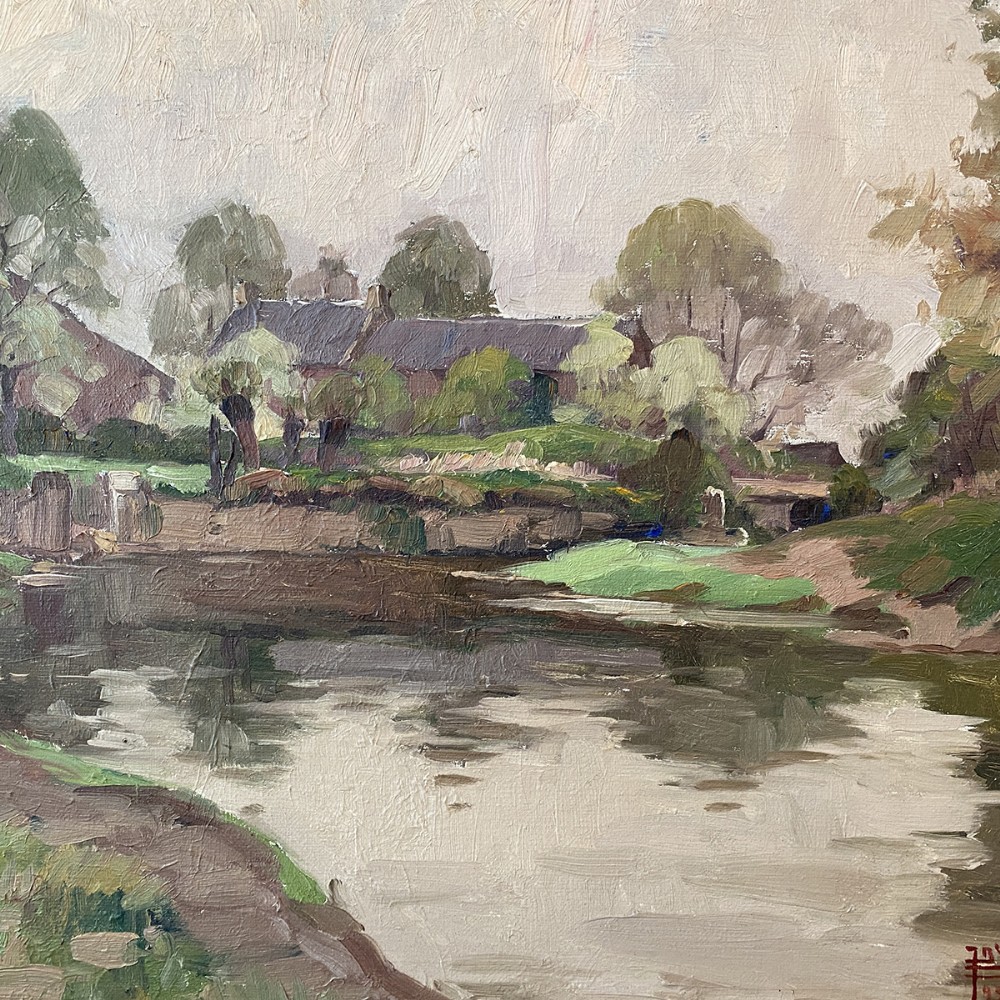
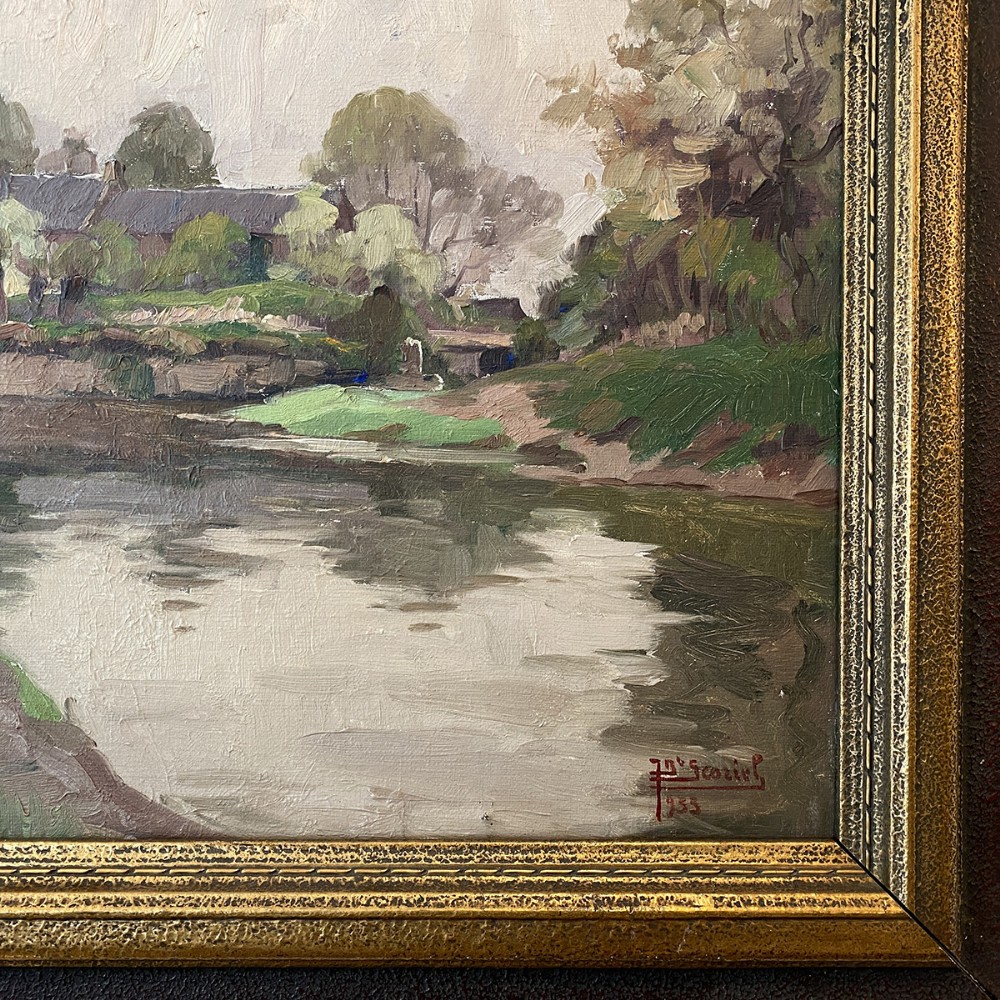
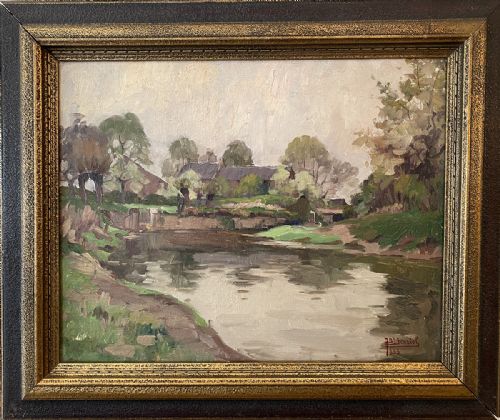
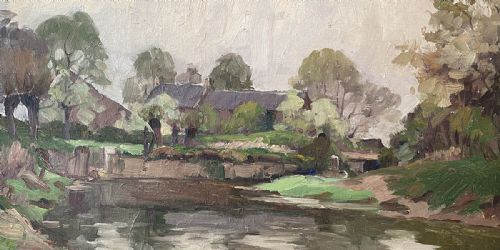
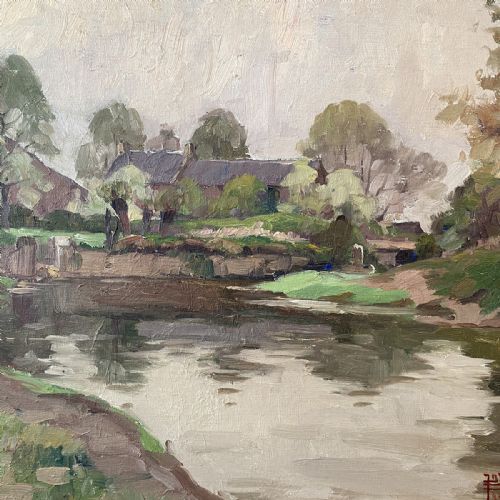
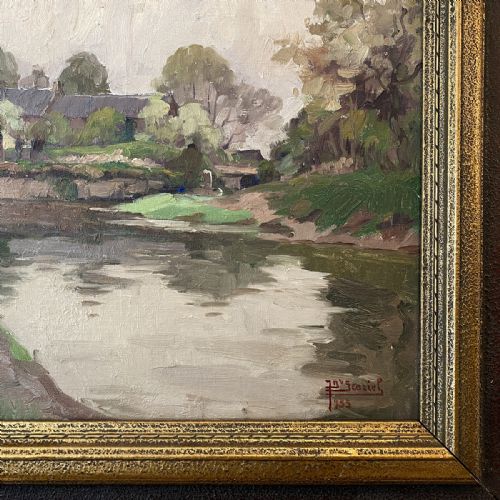
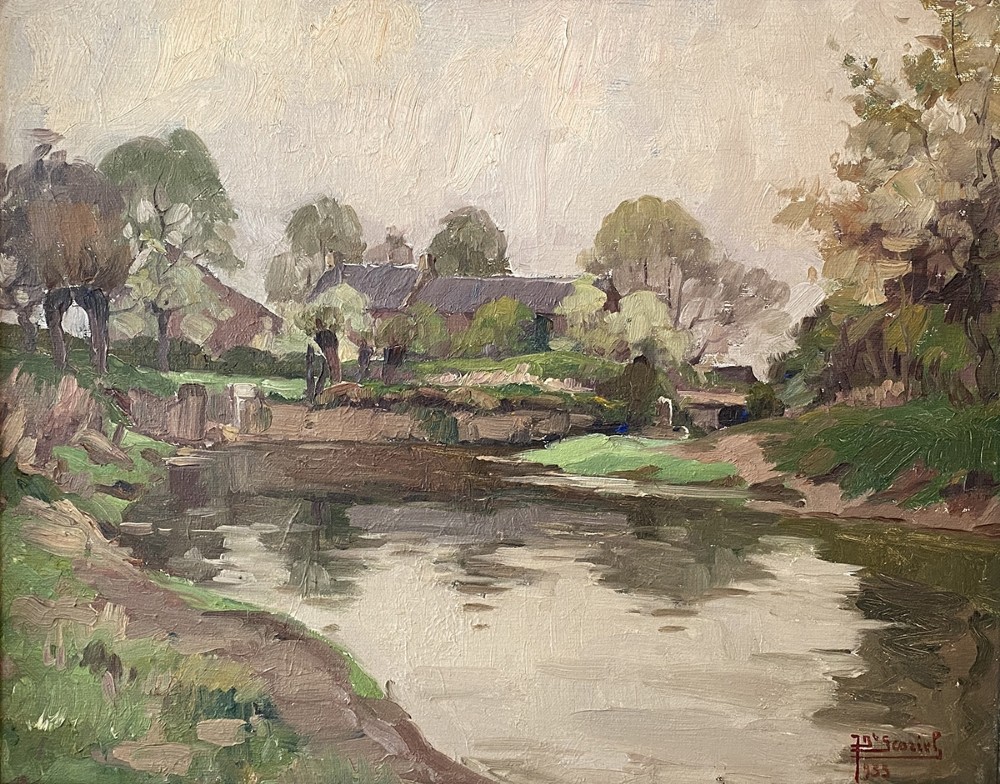
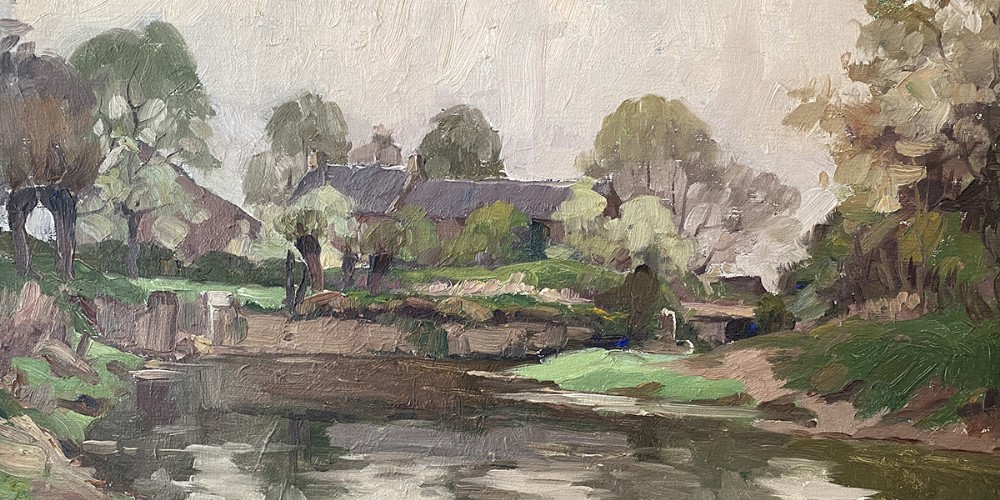
Signed oil on canvas signed by the listed Belgium painter Jean Baptiste Scoriel (1883 - 1956). The painting is dated 1935 and shows a view of a river with farm beyond.

Scoriel was the son of a miner and of Flemish origin. He was only three when his family moved to Tamines and was orphaned at twelve.

JB Scoriel found his artistic vocation from an early age. Although from the age of eleven years old, he had to work for the family as a worker in a brickyard and then a foundry. Despite this he managed to enroll in the School of Fine Arts in Namur, led by Theodore Baron. He was taught by D. Merny and in 1905 making a very fast passage to the Brussels Academy. After an exhibition in 1906 and encouraged by a promising success, he then focused on the task he had set himself - to be a landscape painter. He attended for a while the workshop of landscape gardener Henri Deglume, then Félix Delahaut. He then went on to complete his training at the School of Emile Claus - a realist painter. Scoriel took most of his imspiration from the Sambre.
During the First World War, he volunteered with his four brothers and experienced the hard existence of the trenches. After being wounded in battle, he returned to painting in Dieppe where married his nurse. After a few years in Dieppe, he moved back to Tamines where he remained except for a few trips to Italy and France.
Scoriel was rightly called "Master of the Snow", no less than "Master of the Sambre". His predilection for snow was early. Very early in 1922 he felt the attraction, the power of evocation. The snow corresponds well to the gravity of his temperament. The Master had, indeed, an inimitable talent to seize and render the winters bitter of our campaigns, such as our ancestors knew them and lived, but also their seduction under an ephemeral ray of sun whose fleeting gleams colour. The Scoriel Snows are fascinating with their transcendent spell, their evocative power. However, they can not hide the rest of the work, so fruitful and diverse, the painter of the Lower Sambre.
During the exodus of 1940 he was refugee in the South, in Castelsagrat (Tarn-et-Garonne). The southern light dazzled Scoriel and left us some interesting pictorial testimonies. After the war, the artist revised his technique and shows a return to respect for line and form. Back in Tamines, the artist returned to his first love ,the Neiges and was inspired by his master Pierre Breughel. He is also inspired by his technique, uses a resin-based medium to dilute his now over-finished colours .
He became an eminent professor of great value who has trained a large number of future artists. Scoriel can realise, by simple means, vast landscapes. The colours are frank and effects very bright. His theory for his pupils was "Simplify!"

Bibliography taken from the Abécédaire des peintres du Pays de Charleroi, Frédéric Mac Donough, éditions Labor, 2006.

Dimensions - 64 x 55 cms

Physical Dimensions
Height
55cm (21.65")
Width
64cm (25.20")
Depth
4cm (1.57")
Declaration

Rue des Fontenelles has dated this River Landscape Oil Painting to the 1910s.

Reference Numbers
Sellingantiques Reference
SA841075
Description
Signed oil on canvas signed by the listed Belgium painter Jean Baptiste Scoriel (1883 - 1956). The painting is dated 1935 and shows a view of a river with farm beyond.

Scoriel was the son of a miner and of Flemish origin. He was only three when his family moved to Tamines and was orphaned at twelve.

JB Scoriel found his artistic vocation from an early age.

Although from the age of eleven years old, he had to work for the family as a worker in a brickyard and then a foundry.
Rue des Fontenelles

Despite this he managed to enroll in the School of Fine Arts in Namur, led by Theodore Baron. He was taught by D. Merny and in 1905 making a very fast passage to the Brussels Academy. After an exhibition in 1906 and encouraged by a promising success, he then focused on the task he had set himself - to be a landscape painter. He attended for a while the workshop of landscape gardener Henri Deglume, then Félix Delahaut. He then went on to complete his training at the School of Emile Claus - a realist painter. Scoriel took most of his imspiration from the Sambre.

fig 1. A 1930s Post-Impressionist oil painting displaying a tranquil river scene with green trees, distant cottages, and sky reflections in the water.
fig 1. River Landscape - Antique Oil Painting

During the First World War, he volunteered with his four brothers and experienced the hard existence of the trenches. After being wounded in battle, he returned to painting in Dieppe where married his nurse. After a few years in Dieppe, he moved back to Tamines where he remained except for a few trips to Italy and France.

fig 2. A 1930s Post-Impressionist oil painting displaying a tranquil river scene with green trees, distant cottages, and sky reflections in the water.
fig 2. River Landscape - Antique Oil Painting

Scoriel was rightly called "Master of the Snow", no less than "Master of the Sambre". His predilection for snow was early. Very early in 1922 he felt the attraction, the power of evocation. The snow corresponds well to the gravity of his temperament. The Master had, indeed, an inimitable talent to seize and render the winters bitter of our campaigns, such as our ancestors knew them and lived, but also their seduction under an ephemeral ray of sun whose fleeting gleams colour. The Scoriel Snows are fascinating with their transcendent spell, their evocative power. However, they can not hide the rest of the work, so fruitful and diverse, the painter of the Lower Sambre.

fig 3. A 1930s Post-Impressionist oil painting displaying a tranquil river scene with green trees, distant cottages, and sky reflections in the water.
fig 3. River Landscape - Antique Oil Painting

During the exodus of 1940 he was refugee in the South, in Castelsagrat (Tarn-et-Garonne). The southern light dazzled Scoriel and left us some interesting pictorial testimonies. After the war, the artist revised his technique and shows a return to respect for line and form. Back in Tamines, the artist returned to his first love ,the Neiges and was inspired by his master Pierre Breughel. He is also inspired by his technique, uses a resin-based medium to dilute his now over-finished colours .

fig 4. A 1930s Post-Impressionist oil painting displaying a tranquil river scene with green trees, distant cottages, and sky reflections in the water.
fig 4. River Landscape - Antique Oil Painting

He became an eminent professor of great value who has trained a large number of future artists. Scoriel can realise, by simple means, vast landscapes. The colours are frank and effects very bright. His theory for his pupils was "Simplify!"

Bibliography taken from the Abécédaire des peintres du Pays de Charleroi, Frédéric Mac Donough, éditions Labor, 2006.

Dimensions - 64 x 55 cms

Height
55cm (21.65")
Width
64cm (25.20")
Depth
4cm (1.57")
Date of Manufacture

Rue des Fontenelles has dated this River Landscape Oil Painting to the 1910s.

Reference Numbers
Sellingantiques Ref
SA841075
Rue des Fontenelles
Sellingantiques verified Since Mar 2015

Specialists in french antiiques, decorative objects and french and european paintings.

Dealer Profile

You can view the stock and full dealer information on the Rue des Fontenelles Profile Page
PDF SHARE
SAVE
A 1930s Post-Impressionist oil painting displaying a tranquil river scene with green trees, distant cottages, and sky reflections in the water.
1 / 5
Archive I A 1930s Post-Impressionist oil painting displaying a tranquil river scene with green trees, distant cottages, and sky reflections in the water.

River Landscape - Antique Oil Painting
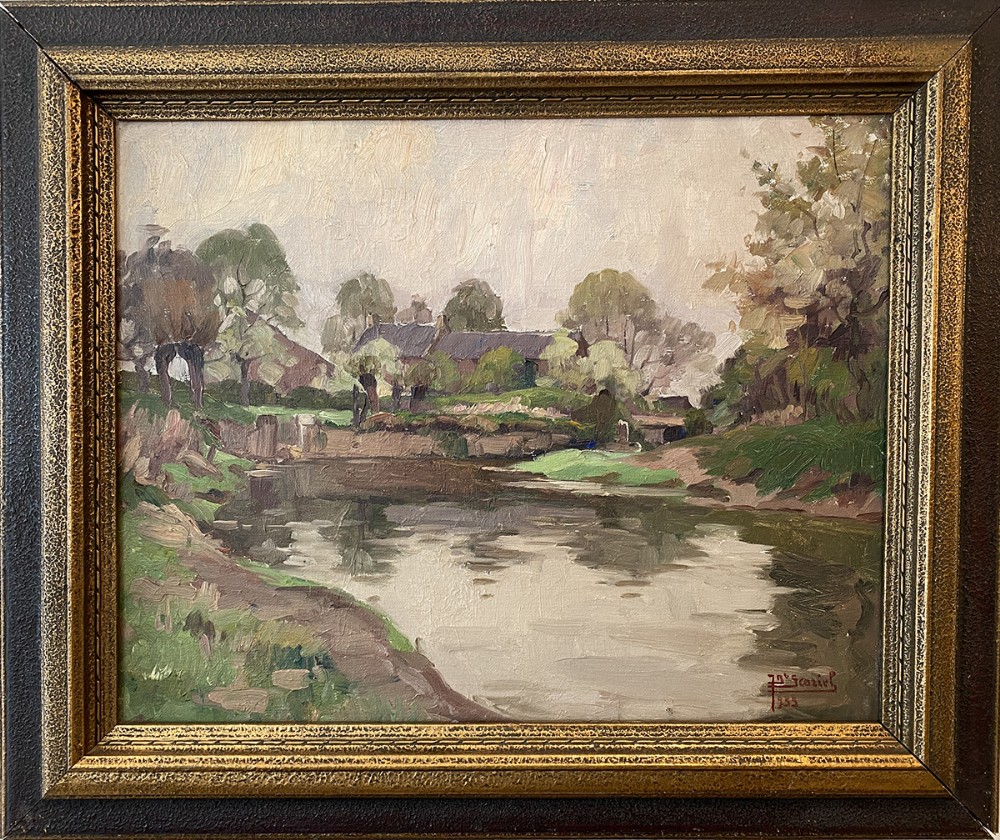
Archive II A 1930s Post-Impressionist oil painting displaying a tranquil river scene with green trees, distant cottages, and sky reflections in the water. View II
Archive III A 1930s Post-Impressionist oil painting displaying a tranquil river scene with green trees, distant cottages, and sky reflections in the water. View III
Archive IV A 1930s Post-Impressionist oil painting displaying a tranquil river scene with green trees, distant cottages, and sky reflections in the water. View IV
Archive V A 1930s Post-Impressionist oil painting displaying a tranquil river scene with green trees, distant cottages, and sky reflections in the water. View V
FURTHER BROWSING

Visitors also looked at these ⇣

Enlarged Archival View
Location
Chagford
Devon
United Kingdom
Verified Since Mar 2015
Items For Sale 154
Items Sold 1,179
Rue des Fontenelles
Verified Since Mar 2015
View Dealer Info
Location: Chagford, Devon, United Kingdom
Verified
Mar 2015
For Sale
154
Sold
1,179
A 1930s Post-Impressionist oil painting displaying a tranquil river scene with green trees, distant cottages, and sky reflections in the water.
River Landscape - Antique Oil Painting
Ref: SA841075
A 1930s Post-Impressionist oil painting displaying a tranquil river scene with green trees, distant cottages, and sky reflections in the water.
Detail View 1
Detail View 2
Detail View 3
Detail View 4
Archival Detail
Every single antique dealer on our platform is individually approved by our internal team. We verify their professional trade history, ethical standards, and photographic quality to ensure a secure, high-standard buying environment. Upon joining, every dealer agrees to a strict 9-point code of conduct. While issues can occasionally arise, our dealers typically resolve them swiftly and directly with the buyer. In fact, since our founding in 2002, Sellingantiques has only had to step in to help resolve an issue on roughly five occasions—a true testament to the quality of our dealers and their dedication to your happiness.
Our dealers are highly experienced in packing and shipping fragile, high-value antiques. Because you are in direct contact with the dealer, you will be able to easily go through all available shipping and insurance options together to ensure your item arrives safely.
Antiques are the ultimate green purchase. By choosing historical pieces over newly manufactured goods, you completely eliminate the carbon footprint of modern mass production while preserving exceptional, timeless craftsmanship.

Early 20th-century landscape oil paintings frequently reflect the influence of Impressionism and Post-Impressionism, focusing on natural light, visible brushwork, and atmospheric conditions. Artists often rendered rural canal, river, and countryside scenes using textured impasto techniques.

Artists typically painted with oil-based pigments mixed with binder, applied onto stretched linen canvas, cotton duck, or solid wood panels. Paint application ranged from thin washes to thick impasto executed with brushes or palette knives.

Authentic period oil paintings usually feature age-consistent craquelure across the paint surface, natural yellowing of original varnish, historical signatures or dates, and expected oxidation on the rear substrate.

A rural landscape painting provides visual depth when positioned above a console table or incorporated into a gallery wall alongside traditional frames. The muted tones harmonise effectively with natural timber and earthy textiles.

Position the painting away from direct sunlight, extreme humidity, and direct heat sources such as radiators. Dust the surface lightly with a dry, soft brush and consult a professional conservator for varnish restoration.
items
Add keywords to the filter
Price
£100
£250000
Era
Movements
Material
Origin
Stock Location
Freshness
Online Payments
Categories