3,882  PAGES BROWSED TODAY PAGES TODAY 0  ANTIQUES UPLOADED TODAY NEW ARRIVALS
ID #SA839871
FOR SALE
£1,595
Email Buy
Save
Late Eighteenth Century Mahogany Stick Barometer by Gilbert London
Jason Clarke Antiques
for sale €1,866     $2,026
£1,595
Jason Clarke Antiques

Jason Clarke Antiques

Sellingantiques Verified Since Jul 2015
View Dealers Stock Page
Id #SA839871
PDF SHARE
SAVE

Late Eighteenth Century Mahogany Stick Barometer by Gilbert London

18th century
Description

For sale, a Late Eighteenth Century Mahogany Stick Barometer by Gilbert of London.

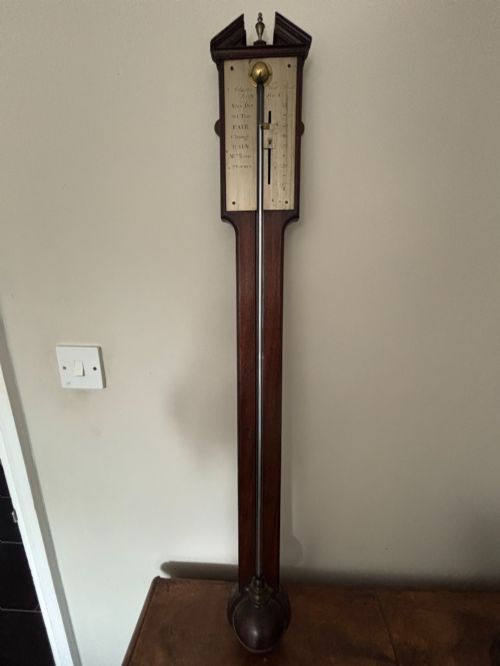
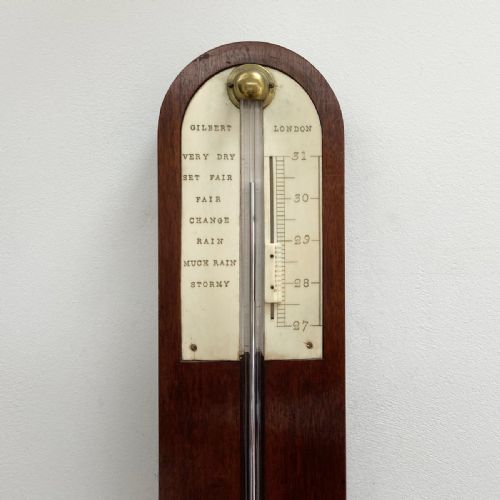
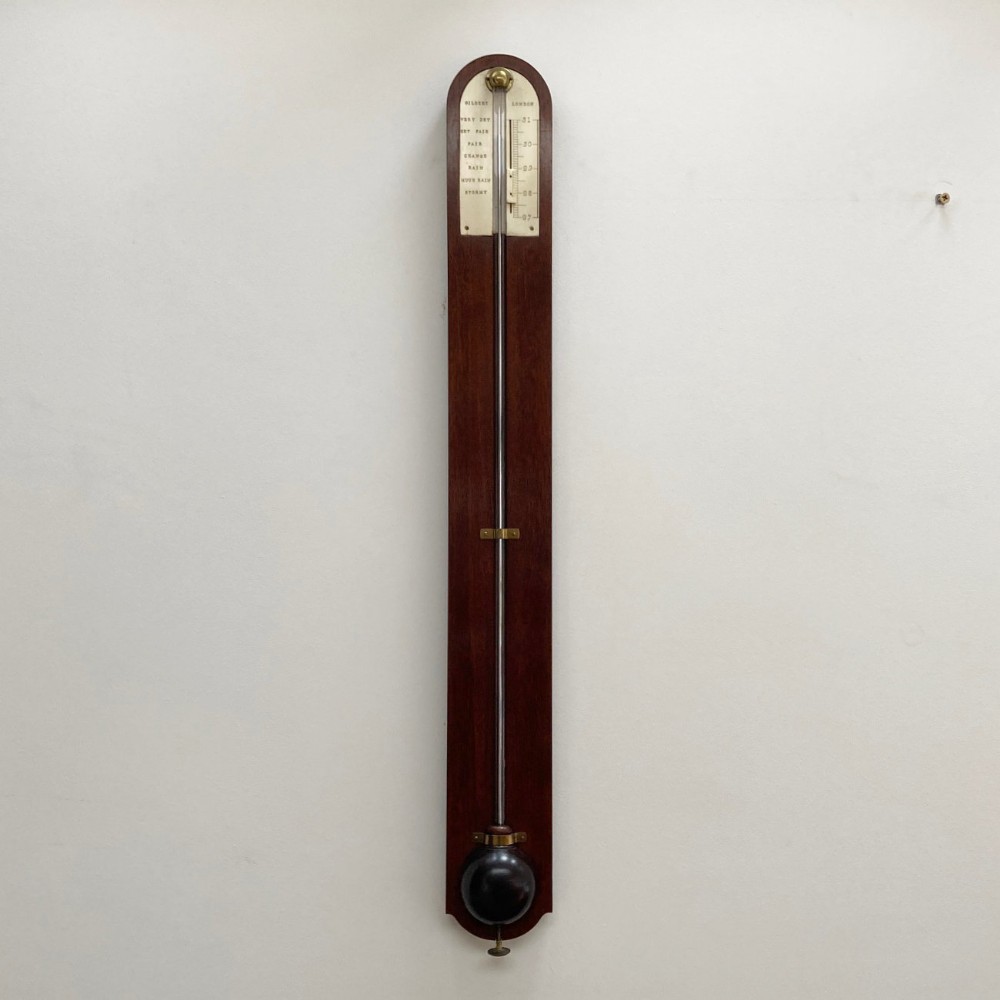
A simply designed yet beautifully robust example comprised of a solid mahogany backboard with domed top and base. The inset bone scale plate is engraved with weather indications to the left and and a scale to the right measuring 27 to 31 inches of barometric pressure with a sliding Vernier incorporated for fine measurement. The head of the scale is simply engraved with the maker’s name of Gilbert, London to the top and a brass dome above to secure the head of the barometer tube.
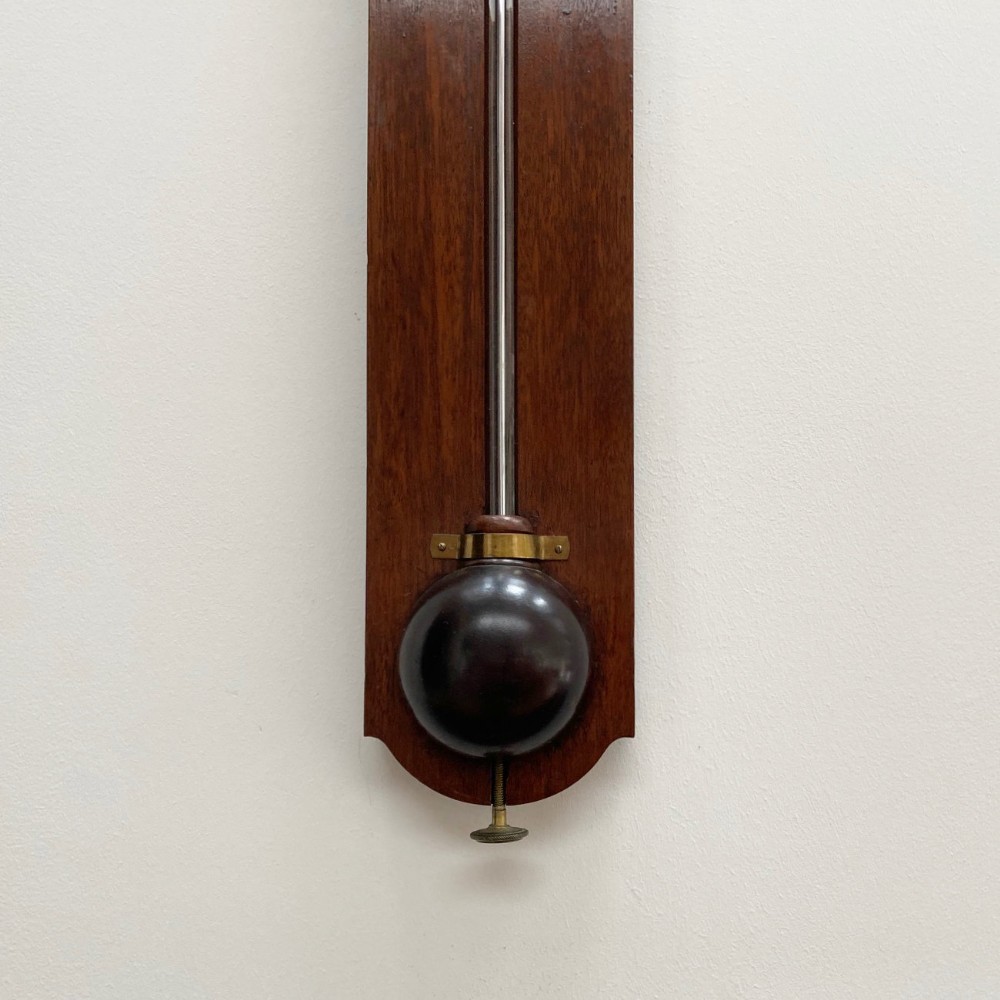
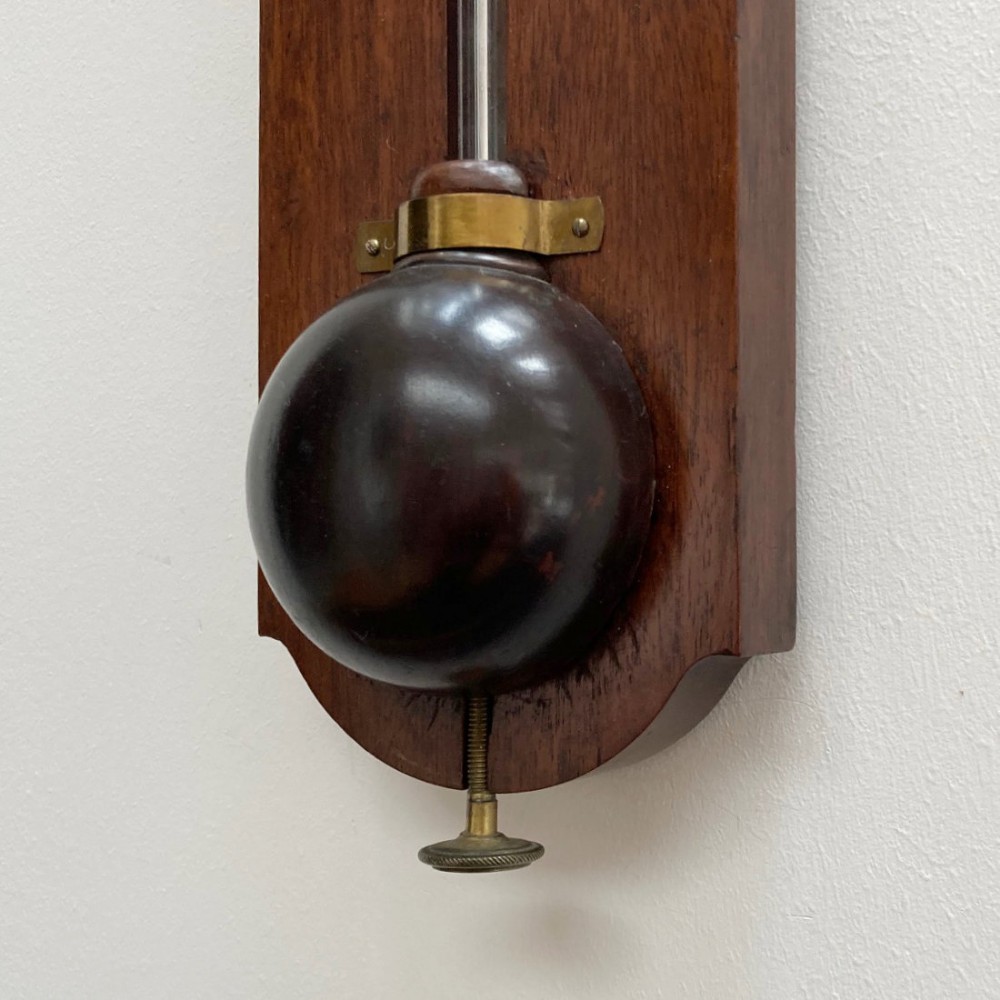
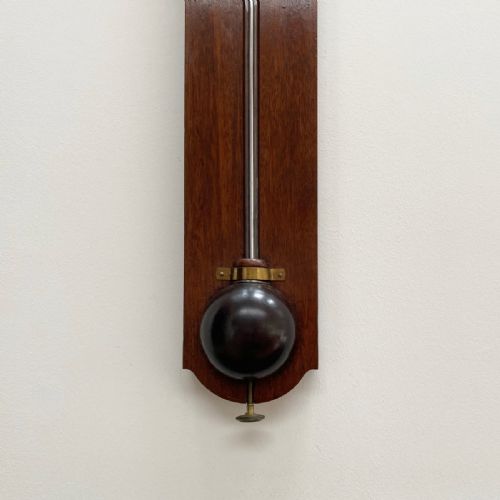
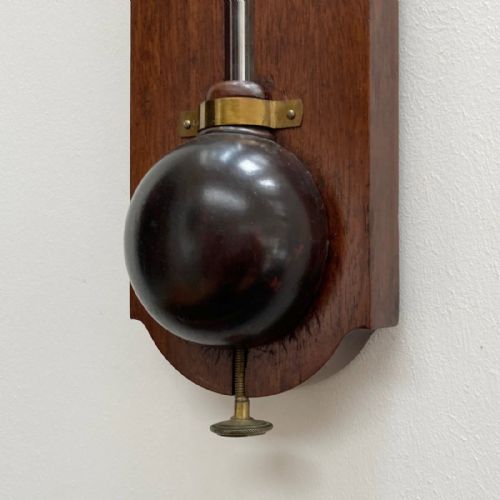
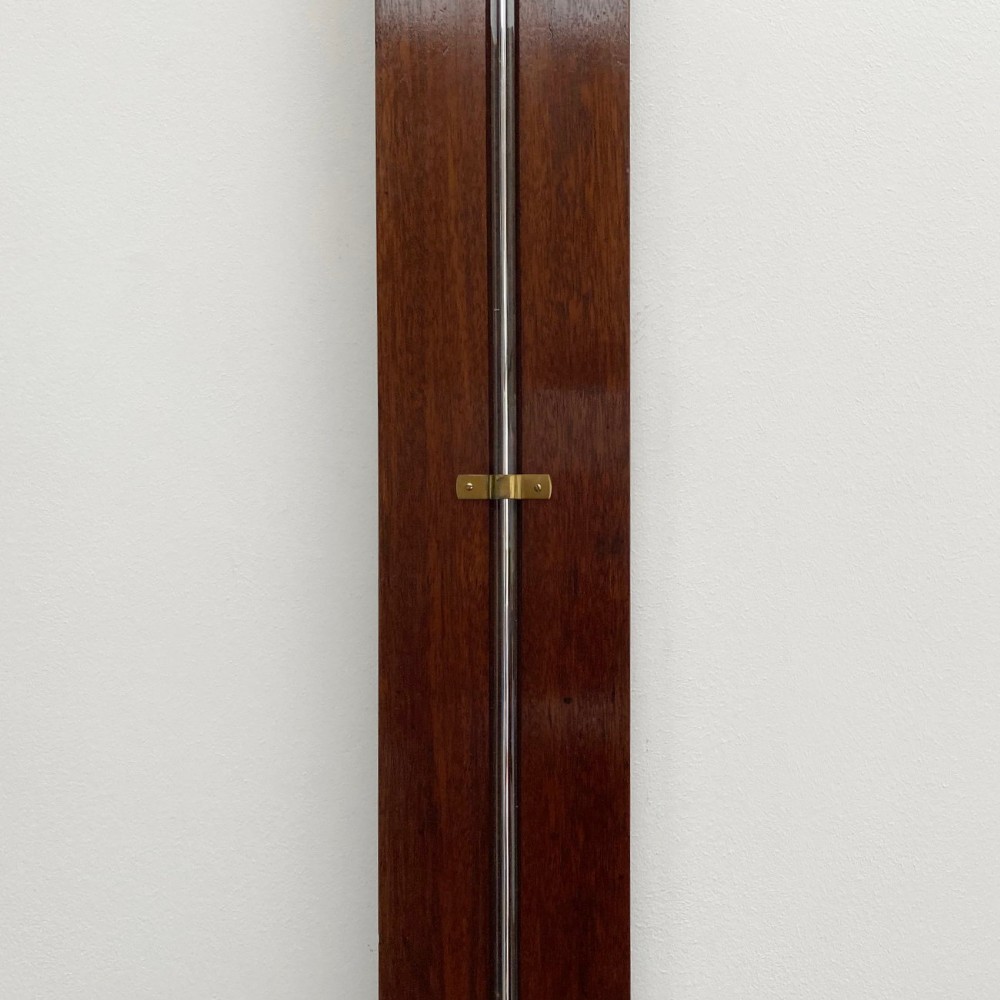
The exposed barometer tube runs the full length of the body into a half globe mahogany cistern cover with brass travel screw protruding underneath.

During the eighteenth and early nineteenth centuries, the Gilbert family of Tower Hill carried a huge reputation, rivalling that of the Dollond and Ramsden for their skill of manufacture. The first family member to come to prominence as a scientific instrument maker was John Gilbert Snr. After beginning an apprenticeship in 1709 with a John Johnson he began trading after the customary seven years in 1716, entering the Company of Grocers. In 1726, he is referred to by the scientist, John Peter Biester as the chosen maker for his “Portatoris”, an instrument intended to solve the issue of longitude by observing the moon’s distance from a known star as it crossed the meridian. Clearly the device was not ultimately successful for Biester but he was confident enough to show his work to Isaac Newton and The Royal Society which should give you a flavour of the circles in which the elder John Gilbert was already moving.
Amongst a number of apprentices, his son John Gilbert the younger was enrolled in 1736 and following his eventual freedom in the early 1740’s, the family traded as Gilbert & Son and notably acquired the sole rights to manufacture and sell John Hadley’s hugely popular patent reflecting quadrant. The elder Gilbert’s date of death is not recorded but he became a member of the Livery of the Grocer’s Company in 1749 alongside notable instrument makers Thomas Heath and the hugely renowned George Adams of Fleet Street.
It seems fairly certain that the younger was trading under his own name by the 1750’s and he maintained a number of apprentices including his sons John (III) in 1764 and his second son William in 1769 although the latter was soon turned over to Peter Dollond, an enormously shrewd move on Gilbert’s part given the Dollond family’s recent patenting of the achromatic lens. Records show that by 1764, Gilbert was one of the few instrument makers that was given the rights to sell the achromatic lens by the Dollond family and William’s apprenticeship may have been a positive gesture by the Dollonds for the continued support and loyalty shown by Gilbert during the various famous legal issues that endured over the patent throughout this period.
Both of John (II) sons went on to have successful careers. The elder brother John (III) succeeded to the business of Joseph Linnell, a business that was originally founded by the great James Ayscough. William eventually succeeded to his Father’s business around 1776 after receiving his freedom from the Dollonds and continued to trade solely under the Gilbert name until his Father’s death in 1791 whereupon he departed on a number of complicated partnerships for the next ten years. By this point the business seems to have interests in properties at 8 Postern Row next to The Tower of London and at a new property at The Navigation Warehouse, 148 Leadenhall Street (now The Argyll Club opposite Lloyd’s of London), and originally home to the partners Gregory and Wright.

His first venture was the partnership of Gilbert & Wright. Gabriel Wright was an employee of the famous author and instrument maker, Benjamin Martin until his employer’s bankruptcy and subsequent suic

Physical Dimensions
Height
95cm (37.40")
Width
11cm (4.33")
Depth
6cm (2.36")
Declaration

Jason Clarke Antiques has dated this Georgian Mahogany Stick Barometer to the 1750s.

Reference Numbers
Sellingantiques Reference
SA839871
Description
For sale, a Late Eighteenth Century Mahogany Stick Barometer by Gilbert of London.
A simply designed yet beautifully robust example comprised of a solid mahogany backboard with domed top and base.
Jason Clarke Antiques

The inset bone scale plate is engraved with weather indications to the left and and a scale to the right measuring 27 to 31 inches of barometric pressure with a sliding Vernier incorporated for fine measurement. The head of the scale is simply engraved with the maker’s name of Gilbert, London to the top and a brass dome above to secure the head of the barometer tube.

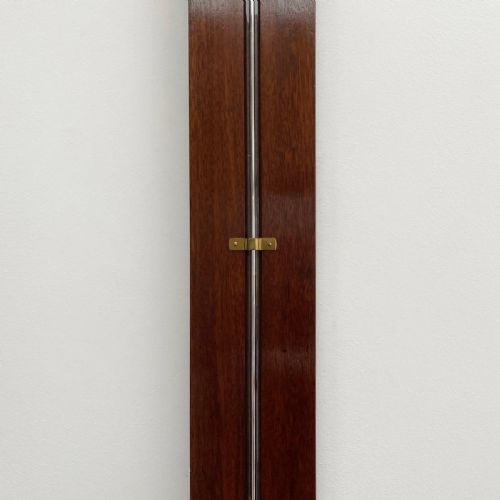
fig 1. A wall-mounted eighteenth-century mahogany stick barometer featuring an arched top, a light-coloured register plate, a central glass tube, and a turned hemispherical wooden cistern cover at the base.
fig 1. Late Eighteenth Century Mahogany Stick Barometer by Gilbert London

The exposed barometer tube runs the full length of the body into a half globe mahogany cistern cover with brass travel screw protruding underneath.

During the eighteenth and early nineteenth centuries, the Gilbert family of Tower Hill carried a huge reputation, rivalling that of the Dollond and Ramsden for their skill of manufacture. The first family member to come to prominence as a scientific instrument maker was John Gilbert Snr. After beginning an apprenticeship in 1709 with a John Johnson he began trading after the customary seven years in 1716, entering the Company of Grocers. In 1726, he is referred to by the scientist, John Peter Biester as the chosen maker for his “Portatoris”, an instrument intended to solve the issue of longitude by observing the moon’s distance from a known star as it crossed the meridian. Clearly the device was not ultimately successful for Biester but he was confident enough to show his work to Isaac Newton and The Royal Society which should give you a flavour of the circles in which the elder John Gilbert was already moving.

fig 2. A wall-mounted eighteenth-century mahogany stick barometer featuring an arched top, a light-coloured register plate, a central glass tube, and a turned hemispherical wooden cistern cover at the base.
fig 2. Late Eighteenth Century Mahogany Stick Barometer by Gilbert London

Amongst a number of apprentices, his son John Gilbert the younger was enrolled in 1736 and following his eventual freedom in the early 1740’s, the family traded as Gilbert & Son and notably acquired the sole rights to manufacture and sell John Hadley’s hugely popular patent reflecting quadrant. The elder Gilbert’s date of death is not recorded but he became a member of the Livery of the Grocer’s Company in 1749 alongside notable instrument makers Thomas Heath and the hugely renowned George Adams of Fleet Street.

fig 3. A wall-mounted eighteenth-century mahogany stick barometer featuring an arched top, a light-coloured register plate, a central glass tube, and a turned hemispherical wooden cistern cover at the base.
fig 3. Late Eighteenth Century Mahogany Stick Barometer by Gilbert London

It seems fairly certain that the younger was trading under his own name by the 1750’s and he maintained a number of apprentices including his sons John (III) in 1764 and his second son William in 1769 although the latter was soon turned over to Peter Dollond, an enormously shrewd move on Gilbert’s part given the Dollond family’s recent patenting of the achromatic lens. Records show that by 1764, Gilbert was one of the few instrument makers that was given the rights to sell the achromatic lens by the Dollond family and William’s apprenticeship may have been a positive gesture by the Dollonds for the continued support and loyalty shown by Gilbert during the various famous legal issues that endured over the patent throughout this period.

fig 4. A wall-mounted eighteenth-century mahogany stick barometer featuring an arched top, a light-coloured register plate, a central glass tube, and a turned hemispherical wooden cistern cover at the base.
fig 4. Late Eighteenth Century Mahogany Stick Barometer by Gilbert London

Both of John (II) sons went on to have successful careers. The elder brother John (III) succeeded to the business of Joseph Linnell, a business that was originally founded by the great James Ayscough. William eventually succeeded to his Father’s business around 1776 after receiving his freedom from the Dollonds and continued to trade solely under the Gilbert name until his Father’s death in 1791 whereupon he departed on a number of complicated partnerships for the next ten years. By this point the business seems to have interests in properties at 8 Postern Row next to The Tower of London and at a new property at The Navigation Warehouse, 148 Leadenhall Street (now The Argyll Club opposite Lloyd’s of London), and originally home to the partners Gregory and Wright.

His first venture was the partnership of Gilbert & Wright. Gabriel Wright was an employee of the famous author and instrument maker, Benjamin Martin until his employer’s bankruptcy and subsequent suic

Height
95cm (37.40")
Width
11cm (4.33")
Depth
6cm (2.36")
Date of Manufacture

Jason Clarke Antiques has dated this Georgian Mahogany Stick Barometer to the 1750s.

Reference Numbers
Sellingantiques Ref
SA839871
Jason Clarke Antiques
Sellingantiques verified Since Jul 2015
Dealer Profile

You can view the stock and full dealer information on the Jason Clarke Antiques Profile Page
PDF SHARE
SAVE
A wall-mounted eighteenth-century mahogany stick barometer featuring an arched top, a light-coloured register plate, a central glass tube, and a turned hemispherical wooden cistern cover at the base.
1 / 5
Archive I A wall-mounted eighteenth-century mahogany stick barometer featuring an arched top, a light-coloured register plate, a central glass tube, and a turned hemispherical wooden cistern cover at the base.

Late Eighteenth Century Mahogany Stick Barometer by Gilbert London
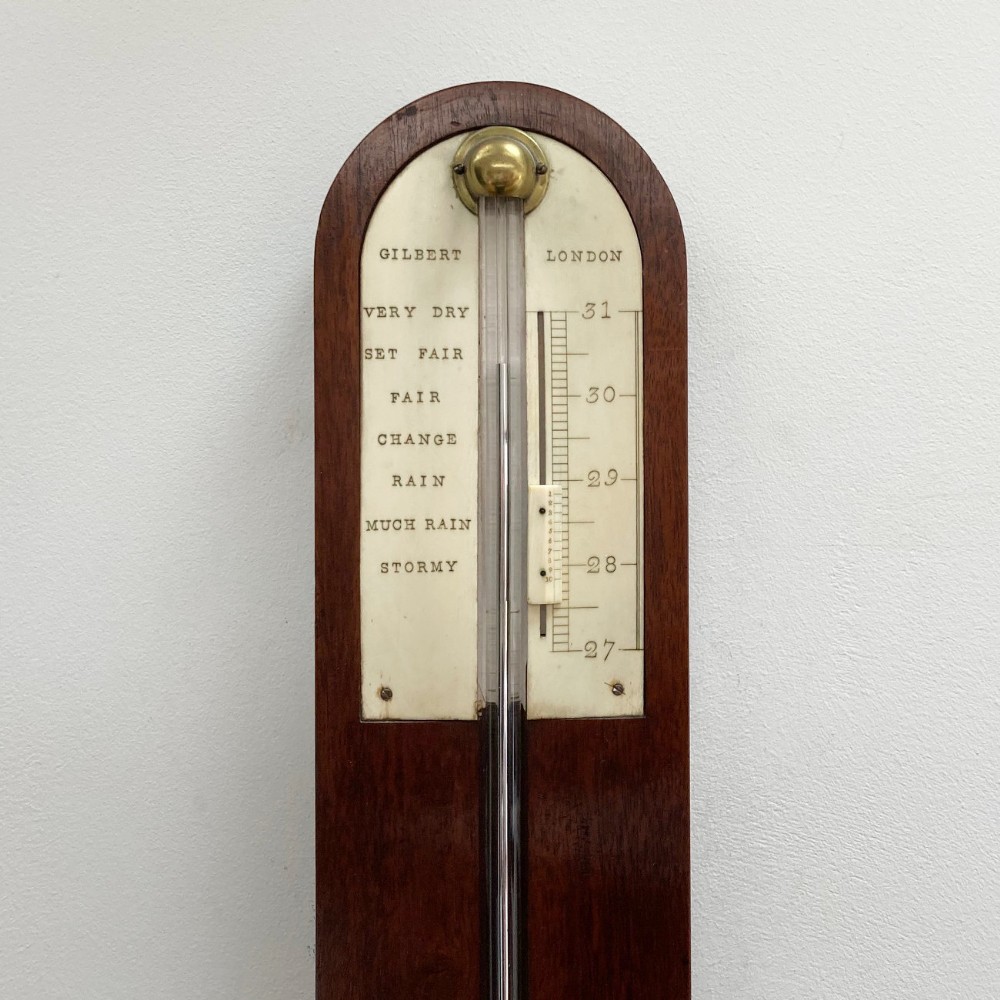
Archive II A wall-mounted eighteenth-century mahogany stick barometer featuring an arched top, a light-coloured register plate, a central glass tube, and a turned hemispherical wooden cistern cover at the base. View II
Archive III A wall-mounted eighteenth-century mahogany stick barometer featuring an arched top, a light-coloured register plate, a central glass tube, and a turned hemispherical wooden cistern cover at the base. View III
Archive IV A wall-mounted eighteenth-century mahogany stick barometer featuring an arched top, a light-coloured register plate, a central glass tube, and a turned hemispherical wooden cistern cover at the base. View IV
Archive V A wall-mounted eighteenth-century mahogany stick barometer featuring an arched top, a light-coloured register plate, a central glass tube, and a turned hemispherical wooden cistern cover at the base. View V
FURTHER BROWSING

Visitors also looked at these ⇣

Enlarged Archival View
Telephone 07815 046645
Location
Newbury
Berkshire
United Kingdom
Verified Since Jul 2015
Items For Sale 82
Items Sold 605
Jason Clarke Antiques
Verified Since Jul 2015
View Dealer Info
Location: Newbury, Berkshire, United Kingdom
Verified
Jul 2015
For Sale
82
Sold
605
A wall-mounted eighteenth-century mahogany stick barometer featuring an arched top, a light-coloured register plate, a central glass tube, and a turned hemispherical wooden cistern cover at the base.
Late Eighteenth Century Mahogany Stick Barometer by Gilbert London
Ref: SA839871
A wall-mounted eighteenth-century mahogany stick barometer featuring an arched top, a light-coloured register plate, a central glass tube, and a turned hemispherical wooden cistern cover at the base.
Detail View 1
Detail View 2
Detail View 3
Detail View 4
Archival Detail
Every single antique dealer on our platform is individually approved by our internal team. We verify their professional trade history, ethical standards, and photographic quality to ensure a secure, high-standard buying environment. Upon joining, every dealer agrees to a strict 9-point code of conduct. While issues can occasionally arise, our dealers typically resolve them swiftly and directly with the buyer. In fact, since our founding in 2002, Sellingantiques has only had to step in to help resolve an issue on roughly five occasions—a true testament to the quality of our dealers and their dedication to your happiness.
Our dealers are highly experienced in packing and shipping fragile, high-value antiques. Because you are in direct contact with the dealer, you will be able to easily go through all available shipping and insurance options together to ensure your item arrives safely.
Antiques are the ultimate green purchase. By choosing historical pieces over newly manufactured goods, you completely eliminate the carbon footprint of modern mass production while preserving exceptional, timeless craftsmanship.

First developed in the late seventeenth century and refined during the eighteenth century, a stick barometer is a wall-mounted instrument that utilises a column of mercury inside a glass tube to measure atmospheric pressure changes.

These instruments typically feature a solid mahogany or walnut carcass, hand-engraved silvered brass or bone register plates, blown glass capillary tubes, and cast brass fittings.

Authentic period examples often feature hand-engraved maker signatures on the register plate, natural timber grain patination, mercury-filled capillary glass, and turned wood or turned brass cistern covers at the base.

Stick barometers function as vertical architectural accents when hung on narrow wall spaces, in hallways, or alongside framed artwork in a gallery wall arrangement.

Keep the instrument strictly upright to prevent air entering the tube, avoid placing it near direct heat sources or in direct sunlight, and clean the wood and brass using non-abrasive dry cloths.
items
Add keywords to the filter
Price
£100
£250000
Era
Movements
Material
Origin
Stock Location
Freshness
Online Payments
Categories