8,310  PAGES BROWSED TODAY PAGES TODAY 36  ANTIQUES UPLOADED TODAY NEW ARRIVALS
ID #SA754594
FOR SALE
£695
Email Buy
Save
Victorian Celluloid Desk Magnifying Glass in Case by Cw Dixey London
Jason Clarke Antiques
for sale €813     $883
£695
Jason Clarke Antiques

Jason Clarke Antiques

Sellingantiques Verified Since Jul 2015
View Dealers Stock Page
Id #SA754594
PDF SHARE
SAVE

Victorian Celluloid Desk Magnifying Glass in Case by Cw Dixey London

19th century
Description

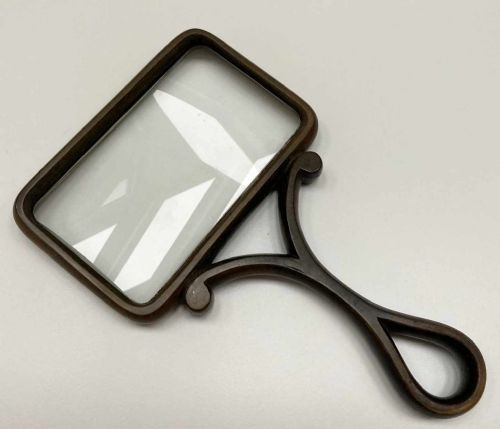
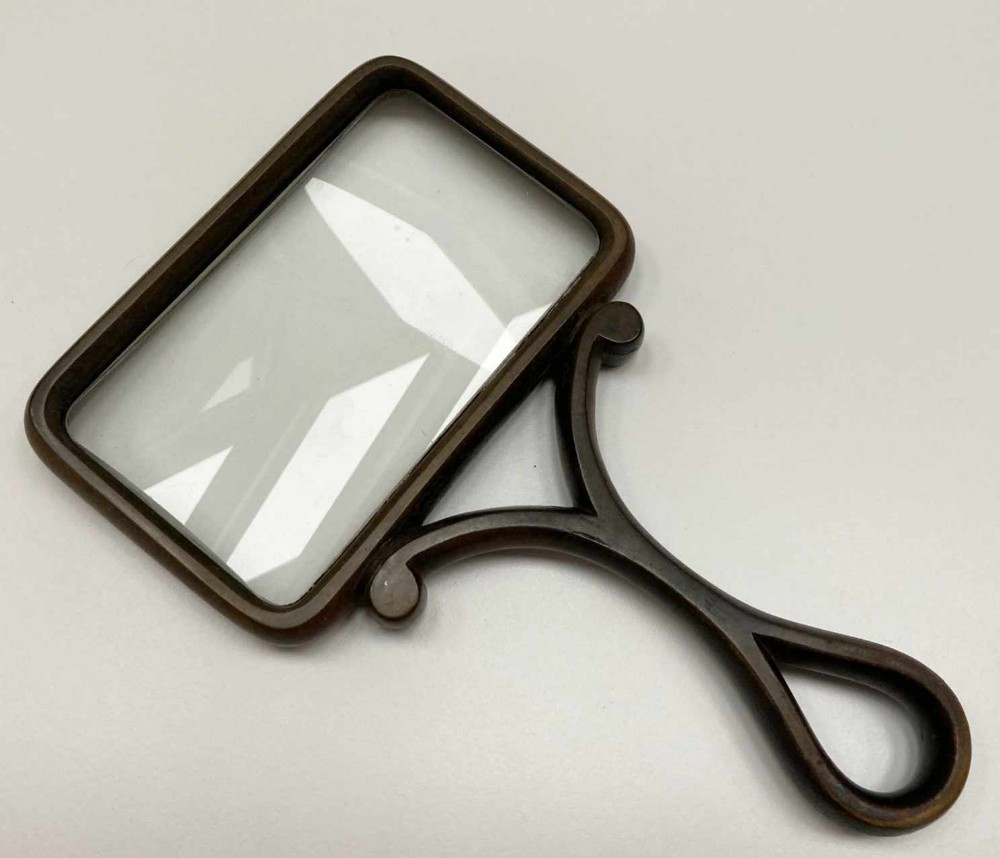
For sale, a Victorian Parkesine celluloid rectangular desk magnifying glass in original leather case by CW Dixey of Bond Street, London.

Exquisitely moulded with a looped handle and rectangular mount for the magnifying lens, the material is reminiscent of horn but is actually a fine example of the early use of the celluloid plastic invented by the British inventor Alexander Parkes who was awarded a patent for his invention in 1856. Its properties were shown off with great success at the London 1862 Internation Exhibition where the Dixey family are likely to have been introduced to the possibilities of this new product.

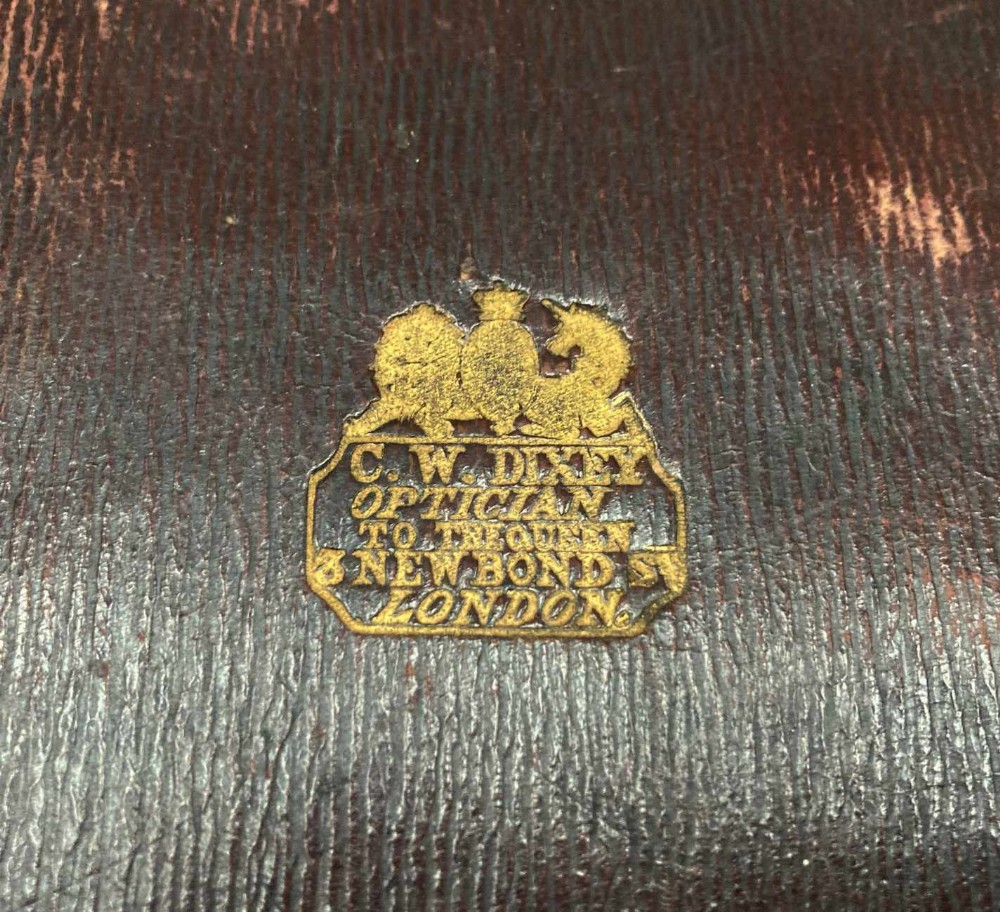
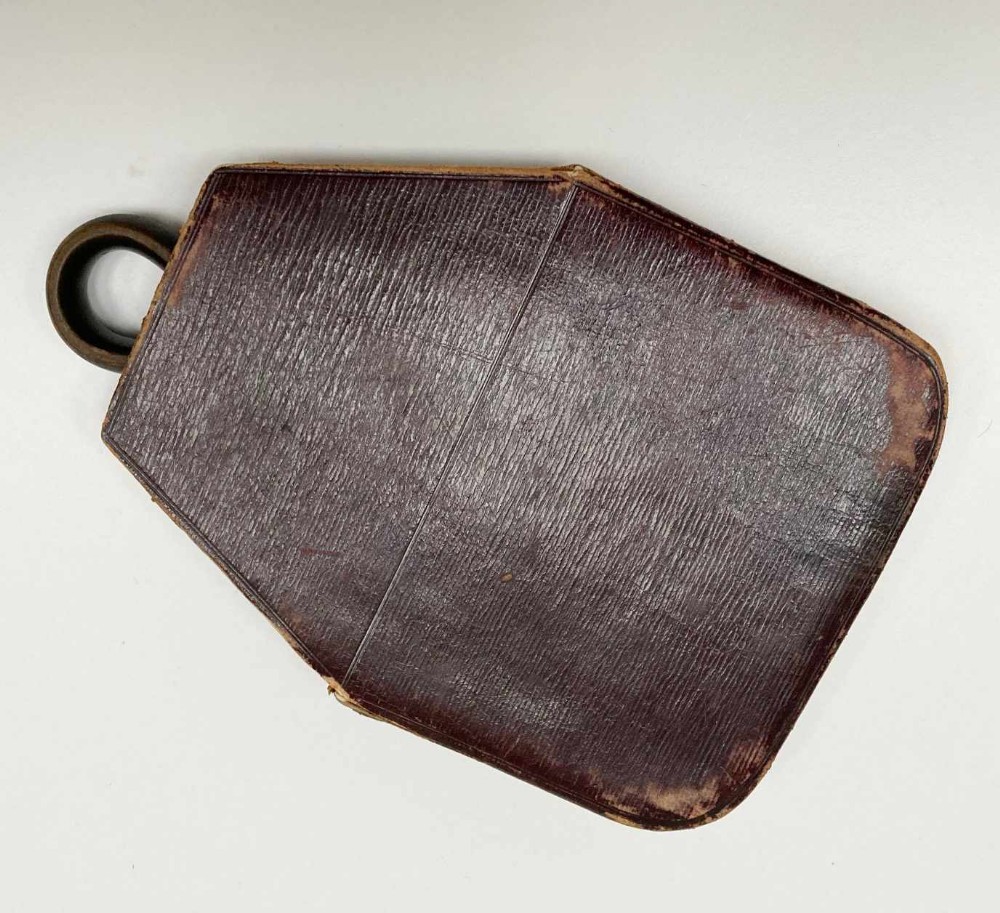
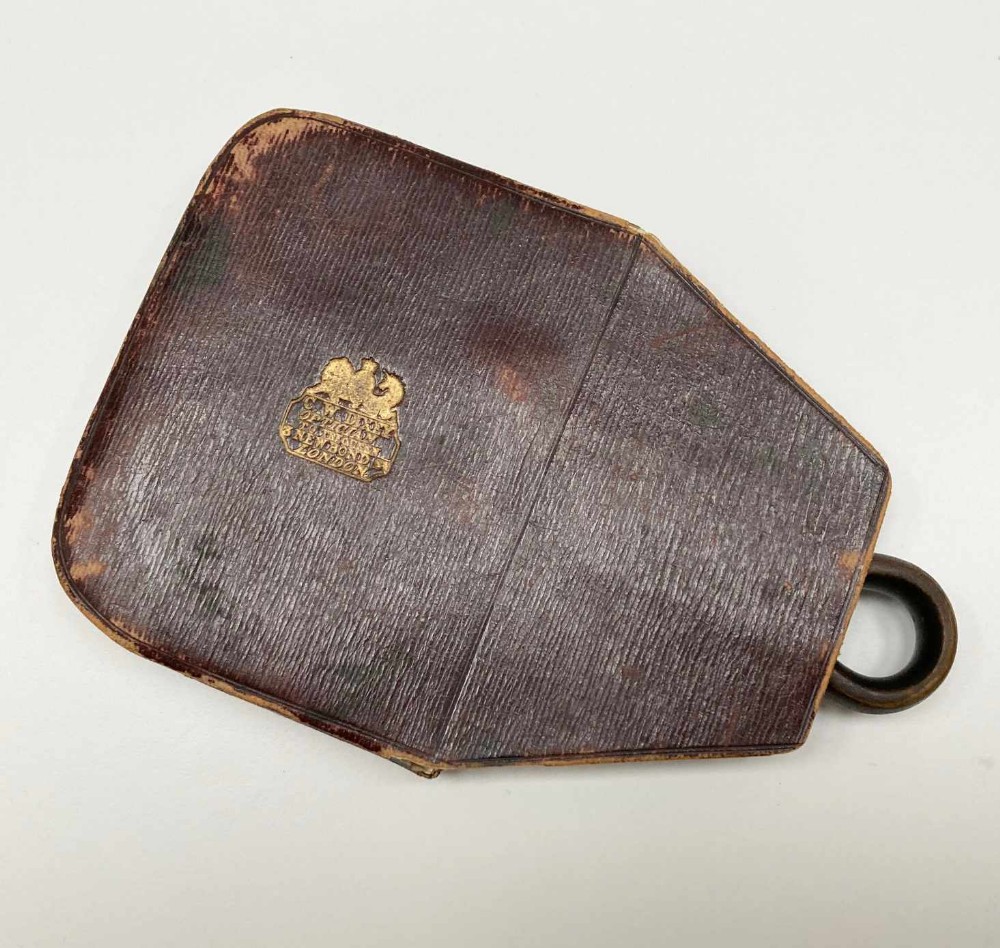
The lens measures 4 inches wide 2 and a half inches high with the overall height being 7 and a quarter inches (or 18.5 cms). It comes complete with it original morocco leather slip case which is impressed with the Royal Warrant crest over the company details, “CW Dixey Optician to The Queen, 3 New Bond Street, London”.

Charles Wastell Dixey or CW Dixey still trades today as a manufacturer and retailer of high end spectacles. The story of the dynasty however, is comprised of two strands of history. The present company’s history on its website is told in relation to the premises at 3 New Bond Street of which the company of G&C Dixey took over in 1825 from William Hawks Grice. Grice had traded at that address from 1818 to 1823. He in turn had taken over the business of the Fraser family in 1818.

The Fraser family had been in business as instrument makers from the 1770’s and are listed at 3 New Bond Street from about 1780. Started by William Fraser, his son Alexander joined the business as William Fraser & Son in 1805 and upon William’s death in 1812, the company was finally listed as just Alexander Fraser. William was a renowned maker and had received a Royal Appointment from George III, an accolade that Alexander kept after his father’s death. The reasons for the Fraser family selling to Grice is unclear but Grice himself seems to have continued the association with the Royal Family according to his, “description of the new improved self-registering thermometer” published in 1818 and from drawing instruments still contained within the Royal Collection. He is also described as a member of the City Philosophical Society and is listed as a contributing member of The Society of Arts in 1820 and 1823. According to the CW Dixey website, Grice is described as an assistant of the Fraser business and some records show him to have been apprenticed to the family business before he bought it. It also makes some reference to Grice having brought the business into ill-repute for having used it as a gambling den but I can find no record of this story. If true, it would explain his short tenure at the property but his membership of notable societies and his continued relationship with the Royal Family would suggest that he was a reputable instrument maker before this time.

Whether it was for reasons of criminal activity or not, the business was eventually sold in 1825 to George & Charles Wastell Dixey. George Dixey is known to have been apprenticed to George Wilson and Charles Wastell Dixey to his father Edward Dixey and Edward’s earlier records of trading form the second strand of the Dixey family story.

Edward’s history is somewhat difficult to unravel, he was born in 1772, the son of John Dixey a victualler or publican in Vine Street, Piccadilly and Catherine Dixey (nee Harris). According to most records, he is considered to have been apprenticed to George Linnell or George Black but more recent research by Anita McConnell shows Edward Dixey to have been apprenticed on the 4th September 1787 for seven years to the top instrument maker Jesse Ramsden at a cost of £21. A Christie’s sale record for a Wilson & Dixey telescope is also marked, “late apprentice to Jesse Ramsden” so the corroboration of these two f

Physical Dimensions
Height
19cm (7.48")
Width
12.5cm (4.92")
Depth
2cm (0.79")
Declaration

Jason Clarke Antiques has dated this Victorian Desk Magnifying Glass to the 1870s.

Reference Numbers
Sellingantiques Reference
SA754594
Description
For sale, a Victorian Parkesine celluloid rectangular desk magnifying glass in original leather case by CW Dixey of Bond Street, London.

Exquisitely moulded with a looped handle and rectangular mount for the magnifying lens, the material is reminiscent of horn but is actually a fine example of the early use of the celluloid plastic invented by the British inventor Alexander Parkes who was awarded a patent for his invention in 1856.
Its properties were shown off with great success at the London 1862 Internation Exhibition where the Dixey family are likely to have been introduced to the possibilities of this new product.
Jason Clarke Antiques
fig 1. A dark brown rectangular celluloid magnifying glass featuring a scrolled Y-shaped handle and a clear glass lens.
fig 1. Victorian Celluloid Desk Magnifying Glass in Case by Cw Dixey London

The lens measures 4 inches wide 2 and a half inches high with the overall height being 7 and a quarter inches (or 18.5 cms). It comes complete with it original morocco leather slip case which is impressed with the Royal Warrant crest over the company details, “CW Dixey Optician to The Queen, 3 New Bond Street, London”.
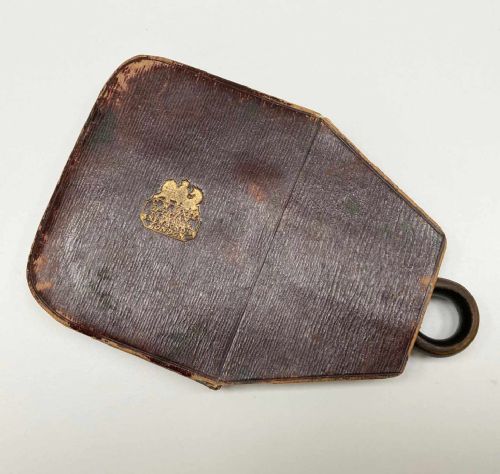
fig 2. A dark brown rectangular celluloid magnifying glass featuring a scrolled Y-shaped handle and a clear glass lens.
fig 2. Victorian Celluloid Desk Magnifying Glass in Case by Cw Dixey London

Charles Wastell Dixey or CW Dixey still trades today as a manufacturer and retailer of high end spectacles. The story of the dynasty however, is comprised of two strands of history. The present company’s history on its website is told in relation to the premises at 3 New Bond Street of which the company of G&C Dixey took over in 1825 from William Hawks Grice. Grice had traded at that address from 1818 to 1823. He in turn had taken over the business of the Fraser family in 1818.
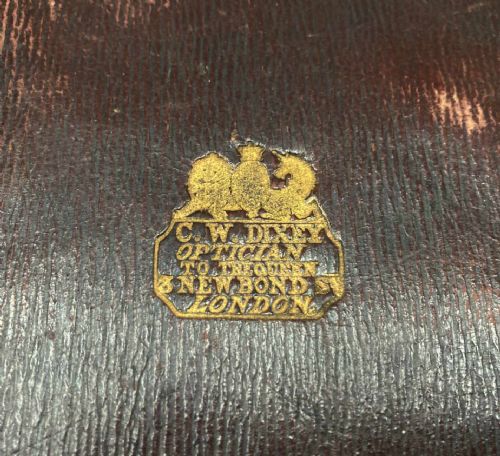
fig 3. A dark brown rectangular celluloid magnifying glass featuring a scrolled Y-shaped handle and a clear glass lens.
fig 3. Victorian Celluloid Desk Magnifying Glass in Case by Cw Dixey London

The Fraser family had been in business as instrument makers from the 1770’s and are listed at 3 New Bond Street from about 1780. Started by William Fraser, his son Alexander joined the business as William Fraser & Son in 1805 and upon William’s death in 1812, the company was finally listed as just Alexander Fraser. William was a renowned maker and had received a Royal Appointment from George III, an accolade that Alexander kept after his father’s death. The reasons for the Fraser family selling to Grice is unclear but Grice himself seems to have continued the association with the Royal Family according to his, “description of the new improved self-registering thermometer” published in 1818 and from drawing instruments still contained within the Royal Collection. He is also described as a member of the City Philosophical Society and is listed as a contributing member of The Society of Arts in 1820 and 1823. According to the CW Dixey website, Grice is described as an assistant of the Fraser business and some records show him to have been apprenticed to the family business before he bought it. It also makes some reference to Grice having brought the business into ill-repute for having used it as a gambling den but I can find no record of this story. If true, it would explain his short tenure at the property but his membership of notable societies and his continued relationship with the Royal Family would suggest that he was a reputable instrument maker before this time.
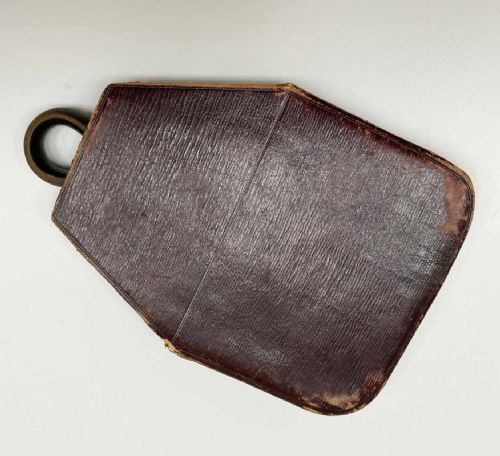
fig 4. A dark brown rectangular celluloid magnifying glass featuring a scrolled Y-shaped handle and a clear glass lens.
fig 4. Victorian Celluloid Desk Magnifying Glass in Case by Cw Dixey London

Whether it was for reasons of criminal activity or not, the business was eventually sold in 1825 to George & Charles Wastell Dixey. George Dixey is known to have been apprenticed to George Wilson and Charles Wastell Dixey to his father Edward Dixey and Edward’s earlier records of trading form the second strand of the Dixey family story.

Edward’s history is somewhat difficult to unravel, he was born in 1772, the son of John Dixey a victualler or publican in Vine Street, Piccadilly and Catherine Dixey (nee Harris). According to most records, he is considered to have been apprenticed to George Linnell or George Black but more recent research by Anita McConnell shows Edward Dixey to have been apprenticed on the 4th September 1787 for seven years to the top instrument maker Jesse Ramsden at a cost of £21. A Christie’s sale record for a Wilson & Dixey telescope is also marked, “late apprentice to Jesse Ramsden” so the corroboration of these two f

Height
19cm (7.48")
Width
12.5cm (4.92")
Depth
2cm (0.79")
Date of Manufacture

Jason Clarke Antiques has dated this Victorian Desk Magnifying Glass to the 1870s.

Reference Numbers
Sellingantiques Ref
SA754594
Jason Clarke Antiques
Sellingantiques verified Since Jul 2015
Dealer Profile

You can view the stock and full dealer information on the Jason Clarke Antiques Profile Page
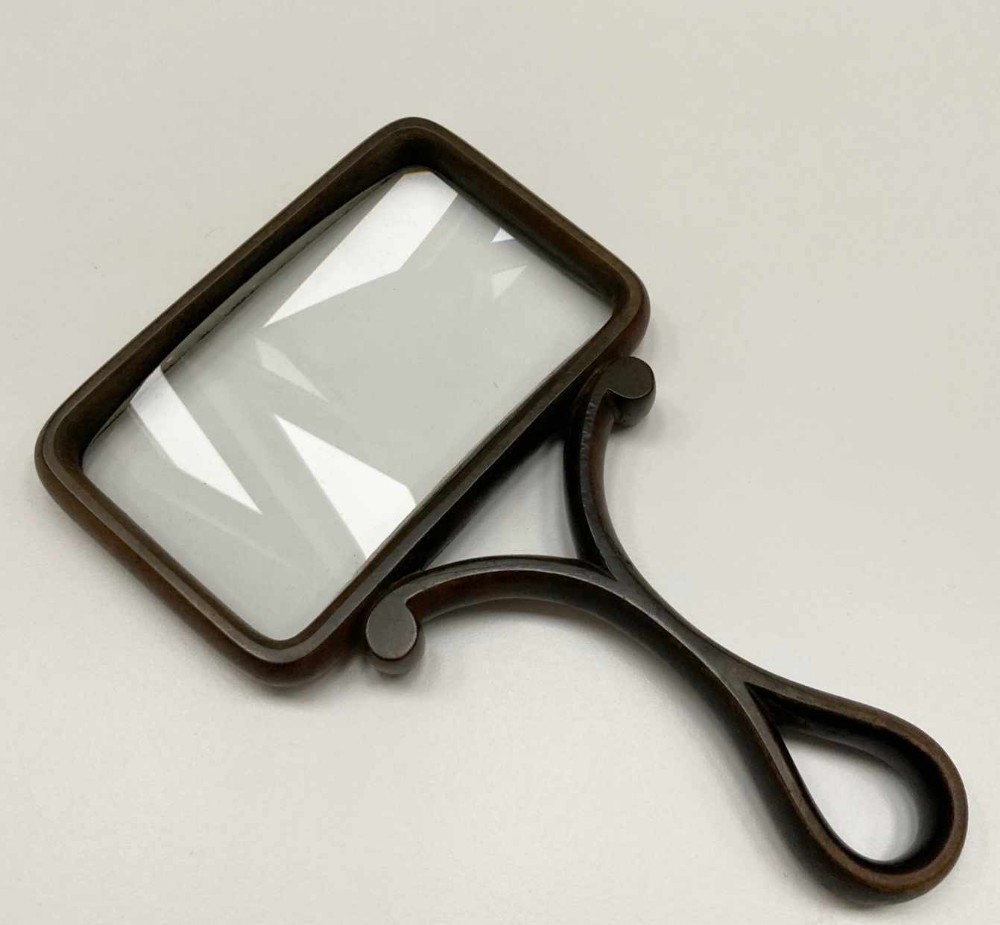
PDF SHARE
SAVE
A dark brown rectangular celluloid magnifying glass featuring a scrolled Y-shaped handle and a clear glass lens.
1 / 5
Archive I A dark brown rectangular celluloid magnifying glass featuring a scrolled Y-shaped handle and a clear glass lens.

Victorian Celluloid Desk Magnifying Glass in Case by CW Dixey London
Archive II A dark brown rectangular celluloid magnifying glass featuring a scrolled Y-shaped handle and a clear glass lens. View II
Archive III A dark brown rectangular celluloid magnifying glass featuring a scrolled Y-shaped handle and a clear glass lens. View III
Archive IV A dark brown rectangular celluloid magnifying glass featuring a scrolled Y-shaped handle and a clear glass lens. View IV
Archive V A dark brown rectangular celluloid magnifying glass featuring a scrolled Y-shaped handle and a clear glass lens. View V
FURTHER BROWSING

Visitors also looked at these ⇣

Enlarged Archival View
Telephone 07815 046645
Location
Newbury
Berkshire
United Kingdom
Verified Since Jul 2015
Items For Sale 82
Items Sold 605
Jason Clarke Antiques
Verified Since Jul 2015
View Dealer Info
Location: Newbury, Berkshire, United Kingdom
Verified
Jul 2015
For Sale
82
Sold
605
A dark brown rectangular celluloid magnifying glass featuring a scrolled Y-shaped handle and a clear glass lens.
Victorian Celluloid Desk Magnifying Glass in Case by CW Dixey London
Ref: SA754594
A dark brown rectangular celluloid magnifying glass featuring a scrolled Y-shaped handle and a clear glass lens.
Detail View 1
Detail View 2
Detail View 3
Detail View 4
Archival Detail
Every single antique dealer on our platform is individually approved by our internal team. We verify their professional trade history, ethical standards, and photographic quality to ensure a secure, high-standard buying environment. Upon joining, every dealer agrees to a strict 9-point code of conduct. While issues can occasionally arise, our dealers typically resolve them swiftly and directly with the buyer. In fact, since our founding in 2002, Sellingantiques has only had to step in to help resolve an issue on roughly five occasions—a true testament to the quality of our dealers and their dedication to your happiness.
Our dealers are highly experienced in packing and shipping fragile, high-value antiques. Because you are in direct contact with the dealer, you will be able to easily go through all available shipping and insurance options together to ensure your item arrives safely.
Antiques are the ultimate green purchase. By choosing historical pieces over newly manufactured goods, you completely eliminate the carbon footprint of modern mass production while preserving exceptional, timeless craftsmanship.

Desk magnifying glasses became prominent during the nineteenth century as essential optical instruments for reading fine print, examining maps, and inspecting documents. Opticians in major cities manufactured high-quality handheld and desk-standing magnifiers throughout the Victorian era.

Historical magnifiers utilised ground glass lenses framed in materials such as brass, horn, tortoiseshell, nickel, or early synthetic polymers like celluloid. Handles were crafted from turned wood, cast metal, carved bone, or moulded resins to provide structural support.

Authentic pieces frequently feature maker stamps or engravings from established opticians along the frame, handle, or storage case. Indications of period origin include bevelled lens edges, slight surface wear to early synthetic or organic frames, and nineteenth-century assembly techniques.

An antique desk magnifier functions well as a styled object atop a stack of hardback books on an office desk or coffee table. Placing it alongside leather-bound journals, brass desk implements, or decorative trays reinforces a traditional library aesthetic.

Clean the glass lens gently using a microfibre cloth and avoid applying chemical solvents or water directly to celluloid components. Store the item in a temperate environment away from direct heat sources and high humidity to preserve the structural stability of the early polymer.
items
Add keywords to the filter
Price
£100
£250000
Era
Movements
Material
Origin
Stock Location
Freshness
Online Payments
Categories