24,122  PAGES BROWSED TODAY PAGES TODAY 36  ANTIQUES UPLOADED TODAY NEW ARRIVALS
ID #SA620728
FOR SALE
£1,500
Email
Save
English School 19th Century portrait of Lord Randolph Henry Spencer-churchill (1849 – 1895)
Artware Fineart
for sale €1,755     $1,905
£1,500

Artware Fineart

Sellingantiques Verified Since Sep 2008
View Dealers Stock Page
Id #SA620728
PDF SHARE
SAVE

English School 19th Century portrait of Lord Randolph Henry Spencer-churchill (1849 – 1895)

19th century
For Sale by Artware Fineart
Description

English School 19th Century

Portrait of Lord Randolph Henry Spencer-Churchill (1849 – 1895)

oil on canvas

40 x 30 cm. (16 x 12 in.)

Lord Randolph Henry Spencer Churchill, (1849–1895), politician, was born at 3 Wilton Terrace, Belgravia, London, on 12 February 1849 (b. cert.; Winston Churchill's biography gives 13 February 1849), the third son of John Winston Spencer Churchill, seventh duke of Marlborough (1822–1883), and his wife, Lady Frances Anne Emily (1822–1899), daughter of Charles William Vane, third marquess of Londonderry, and his wife Frances Anne Vane.
Education and marriage

Churchill was sent to Mr Tabor's preparatory school at Cheam, where he displayed an interest in history and a character which, according to a contemporary, was 'sometimes impetuous, sometimes imperious, always irrepressible' (Gordon and Gordon, 1.24). At Eton College (1863–5) his record was unremarkable, but he became friends with Arthur Balfour and Lord Rosebery, who were to have an important influence on his political career. At Oxford (1867–70) he read jurisprudence and modern history at Merton College, where he was well regarded by his history tutor, Mandell Creighton. In 1883 Churchill told Creighton that 'The historical studies which I too lightly carried on under your guidance have been of immense value to me in calculating and carrying out actions which to many appear erratic' (DNB). His accurate knowledge of Gibbon's Decline and Fall of the Roman Empire was noted by the history examiners, who included E. A. Freeman. Churchill spent much of his time at Oxford hunting or steeplechasing, and he was one of the founders of the Merton dining club the Myrmidons. He obtained a second-class degree in 1870, and then spent much of the next three years at Blenheim, where he hunted with a pack of harriers.
In 1873 Churchill met, at a ball at Cowes, a young American, Jeanette (Jennie) Jerome (1854–1921), the daughter of Clara and Leonard Jerome, a wealthy New York financier. Mrs Jerome and her daughters had come to England from Paris, after the fall of the Second Empire, and they were quickly received into society. Randolph and Jennie fell in love and became secretly engaged, but it took them six months to persuade their parents to allow them to marry. At this time, it was virtually unprecedented for the son of a leading aristocrat to marry an American, but Churchill was only the younger son of a poor duke, and when Leonard Jerome agreed to settle £50,000 on the couple, the duke agreed to the marriage. Randolph and Jennie [see Churchill, Jeanette] were married at the British embassy in Paris on 15 April 1874, and their first child, Winston Churchill (the future prime minister), was born prematurely at Blenheim Palace on 30 November 1874. Their younger child, John (Jack), was born in February 1880.

Conservative back-bencher

Churchill shared the Conservative politics of his parents, and in 1868 he had published a letter defending his father's conduct in connection with the parliamentary election at Woodstock. In 1874, in return for his father's consent to marry, Churchill agreed to stand at the general election as the Conservative candidate for the borough of Woodstock, where his father was the principal landowner. In his election address he called for a more economical defence policy—a portent of his future policy. He defeated his Liberal opponent, George Brodrick (a fellow of Merton College) by a majority of 165 votes out of a total electorate of 1147. His maiden speech in the House of Commons, on 22 May 1874, prompted compliments from Harcourt and Disraeli, who wrote to the queen: 'the House was surprised, and then captivated, by his energy and natural flow and his impressive manner' (Monypenny & Buckle, 2.652). The hallmark of Churchill's early parliamentary career was his loyalty to his family—which did not always equate

Physical Dimensions
Height
40cm (15.75")
Width
30cm (11.81")
Depth
5cm (1.97")
Declaration

Artware Fineart has dated this Victorian Portrait Oil Painting to the 19th Century.

Reference Numbers
Sellingantiques Reference
SA620728
Dealers Internal Reference
4138
Description
English School 19th Century

Portrait of Lord Randolph Henry Spencer-Churchill (1849 – 1895)

oil on canvas

40 x 30 cm. (16 x 12 in.)

Lord Randolph Henry Spencer Churchill, (1849–1895), politician, was born at 3 Wilton Terrace, Belgravia, London, on 12 February 1849 (b.
Artware Fineart

cert.; Winston Churchill's biography gives 13 February 1849), the third son of John Winston Spencer Churchill, seventh duke of Marlborough (1822–1883), and his wife, Lady Frances Anne Emily (1822–1899), daughter of Charles William Vane, third marquess of Londonderry, and his wife Frances Anne Vane.

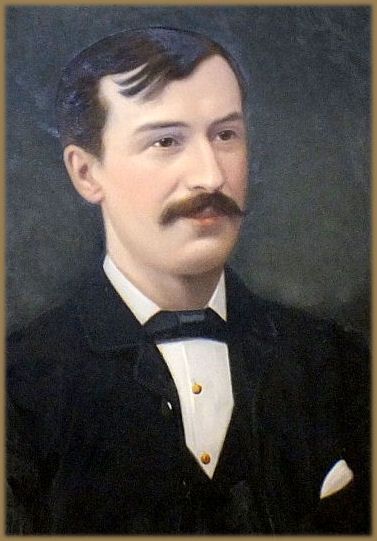
fig 1. A 19th-century Victorian oil portrait of a gentleman with a dark moustache, styled hair, and a black formal suit against a dark background.
fig 1. English School 19th Century portrait of Lord Randolph Henry Spencer-churchill (1849 – 1895)

Education and marriage

Churchill was sent to Mr Tabor's preparatory school at Cheam, where he displayed an interest in history and a character which, according to a contemporary, was 'sometimes impetuous, sometimes imperious, always irrepressible' (Gordon and Gordon, 1.24). At Eton College (1863–5) his record was unremarkable, but he became friends with Arthur Balfour and Lord Rosebery, who were to have an important influence on his political career. At Oxford (1867–70) he read jurisprudence and modern history at Merton College, where he was well regarded by his history tutor, Mandell Creighton. In 1883 Churchill told Creighton that 'The historical studies which I too lightly carried on under your guidance have been of immense value to me in calculating and carrying out actions which to many appear erratic' (DNB). His accurate knowledge of Gibbon's Decline and Fall of the Roman Empire was noted by the history examiners, who included E. A. Freeman. Churchill spent much of his time at Oxford hunting or steeplechasing, and he was one of the founders of the Merton dining club the Myrmidons. He obtained a second-class degree in 1870, and then spent much of the next three years at Blenheim, where he hunted with a pack of harriers.

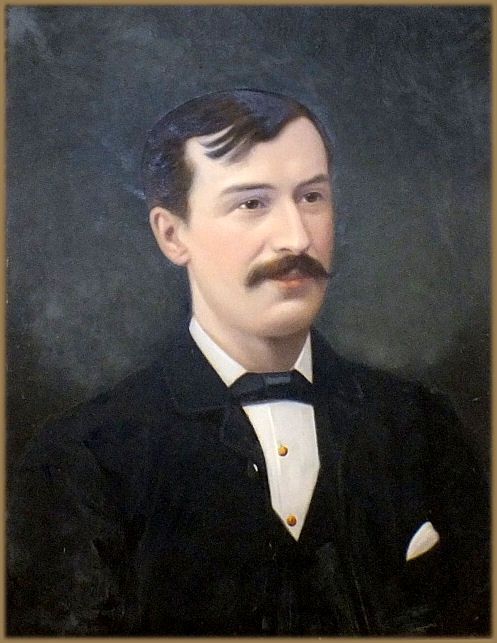
fig 2. A 19th-century Victorian oil portrait of a gentleman with a dark moustache, styled hair, and a black formal suit against a dark background.
fig 2. English School 19th Century portrait of Lord Randolph Henry Spencer-churchill (1849 – 1895)

In 1873 Churchill met, at a ball at Cowes, a young American, Jeanette (Jennie) Jerome (1854–1921), the daughter of Clara and Leonard Jerome, a wealthy New York financier. Mrs Jerome and her daughters had come to England from Paris, after the fall of the Second Empire, and they were quickly received into society. Randolph and Jennie fell in love and became secretly engaged, but it took them six months to persuade their parents to allow them to marry. At this time, it was virtually unprecedented for the son of a leading aristocrat to marry an American, but Churchill was only the younger son of a poor duke, and when Leonard Jerome agreed to settle £50,000 on the couple, the duke agreed to the marriage. Randolph and Jennie [see Churchill, Jeanette] were married at the British embassy in Paris on 15 April 1874, and their first child, Winston Churchill (the future prime minister), was born prematurely at Blenheim Palace on 30 November 1874. Their younger child, John (Jack), was born in February 1880.

Conservative back-bencher

Churchill shared the Conservative politics of his parents, and in 1868 he had published a letter defending his father's conduct in connection with the parliamentary election at Woodstock. In 1874, in return for his father's consent to marry, Churchill agreed to stand at the general election as the Conservative candidate for the borough of Woodstock, where his father was the principal landowner. In his election address he called for a more economical defence policy—a portent of his future policy. He defeated his Liberal opponent, George Brodrick (a fellow of Merton College) by a majority of 165 votes out of a total electorate of 1147. His maiden speech in the House of Commons, on 22 May 1874, prompted compliments from Harcourt and Disraeli, who wrote to the queen: 'the House was surprised, and then captivated, by his energy and natural flow and his impressive manner' (Monypenny & Buckle, 2.652). The hallmark of Churchill's early parliamentary career was his loyalty to his family—which did not always equate

Height
40cm (15.75")
Width
30cm (11.81")
Depth
5cm (1.97")
Date of Manufacture

Artware Fineart has dated this Victorian Portrait Oil Painting to the 19th Century.

Reference Numbers
Sellingantiques Ref
SA620728
Dealers Internal Ref
4138
Artware Fineart
Sellingantiques verified Since Sep 2008
Dealer Profile

You can view the stock and full dealer information on the Artware Fineart Profile Page
PDF SHARE
SAVE
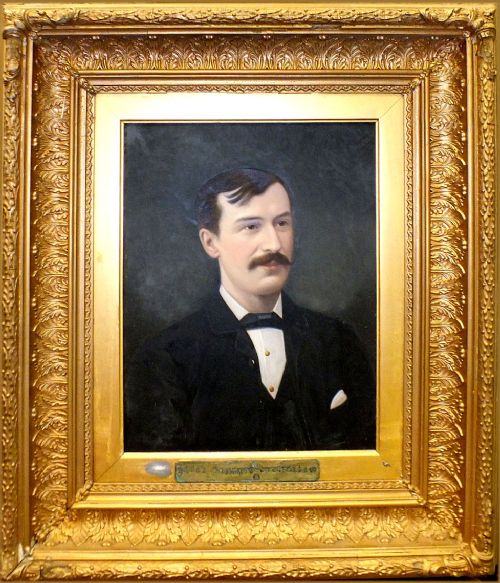
A 19th-century Victorian oil portrait of a gentleman with a dark moustache, styled hair, and a black formal suit against a dark background.
1 / 3
Archive I A 19th-century Victorian oil portrait of a gentleman with a dark moustache, styled hair, and a black formal suit against a dark background.

English School 19th Century portrait of Lord Randolph Henry Spencer-churchill (1849 – 1895)

Archive II A 19th-century Victorian oil portrait of a gentleman with a dark moustache, styled hair, and a black formal suit against a dark background. View II
Archive III A 19th-century Victorian oil portrait of a gentleman with a dark moustache, styled hair, and a black formal suit against a dark background. View III
FURTHER BROWSING

Visitors also looked at these ⇣

Enlarged Archival View
Telephone 07958 699 645
Location
18 La Gare
51 Surrey Row
London
SE1 0BZ
United Kingdom
Verified Since Sep 2008
Items For Sale 243
Items Sold 223
Artware Fineart
Verified Since Sep 2008
View Dealer Info
Location: 18 La Gare , 51 Surrey Row , London , SE1 0BZ , United Kingdom
Verified
Sep 2008
For Sale
243
Sold
223
A 19th-century Victorian oil portrait of a gentleman with a dark moustache, styled hair, and a black formal suit against a dark background.
English School 19th Century Portrait of Lord Randolph Henry Spencer-Churchill (1849 – 1895)
Ref: SA620728
A 19th-century Victorian oil portrait of a gentleman with a dark moustache, styled hair, and a black formal suit against a dark background.
Detail View 1
Detail View 2
Archival Detail
Every single antique dealer on our platform is individually approved by our internal team. We verify their professional trade history, ethical standards, and photographic quality to ensure a secure, high-standard buying environment. Upon joining, every dealer agrees to a strict 9-point code of conduct. While issues can occasionally arise, our dealers typically resolve them swiftly and directly with the buyer. In fact, since our founding in 2002, Sellingantiques has only had to step in to help resolve an issue on roughly five occasions—a true testament to the quality of our dealers and their dedication to your happiness.
Our dealers are highly experienced in packing and shipping fragile, high-value antiques. Because you are in direct contact with the dealer, you will be able to easily go through all available shipping and insurance options together to ensure your item arrives safely.
Antiques are the ultimate green purchase. By choosing historical pieces over newly manufactured goods, you completely eliminate the carbon footprint of modern mass production while preserving exceptional, timeless craftsmanship.

Nineteenth-century British portraiture is characterised by formal compositions, realistic depictions of attire, and subdued background tones designed to highlight the sitters social standing.

Paintings from this period were primarily executed using oil pigments ground in natural oils, applied onto stretched linen or cotton canvas, and secured within timber frames.

Authentic period portraits typically feature natural craquelure patterns across the paint surface, age-appropriate discolouration of surface varnish, and period-correct canvas stretching hardware.

Position the portrait as a focal piece above a fireplace mantel, or integrate it into a curated gallery wall alongside contrasting modern artwork and structured lighting.

Store the painting in a climate-controlled room away from direct sunlight. Dust lightly with a soft brush and engage a professional conservator for varnish restoration.
items
Add keywords to the filter
Price
£100
£250000
Era
Movements
Material
Origin
Stock Location
Freshness
Online Payments
Categories