14,894  PAGES BROWSED TODAY PAGES TODAY 36  ANTIQUES UPLOADED TODAY NEW ARRIVALS
ID #SA594941
FOR SALE
£980
Email
Save
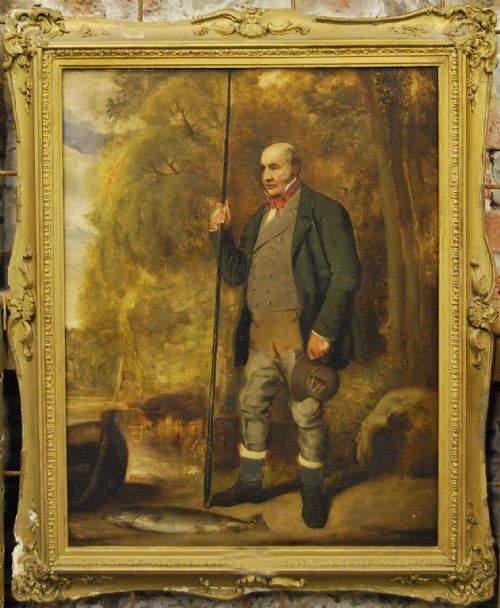
English School 19th, Century portrait of an Angler with His Catch on a Riverbank
Artware Fineart
for sale €1,147     $1,245
£980

Artware Fineart

Sellingantiques Verified Since Sep 2008
View Dealers Stock Page
Id #SA594941
PDF SHARE
SAVE

English School 19th, Century portrait of an Angler with His Catch on a Riverbank

19th century
For Sale by Artware Fineart
Description

English School 19th, Century

Portrait of an Angler with his Catch on a Riverbank

oil on canvas

63.50 x 50.80 cm. (25 x 20 in.)

The impact of the Industrial Revolution was first felt in the manufacture of fly lines. Instead of anglers twisting their own lines - a laborious and time-consuming process - the new textile spinning machines allowed for a variety of tapered lines to be easily manufactured and marketed.
British fly-fishing continued to develop in the 19th Century, with the emergence of fly fishing clubs, along with the appearance of several books on the subject of fly tying and fly fishing techniques.

The Fly-fisher's Entomology by Alfred Ronalds had a great influence on the development of fly fishing when it was first published in 1836.

Alfred Ronalds took up the sport of fly fishing, learning the craft on the rivers Trent, Blythe and Dove. On the River Blythe, near what is today Creswell Green, Ronalds constructed a bankside fishing hut designed primarily as an observatory of trout behaviour in the river. From this hut, and elsewhere on his home rivers, Ronalds conducted experiments and formulated the ideas that eventually were published in The Fly-fisher's Entomologyin 1836.

He combined his knowledge of fly fishing with his skill as an engraver and printer, to lavish his work with 20 colour plates. It was the first comprehensive work related to the entomology associated with fly fishing and most fly-fishing historians credit Ronalds with setting a literature standard in 1836 that is still followed today.Describing methods, techniques and, most importantly, artificial flies, in a meaningful way for the angler and illustrating them in colour is a method of presentation that can be seen in most fly-fishing literature today.

The book was mostly about the aquatic insects—mayflies, caddisflies and stoneflies—that trout and grayling feed on and their counterpart artificial imitations. About half the book is devoted to observations of trout, their behaviour, and the methods and techniques used to catch them. Most of this information, although enhanced by Ronalds' experiences and observations, was merely an enhancement of Charles Bowlker's Art of Angling (first published in 1774 but still in print in 1836).

In Chapter IV - Of a Selection of Insects, and Their Imitations, Used in Fly Fishing - for the first time is discussed specific artificial fly imitations by name, associated with the corresponding natural insect. Organized by their month of appearance, Ronalds was the first author to begin the standardization of angler names for artificial flies. Prior to The Fly-fisher's Entomology, anglers had been given suggestions for artificial flies to be used on a particular river or at a particular time of the year, but those suggestions were never matched to specific natural insects the angler might encounter on the water. According to Ernest Schwiebert: "Ronalds is one of the major milestones in the entire literature of fly-fishing, and with his Entomology the scientific method has reached angling in full flower. Ronalds was completely original in its content and research, setting the yardstick for all subsequent discussion and illustration of aquatic fly hatches.

Physical Dimensions
Height
63cm (24.80")
Width
50cm (19.69")
Depth
2cm (0.79")
Declaration

Artware Fineart has dated this 19th Century Angler Portrait to the 19th Century.

Reference Numbers
Sellingantiques Reference
SA594941
Dealers Internal Reference
3137
Description
English School 19th, Century

Portrait of an Angler with his Catch on a Riverbank

oil on canvas

63.50 x 50.80 cm. (25 x 20 in.)

The impact of the Industrial Revolution was first felt in the manufacture of fly lines.

Instead of anglers twisting their own lines - a laborious and time-consuming process - the new textile spinning machines allowed for a variety of tapered lines to be easily manufactured and marketed.
Artware Fineart
fig 1. A 19th-century English oil painting depicting a standing gentleman angler holding a fishing rod beside a riverbank with a caught fish at his feet.
fig 1. English School 19th, Century portrait of an Angler with His Catch on a Riverbank

British fly-fishing continued to develop in the 19th Century, with the emergence of fly fishing clubs, along with the appearance of several books on the subject of fly tying and fly fishing techniques.

The Fly-fisher's Entomology by Alfred Ronalds had a great influence on the development of fly fishing when it was first published in 1836.

Alfred Ronalds took up the sport of fly fishing, learning the craft on the rivers Trent, Blythe and Dove. On the River Blythe, near what is today Creswell Green, Ronalds constructed a bankside fishing hut designed primarily as an observatory of trout behaviour in the river. From this hut, and elsewhere on his home rivers, Ronalds conducted experiments and formulated the ideas that eventually were published in The Fly-fisher's Entomologyin 1836.

He combined his knowledge of fly fishing with his skill as an engraver and printer, to lavish his work with 20 colour plates. It was the first comprehensive work related to the entomology associated with fly fishing and most fly-fishing historians credit Ronalds with setting a literature standard in 1836 that is still followed today.Describing methods, techniques and, most importantly, artificial flies, in a meaningful way for the angler and illustrating them in colour is a method of presentation that can be seen in most fly-fishing literature today.

The book was mostly about the aquatic insects—mayflies, caddisflies and stoneflies—that trout and grayling feed on and their counterpart artificial imitations. About half the book is devoted to observations of trout, their behaviour, and the methods and techniques used to catch them. Most of this information, although enhanced by Ronalds' experiences and observations, was merely an enhancement of Charles Bowlker's Art of Angling (first published in 1774 but still in print in 1836).

In Chapter IV - Of a Selection of Insects, and Their Imitations, Used in Fly Fishing - for the first time is discussed specific artificial fly imitations by name, associated with the corresponding natural insect. Organized by their month of appearance, Ronalds was the first author to begin the standardization of angler names for artificial flies. Prior to The Fly-fisher's Entomology, anglers had been given suggestions for artificial flies to be used on a particular river or at a particular time of the year, but those suggestions were never matched to specific natural insects the angler might encounter on the water. According to Ernest Schwiebert: "Ronalds is one of the major milestones in the entire literature of fly-fishing, and with his Entomology the scientific method has reached angling in full flower. Ronalds was completely original in its content and research, setting the yardstick for all subsequent discussion and illustration of aquatic fly hatches.

Height
63cm (24.80")
Width
50cm (19.69")
Depth
2cm (0.79")
Date of Manufacture

Artware Fineart has dated this 19th Century Angler Portrait to the 19th Century.

Reference Numbers
Sellingantiques Ref
SA594941
Dealers Internal Ref
3137
Artware Fineart
Sellingantiques verified Since Sep 2008
Dealer Profile

You can view the stock and full dealer information on the Artware Fineart Profile Page

PDF SHARE
SAVE
A 19th-century English oil painting depicting a standing gentleman angler holding a fishing rod beside a riverbank with a caught fish at his feet.
1 / 2
Archive I A 19th-century English oil painting depicting a standing gentleman angler holding a fishing rod beside a riverbank with a caught fish at his feet.

English School 19th, Century portrait of an Angler with His Catch on a Riverbank
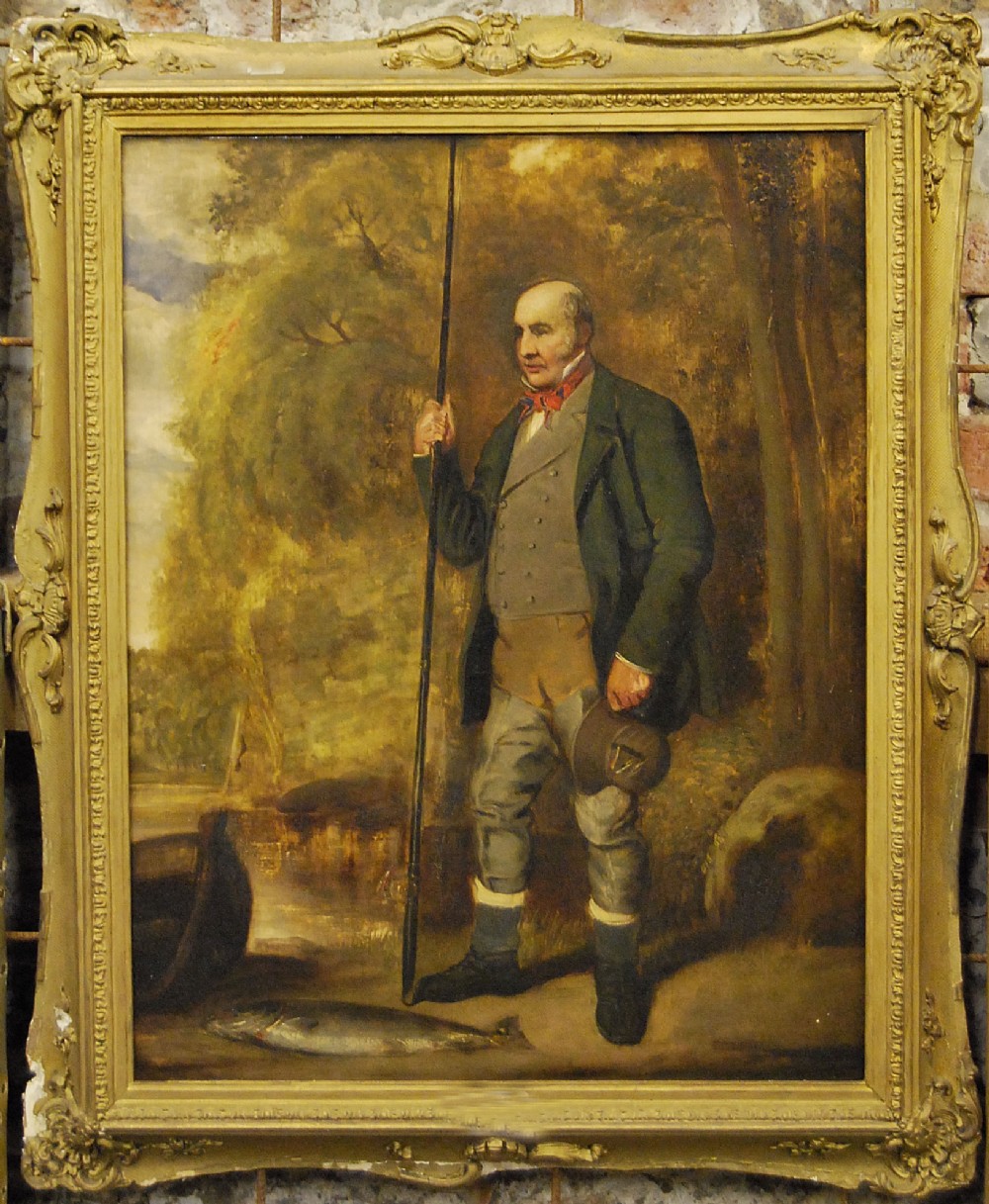
Archive II A 19th-century English oil painting depicting a standing gentleman angler holding a fishing rod beside a riverbank with a caught fish at his feet. View II
Enlarged Archival View
Telephone 07958 699 645
Location
18 La Gare
51 Surrey Row
London
SE1 0BZ
United Kingdom
Verified Since Sep 2008
Items For Sale 243
Items Sold 223
Artware Fineart
Verified Since Sep 2008
View Dealer Info
Location: 18 La Gare , 51 Surrey Row , London , SE1 0BZ , United Kingdom
Verified
Sep 2008
For Sale
243
Sold
223
A 19th-century English oil painting depicting a standing gentleman angler holding a fishing rod beside a riverbank with a caught fish at his feet.
English School 19th, Century Portrait of an Angler with his Catch on a Riverbank
Ref: SA594941
A 19th-century English oil painting depicting a standing gentleman angler holding a fishing rod beside a riverbank with a caught fish at his feet.
Detail View 1
Archival Detail
Every single antique dealer on our platform is individually approved by our internal team. We verify their professional trade history, ethical standards, and photographic quality to ensure a secure, high-standard buying environment. Upon joining, every dealer agrees to a strict 9-point code of conduct. While issues can occasionally arise, our dealers typically resolve them swiftly and directly with the buyer. In fact, since our founding in 2002, Sellingantiques has only had to step in to help resolve an issue on roughly five occasions—a true testament to the quality of our dealers and their dedication to your happiness.
Our dealers are highly experienced in packing and shipping fragile, high-value antiques. Because you are in direct contact with the dealer, you will be able to easily go through all available shipping and insurance options together to ensure your item arrives safely.
Antiques are the ultimate green purchase. By choosing historical pieces over newly manufactured goods, you completely eliminate the carbon footprint of modern mass production while preserving exceptional, timeless craftsmanship.

British School sporting art of the 19th century encompasses portraiture and landscape works depicting traditional outdoor pursuits such as angling, hunting, and equestrian activities. These works typically feature naturalistic outdoor lighting, atmospheric landscapes, and realistic representations of provincial life.

Artists during this period primarily executed works using oil pigments bound with linseed oil on stretched linen or cotton canvas. Supports were prepared with gesso grounds, and completed works were finished with natural varnish layers such as dammar or mastic.

Authentication involves examining craquelure patterns across the paint film, inspecting canvas weave and stretcher construction for period-appropriate wear, and evaluating natural oxidisation on the reverse. Provenance research and technical analysis of pigment composition further assist in verification.

A traditional figurative painting can serve as a focal point when hung above a mantlepiece or sideboard, juxtaposed against clean modern architectural lines or contemporary wall finishes. Complementary ambient lighting highlights the texture and depth of the oil medium.

Keep the canvas in a climate-controlled environment away from direct sunlight, excess humidity, and direct heat sources. Dust gently using a soft, dry natural-bristle brush, avoiding liquid cleaners or chemical treatments.
items
Add keywords to the filter
Price
£100
£250000
Era
Movements
Material
Origin
Stock Location
Freshness
Online Payments
Categories