10,055  PAGES BROWSED TODAY PAGES TODAY 13  ANTIQUES UPLOADED TODAY NEW ARRIVALS
ID #SA584817
FOR SALE
£7,000
Email
Save
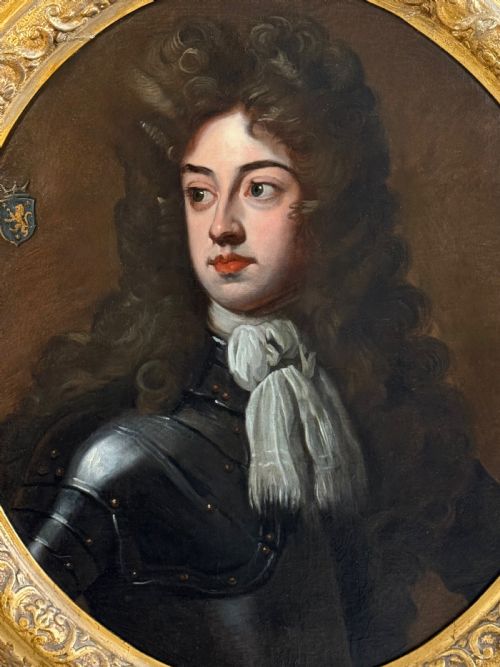
John Closterman , 1660-1711 Portrait of General John Churchill, 1st Duke of Marlborough, Kg, Pc 1650 – 1722 in Armour Wearing the Lesser George
Artware Fineart
for sale €8,190     $8,890
£7,000

Artware Fineart

Sellingantiques Verified Since Sep 2008
View Dealers Stock Page
Id #SA584817
PDF SHARE
SAVE

John Closterman , 1660-1711 Portrait of General John Churchill, 1st Duke of Marlborough, Kg, Pc 1650 – 1722 in Armour Wearing the Lesser George

17th century
For Sale by Artware Fineart
Description

John Closterman , 1660-1711

Portrait of General John Churchill, 1st Duke of Marlborough, KG, PC 1650 – 1722 in Armour wearing the Lesser George

oil on canvas

30 x 25 in. (76 x 64 cm.)

Churchill, John, first duke of Marlborough(1650–1722), army officer and politician, was born at the manor house of Ashe, near Musbury, Devon, on 26 May 1650 and baptized in the chapel of Ashe House on 2 June, the second, but first surviving, son of Sir Winston Churchill (bap. 1620, d. 1688)and Elizabeth (c.1622–1698), third daughter of Sir John Drake (d. 1636) of Ashe, and a niece of George Villiers, first duke of Buckingham. Arabella Churchill (1649–1730)was his elder sister, and he was the elder brother of Admiral George Churchill (bap. 1654, d. 1710) and General Charles Churchill (1656–1714).
Impoverished following his stalwart service of the royalist cause as a cavalry captain, Winston Churchill and his wife, Elizabeth, were living with Elizabeth's widowed mother, Eleanor, Lady Drake, in her ancestral home when John was born. During these early years the father, now unemployed, may have supplemented the early instruction that John received from a sequestered clergyman. At the Restoration in 1660 Winston Churchill began to recover his position and income. Appointed to the court of claims in 1662, he took his family with him to Dublin, where he enrolled John in the DublinFreeGrammar School. After returning to London, Winston was knighted, appointed to the royal household, and given apartments at Whitehall. About 1663 he enrolled John as a scholar at St Paul's School, and the boy studied there until officials closed the school in 1665 during the plague epidemic.
Sir Winston first found favour for his eldest daughter, Arabella, as maid of honour in the household of the duchess of York. Shortly afterwards James, duke of York, appointed John Churchill a page of honour in his household and obtained for him a commission on 14 September 1667 as an ensign in Colonel John Russell's company of the King's Own regiment, a unit later known as the Grenadier Guards. Churchill's aunt Mrs Godfrey, his mother's sister, was also a member of the duke's household, and through her the young Churchill met another distant relation, a second cousin once removed, Barbara Villiers, Lady Castlemaine, King Charles II's mistress, who in 1670 became the duchess of Cleveland.

Several biographers have asserted that about 1668 Churchill went to Tangier and possibly served there for two years as a volunteer with the earl of Peterborough'sregiment in the defence of that outpost, but no contemporary evidence has been found to support this. However, on 10 March 1670 the duke of York approvingly wrote to Admiral Sir Thomas Allin, who commanded the English squadron in the Mediterranean, that Churchill, one of the ensigns of the King's regiment sent to command the troops 'for recruit of your squadron', wished to continue with Allin'ssquadron as a supernumerary, apparently in Allin's flagship Resolution (TNA: PRO, ADM 2/1746, fol. 61). During this period Allin was involved in operations against the Algerine corsairs near Tangier. Allin returned with his flagship to England in November 1670. Shortly afterwards, on 6 February 1671, Churchill was wounded in a duel with John Fenwick in London.

In March 1671 Ensign Churchill embarked with the first company of the guards and participated in Sir Robert Holmes's unsuccessful attack on the Dutch Smyrna-bound ships anchored near the Isle of Wight. At the end of May 1672 he and his company were on board Royal Prince, the duke of York's flagship. On 28 May during the battle of Sole Bay against the Dutch fleet off Southwold, Suffolk, Churchill distinguished himself by his bravery and steadiness under fire, but no details of this are known. When Royal Prince was heavily damaged in the battle, York transferred his flag to St Michael and Churchill apparently followed him, although most of his fellow guards had r

Physical Dimensions
Height
76cm (29.92")
Width
64cm (25.20")
Depth
2cm (0.79")
Declaration

Artware Fineart has dated this Baroque Oil Portrait Painting to the 17th Century.

Reference Numbers
Sellingantiques Reference
SA584817
Dealers Internal Reference
4005
Description
John Closterman , 1660-1711
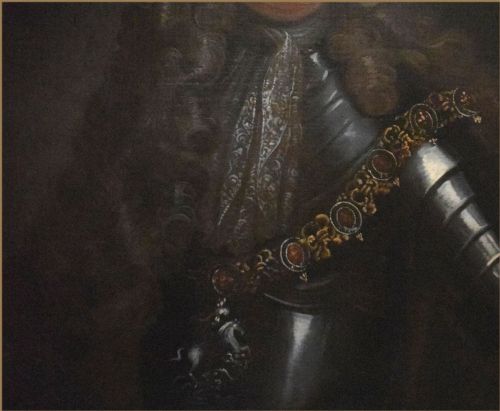
Portrait of General John Churchill, 1st Duke of Marlborough, KG, PC 1650 – 1722 in Armour wearing the Lesser George.
Artware Fineart

oil on canvas

30 x 25 in. (76 x 64 cm.)

Churchill, John, first duke of Marlborough(1650–1722), army officer and politician, was born at the manor house of Ashe, near Musbury, Devon, on 26 May 1650 and baptized in the chapel of Ashe House on 2 June, the second, but first surviving, son of Sir Winston Churchill (bap. 1620, d. 1688)and Elizabeth (c.1622–1698), third daughter of Sir John Drake (d. 1636) of Ashe, and a niece of George Villiers, first duke of Buckingham. Arabella Churchill (1649–1730)was his elder sister, and he was the elder brother of Admiral George Churchill (bap. 1654, d. 1710) and General Charles Churchill (1656–1714).

fig 1. A Baroque oil painting depicting a nobleman with a full periwig and lace cravat wearing polished steel plate armour.
fig 1. John Closterman , 1660-1711 Portrait of General John Churchill, 1st Duke of Marlborough, Kg, Pc 1650 – 1722 in Armour Wearing the Lesser George

Impoverished following his stalwart service of the royalist cause as a cavalry captain, Winston Churchill and his wife, Elizabeth, were living with Elizabeth's widowed mother, Eleanor, Lady Drake, in her ancestral home when John was born. During these early years the father, now unemployed, may have supplemented the early instruction that John received from a sequestered clergyman. At the Restoration in 1660 Winston Churchill began to recover his position and income. Appointed to the court of claims in 1662, he took his family with him to Dublin, where he enrolled John in the DublinFreeGrammar School. After returning to London, Winston was knighted, appointed to the royal household, and given apartments at Whitehall. About 1663 he enrolled John as a scholar at St Paul's School, and the boy studied there until officials closed the school in 1665 during the plague epidemic.

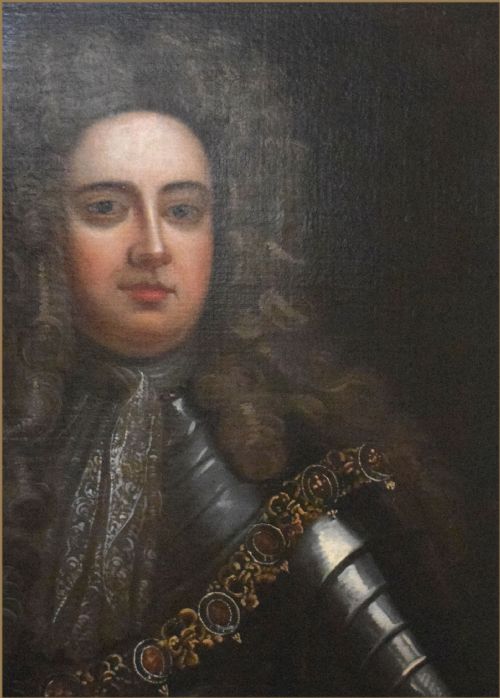
fig 2. A Baroque oil painting depicting a nobleman with a full periwig and lace cravat wearing polished steel plate armour.
fig 2. John Closterman , 1660-1711 Portrait of General John Churchill, 1st Duke of Marlborough, Kg, Pc 1650 – 1722 in Armour Wearing the Lesser George

Sir Winston first found favour for his eldest daughter, Arabella, as maid of honour in the household of the duchess of York. Shortly afterwards James, duke of York, appointed John Churchill a page of honour in his household and obtained for him a commission on 14 September 1667 as an ensign in Colonel John Russell's company of the King's Own regiment, a unit later known as the Grenadier Guards. Churchill's aunt Mrs Godfrey, his mother's sister, was also a member of the duke's household, and through her the young Churchill met another distant relation, a second cousin once removed, Barbara Villiers, Lady Castlemaine, King Charles II's mistress, who in 1670 became the duchess of Cleveland.

Several biographers have asserted that about 1668 Churchill went to Tangier and possibly served there for two years as a volunteer with the earl of Peterborough'sregiment in the defence of that outpost, but no contemporary evidence has been found to support this. However, on 10 March 1670 the duke of York approvingly wrote to Admiral Sir Thomas Allin, who commanded the English squadron in the Mediterranean, that Churchill, one of the ensigns of the King's regiment sent to command the troops 'for recruit of your squadron', wished to continue with Allin'ssquadron as a supernumerary, apparently in Allin's flagship Resolution (TNA: PRO, ADM 2/1746, fol. 61). During this period Allin was involved in operations against the Algerine corsairs near Tangier. Allin returned with his flagship to England in November 1670. Shortly afterwards, on 6 February 1671, Churchill was wounded in a duel with John Fenwick in London.

In March 1671 Ensign Churchill embarked with the first company of the guards and participated in Sir Robert Holmes's unsuccessful attack on the Dutch Smyrna-bound ships anchored near the Isle of Wight. At the end of May 1672 he and his company were on board Royal Prince, the duke of York's flagship. On 28 May during the battle of Sole Bay against the Dutch fleet off Southwold, Suffolk, Churchill distinguished himself by his bravery and steadiness under fire, but no details of this are known. When Royal Prince was heavily damaged in the battle, York transferred his flag to St Michael and Churchill apparently followed him, although most of his fellow guards had r

Height
76cm (29.92")
Width
64cm (25.20")
Depth
2cm (0.79")
Date of Manufacture

Artware Fineart has dated this Baroque Oil Portrait Painting to the 17th Century.

Reference Numbers
Sellingantiques Ref
SA584817
Dealers Internal Ref
4005
Artware Fineart
Sellingantiques verified Since Sep 2008
Dealer Profile

You can view the stock and full dealer information on the Artware Fineart Profile Page

PDF SHARE
SAVE
A Baroque oil painting depicting a nobleman with a full periwig and lace cravat wearing polished steel plate armour.
1 / 3
Archive I A Baroque oil painting depicting a nobleman with a full periwig and lace cravat wearing polished steel plate armour.

John Closterman , 1660-1711 Portrait of General John Churchill, 1st Duke of Marlborough, Kg, Pc 1650 – 1722 in Armour Wearing the Lesser George

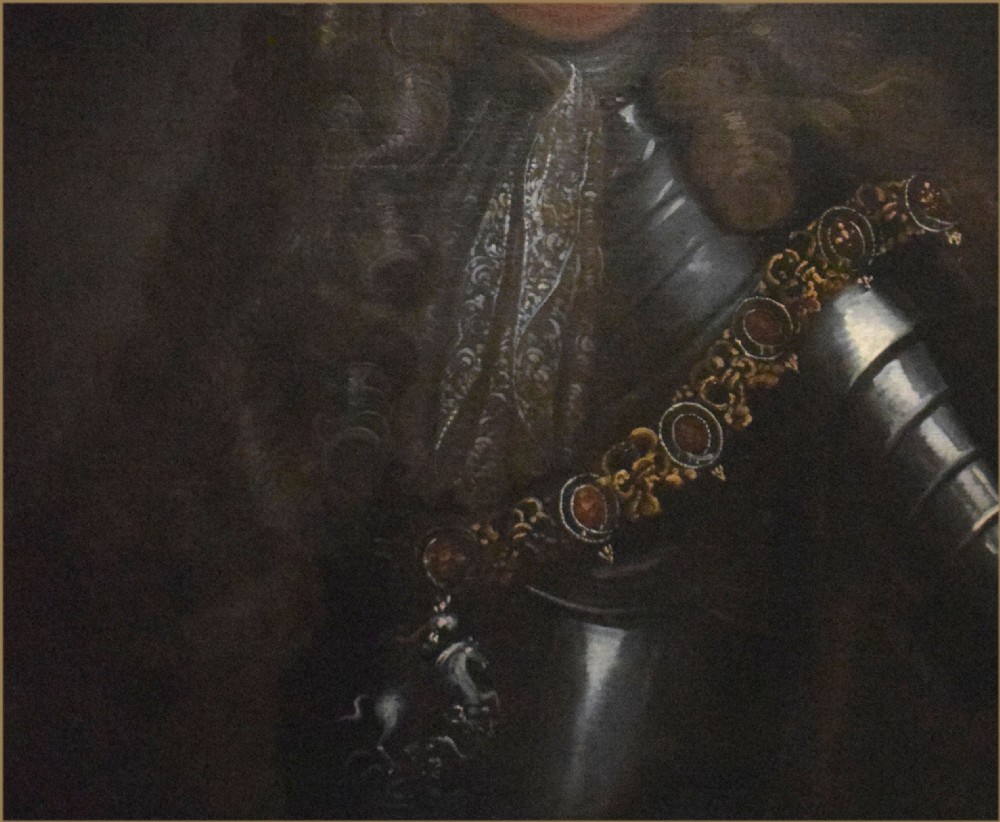
Archive II A Baroque oil painting depicting a nobleman with a full periwig and lace cravat wearing polished steel plate armour. View II
Archive III A Baroque oil painting depicting a nobleman with a full periwig and lace cravat wearing polished steel plate armour. View III
FURTHER BROWSING

Visitors also looked at these ⇣

Enlarged Archival View
Telephone 07958 699 645
Location
18 La Gare
51 Surrey Row
London
SE1 0BZ
United Kingdom
Verified Since Sep 2008
Items For Sale 243
Items Sold 223
Artware Fineart
Verified Since Sep 2008
View Dealer Info
Location: 18 La Gare , 51 Surrey Row , London , SE1 0BZ , United Kingdom
Verified
Sep 2008
For Sale
243
Sold
223
A Baroque oil painting depicting a nobleman with a full periwig and lace cravat wearing polished steel plate armour.
John Closterman , 1660-1711 Portrait of General John Churchill, 1st Duke of Marlborough, KG, PC 1650 – 1722 in Armour wearing the Lesser George
Ref: SA584817
A Baroque oil painting depicting a nobleman with a full periwig and lace cravat wearing polished steel plate armour.
Detail View 1
Detail View 2
Archival Detail
Every single antique dealer on our platform is individually approved by our internal team. We verify their professional trade history, ethical standards, and photographic quality to ensure a secure, high-standard buying environment. Upon joining, every dealer agrees to a strict 9-point code of conduct. While issues can occasionally arise, our dealers typically resolve them swiftly and directly with the buyer. In fact, since our founding in 2002, Sellingantiques has only had to step in to help resolve an issue on roughly five occasions—a true testament to the quality of our dealers and their dedication to your happiness.
Our dealers are highly experienced in packing and shipping fragile, high-value antiques. Because you are in direct contact with the dealer, you will be able to easily go through all available shipping and insurance options together to ensure your item arrives safely.
Antiques are the ultimate green purchase. By choosing historical pieces over newly manufactured goods, you completely eliminate the carbon footprint of modern mass production while preserving exceptional, timeless craftsmanship.

Baroque military portraits typically feature sitters depicted in polished plate armour, wearing formal wigs and lace cravats to signify status, authority, and martial leadership.

Artists primarily utilised hand-mixed oil pigments composed of natural minerals and binders, applied directly onto woven linen canvas.

Authentic period works display natural age craquelure across the paint surface, historic canvas weaving techniques, and signs of aged varnish on the reverse.

A period portrait serves as a strong focal point when hung against modern neutral walls, positioned directly above a minimalist console table or integrated into a gallery wall.

Keep paintings away from direct sunlight and humidity fluctuations, dust gently with a soft dry brush, and consult a professional conservator for surface cleaning.
items
Add keywords to the filter
Price
£100
£250000
Era
Movements
Material
Origin
Stock Location
Freshness
Online Payments
Categories