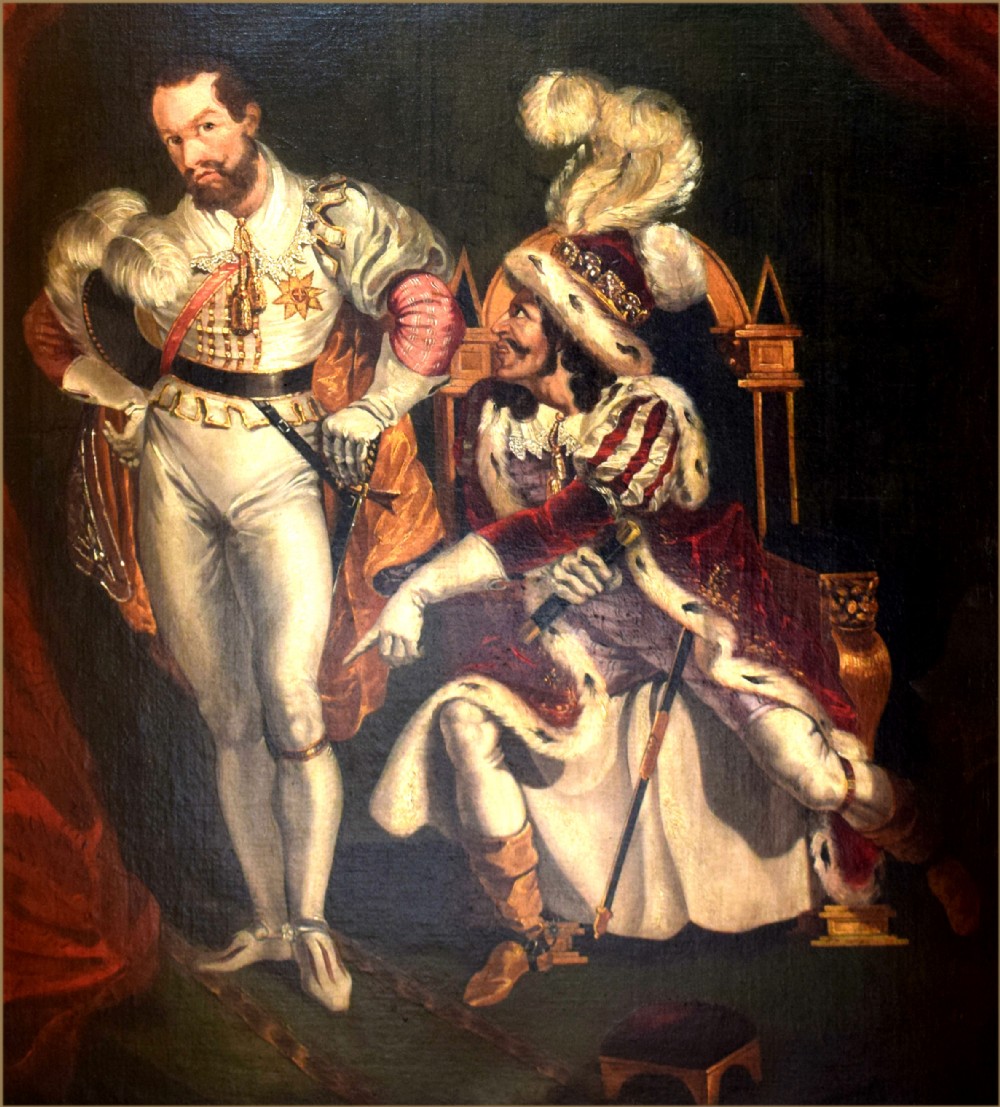
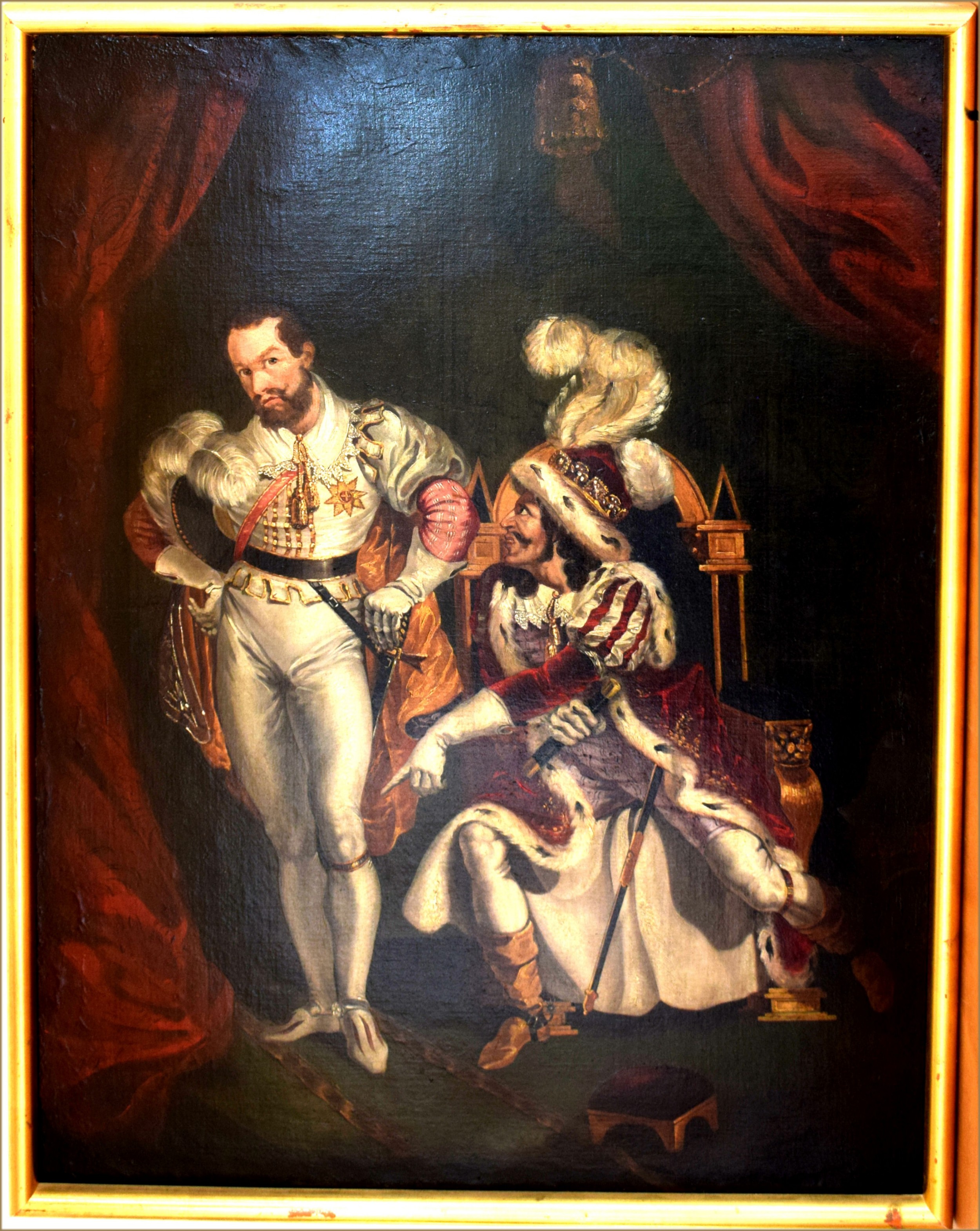
Artware Fineart has dated this Georgian Theatrical Oil Painting to the 18th Century.
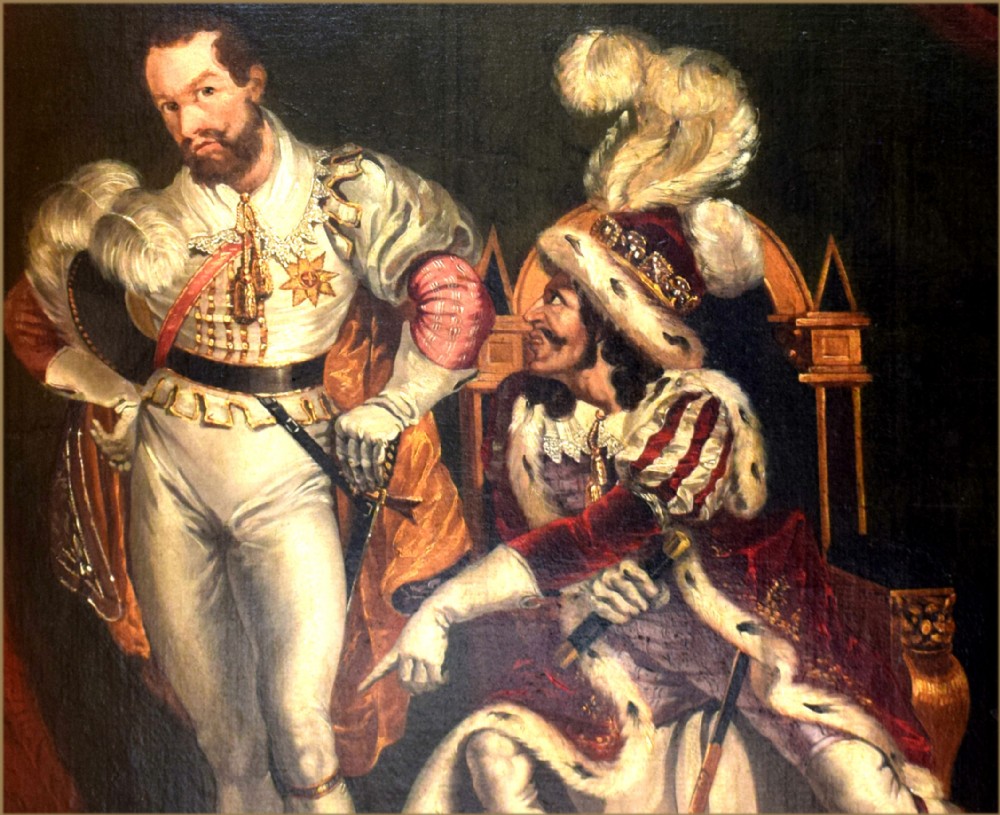
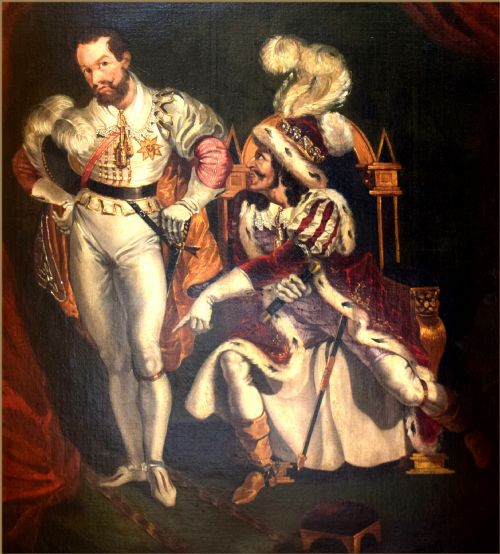
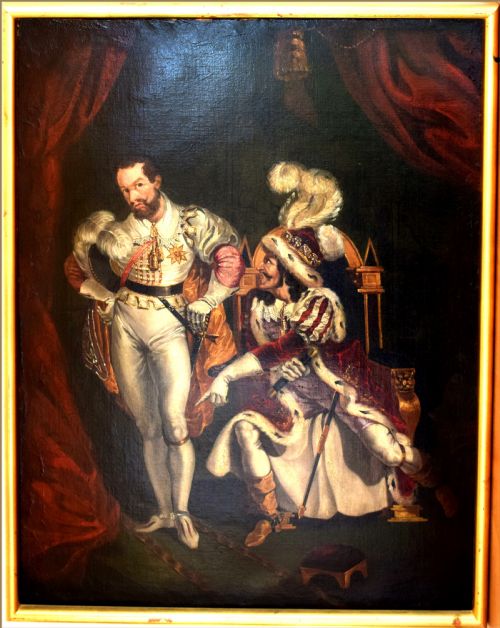
Portrait of Edmund Kean 1787-1833 as Richard III with the Duke of Buckingham
oil on canvas
90 x 70 cm. (36 x 28 in.)
Theatre scholars have been fascinated by Edmund Kean since his death in 1833, aged 45.
Kean’s relatively short working life was every bit as dramatic as his stage performances. Not only was his rise to stardom extraordinarily rapid but, once perched at the top of the tree, he proceeded to behave very badly indeed. “He was one of the first great celebrities of Georgian England, but he had no idea how to deal with it,” says Hughes, who is also a Shakespearean scholar. “He was earning £50 a night at a time when the average annual income was £30. He spent the money on whores and booze, and towards the end of his career regularly appeared drunk on stage.”
In terms of his acting, Kean replaced the lifeless posturing and declaiming of his predecessors with a level of passion, urgency and energy that hadn’t previously been seen on the London stage. His signature performances were Richard III, Hamlet, Shylock and Iago, as well as the role of the villainous Sir Giles Overreach in A New Way to Pay Old Debts (1633). “Restraint was alien to him,” writes Giles Playfair in his 1983 biography, The Flash of Lightning. “He was flashy, all energy and passion and he needed the big scene to show off his real powers.”
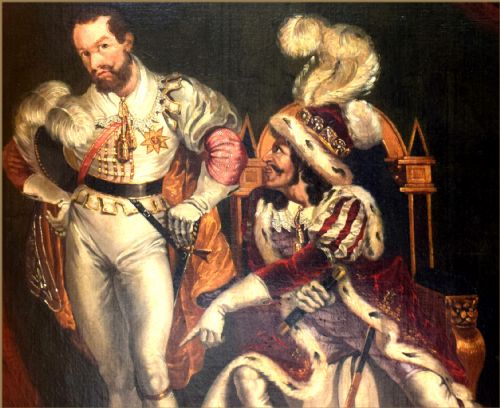
Ian Hughes agrees: “He used a lot of carefully honed tricks. He wasn’t above gabbling a long speech until he got to a key phrase. Classical acting up to that point had been dull and dry. Kean introduced what became known as ‘passionate realism’. Even in his heyday, people didn’t go to see Shakespeare, they went to see Kean doing Shakespeare.”
Jane Austen refers to his popularity in a letter to her sister Cassandra, dated March 4, 1814. She wrote: “Places are secured at Drury Lane for Saturday, but so great is the rage for seeing Kean that only a third or fourth row could be got.” The poet Samuel Taylor Coleridge, describing the experience of seeing Kean for the first time, wrote: “To see him act is like reading Shakespeare by flashes of lightning.” The critic William Hazlitt said his Iago was “the most perfect piece of acting on the stage, the most complete absorption of the man in the character”.
Kean’s theatrical apprenticeship was a long one, starting in childhood. At the age of eight he could recite the whole of The Merchant of Venice from memory, and he appeared on stage with Charles Kemble, the leading tragedian of his day, aged six as Fleance in Macbeth. In his youth he toured the provinces with second-rate travelling companies, playing barns and fairgrounds, as well as theatres, walking everywhere between engagements. Because out-of-town audiences expected all-round entertainment, he also learnt about clowning, acrobatics, timing a laugh, singing, dancing and mimicry. At 5ft 6in and slight of build, Kean’s intention to become a heroic tragedian was met mostly with derision, although he was engaged to play Hamlet in York at the age of 14. Traditionally, successful Shakespearean actors tended to be tall and aristocratic like Kemble and Henry Irving. He was talent-spotted in the provinces by Samuel Arnold, the manager of Drury Lane Theatre, and contracted to play Shylock in The Merchant of Venice in 1814. Off stage, Kean was a quiet, unassuming figure but as soon as he stepped on to the Drury Lane stage, he had the audience enraptured. Hazlitt reported in the next day’s Morning Chronicle that “no actor had come out for many years at all equal to him”. Hughes first became interested in Kean after buying an 1867 biography from David Drummond’s Theatre Bookshop off Leicester Square. He says: “It was t
Artware Fineart has dated this Georgian Theatrical Oil Painting to the 18th Century.
You can view the stock and full dealer information on the Artware Fineart Profile Page
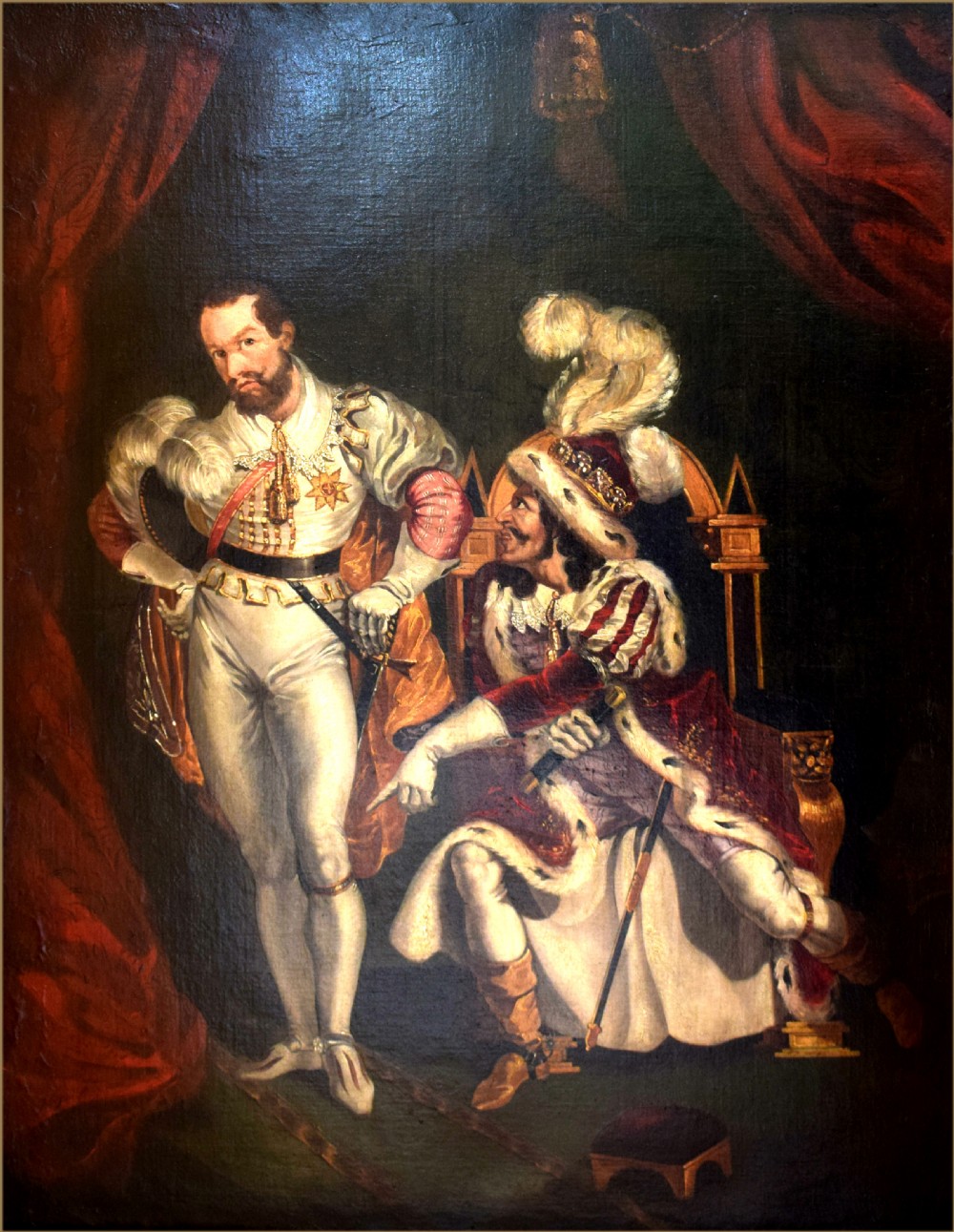

George Clint, 1770 – 854 Portrait of Edmund Kean 1787-1833 as Richard III with the Duke of Buckingham