60,930  PAGES BROWSED TODAY PAGES TODAY 0  ANTIQUES UPLOADED TODAY NEW ARRIVALS
ID #SA534615
FOR SALE
£1,500
Email
Save
Attributed to George Clint, 1770 – 1854 Portrait of Maria "Foote" Stanhope, Countess of Harrington (1797-1867) as Maria Darlington in "A Roland for an Oliver"
Artware Fineart
for sale €1,755     $1,905
£1,500

Artware Fineart

Sellingantiques Verified Since Sep 2008
View Dealers Stock Page
Id #SA534615
PDF SHARE
SAVE

Attributed to George Clint, 1770 – 1854 Portrait of Maria "Foote" Stanhope, Countess of Harrington (1797-1867) as Maria Darlington in "A Roland for an Oliver"

19th century
For Sale by Artware Fineart
Description

Attributed to George Clint, 1770 – 1854

PORTRAIT OF MARIA "FOOTE" STANHOPE, COUNTESS of HARRINGTON (1797-1867) as Maria Darlington in "A Roland for An Oliver"
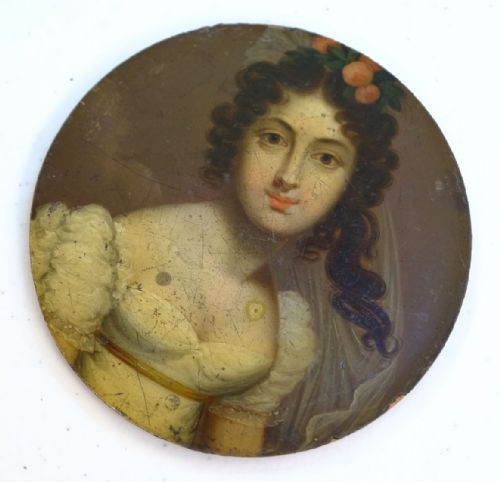
MARIA "FOOTE" STANHOPE, COUNTESS of HARRINGTON

Signed/Inscribed:

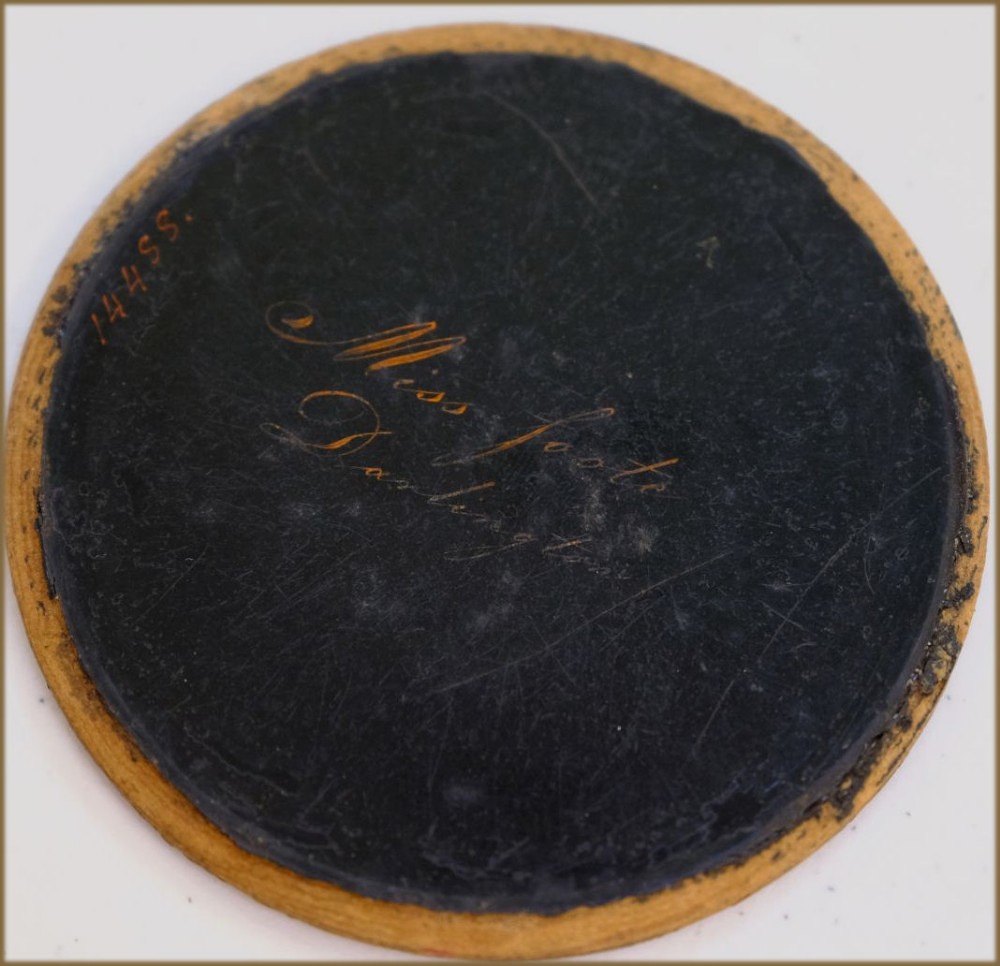
circa 1825, inscription to verso in red ink 'Miss foote, Darlington', and numbered "14488"

oil on board

9.20 x 9.20 cm. (3.62 x 3.62 in.)

PROVENANCE : The Late Robert Hardy CBE, FSA, 1925 – 2017, Actor
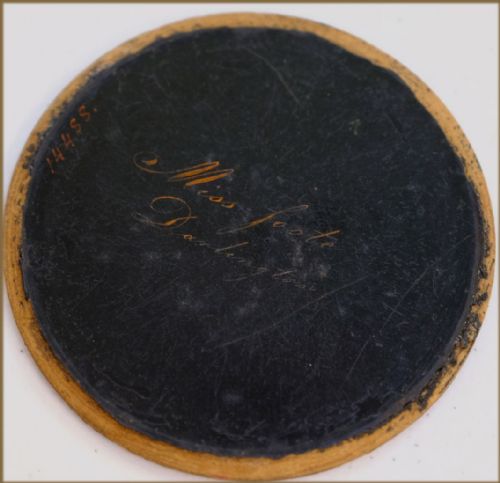
Maria Foote, [married name Maria Stanhope, countess of Harrington] (1797–1867), actress, was born at Plymouth on 24 July 1797, the daughter of Samuel T. Foote, a theatre manager, and his wife, a Miss Hannington, of Twyford, Hertfordshire. In July 1810 she appeared at her father's Plymouth theatre as Juliet, and on 26 May 1814 she made her début at Covent Garden as Amanthis in The Child of Nature (adapted by Elizabeth Inchbald from the French of Madame de Genlis). In this part, which was particularly suited to her abilities, she was widely acclaimed. She performed in every season at Covent Garden until 1825, and in 1826 made her first appearance at Drury Lane. Indefatigable in touring, she is said to have performed in the English provinces, Scotland, and Ireland every year for five years. She was, however, more notable for her beauty than her talents: Macready recorded that, for the original production of Sheridan Knowles's Virginius (17 May 1820), 'the lovely Miss Foote' played Virginia, and that, 'thankfully accepting my tuition, [she] produced the most pleasing effect by aiming at none' (Macready's Reminiscences, 1.209). John Genest wrote that 'she was a very pretty woman and a very pleasing actress, but she never would have travelled about as a star if it had not been for circumstances totally unconnected with the stage' (Genest, 9.358–9).

In 1815 Maria Foote had become the mistress of Colonel William Berkeley, later Earl Fitzhardinge (1786–1857), 'a sort of tenth-rate Rochester' (GEC, Peerage), with whom she had two children. A promise of marriage was given, but, when it did not occur, in June 1824 Maria broke off the relationship. She then received an offer of marriage from Joseph ‘Pea-Green’ Hayne of Burderop Park, Wiltshire; she ended her theatrical contract, but Hayne too eventually refused to marry her, claiming not to have known of her relationship with Berkeley until Berkeley, in a fit of pique, told him about it. Maria Foote sued Hayne for breach of promise on 21 December 1824, and secured £3000 in damages, having proved that Hayne had renewed his offer of marriage after his interview with Berkeley and after Maria had given custody of her children to her former lover. The case caused a sensation, and was taken up by pamphleteers. Following the failure of her matrimonial scheme, Maria Foote returned in February 1825 to the stage at Covent Garden, where the notoriety of her personal life ensured full houses. She made her last appearance in Birmingham on 11 March 1831. On 7 April 1831 she married Charles Stanhope, fourth earl of Harrington (1780–1851), at his family seat, Elvaston Hall, Derbyshire. They had a son, who died at the age of four, and a daughter, who lived to marry the third Marquess Conyngham. Unable to move in society, Lady Harrington lived in virtual seclusion at Elvaston Hall. She died from bronchitis at her home, 2 Richmond Terrace, Whitehall, London, on 27 December 1867. Joseph Knight, revised by K. D. Reynolds DNB

George Clint, (1770–1854), theatrical genre painter and engraver, was born in London at Brownlow Street, Holborn, on 12 April 1770, the son of Michael Clint, a hairdresser in Lombard Street, and his first wife. The family came from Hexham in Northumberland. Clint received a simple education in Yorkshire. He had several false starts before taking up painting, first as a fishmonger's apprentice, then in an attorney's office, and finally

Physical Dimensions
Height
9cm (3.54")
Width
9cm (3.54")
Declaration

Artware Fineart has dated this Regency Portrait Miniature Painting to the 19th Century.

Reference Numbers
Sellingantiques Reference
SA534615
Dealers Internal Reference
3981
Description
Attributed to George Clint, 1770 – 1854
PORTRAIT OF MARIA "FOOTE" STANHOPE, COUNTESS of HARRINGTON (1797-1867) as Maria Darlington in "A Roland for An Oliver".
Artware Fineart

MARIA "FOOTE" STANHOPE, COUNTESS of HARRINGTON

fig 1. A circular Regency-era portrait painting depicting a woman with dark curly hair wearing a white gown with puff sleeves and flowers in her hair.
fig 1. Attributed to George Clint, 1770 – 1854 Portrait of Maria "Foote" Stanhope, Countess of Harrington (1797-1867) as Maria Darlington in "A Roland for an Oliver"

Signed/Inscribed:

circa 1825, inscription to verso in red ink 'Miss foote, Darlington', and numbered "14488"

oil on board

9.20 x 9.20 cm. (3.62 x 3.62 in.)

PROVENANCE : The Late Robert Hardy CBE, FSA, 1925 – 2017, Actor

fig 2. A circular Regency-era portrait painting depicting a woman with dark curly hair wearing a white gown with puff sleeves and flowers in her hair.
fig 2. Attributed to George Clint, 1770 – 1854 Portrait of Maria "Foote" Stanhope, Countess of Harrington (1797-1867) as Maria Darlington in "A Roland for an Oliver"

Maria Foote, [married name Maria Stanhope, countess of Harrington] (1797–1867), actress, was born at Plymouth on 24 July 1797, the daughter of Samuel T. Foote, a theatre manager, and his wife, a Miss Hannington, of Twyford, Hertfordshire. In July 1810 she appeared at her father's Plymouth theatre as Juliet, and on 26 May 1814 she made her début at Covent Garden as Amanthis in The Child of Nature (adapted by Elizabeth Inchbald from the French of Madame de Genlis). In this part, which was particularly suited to her abilities, she was widely acclaimed. She performed in every season at Covent Garden until 1825, and in 1826 made her first appearance at Drury Lane. Indefatigable in touring, she is said to have performed in the English provinces, Scotland, and Ireland every year for five years. She was, however, more notable for her beauty than her talents: Macready recorded that, for the original production of Sheridan Knowles's Virginius (17 May 1820), 'the lovely Miss Foote' played Virginia, and that, 'thankfully accepting my tuition, [she] produced the most pleasing effect by aiming at none' (Macready's Reminiscences, 1.209). John Genest wrote that 'she was a very pretty woman and a very pleasing actress, but she never would have travelled about as a star if it had not been for circumstances totally unconnected with the stage' (Genest, 9.358–9).

In 1815 Maria Foote had become the mistress of Colonel William Berkeley, later Earl Fitzhardinge (1786–1857), 'a sort of tenth-rate Rochester' (GEC, Peerage), with whom she had two children. A promise of marriage was given, but, when it did not occur, in June 1824 Maria broke off the relationship. She then received an offer of marriage from Joseph ‘Pea-Green’ Hayne of Burderop Park, Wiltshire; she ended her theatrical contract, but Hayne too eventually refused to marry her, claiming not to have known of her relationship with Berkeley until Berkeley, in a fit of pique, told him about it. Maria Foote sued Hayne for breach of promise on 21 December 1824, and secured £3000 in damages, having proved that Hayne had renewed his offer of marriage after his interview with Berkeley and after Maria had given custody of her children to her former lover. The case caused a sensation, and was taken up by pamphleteers. Following the failure of her matrimonial scheme, Maria Foote returned in February 1825 to the stage at Covent Garden, where the notoriety of her personal life ensured full houses. She made her last appearance in Birmingham on 11 March 1831. On 7 April 1831 she married Charles Stanhope, fourth earl of Harrington (1780–1851), at his family seat, Elvaston Hall, Derbyshire. They had a son, who died at the age of four, and a daughter, who lived to marry the third Marquess Conyngham. Unable to move in society, Lady Harrington lived in virtual seclusion at Elvaston Hall. She died from bronchitis at her home, 2 Richmond Terrace, Whitehall, London, on 27 December 1867. Joseph Knight, revised by K. D. Reynolds DNB

George Clint, (1770–1854), theatrical genre painter and engraver, was born in London at Brownlow Street, Holborn, on 12 April 1770, the son of Michael Clint, a hairdresser in Lombard Street, and his first wife. The family came from Hexham in Northumberland. Clint received a simple education in Yorkshire. He had several false starts before taking up painting, first as a fishmonger's apprentice, then in an attorney's office, and finally

Height
9cm (3.54")
Width
9cm (3.54")
Date of Manufacture

Artware Fineart has dated this Regency Portrait Miniature Painting to the 19th Century.

Reference Numbers
Sellingantiques Ref
SA534615
Dealers Internal Ref
3981
Artware Fineart
Sellingantiques verified Since Sep 2008
Dealer Profile

You can view the stock and full dealer information on the Artware Fineart Profile Page
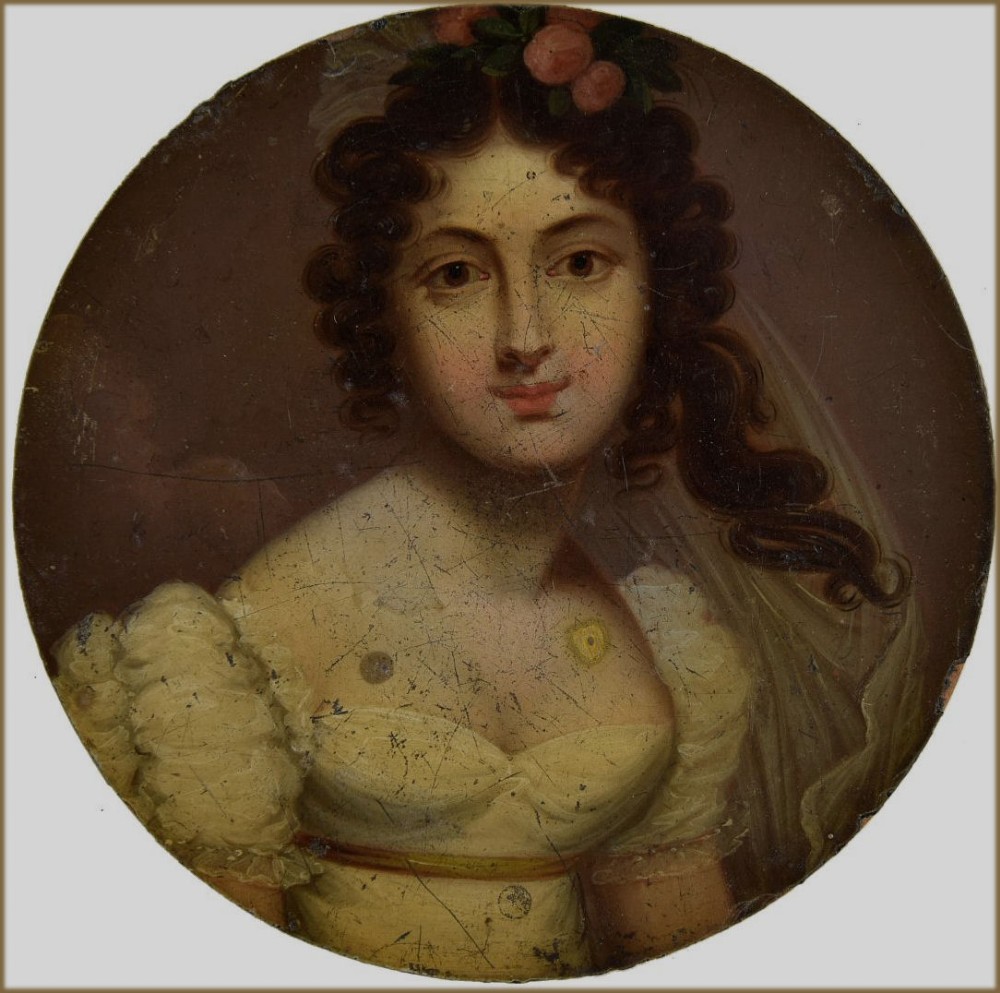
PDF SHARE
SAVE
A circular Regency-era portrait painting depicting a woman with dark curly hair wearing a white gown with puff sleeves and flowers in her hair.
1 / 3
Archive I A circular Regency-era portrait painting depicting a woman with dark curly hair wearing a white gown with puff sleeves and flowers in her hair.

Attributed to George Clint, 1770 – 1854 Portrait of Maria "Foote" Stanhope, Countess of Harrington (1797-1867) as Maria Darlington in "A Roland for an Oliver"
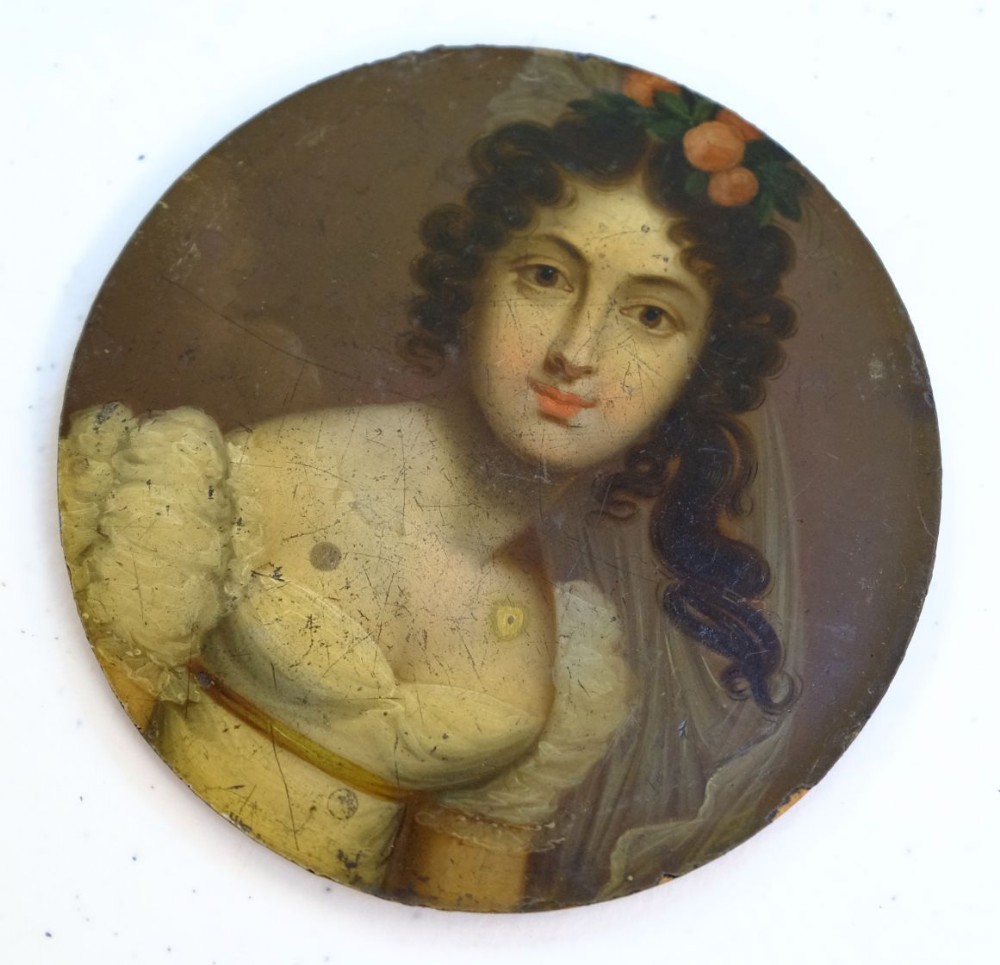
Archive II A circular Regency-era portrait painting depicting a woman with dark curly hair wearing a white gown with puff sleeves and flowers in her hair. View II
Archive III A circular Regency-era portrait painting depicting a woman with dark curly hair wearing a white gown with puff sleeves and flowers in her hair. View III
Enlarged Archival View
Telephone 07958 699 645
Location
18 La Gare
51 Surrey Row
London
SE1 0BZ
United Kingdom
Verified Since Sep 2008
Items For Sale 243
Items Sold 223
Artware Fineart
Verified Since Sep 2008
View Dealer Info
Location: 18 La Gare , 51 Surrey Row , London , SE1 0BZ , United Kingdom
Verified
Sep 2008
For Sale
243
Sold
223
A circular Regency-era portrait painting depicting a woman with dark curly hair wearing a white gown with puff sleeves and flowers in her hair.
Attributed to George Clint, 1770 – 1854 PORTRAIT OF MARIA "FOOTE" STANHOPE, COUNTESS of HARRINGTON (1797-1867) as Maria Darlington in "A Roland for An Oliver"
Ref: SA534615
A circular Regency-era portrait painting depicting a woman with dark curly hair wearing a white gown with puff sleeves and flowers in her hair.
Detail View 1
Detail View 2
Archival Detail
Every single antique dealer on our platform is individually approved by our internal team. We verify their professional trade history, ethical standards, and photographic quality to ensure a secure, high-standard buying environment. Upon joining, every dealer agrees to a strict 9-point code of conduct. While issues can occasionally arise, our dealers typically resolve them swiftly and directly with the buyer. In fact, since our founding in 2002, Sellingantiques has only had to step in to help resolve an issue on roughly five occasions—a true testament to the quality of our dealers and their dedication to your happiness.
Our dealers are highly experienced in packing and shipping fragile, high-value antiques. Because you are in direct contact with the dealer, you will be able to easily go through all available shipping and insurance options together to ensure your item arrives safely.
Antiques are the ultimate green purchase. By choosing historical pieces over newly manufactured goods, you completely eliminate the carbon footprint of modern mass production while preserving exceptional, timeless craftsmanship.

Regency portrait miniatures are small-scale likenesses produced predominantly between 1795 and 1837, capturing subjects with soft brushwork, detailed attire, and characteristic hairstyles of the era.

Artists typically executed portrait miniatures using oil or watercolour paints applied onto ivory, vellum, copper plates, or thin wooden panels.

Authentic 19th-century pieces often display fine surface craquelure, period-accurate costume details, natural pigment aging, and evidence of historical hand-craftsmanship on the backing materials.

These small works function well positioned within a curated gallery wall, displayed on a small easel atop a console, or hung in narrow wall spaces to create visual interest.

Keep the artwork away from direct sunlight, maintain stable humidity levels, and avoid chemical cleaning agents to prevent degradation of the paint layer.
items
Add keywords to the filter
Price
£100
£250000
Era
Movements
Material
Origin
Stock Location
Freshness
Online Payments
Categories