

Marlborough Antiques & Interiors has dated this piece to the 19th Century.
Born in London, and younger brother of William Ward the engraver, James Ward was influenced by many people, but his career is conventionally divided into two periods: until 1803, his single greatest influence was his brother in law George Morland; from that time, it was Rubens. From 1810 or so, Ward started to paint horses within landscapes; slightly later, he turned to very large-scale landscapes, of which Gordale Scar (Tate London ), completed in 1814 or 1815 and depicting Gordale Scar (yorkshire) as an example of the sublime, is considered his masterpiece and a masterpiece of English Romantic Painting.
Ward devoted much of the period 1815-21 to the painting of a gigantic work titled Allegory of Waterloo (now lost); this neither was much praised nor brought in the revenue Ward had hoped for. The experience may have embittered him, and the deaths of his first wife and a daughter were among other tragedies. Like many artists of the time, Ward sought commissions from wealthy gentry of their favourite horses, their favourite hunting dogs or their children.]
One such family that Ward painted and drew repeatedly, and whom he counted among his friends, were the Levett family of Wychnor Park. One of Ward's best-known portraits was his Theophilus Levett hunting at Wychnor, Staffordshire of 1817. Another was Ward's 1811 painting entitled The Reverend Thomas Levett and his favourite dogs, cock-shooting. Ward also painted a group portrait of three Levett children — John, Theophilus and Frances Levett.
James Ward was one of the outstanding artists of the day, his singular style and great skill set him above most of his contemporaries, markedly influencing the growth of British art. Regarded as one of the great animal painters of his time, James produced history paintings, portraits, landscapes and genre. He started off as an engraver, trained by William, who later engraved much of his work. The partnership of William and James Ward produced the best that English art had to offer, their great technical skill and artistry having led to images that reflect the grace and charm of the era. He was admitted for membership into the Royal Academy in 1811
Marlborough Antiques & Interiors has dated this piece to the 19th Century.
We display a variety of antiques at all price levels, including furniture, paintings and other decorative items
You can view the stock and full dealer information on the Marlborough Antiques & Interiors Profile Page
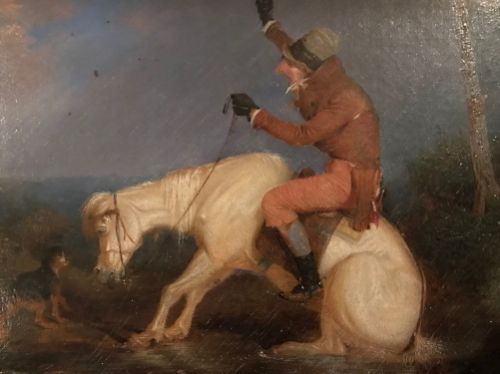
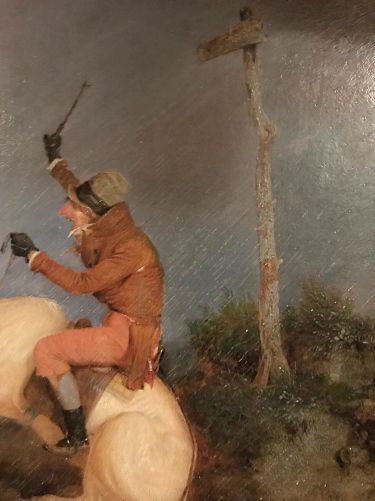
James Ward - 'Tally Ho' - Oil on Canvas
