60,930  PAGES BROWSED TODAY PAGES TODAY 103  ANTIQUES UPLOADED TODAY NEW ARRIVALS
ID #SA485936
FOR SALE
£1,200
Email
Save
Sir Nathaniel Dance-holland, 1735 - 1811 Portrait of John Rennie, Frse, Frs, 1761 – 1821
Artware Fineart
for sale €1,404     $1,524
£1,200

Artware Fineart

Sellingantiques Verified Since Sep 2008
View Dealers Stock Page
Id #SA485936
PDF SHARE
SAVE

Sir Nathaniel Dance-holland, 1735 - 1811 Portrait of John Rennie, Frse, Frs, 1761 – 1821

18th century
For Sale by Artware Fineart
Description

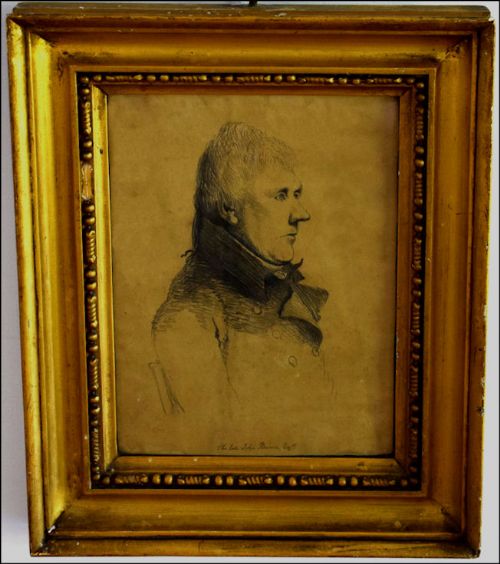
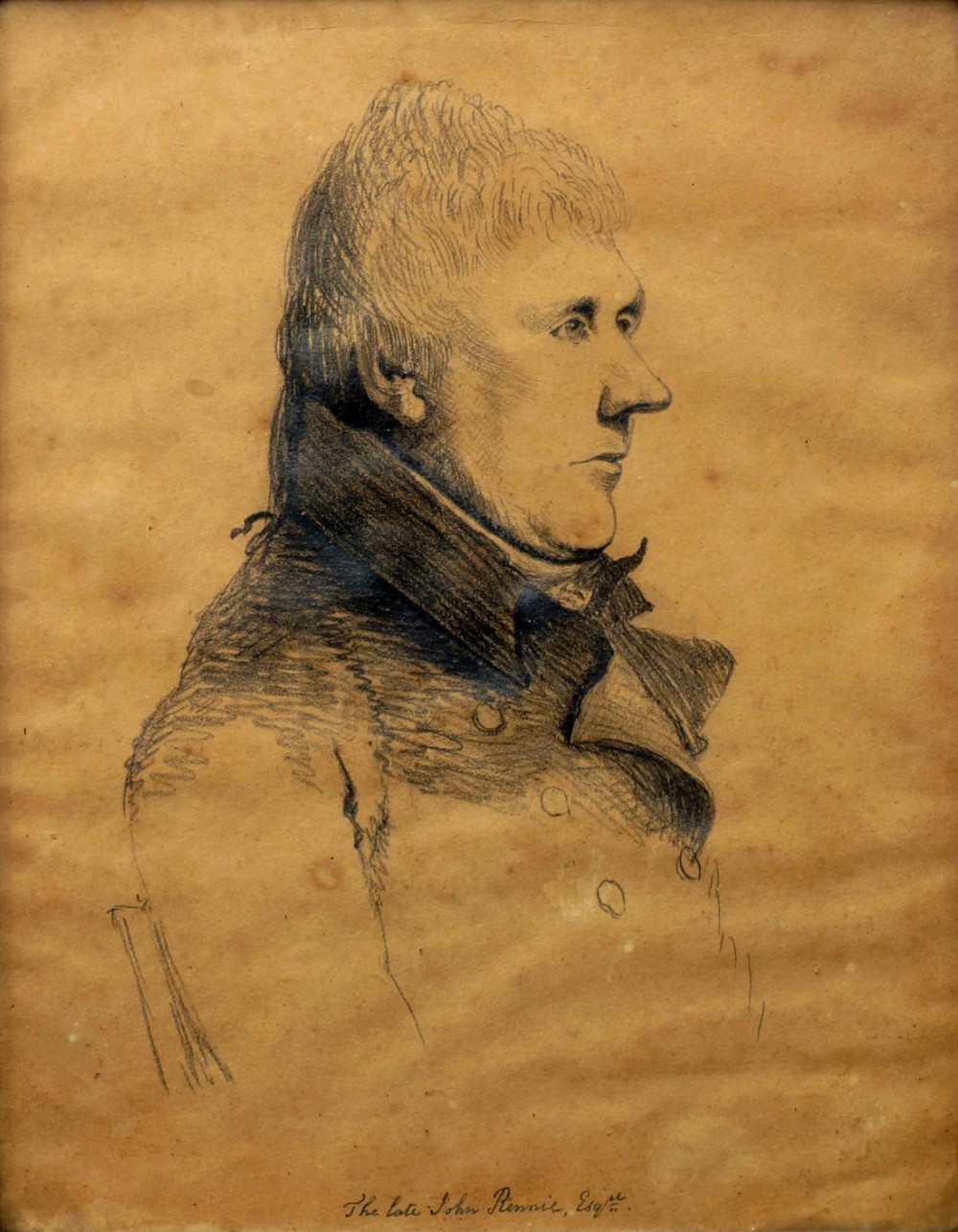
Sir Nathaniel Dance-Holland, 1735 - 1811

Portrait of John Rennie, FRSE, FRS, 1761 – 1821

Signed/Inscribed:

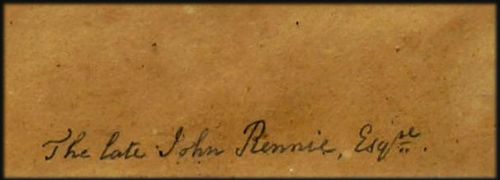
"the late John Rennie Esq"

pencil on paper

( 26 x 20 cm. ) 10.1/4 x 8in.
published by William Daniell, after George Dance soft-ground etching, published 15 August 1810 (28 May 1803) NPG D12160

Notes

John Rennie, (1761–1821), engineer, was born on 7 June 1761 at Phantassie, Haddingtonshire, the youngest of the nine children of James Rennie (d. 1766), a farmer and owner of a brewery, and his wife, Jean, née Rennie (1720–1783). George Rennie (1749–1828), the agriculturist, was his oldest brother and took over the family interests when their father died in 1766. Their eldest sister, Marion (1744–1809), married James Mylne (1738/9–1788), poet. John went to the parish school at Prestonkirk. A precocious interest in machinery was nurtured by the well-known millwright Andrew Meikle (1719–1811), inventor of the threshing machine and improver of the windmill, who lived on the estate. Rennie started to work for Meikle when he was twelve, getting a grounding in practical mechanics. For two years (1775–7) he was then at Dunbar high school, where a visitor, David Loch, singled him out for his ‘amazing powers of genius’ in mathematics and experimental and natural philosophy. Later, when his teacher at Dunbar retired, Rennie was asked to succeed him but agreed to do so only temporarily, as his ambitions lay elsewhere.
After working again for Meikle, with his help and consent Rennie set up on his own as a millwright in 1779. Among his first jobs was building a mill for his brother to house one of Meikle's earliest threshing machines. Though soon in a good way of business, he opted to combine practical work with studies at Edinburgh University, where he matriculated in November 1780, continuing until 1783. Here he made friends with two eminent teachers, the chemist Joseph Black and the professor of natural philosophy, John Robison, and gained a breadth of scientific interest as well as some grasp of theoretical engineering concepts.
In 1783 Rennie took a study tour into England, making notes on canals, bridges, and machinery along his route. His destination was Birmingham, where a letter from Robison procured him an introduction to James Watt. Watt, in need of a millwright to extend the mechanical scope of his steam engine, was greatly taken with Rennie. The next year Boulton and Watt offered him the job of looking after their London business and erecting the engines they supplied for the Albion Mills, the revolutionary flour mill at the south end of Blackfriars Bridge conceived and designed by Samuel Wyatt. To this end Rennie moved to London, setting up a workshop at a Thames wharf near the mill. The millwork for the twenty sets of grinding stones was supplied by Wyatt, but the substitution of much iron gearing for the customary timber was probably Rennie's idea; there was much friction between the two men.

Rennie opened the Albion Mills to visitors when production began in 1786, despite the secretive Watt's disapproval. The building burned down in 1791, but by then Rennie's reputation was made and he was supplying millwork for customers as far away as France, Spain, and Portugal. He made moving machinery for mills, breweries, and factories of all kinds, including a variety of machines for the new Boulton and Watt factory at Birmingham (erected by his foreman, Peter Ewart). Rolling mills for mints were a speciality, most of the equipment for the new Royal Mint at Tower Hill being Rennie's. He was ingenious in improving mechanical devices. A pioneer in applying steam power to pile-driving and dredging, he was among the first to make regular use of ball-bearings, improved the water-wheel and diving bell, experimented with stone pipes for water supply, and contributed to the evolution of the gantry crane. To m

Physical Dimensions
Height
26cm (10.24")
Width
20cm (7.87")
Depth
3cm (1.18")
Declaration

Artware Fineart has dated this Georgian Pencil Portrait Drawing to the 18th Century.

Reference Numbers
Sellingantiques Reference
SA485936
Dealers Internal Reference
3924
Description
Sir Nathaniel Dance-Holland, 1735 - 1811

Portrait of John Rennie, FRSE, FRS, 1761 – 1821

Signed/Inscribed:

"the late John Rennie Esq"

pencil on paper

( 26 x 20 cm. ) 10.1/4 x 8in.

published by William Daniell, after George Dance soft-ground etching, published 15 August 1810 (28 May 1803) NPG D12160.
Artware Fineart
fig 1. A profile portrait sketch in dark graphite on aged brown paper depicting a gentleman in a high-collared coat.
fig 1. Sir Nathaniel Dance-holland, 1735 - 1811 Portrait of John Rennie, Frse, Frs, 1761 – 1821

Notes

John Rennie, (1761–1821), engineer, was born on 7 June 1761 at Phantassie, Haddingtonshire, the youngest of the nine children of James Rennie (d. 1766), a farmer and owner of a brewery, and his wife, Jean, née Rennie (1720–1783). George Rennie (1749–1828), the agriculturist, was his oldest brother and took over the family interests when their father died in 1766. Their eldest sister, Marion (1744–1809), married James Mylne (1738/9–1788), poet. John went to the parish school at Prestonkirk. A precocious interest in machinery was nurtured by the well-known millwright Andrew Meikle (1719–1811), inventor of the threshing machine and improver of the windmill, who lived on the estate. Rennie started to work for Meikle when he was twelve, getting a grounding in practical mechanics. For two years (1775–7) he was then at Dunbar high school, where a visitor, David Loch, singled him out for his ‘amazing powers of genius’ in mathematics and experimental and natural philosophy. Later, when his teacher at Dunbar retired, Rennie was asked to succeed him but agreed to do so only temporarily, as his ambitions lay elsewhere.

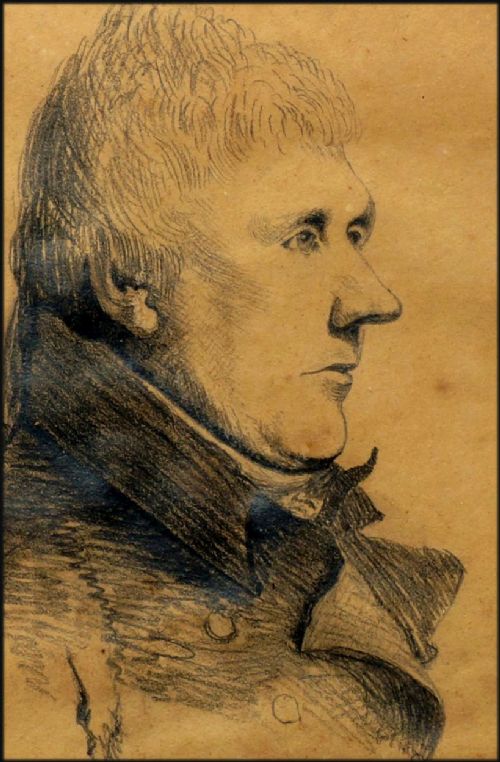
fig 2. A profile portrait sketch in dark graphite on aged brown paper depicting a gentleman in a high-collared coat.
fig 2. Sir Nathaniel Dance-holland, 1735 - 1811 Portrait of John Rennie, Frse, Frs, 1761 – 1821

After working again for Meikle, with his help and consent Rennie set up on his own as a millwright in 1779. Among his first jobs was building a mill for his brother to house one of Meikle's earliest threshing machines. Though soon in a good way of business, he opted to combine practical work with studies at Edinburgh University, where he matriculated in November 1780, continuing until 1783. Here he made friends with two eminent teachers, the chemist Joseph Black and the professor of natural philosophy, John Robison, and gained a breadth of scientific interest as well as some grasp of theoretical engineering concepts.

fig 3. A profile portrait sketch in dark graphite on aged brown paper depicting a gentleman in a high-collared coat.
fig 3. Sir Nathaniel Dance-holland, 1735 - 1811 Portrait of John Rennie, Frse, Frs, 1761 – 1821

In 1783 Rennie took a study tour into England, making notes on canals, bridges, and machinery along his route. His destination was Birmingham, where a letter from Robison procured him an introduction to James Watt. Watt, in need of a millwright to extend the mechanical scope of his steam engine, was greatly taken with Rennie. The next year Boulton and Watt offered him the job of looking after their London business and erecting the engines they supplied for the Albion Mills, the revolutionary flour mill at the south end of Blackfriars Bridge conceived and designed by Samuel Wyatt. To this end Rennie moved to London, setting up a workshop at a Thames wharf near the mill. The millwork for the twenty sets of grinding stones was supplied by Wyatt, but the substitution of much iron gearing for the customary timber was probably Rennie's idea; there was much friction between the two men.

Rennie opened the Albion Mills to visitors when production began in 1786, despite the secretive Watt's disapproval. The building burned down in 1791, but by then Rennie's reputation was made and he was supplying millwork for customers as far away as France, Spain, and Portugal. He made moving machinery for mills, breweries, and factories of all kinds, including a variety of machines for the new Boulton and Watt factory at Birmingham (erected by his foreman, Peter Ewart). Rolling mills for mints were a speciality, most of the equipment for the new Royal Mint at Tower Hill being Rennie's. He was ingenious in improving mechanical devices. A pioneer in applying steam power to pile-driving and dredging, he was among the first to make regular use of ball-bearings, improved the water-wheel and diving bell, experimented with stone pipes for water supply, and contributed to the evolution of the gantry crane. To m

Height
26cm (10.24")
Width
20cm (7.87")
Depth
3cm (1.18")
Date of Manufacture

Artware Fineart has dated this Georgian Pencil Portrait Drawing to the 18th Century.

Reference Numbers
Sellingantiques Ref
SA485936
Dealers Internal Ref
3924
Artware Fineart
Sellingantiques verified Since Sep 2008
Dealer Profile

You can view the stock and full dealer information on the Artware Fineart Profile Page
PDF SHARE
SAVE
A profile portrait sketch in dark graphite on aged brown paper depicting a gentleman in a high-collared coat.
1 / 4
Archive I A profile portrait sketch in dark graphite on aged brown paper depicting a gentleman in a high-collared coat.

Sir Nathaniel Dance-holland, 1735 - 1811 Portrait of John Rennie, Frse, Frs, 1761 – 1821

Archive II A profile portrait sketch in dark graphite on aged brown paper depicting a gentleman in a high-collared coat. View II
Archive III A profile portrait sketch in dark graphite on aged brown paper depicting a gentleman in a high-collared coat. View III
Archive IV A profile portrait sketch in dark graphite on aged brown paper depicting a gentleman in a high-collared coat. View IV
Enlarged Archival View
Telephone 07958 699 645
Location
18 La Gare
51 Surrey Row
London
SE1 0BZ
United Kingdom
Verified Since Sep 2008
Items For Sale 243
Items Sold 223
Artware Fineart
Verified Since Sep 2008
View Dealer Info
Location: 18 La Gare , 51 Surrey Row , London , SE1 0BZ , United Kingdom
Verified
Sep 2008
For Sale
243
Sold
223
A profile portrait sketch in dark graphite on aged brown paper depicting a gentleman in a high-collared coat.
Sir Nathaniel Dance-Holland, 1735 - 1811 Portrait of John Rennie, FRSE, FRS, 1761 – 1821
Ref: SA485936
A profile portrait sketch in dark graphite on aged brown paper depicting a gentleman in a high-collared coat.
Detail View 1
Detail View 2
Detail View 3
Archival Detail
Every single antique dealer on our platform is individually approved by our internal team. We verify their professional trade history, ethical standards, and photographic quality to ensure a secure, high-standard buying environment. Upon joining, every dealer agrees to a strict 9-point code of conduct. While issues can occasionally arise, our dealers typically resolve them swiftly and directly with the buyer. In fact, since our founding in 2002, Sellingantiques has only had to step in to help resolve an issue on roughly five occasions—a true testament to the quality of our dealers and their dedication to your happiness.
Our dealers are highly experienced in packing and shipping fragile, high-value antiques. Because you are in direct contact with the dealer, you will be able to easily go through all available shipping and insurance options together to ensure your item arrives safely.
Antiques are the ultimate green purchase. By choosing historical pieces over newly manufactured goods, you completely eliminate the carbon footprint of modern mass production while preserving exceptional, timeless craftsmanship.

Georgian profile portraiture typically features fine graphite, charcoal, or chalk execution on paper, focusing on side-profile silhouettes of notable figures. Influenced by Neoclassical taste, artists emphasised clear contours, delicate cross-hatching, and realistic facial proportions.

Artists during the 18th century primarily utilized natural graphite, black or red chalk, and iron gall ink executed on handmade laid or wove rag paper. The paper often exhibits an aged, toned patina due to historical light exposure and natural wood cellulose content.

Authentication involves examining paper watermarks, inspecting the medium under magnification for period-correct graphite or ink oxidation, and verifying provenance records. Hand-drawn cross-hatching techniques and anatomical accuracy standard to period masters also provide visual confirmation.

Historic works on paper integrate seamlessly into modern interiors when mounted in minimal dark wood or gilded frames with oversized acid-free matting. They are frequently displayed as part of a curated gallery wall or hung individually in a study or reading nook.

Works on paper should be framed using UV-protective museum glass and mounted with 100% acid-free materials to prevent foxing and yellowing. Store or display the artwork away from direct sunlight and maintain stable relative humidity levels to safeguard the paper fibres.
items
Add keywords to the filter
Price
£100
£250000
Era
Movements
Material
Origin
Stock Location
Freshness
Online Payments
Categories