50,371  PAGES BROWSED TODAY PAGES TODAY 202  ANTIQUES UPLOADED TODAY NEW ARRIVALS
Sort Order
Items Per Page
ID #SA474330
SOLD
Email
Save
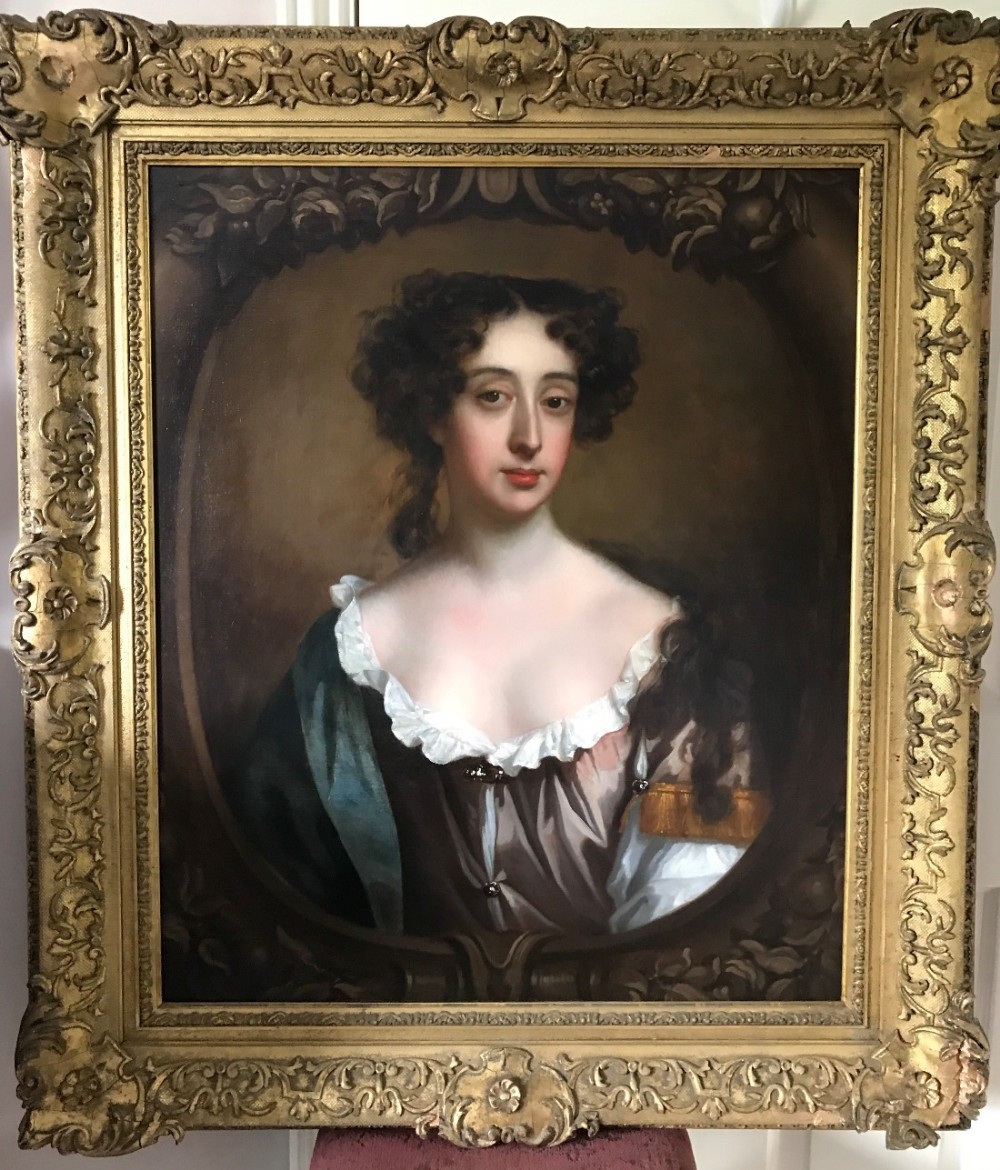
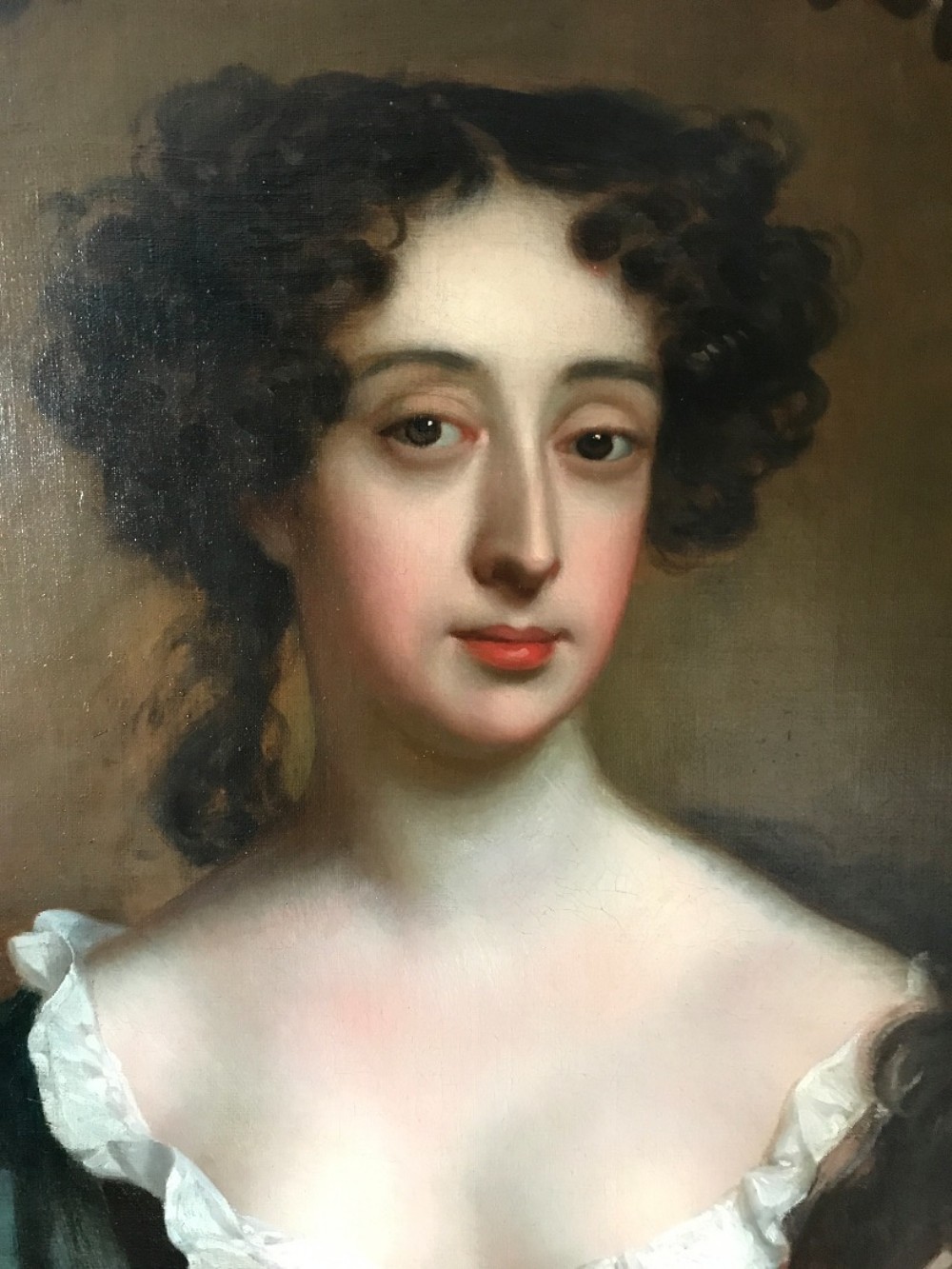
Portrait of Phillipa Speke, Later Lady Trenchard, 1682; by William Wissing.
Roy Precious - Antiques & Fine Art
sold SA474330
Sorry, but this item has been sold.
Roy Precious - Antiques & Fine Art

Roy Precious - Antiques & Fine Art

Sellingantiques Verified Since Mar 2003
View Dealers Stock Page
  • About Us
    Roy and nadine precious: specialists in portraiture from the 16th to the 20th century. Established in 1972.
Id #SA474330
PDF SHARE
SAVE

Portrait of Phillipa Speke, Later Lady Trenchard, 1682; by William Wissing.

17th century
Description

Oil on canvas in a gilded 19th century frame. (Frame has some small losses and a damage to the lower right).

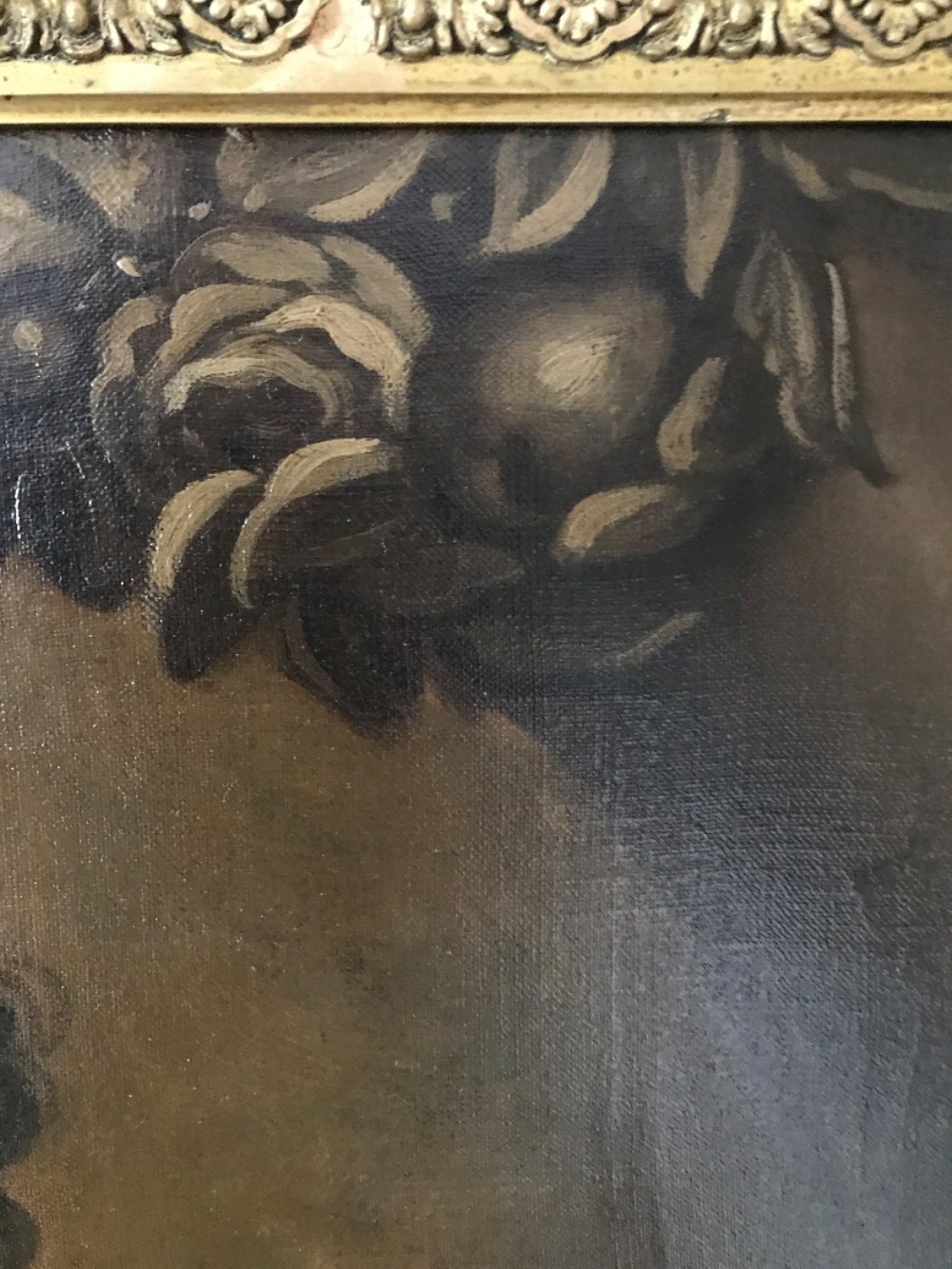
At a glance this could be by Mary Beale; the pose and especially the feigned stone oval are characteristic of her work. However, the pose and oval were used by several artists, most notably Sir Peter Lely.
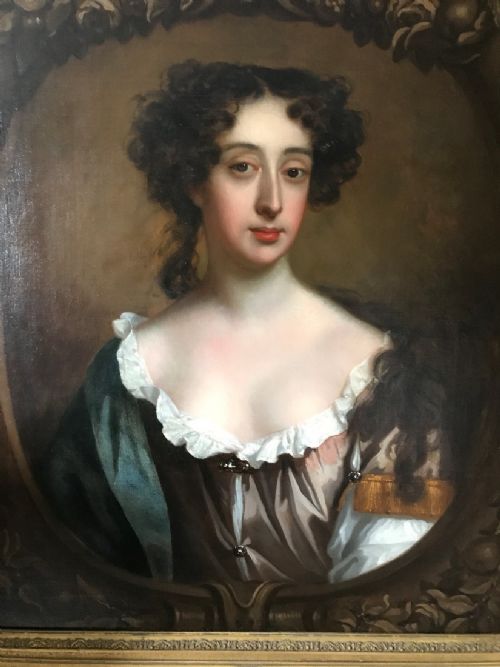
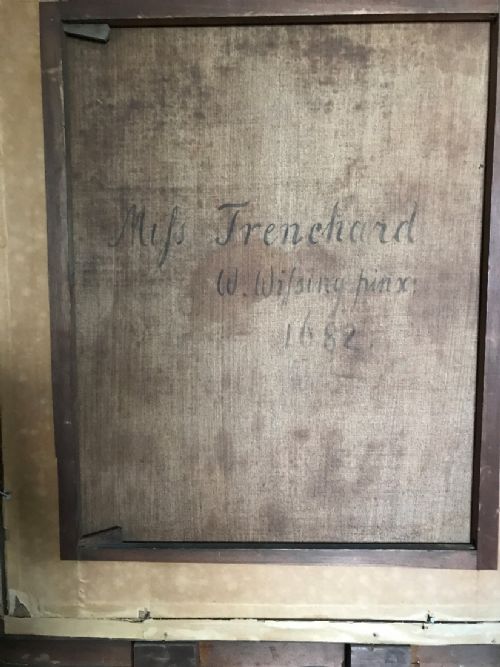
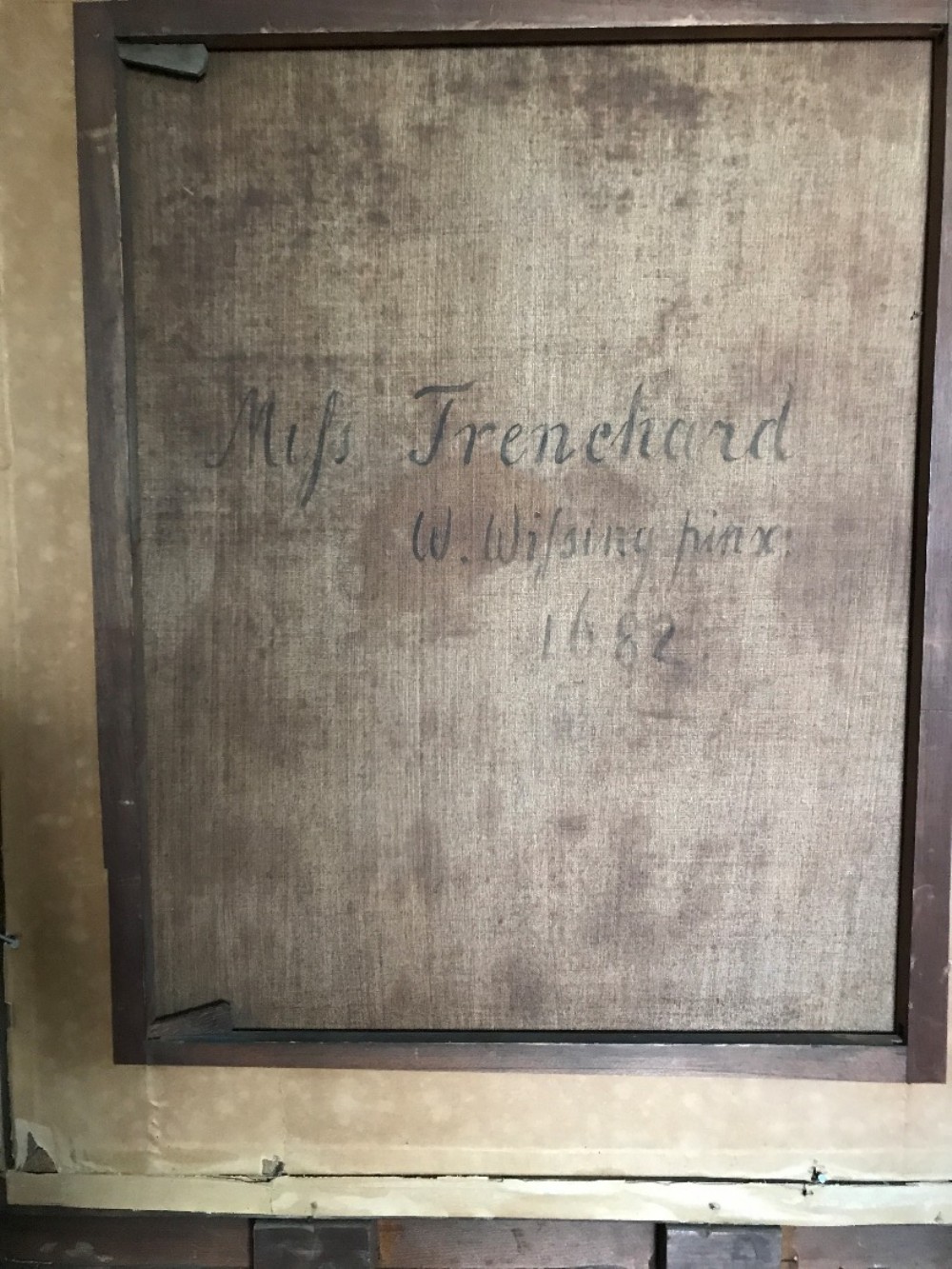
When the painting went for conservation a hardboard backing was removed and, painted on the lining, in what appears to be an 18th century hand, is an inscription naming the sitter as Miss Trenchard, painted by William Wissing in 1682.
Below are excepts from research by Adam Busiakiewicz, art historian:-

" I believe that your portrait very likely to be Philip(a) Trenchard , wife of Sir John Trenchard (1649-1695).

I believe Sir John's wife, Philip(a) daughter of George Speke esq. of Whitelackington, is the best candidate.
She was born in 1663/4 and married Sir John in 1682 - the year that this portrait was made. I think that this portrait was probably made to celebrate their marriage,

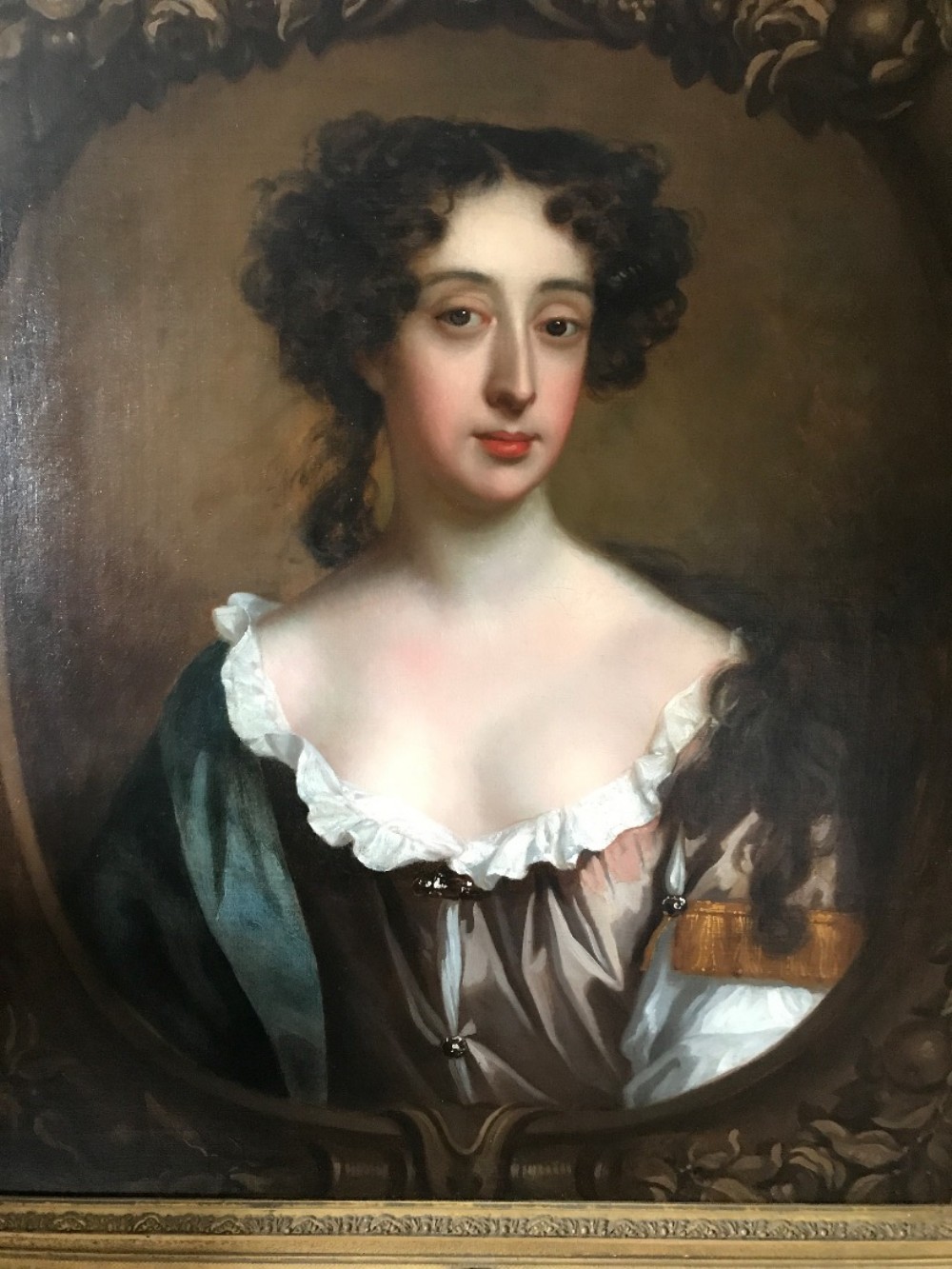
I think that there is little doubt that this is a picture by Wissing, dating to 1682.
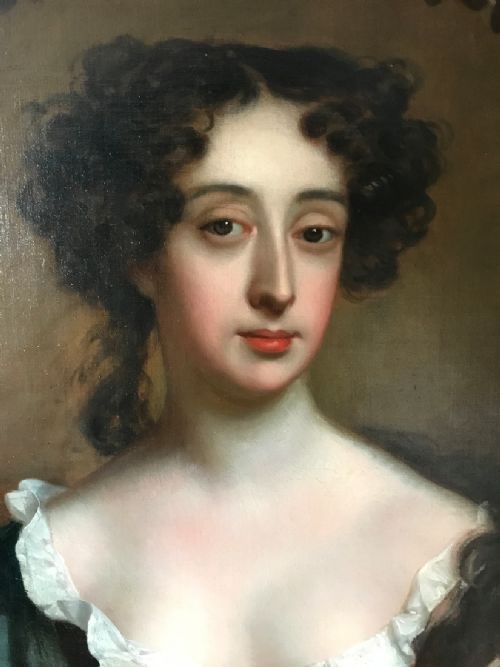
The quality of the picture is rather good, with lots of character in the face. The blushing cheeks are well painted too. It has far more depth that a Beale. I have attached a few comparisons.

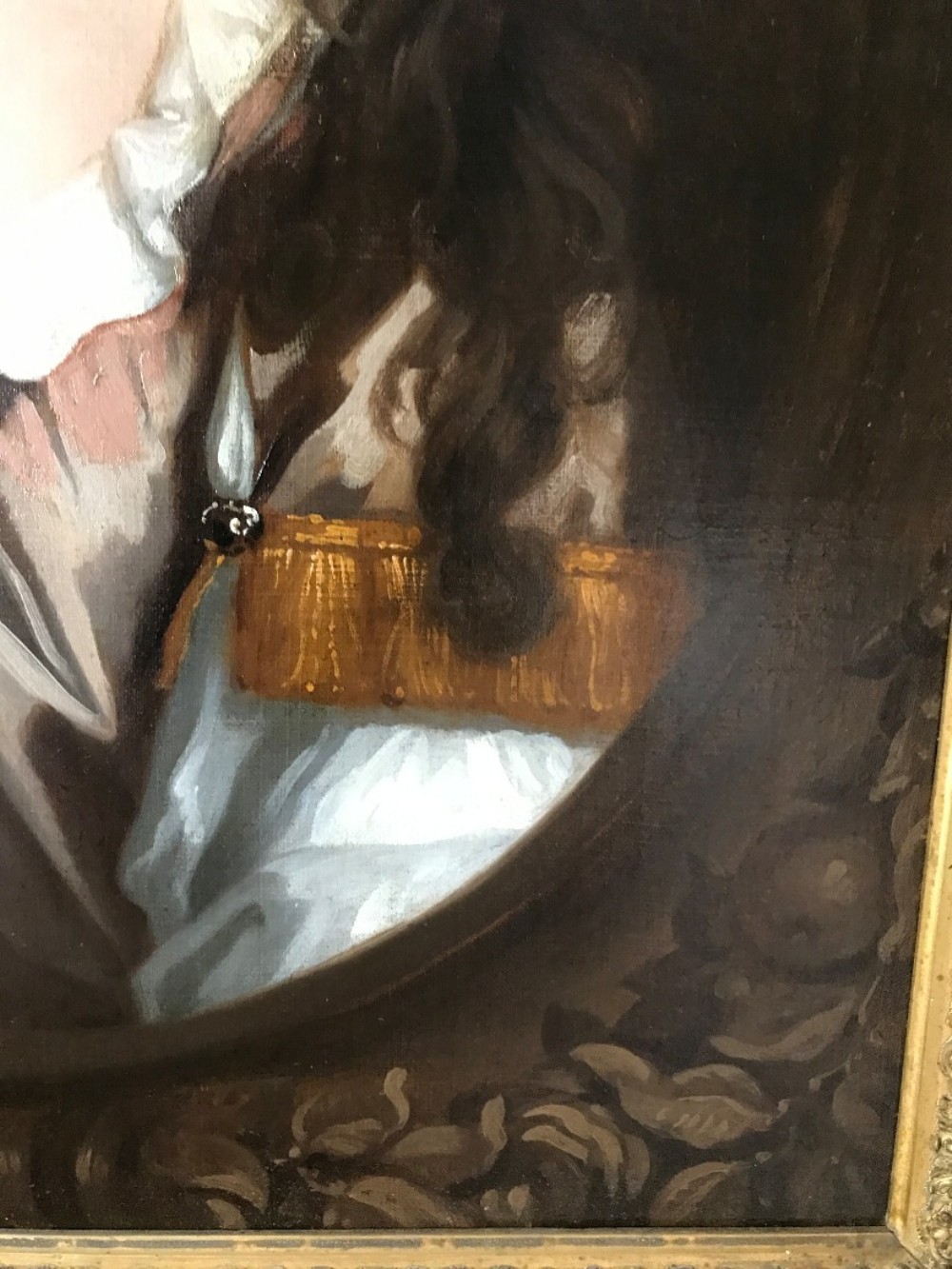
Wissing did paint decorative ovals, although far less often than Beale.
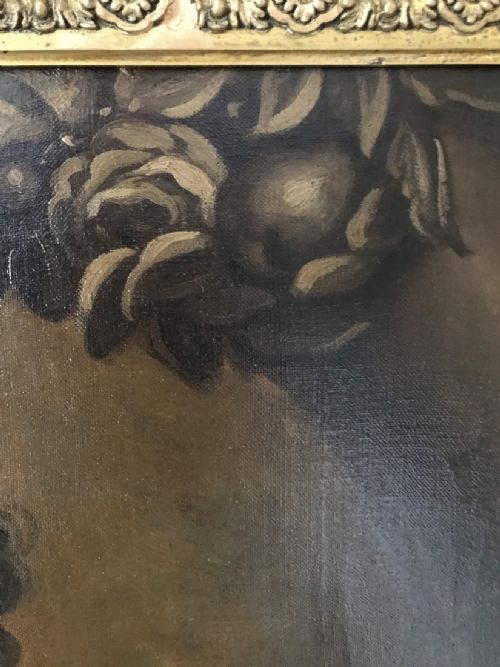
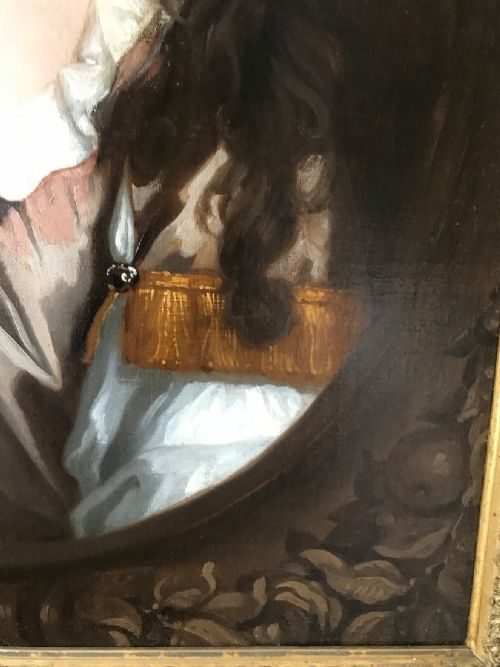
The drapery is good too and lacks the solidity you find in Beale.

The strong political connections between Sir John Trenchard and William III, who was eventually painted by Wissing many times, makes this connection rather interesting.

Of course, we have lots of portraits of William and Mary that Wissing produced from his studio with great speed. One often finds that Wissing eventually settled down into a rather stiff and formulaic manner (as many court painters often did), but, this particular portrait is filled with character and freshness."

SIR JOHN TRENCHARD (30 March 1649 – 27 April 16950 was one of Stuart England’s most accomplished and controversial aristocratic statesmen or “principal secretary of state for life”.

He belonged to an old Dorset family. He was born on 30 March 1649 at Lytchett Matravers, near Poole, to Thomas Trenchard of Wolverton (1615–1671), and his wife Hannah née Henley (d. 1691). His grandfather was Sir Thomas Trenchard of Wolverton (1582–1657), who was knighted by James I in 1613. John Trenchard entered Parliament as member for Taunton in 1679. He associated himself with those who proposed to exclude the Duke of York from the throne, and attended some of the meetings held by these malcontents. It is possible he was concerned in the Rye House Plot. In fact, he was arrested at one of the events in July 1683, but no definite evidence was brought against him so he was released.

When Monmouth landed in the west of England in June 1685, Trenchard fled from England to Groningen, Netherlands. Around 1687-1688, he was pardoned , and able to return home. Again he entered Parliament, but he took no active part in the Revolution of 1688, although he managed to secure the good will of William III. On 29 October 1689, he was knighted by the King, and made Chief Justice of Chester. In 1692, he was appointed Secretary of State.

On 10 November 1682, he had married: Philippa Speke (1664–1743), daughter of George Speke of White Lackington, Somerset.

Sir John died on 27 April 1695 at Kensington, London, and is buried at Bloxworth, Dorset.

Phillipa remarried and lived for another 50 years.

WILLIAM WISSING (1656 - 1687) After Lely's death in 1680, Wissing emerged as his most important pupil. Wissing’s royal sitters include Charles II of England, Queen Catharine of Braganza, Prince George of Denmark and the Duke of Monmouth.

SIZE; 39 x 34 inches inc.frame.

PROVENANCE: descent in a Dorset family. (It is plausible that this of portrait might have descended down with the Trenchard family, of Lychett Maltravers, Dorset)

Physical Dimensions
Height
99cm (38.98")
Width
86cm (33.86")
Depth
7cm (2.76")
Declaration

Roy Precious - Antiques & Fine Art has dated this piece to the Before 1700 period.

Reference Numbers
Sellingantiques Reference
SA474330
Dealers Internal Reference
9028
Description
Oil on canvas in a gilded 19th century frame. (Frame has some small losses and a damage to the lower right).
At a glance this could be by Mary Beale; the pose and especially the feigned stone oval are characteristic of her work.
Roy Precious - Antiques & Fine Art

However, the pose and oval were used by several artists, most notably Sir Peter Lely.

fig 1. Portrait of Phillipa Speke, later Lady Trenchard, 1682; by William Wissing.
fig 1. Portrait of Phillipa Speke, Later Lady Trenchard, 1682; by William Wissing.

When the painting went for conservation a hardboard backing was removed and, painted on the lining, in what appears to be an 18th century hand, is an inscription naming the sitter as Miss Trenchard, painted by William Wissing in 1682.

fig 2. Portrait of Phillipa Speke, later Lady Trenchard, 1682; by William Wissing.
fig 2. Portrait of Phillipa Speke, Later Lady Trenchard, 1682; by William Wissing.

Below are excepts from research by Adam Busiakiewicz, art historian:-

" I believe that your portrait very likely to be Philip(a) Trenchard , wife of Sir John Trenchard (1649-1695).

I believe Sir John's wife, Philip(a) daughter of George Speke esq. of Whitelackington, is the best candidate.

fig 3. Portrait of Phillipa Speke, later Lady Trenchard, 1682; by William Wissing.
fig 3. Portrait of Phillipa Speke, Later Lady Trenchard, 1682; by William Wissing.

She was born in 1663/4 and married Sir John in 1682 - the year that this portrait was made. I think that this portrait was probably made to celebrate their marriage,

I think that there is little doubt that this is a picture by Wissing, dating to 1682.

fig 4. Portrait of Phillipa Speke, later Lady Trenchard, 1682; by William Wissing.
fig 4. Portrait of Phillipa Speke, Later Lady Trenchard, 1682; by William Wissing.

The quality of the picture is rather good, with lots of character in the face. The blushing cheeks are well painted too. It has far more depth that a Beale. I have attached a few comparisons.

Wissing did paint decorative ovals, although far less often than Beale.

fig 5. Portrait of Phillipa Speke, later Lady Trenchard, 1682; by William Wissing.
fig 5. Portrait of Phillipa Speke, Later Lady Trenchard, 1682; by William Wissing.

The drapery is good too and lacks the solidity you find in Beale.

The strong political connections between Sir John Trenchard and William III, who was eventually painted by Wissing many times, makes this connection rather interesting.

Of course, we have lots of portraits of William and Mary that Wissing produced from his studio with great speed. One often finds that Wissing eventually settled down into a rather stiff and formulaic manner (as many court painters often did), but, this particular portrait is filled with character and freshness."

SIR JOHN TRENCHARD (30 March 1649 – 27 April 16950 was one of Stuart England’s most accomplished and controversial aristocratic statesmen or “principal secretary of state for life”.

He belonged to an old Dorset family. He was born on 30 March 1649 at Lytchett Matravers, near Poole, to Thomas Trenchard of Wolverton (1615–1671), and his wife Hannah née Henley (d. 1691). His grandfather was Sir Thomas Trenchard of Wolverton (1582–1657), who was knighted by James I in 1613. John Trenchard entered Parliament as member for Taunton in 1679. He associated himself with those who proposed to exclude the Duke of York from the throne, and attended some of the meetings held by these malcontents. It is possible he was concerned in the Rye House Plot. In fact, he was arrested at one of the events in July 1683, but no definite evidence was brought against him so he was released.

When Monmouth landed in the west of England in June 1685, Trenchard fled from England to Groningen, Netherlands. Around 1687-1688, he was pardoned , and able to return home. Again he entered Parliament, but he took no active part in the Revolution of 1688, although he managed to secure the good will of William III. On 29 October 1689, he was knighted by the King, and made Chief Justice of Chester. In 1692, he was appointed Secretary of State.

On 10 November 1682, he had married: Philippa Speke (1664–1743), daughter of George Speke of White Lackington, Somerset.

Sir John died on 27 April 1695 at Kensington, London, and is buried at Bloxworth, Dorset.

Phillipa remarried and lived for another 50 years.

WILLIAM WISSING (1656 - 1687) After Lely's death in 1680, Wissing emerged as his most important pupil. Wissing’s royal sitters include Charles II of England, Queen Catharine of Braganza, Prince George of Denmark and the Duke of Monmouth.

SIZE; 39 x 34 inches inc.frame.

PROVENANCE: descent in a Dorset family. (It is plausible that this of portrait might have descended down with the Trenchard family, of Lychett Maltravers, Dorset)

Height
99cm (38.98")
Width
86cm (33.86")
Depth
7cm (2.76")
Date of Manufacture

Roy Precious - Antiques & Fine Art has dated this piece to the Before 1700 period.

Reference Numbers
Sellingantiques Ref
SA474330
Dealers Internal Ref
9028
Roy Precious - Antiques & Fine Art
Sellingantiques verified Since Mar 2003

Roy and nadine precious: specialists in portraiture from the 16th to the 20th century. Established in 1972.

Dealer Profile

You can view the stock and full dealer information on the Roy Precious - Antiques & Fine Art Profile Page
PDF SHARE
SAVE
Portrait of Phillipa Speke, later Lady Trenchard, 1682; by William Wissing.
1 / 6
Archive I Portrait of Phillipa Speke, later Lady Trenchard, 1682; by William Wissing.
Portrait of Phillipa Speke, Later Lady Trenchard, 1682; by William Wissing.
Archive II Portrait of Phillipa Speke, later Lady Trenchard, 1682; by William Wissing. View II
Archive III Portrait of Phillipa Speke, later Lady Trenchard, 1682; by William Wissing. View III
Archive IV Portrait of Phillipa Speke, later Lady Trenchard, 1682; by William Wissing. View IV
Archive V Portrait of Phillipa Speke, later Lady Trenchard, 1682; by William Wissing. View V
Archive VI Portrait of Phillipa Speke, later Lady Trenchard, 1682; by William Wissing. View VI
Enlarged Archival View
Location
Wiltshire
United Kingdom
Dealer Profile Page sellingantiques.co.uk/rp
Verified Since Mar 2003
Items For Sale 95
Items Sold 679
Roy Precious - Antiques & Fine Art
Verified Since Mar 2003
View Dealer Info
Location: Wiltshire, United Kingdom
Verified
Mar 2003
For Sale
95
Sold
679
Portrait of Phillipa Speke, later Lady Trenchard, 1682; by William Wissing.
Ref: SA474330
Portrait of Phillipa Speke, later Lady Trenchard, 1682; by William Wissing.
Detail View 1
Detail View 2
Detail View 3
Detail View 4
Detail View 5
Archival Detail
Every single antique dealer on our platform is individually approved by our internal team. We verify their professional trade history, ethical standards, and photographic quality to ensure a secure, high-standard buying environment. Upon joining, every dealer agrees to a strict 9-point code of conduct. While issues can occasionally arise, our dealers typically resolve them swiftly and directly with the buyer. In fact, since our founding in 2002, Sellingantiques has only had to step in to help resolve an issue on roughly five occasions—a true testament to the quality of our dealers and their dedication to your happiness.
Our dealers are highly experienced in packing and shipping fragile, high-value antiques. Because you are in direct contact with the dealer, you will be able to easily go through all available shipping and insurance options together to ensure your item arrives safely.
Antiques are the ultimate green purchase. By choosing historical pieces over newly manufactured goods, you completely eliminate the carbon footprint of modern mass production while preserving exceptional, timeless craftsmanship.
items
Add keywords to the filter
Price
£100
£250000
Era
Movements
Material
Origin
Stock Location
Freshness
Online Payments
Categories