18,255  PAGES BROWSED TODAY PAGES TODAY 29  ANTIQUES UPLOADED TODAY NEW ARRIVALS
ID #SA463087
SOLD
Email
Save
George Vertue After Alexander Gordon - A Rare Engraving of an Egyptian Mummy from the Collection of Richard Mead 1737
Hand of Glory
sold SA463087
Sorry, but this item has been sold.
Hand of Glory

Hand of Glory

Sellingantiques Verified Since Jul 2012
View Dealers Stock Page
  • About Us
    Decorative antiques & interiors
Id #SA463087
PDF SHARE
SAVE

George Vertue After Alexander Gordon - A Rare Engraving of an Egyptian Mummy from the Collection of Richard Mead 1737

18th century
Description

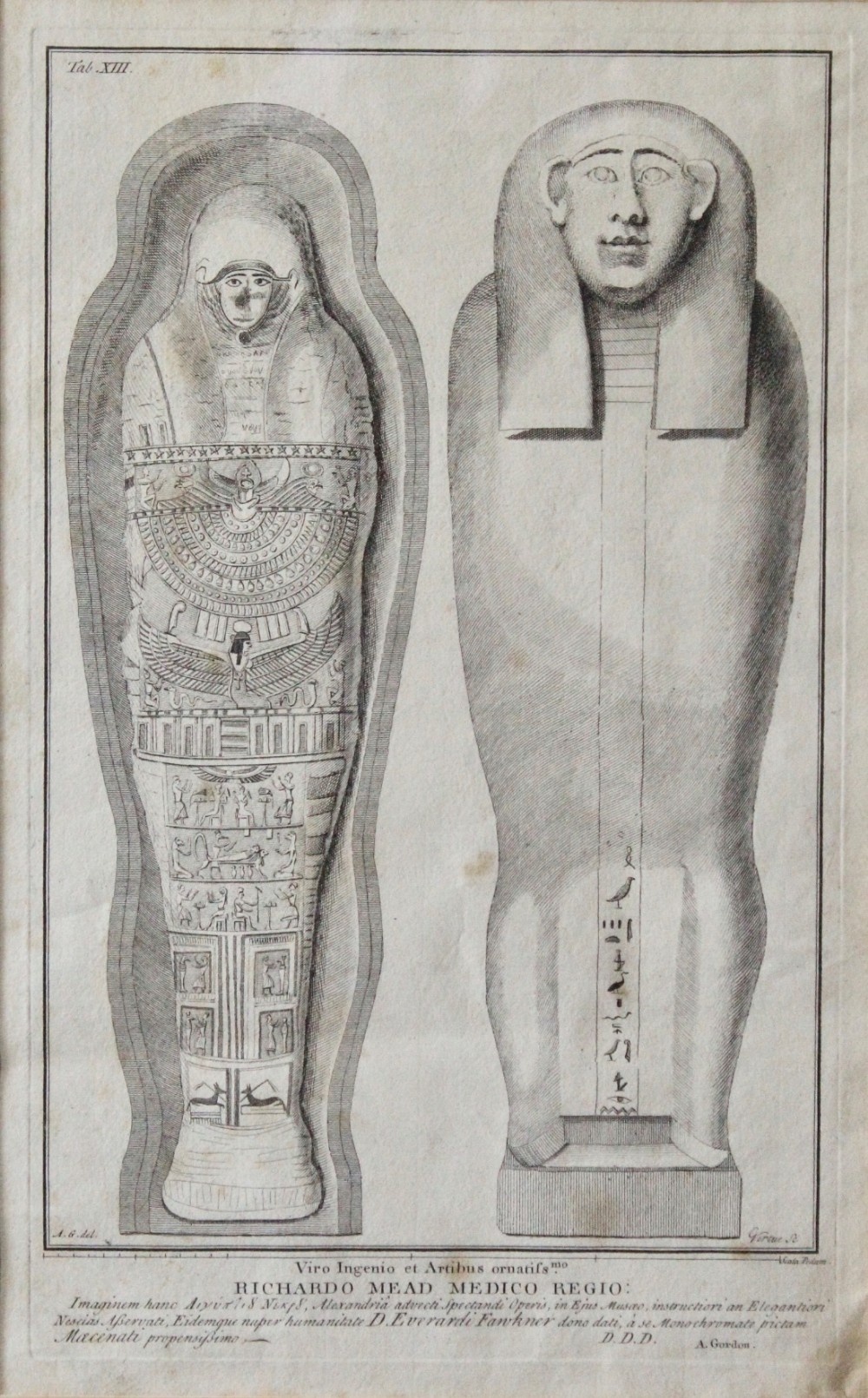
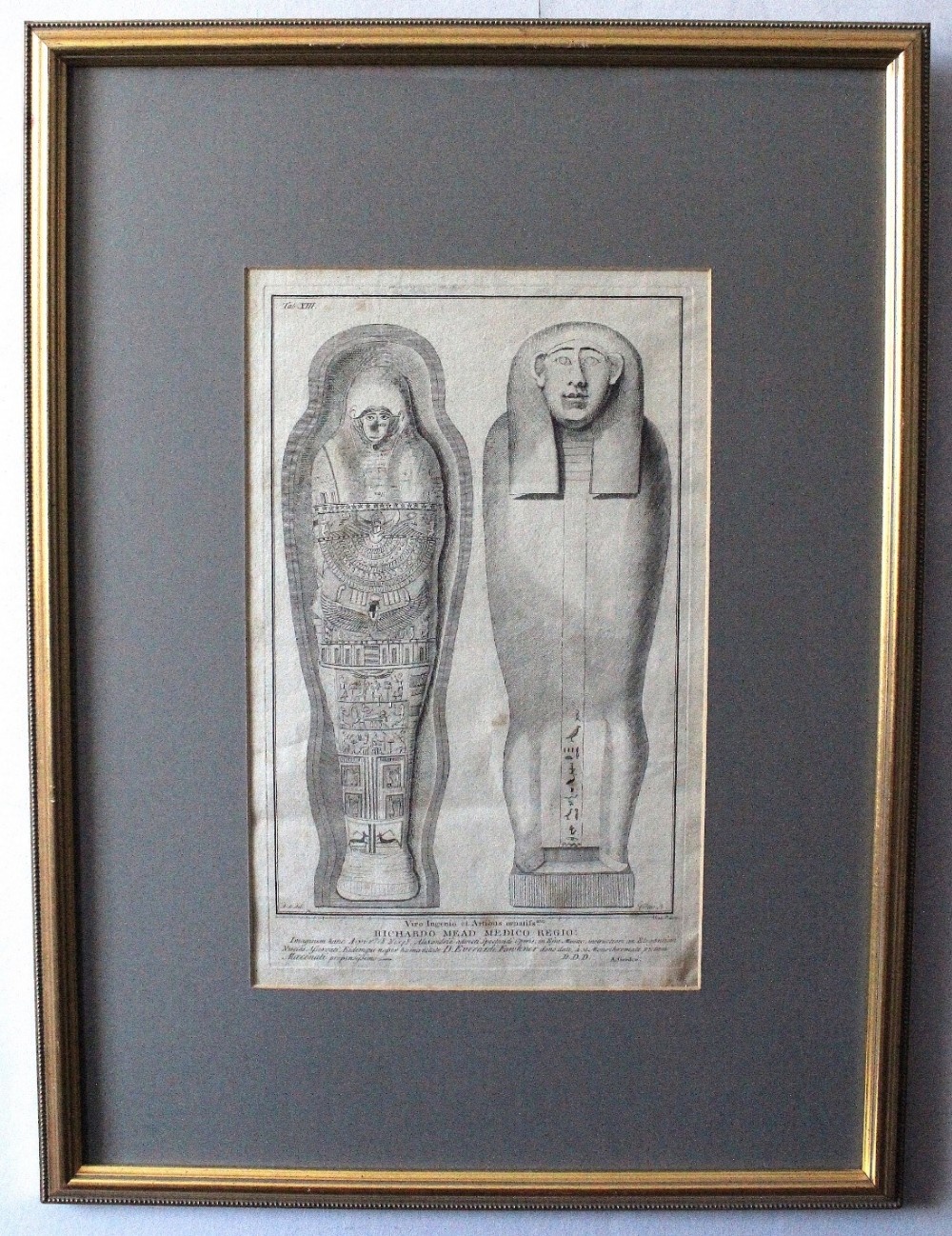
George Vertue After Alexander Gordon - A rare engraving of an Egyptian mummy from Alexander Gordon's 'An Essay towards explaining the antient Hieroglyphical Figures on the Egyptian Mummy in the Museum of Doctor Mead', 1737, Plate viii.

Alexander Gordon ((1692 – 1755) was an antiquary and secretary of the Egyptian Society. He published two very learned treatises to solve the mysteries of hieroglyphics and to illustrate "all the Egyptian mummies in England". One of these treatises being 'An Essay towards explaining the antient Hieroglyphical Figures on the Egyptian Mummy in the Museum of Doctor Mead'.
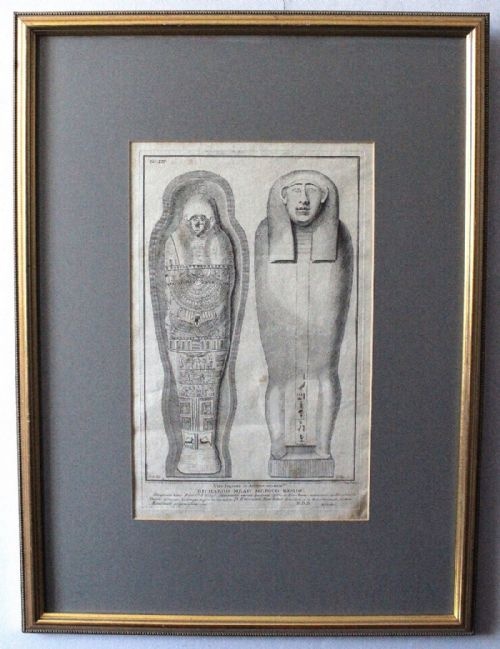
Dr Richard Mead (1673-1754) was an eminent Royal physician and one of the founding governors of The Foundling Museum. He was also a scholar and collector of antiquities, coins, paintings and sculpture. He built a gallery at his home in Great Ormond Street to house his collections where he welcomed scholars and artists, holding a weekly club attracting leading intellectuals of the day. He was also a great patron of the arts and Mead’s collections were dispersed after his death in 1754. The mummy illustrated in the engraving was purchased by William Hunter (Huntarian Museum) on his death. Mead was buried at Temple Church, London and a monument was erected in Westminster Abbey in commemoration. Today, Mead’s reputation and achievements are little known.
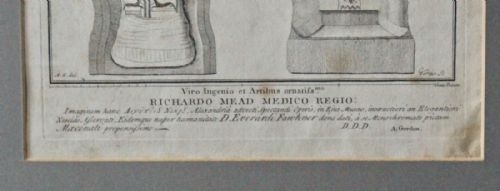
George Vertue (1683-1756) was official engraver to the Society of Antiquaries, appointed in 1717, the same year as its formal foundation.

Plate size: 38cm x 23.4, mounted and within a modern gilt frame ( Framed size 69cm x 51cm)

Condition: The plate is complete and not cut down, a good, clean impression on laid paper, some areas of discolouration to the paper.

A copy of this engraving can be found in the National Library of Scotland.

Physical Dimensions
Height
69cm (27.17")
Width
51cm (20.08")
Depth
2cm (0.79")
Declaration

Hand of Glory has dated this piece to the 18th Century.

Reference Numbers
Sellingantiques Reference
SA463087
Description
George Vertue After Alexander Gordon - A rare engraving of an Egyptian mummy from Alexander Gordon's 'An Essay towards explaining the antient Hieroglyphical Figures on the Egyptian Mummy in the Museum of Doctor Mead', 1737, Plate viii.

Alexander Gordon ((1692 – 1755) was an antiquary and secretary of the Egyptian Society.

He published two very learned treatises to solve the mysteries of hieroglyphics and to illustrate "all the Egyptian mummies in England".
Hand of Glory

One of these treatises being 'An Essay towards explaining the antient Hieroglyphical Figures on the Egyptian Mummy in the Museum of Doctor Mead'.

fig 1. George Vertue after Alexander Gordon - A Rare Engraving of an Egyptian Mummy from the Collection of Richard Mead 1737
fig 1. George Vertue After Alexander Gordon - A Rare Engraving of an Egyptian Mummy from the Collection of Richard Mead 1737

Dr Richard Mead (1673-1754) was an eminent Royal physician and one of the founding governors of The Foundling Museum. He was also a scholar and collector of antiquities, coins, paintings and sculpture. He built a gallery at his home in Great Ormond Street to house his collections where he welcomed scholars and artists, holding a weekly club attracting leading intellectuals of the day. He was also a great patron of the arts and Mead’s collections were dispersed after his death in 1754. The mummy illustrated in the engraving was purchased by William Hunter (Huntarian Museum) on his death. Mead was buried at Temple Church, London and a monument was erected in Westminster Abbey in commemoration. Today, Mead’s reputation and achievements are little known.

fig 2. George Vertue after Alexander Gordon - A Rare Engraving of an Egyptian Mummy from the Collection of Richard Mead 1737
fig 2. George Vertue After Alexander Gordon - A Rare Engraving of an Egyptian Mummy from the Collection of Richard Mead 1737

George Vertue (1683-1756) was official engraver to the Society of Antiquaries, appointed in 1717, the same year as its formal foundation.

Plate size: 38cm x 23.4, mounted and within a modern gilt frame ( Framed size 69cm x 51cm)

Condition: The plate is complete and not cut down, a good, clean impression on laid paper, some areas of discolouration to the paper.

A copy of this engraving can be found in the National Library of Scotland.

Height
69cm (27.17")
Width
51cm (20.08")
Depth
2cm (0.79")
Date of Manufacture

Hand of Glory has dated this piece to the 18th Century.

Reference Numbers
Sellingantiques Ref
SA463087
Hand of Glory
Hand of Glory
Sellingantiques verified Since Jul 2012

Decorative antiques & interiors

Dealer Profile

You can view the stock and full dealer information on the Hand of Glory Profile Page
PDF SHARE
SAVE
George Vertue after Alexander Gordon - A Rare Engraving of an Egyptian Mummy from the Collection of Richard Mead 1737
1 / 3
Archive I George Vertue after Alexander Gordon - A Rare Engraving of an Egyptian Mummy from the Collection of Richard Mead 1737

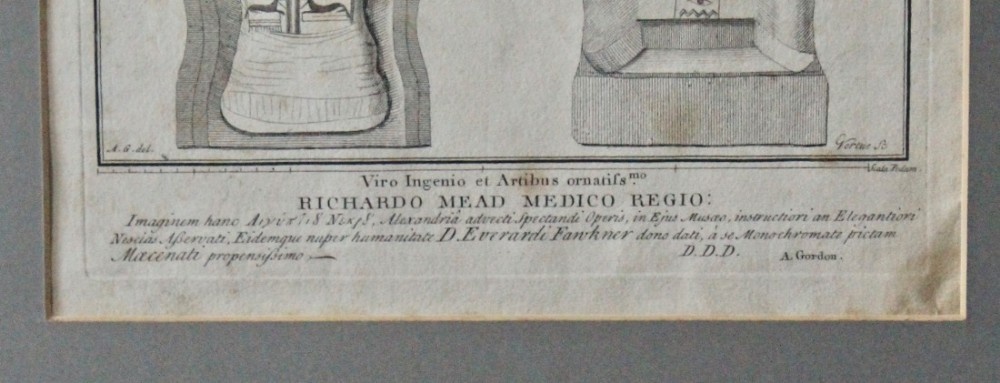
George Vertue After Alexander Gordon - A Rare Engraving of an Egyptian Mummy from the Collection of Richard Mead 1737

Archive II George Vertue after Alexander Gordon - A Rare Engraving of an Egyptian Mummy from the Collection of Richard Mead 1737 View II
Archive III George Vertue after Alexander Gordon - A Rare Engraving of an Egyptian Mummy from the Collection of Richard Mead 1737 View III
Enlarged Archival View
Location
Hand of Glory Antiques
34 Market Place
Chippenham
Wiltshire
SN15 3HP
United Kingdom
Verified Since Jul 2012
Items For Sale 172
Items Sold 2,433
Hand of Glory
Hand of Glory
Verified Since Jul 2012
View Dealer Info
Location: Hand of Glory Antiques, 34 Market Place, Chippenham, Wiltshire, SN15 3HP, United Kingdom
Verified
Jul 2012
For Sale
172
Sold
2,433
George Vertue after Alexander Gordon - A Rare Engraving of an Egyptian Mummy from the Collection of Richard Mead 1737
Ref: SA463087
George Vertue after Alexander Gordon - A Rare Engraving of an Egyptian Mummy from the Collection of Richard Mead 1737
Detail View 1
Detail View 2
Archival Detail
Every single antique dealer on our platform is individually approved by our internal team. We verify their professional trade history, ethical standards, and photographic quality to ensure a secure, high-standard buying environment. Upon joining, every dealer agrees to a strict 9-point code of conduct. While issues can occasionally arise, our dealers typically resolve them swiftly and directly with the buyer. In fact, since our founding in 2002, Sellingantiques has only had to step in to help resolve an issue on roughly five occasions—a true testament to the quality of our dealers and their dedication to your happiness.
Our dealers are highly experienced in packing and shipping fragile, high-value antiques. Because you are in direct contact with the dealer, you will be able to easily go through all available shipping and insurance options together to ensure your item arrives safely.
Antiques are the ultimate green purchase. By choosing historical pieces over newly manufactured goods, you completely eliminate the carbon footprint of modern mass production while preserving exceptional, timeless craftsmanship.
items
Add keywords to the filter
Price
£100
£250000
Era
Movements
Material
Origin
Stock Location
Freshness
Online Payments
Categories