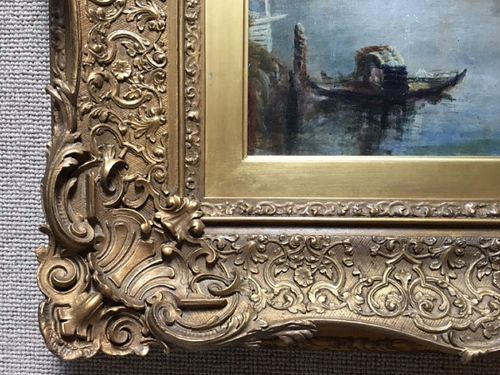
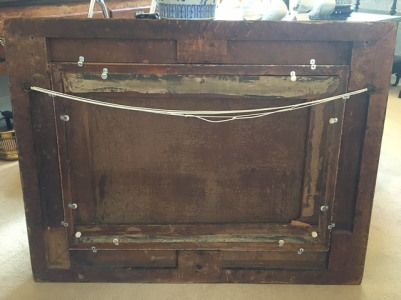
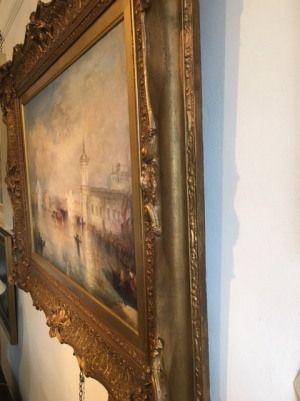
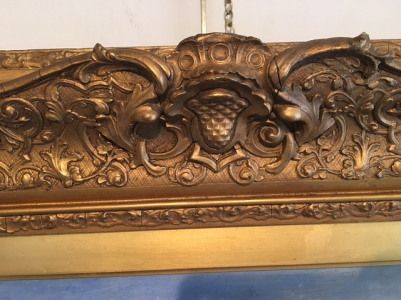
Marlborough Antiques & Interiors has dated this piece to the 19th Century.
In very good condition for age.
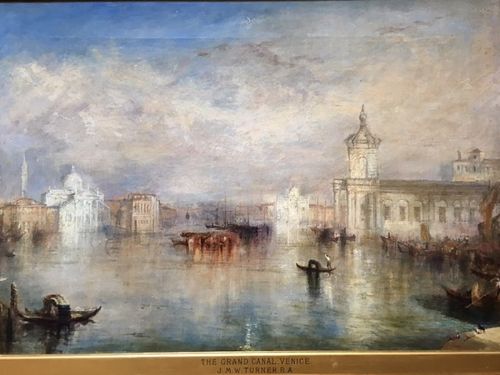
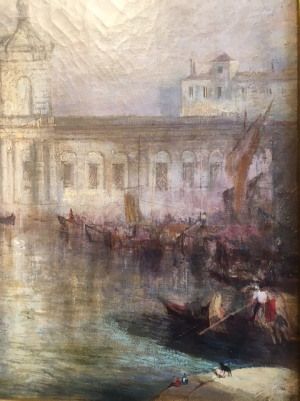
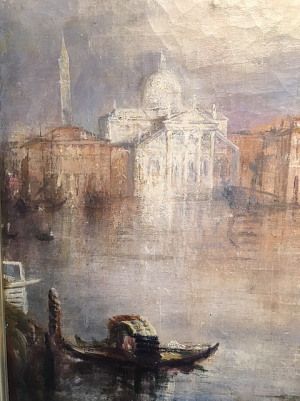
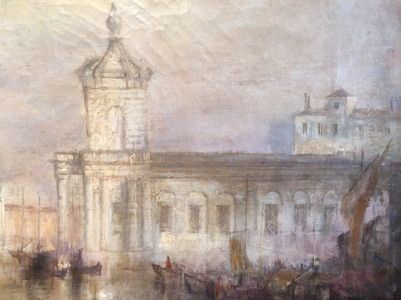
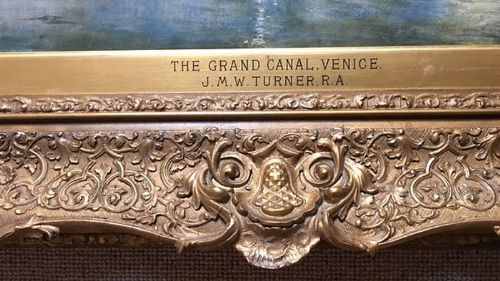
Turners impression of the city was not dominated by ancient ruins and historical past. Instead he explored Venice's combination of water, light and grand rennaissance architecture, all of which blend together here. Here he's transfixed by the spectacle of the churches of Santa Maria della Salute and Santa Maria della Presentazione, known as the Zitelle (or Citella) reflected in the waters of the Guidecca Canal.
The sublime, floating city of Venice, described by Michelangelo as a work of art in itself, has inspired an endless stream of artists. Each has attempted to capture its beauty in his or her own way, from Canaletto in the 18th century to Claude Monet and others in the modern era. Still, few have found such a true echo of their own sensibility in the Venetian scene as the British painter J. M. W. Turner (1775–1851). “Turner and Venice” spanned the twenty years between his first visit in 1819 and his last in 1840. His many paintings, watercolors, and drawings of the city form one of the richest themes in his mature work, a testament to one of the most compelling encounters of artist and place in the history of art.Turner was the most individual and visionary genius of European painting of his age. His paintings—full of vibrant color, expressive brushwork, and Romantic spirit—were a revelation to his contemporaries, and pointed the way to many later developments in modern art. He was an inspiration to the Impressionists, who shared his infatuation with the elemental qualities of light and color, air and water. Like the Impressionists, Turner has held his freshness and appeal throughout the modern period.urner was technically brilliant and enormously ambitious. His work addresses such themes as the fate of empires, the vanity of human endeavor, and the transience of life. The oils and watercolors of his middle to late career, from the 1820s onward, suggest a world in spectacular dissolution, and some of his last paintings treat subjects of a visionary nature. He died at his cottage on the Thames at Chelsea, and is buried in St. Paul’s Cathedral. The Tate now owns his bequest to the nation—some 300 of his own paintings.
52.5 x 78.5 cms Image Only
Marlborough Antiques & Interiors has dated this piece to the 19th Century.
We display a variety of antiques at all price levels, including furniture, paintings and other decorative items
You can view the stock and full dealer information on the Marlborough Antiques & Interiors Profile Page

Circle of Joseph Mallord William Turner (1775-1851) - 'The Grand Canal, Venice - Oil on Canvas