58,372  PAGES BROWSED TODAY PAGES TODAY 206  ANTIQUES UPLOADED TODAY NEW ARRIVALS
Sort Order
Items Per Page
ID #SA357166
SOLD
Email
Save
Portrait of Queen Mary I, Manner of Guillim Scrots.
Roy Precious - Antiques & Fine Art
sold SA357166
Sorry, but this item has been sold.
Roy Precious - Antiques & Fine Art

Roy Precious - Antiques & Fine Art

Sellingantiques Verified Since Mar 2003
View Dealers Stock Page
  • About Us
    Roy and nadine precious: specialists in portraiture from the 16th to the 20th century. Established in 1972.
Id #SA357166
PDF SHARE
SAVE

Portrait of Queen Mary I, Manner of Guillim Scrots.

19th century
Description

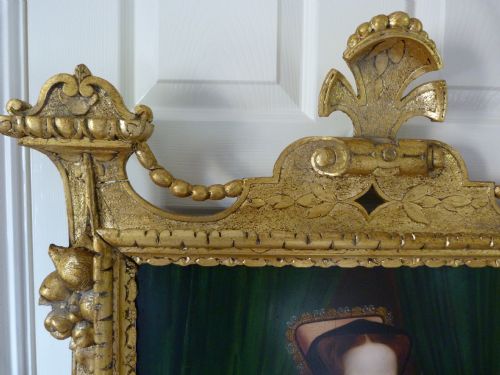
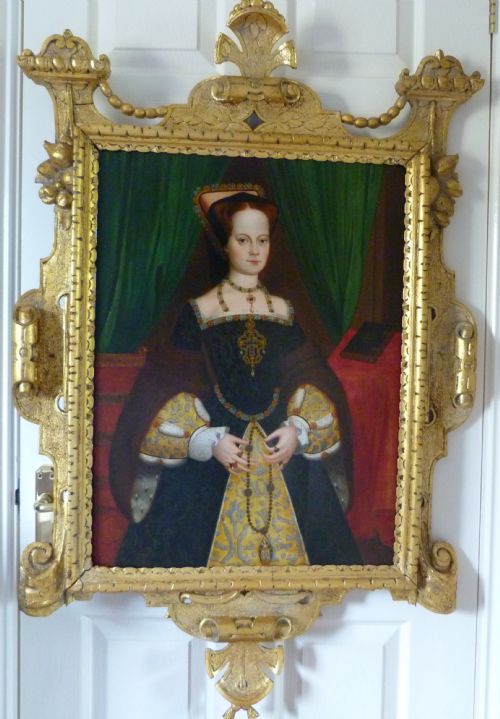
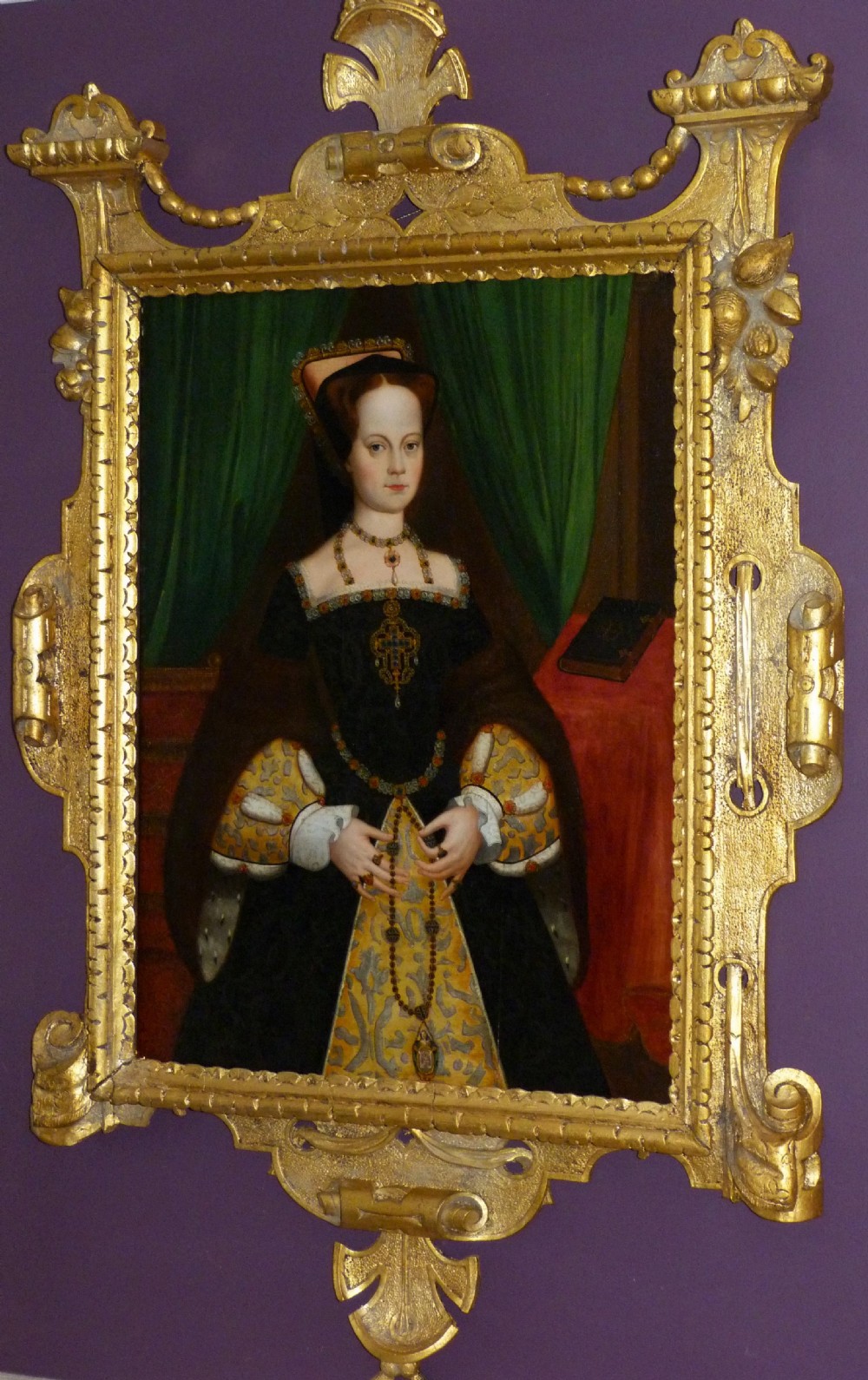
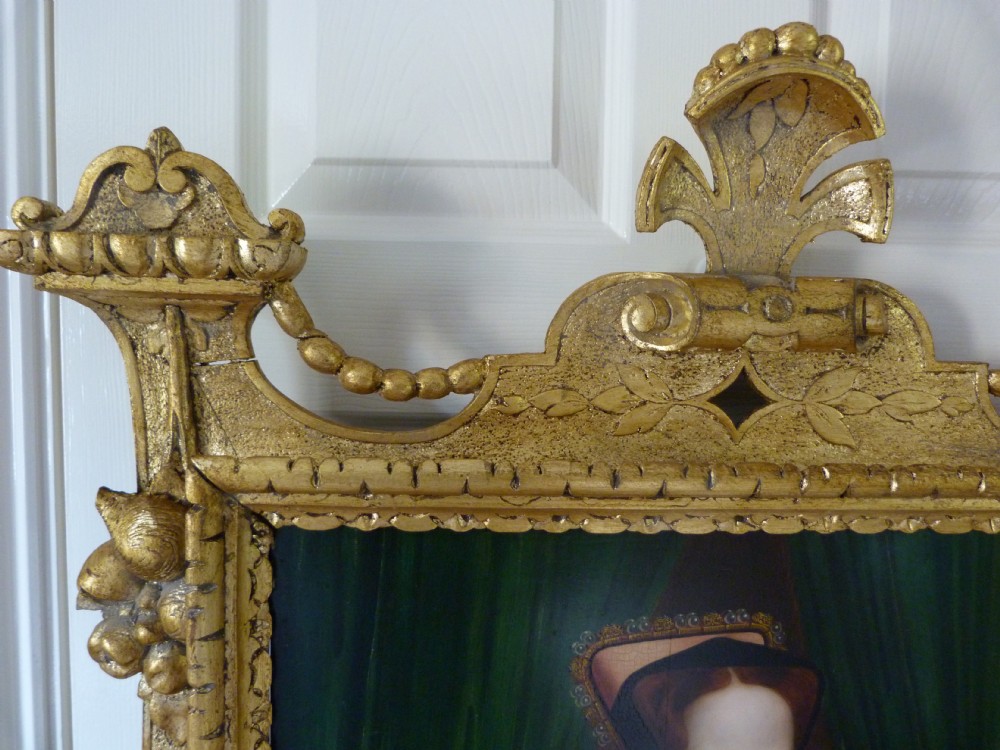
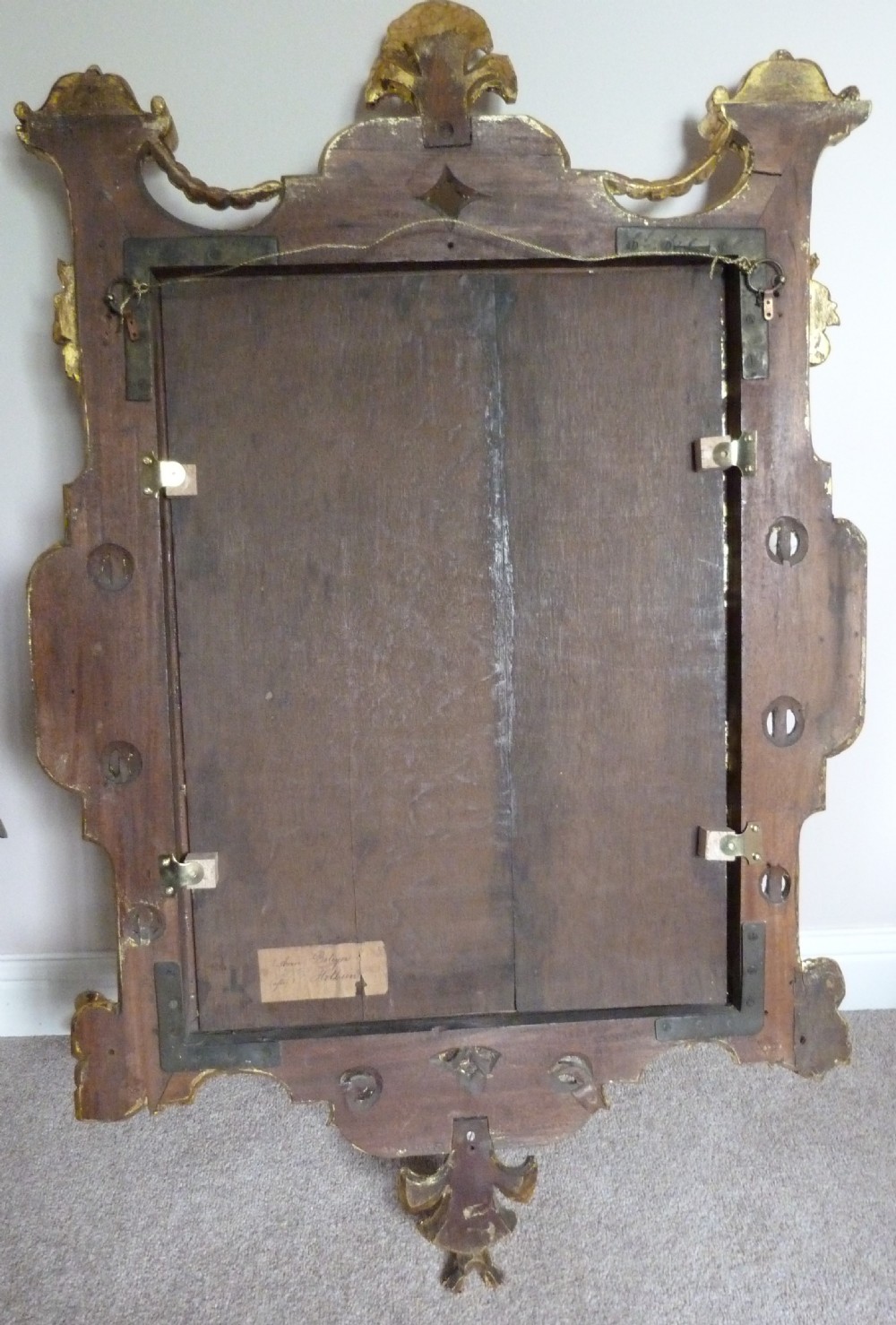
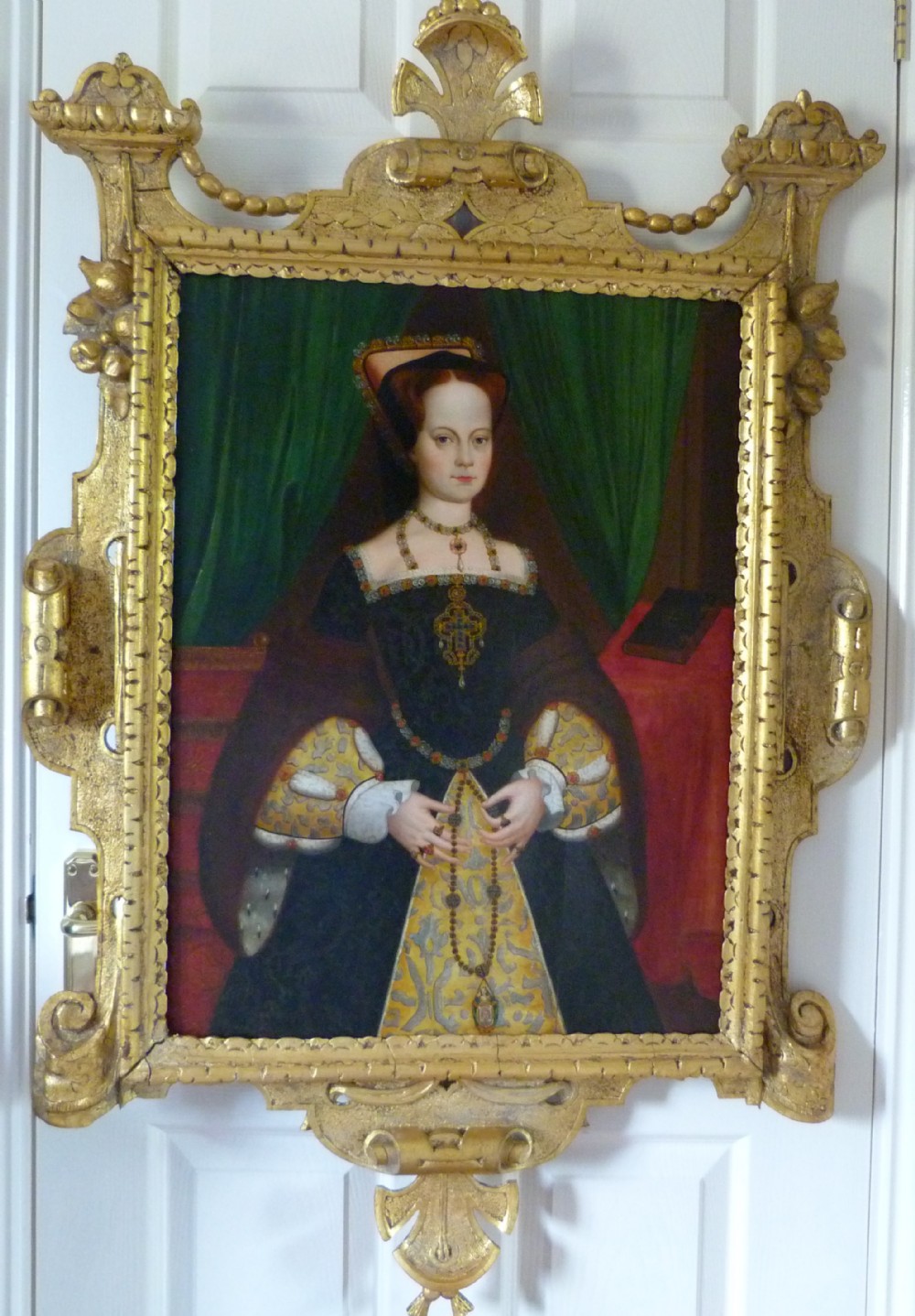
Oil on oak panel in an elaborate carved and giltwood frame.

Created c.1800 this is a superb portrait convincingly painted in the Tudor manner.

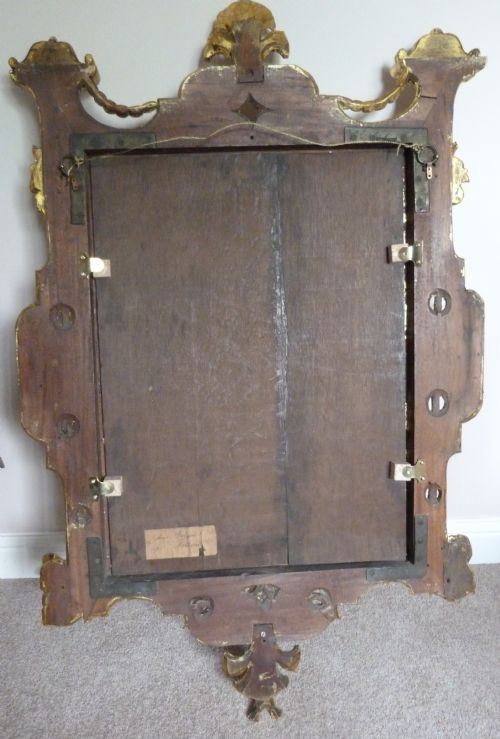
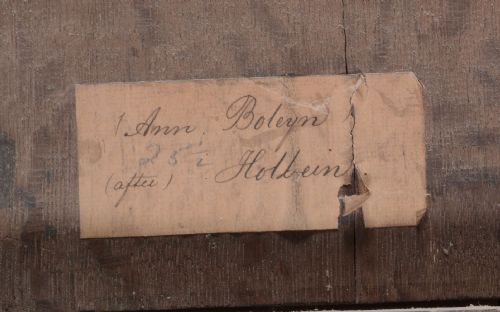
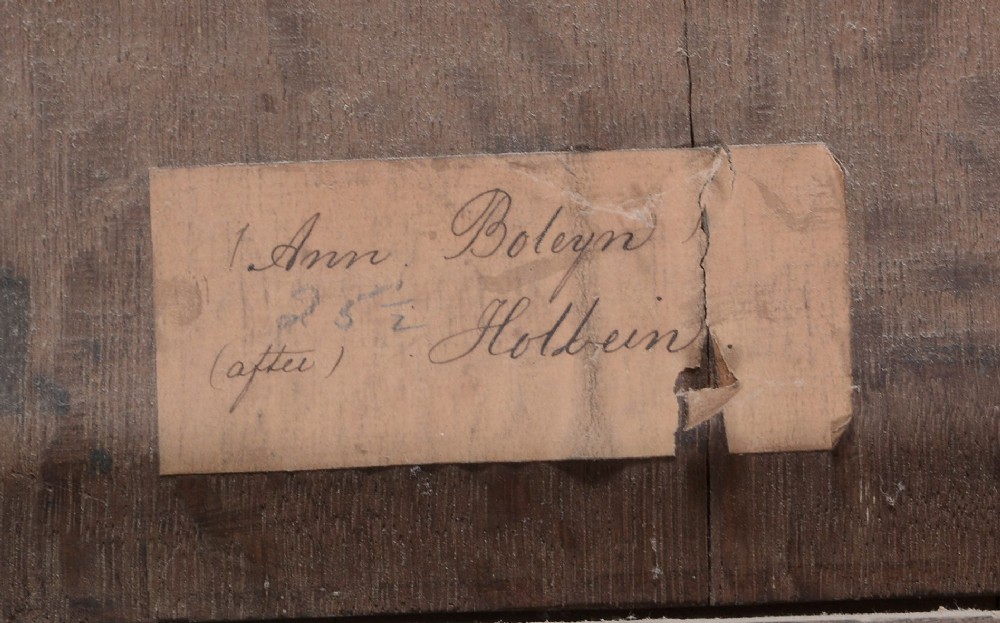
Verso, an old handwritten label "Anne Boleyn, (after) Holbein".
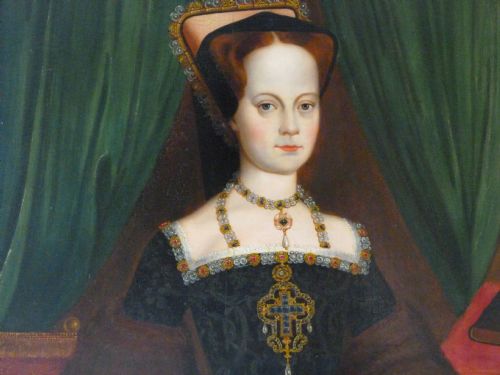
In fact this is a portrait of Mary Tudor, later Queen Mary I, as a young woman.

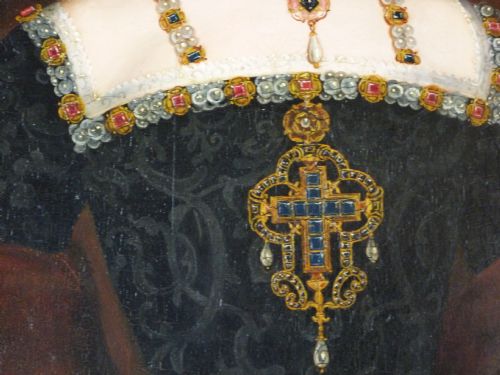
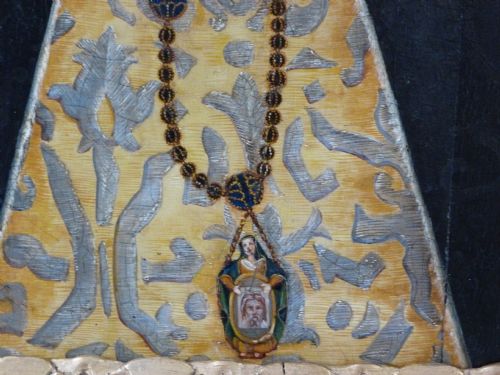
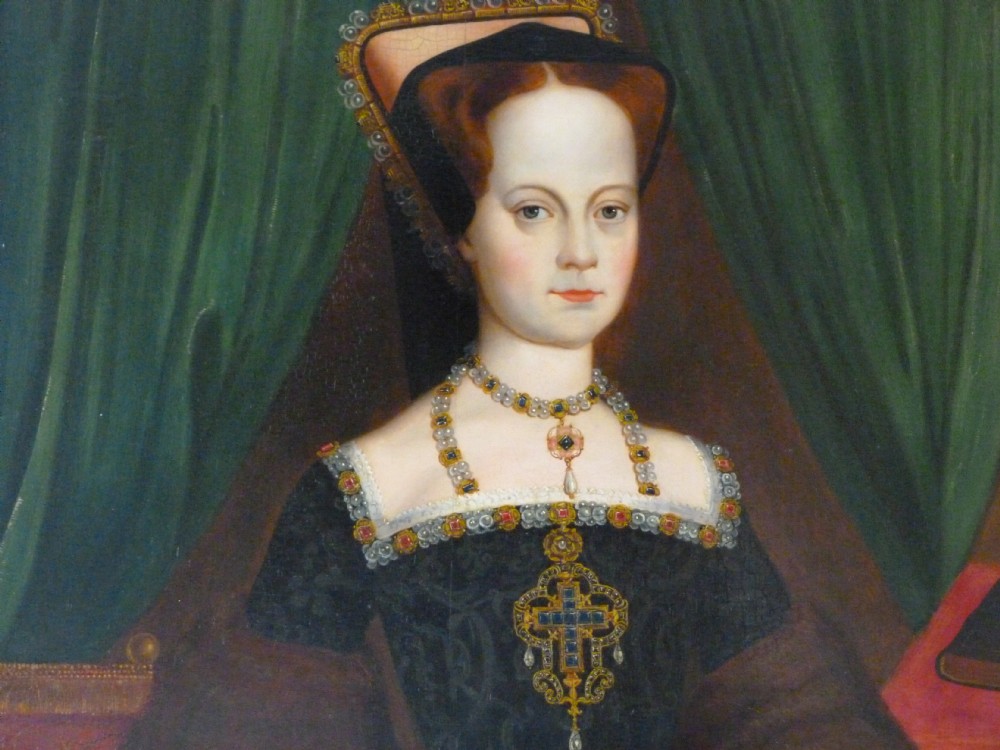
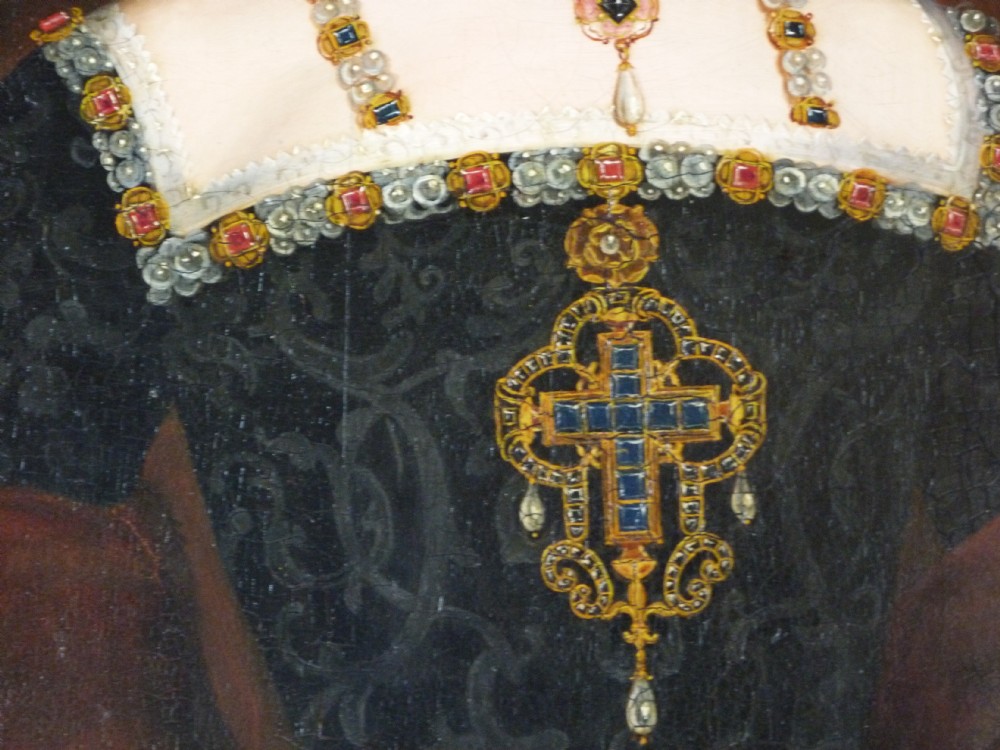
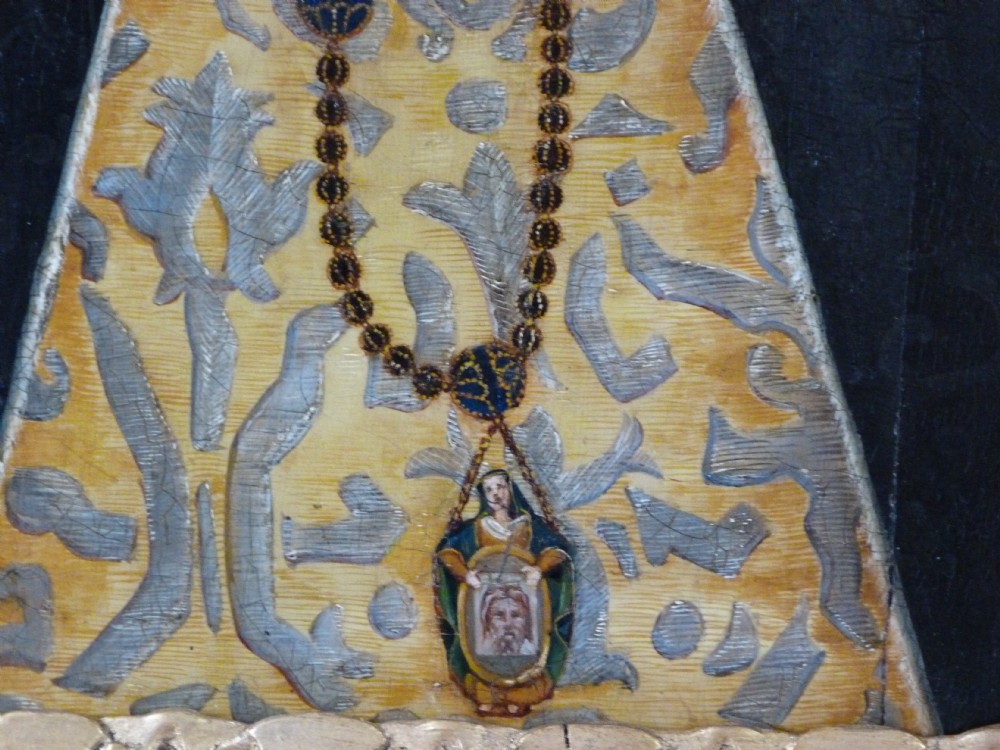
Mary was noted for her fierce Catholic faith, and in this portrait can be clearly seen symbols of that faith; a bible, a jewelled cross and a jewel showing St. Veronica holding the cloth with the image of Christ upon it.
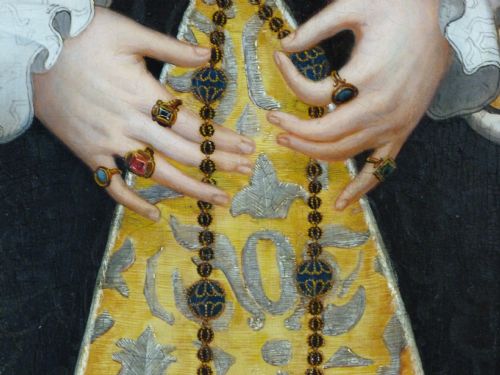
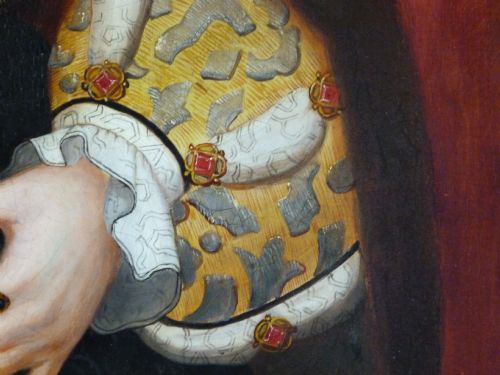
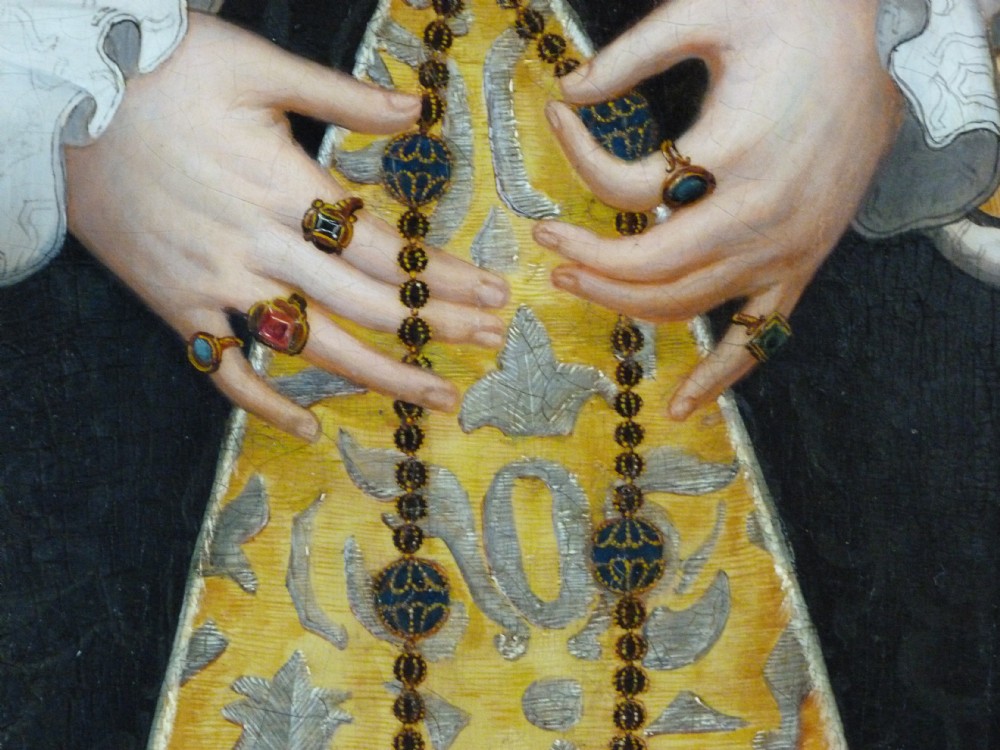
The unknown artist of this lovely painting has been directly influenced by Guillim Scrot's portrait of the young Elizabeth I in the Royal Collection at Windsor castle. Also the placement and composition of the hands in the portrait of Catherine Parr in the Melton Constable portrait (formerly mistakenly called Lady Jane Grey) seem to have been utilised in reverse.
MARY TUDOR was the first Queen Regnant (that is, a queen reigning in her own right rather than a queen through marriage to a king). Courageous and stubborn, her character was moulded by her early years.
In his political and marital manoeuvrings her father Henry VIII instituted an Act of Parliament in 1533 which declared her illegitimate and removed her from the succession to the throne (she was reinstated in 1544, but her half-brother Edward removed her from the succession once more shortly before his death), whilst she was pressurised to give up the Mass and acknowledge the English Protestant Church.
On her succession Mary restored papal supremacy in England, abandoned the title of Supreme Head of the Church, reintroduced Roman Catholic bishops and began the slow reintroduction of monastic orders.
Mary also revived the old heresy laws to secure the religious conversion of the country; heresy was regarded as a religious and civil offence amounting to treason.

As a result, around 300 Protestant heretics were burnt in three years.
Apart from making Mary deeply unpopular, such treatment demonstrated that people were prepared to die for the Protestant settlement established in Henry's reign.

The progress of Mary's conversion of the country was also limited by the vested interests of the aristocracy and gentry who had bought the monastic lands sold off after the Dissolution of the Monasteries, and who refused to return these possessions voluntarily as Mary invited them to do.
Aged 37 at her accession, Mary wished to marry and have children, thus leaving a Catholic heir to consolidate her religious reforms, and removing her half-sister Elizabeth (a focus for Protestant opposition) from direct succession.
Mary's decision to marry Philip, King of Spain in 1554 was very unpopular.

The marriage was childless, Philip spent most of it on the continent, England obtained no share in the Spanish monopolies in New World trade and the alliance with Spain dragged England into a war with France.

Popular discontent grew when Calais, the last vestige of England's possessions in France dating from William the Conqueror's time, was captured by the French in 1558.

Dogged by ill health, Mary died later that year, possibly from cancer, leaving the crown to her half-sister Elizabeth.

GUILLIM SCROTS (Guillim Stretes or William Scrots) (active 1537-1553).

Nothing is known of his early life, training or parentage, but in 1537 William Scrots was appointed painter to Mary of Hungary, Regent of the Netherlands. In 1545, he went to England to take up a position as a painter at the court of Henry VIII, where he was the highest paid artist of the time.

SIZE: Panel 25.25 x 19 inches.

Frame 44.25 x 28.5 inches.

PROVENANCE:From the old collection of an ancient noble Scottish family.

Declaration

Roy Precious - Antiques & Fine Art has dated this piece to the 1800s.

Reference Numbers
Sellingantiques Reference
SA357166
Dealers Internal Reference
8896
Description
Oil on oak panel in an elaborate carved and giltwood frame.

Created c.1800 this is a superb portrait convincingly painted in the Tudor manner.

Verso, an old handwritten label "Anne Boleyn, (after) Holbein".

fig 1. Portrait of Queen Mary I, Manner of Guillim Scrots.

In fact this is a portrait of Mary Tudor, later Queen Mary I, as a young woman.

Mary was noted for her fierce Catholic faith, and in this portrait can be clearly seen symbols of that faith; a bible, a jewelled cross and a jewel showing St.
Roy Precious - Antiques & Fine Art

Veronica holding the cloth with the image of Christ upon it.

fig 2. Portrait of Queen Mary I, Manner of Guillim Scrots.

The unknown artist of this lovely painting has been directly influenced by Guillim Scrot's portrait of the young Elizabeth I in the Royal Collection at Windsor castle. Also the placement and composition of the hands in the portrait of Catherine Parr in the Melton Constable portrait (formerly mistakenly called Lady Jane Grey) seem to have been utilised in reverse.

fig 3. Portrait of Queen Mary I, Manner of Guillim Scrots.

MARY TUDOR was the first Queen Regnant (that is, a queen reigning in her own right rather than a queen through marriage to a king). Courageous and stubborn, her character was moulded by her early years.

fig 4. Portrait of Queen Mary I, Manner of Guillim Scrots.

In his political and marital manoeuvrings her father Henry VIII instituted an Act of Parliament in 1533 which declared her illegitimate and removed her from the succession to the throne (she was reinstated in 1544, but her half-brother Edward removed her from the succession once more shortly before his death), whilst she was pressurised to give up the Mass and acknowledge the English Protestant Church.

fig 5. Portrait of Queen Mary I, Manner of Guillim Scrots.

On her succession Mary restored papal supremacy in England, abandoned the title of Supreme Head of the Church, reintroduced Roman Catholic bishops and began the slow reintroduction of monastic orders.

fig 6. Portrait of Queen Mary I, Manner of Guillim Scrots.

Mary also revived the old heresy laws to secure the religious conversion of the country; heresy was regarded as a religious and civil offence amounting to treason.

As a result, around 300 Protestant heretics were burnt in three years.

fig 7. Portrait of Queen Mary I, Manner of Guillim Scrots.

Apart from making Mary deeply unpopular, such treatment demonstrated that people were prepared to die for the Protestant settlement established in Henry's reign.

The progress of Mary's conversion of the country was also limited by the vested interests of the aristocracy and gentry who had bought the monastic lands sold off after the Dissolution of the Monasteries, and who refused to return these possessions voluntarily as Mary invited them to do.

fig 8. Portrait of Queen Mary I, Manner of Guillim Scrots.

Aged 37 at her accession, Mary wished to marry and have children, thus leaving a Catholic heir to consolidate her religious reforms, and removing her half-sister Elizabeth (a focus for Protestant opposition) from direct succession.

fig 9. Portrait of Queen Mary I, Manner of Guillim Scrots.

Mary's decision to marry Philip, King of Spain in 1554 was very unpopular.

The marriage was childless, Philip spent most of it on the continent, England obtained no share in the Spanish monopolies in New World trade and the alliance with Spain dragged England into a war with France.

Popular discontent grew when Calais, the last vestige of England's possessions in France dating from William the Conqueror's time, was captured by the French in 1558.

Dogged by ill health, Mary died later that year, possibly from cancer, leaving the crown to her half-sister Elizabeth.

GUILLIM SCROTS (Guillim Stretes or William Scrots) (active 1537-1553).

Nothing is known of his early life, training or parentage, but in 1537 William Scrots was appointed painter to Mary of Hungary, Regent of the Netherlands. In 1545, he went to England to take up a position as a painter at the court of Henry VIII, where he was the highest paid artist of the time.

SIZE: Panel 25.25 x 19 inches.

Frame 44.25 x 28.5 inches.

PROVENANCE:From the old collection of an ancient noble Scottish family.

Date of Manufacture

Roy Precious - Antiques & Fine Art has dated this piece to the 1800s.

Reference Numbers
Sellingantiques Ref
SA357166
Dealers Internal Ref
8896
Roy Precious - Antiques & Fine Art
Sellingantiques verified Since Mar 2003

Roy and nadine precious: specialists in portraiture from the 16th to the 20th century. Established in 1972.

Dealer Profile

You can view the stock and full dealer information on the Roy Precious - Antiques & Fine Art Profile Page
PDF SHARE
SAVE
Portrait of Queen Mary I, Manner of Guillim Scrots.
1 / 10
Archive I Portrait of Queen Mary I, Manner of Guillim Scrots.
Portrait of Queen Mary I, Manner of Guillim Scrots.
Archive II Portrait of Queen Mary I, Manner of Guillim Scrots. View II
Archive III Portrait of Queen Mary I, Manner of Guillim Scrots. View III
Archive IV Portrait of Queen Mary I, Manner of Guillim Scrots. View IV
Archive V Portrait of Queen Mary I, Manner of Guillim Scrots. View V
Archive VI Portrait of Queen Mary I, Manner of Guillim Scrots. View VI
Archive VII Portrait of Queen Mary I, Manner of Guillim Scrots. View VII
Archive VIII Portrait of Queen Mary I, Manner of Guillim Scrots. View VIII
Archive IX Portrait of Queen Mary I, Manner of Guillim Scrots. View IX
Archive X Portrait of Queen Mary I, Manner of Guillim Scrots. View X
Enlarged Archival View
Location
Wiltshire
United Kingdom
Dealer Profile Page sellingantiques.co.uk/rp
Verified Since Mar 2003
Items For Sale 95
Items Sold 679
Roy Precious - Antiques & Fine Art
Verified Since Mar 2003
View Dealer Info
Location: Wiltshire, United Kingdom
Verified
Mar 2003
For Sale
95
Sold
679
Portrait of Queen Mary I, Manner of Guillim Scrots.
Ref: SA357166
Portrait of Queen Mary I, Manner of Guillim Scrots.
Detail View 1
Detail View 2
Detail View 3
Detail View 4
Detail View 5
Detail View 6
Detail View 7
Detail View 8
Detail View 9
Archival Detail
Every single antique dealer on our platform is individually approved by our internal team. We verify their professional trade history, ethical standards, and photographic quality to ensure a secure, high-standard buying environment. Upon joining, every dealer agrees to a strict 9-point code of conduct. While issues can occasionally arise, our dealers typically resolve them swiftly and directly with the buyer. In fact, since our founding in 2002, Sellingantiques has only had to step in to help resolve an issue on roughly five occasions—a true testament to the quality of our dealers and their dedication to your happiness.
Our dealers are highly experienced in packing and shipping fragile, high-value antiques. Because you are in direct contact with the dealer, you will be able to easily go through all available shipping and insurance options together to ensure your item arrives safely.
Antiques are the ultimate green purchase. By choosing historical pieces over newly manufactured goods, you completely eliminate the carbon footprint of modern mass production while preserving exceptional, timeless craftsmanship.
items
Add keywords to the filter
Price
£100
£250000
Era
Movements
Material
Origin
Stock Location
Freshness
Online Payments
Categories