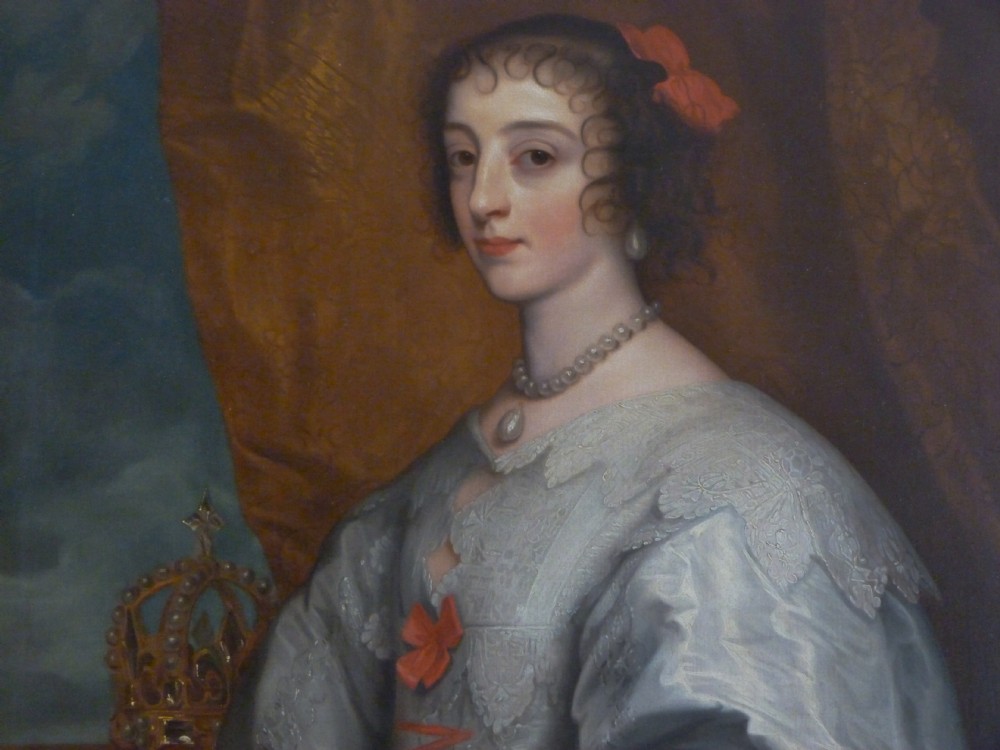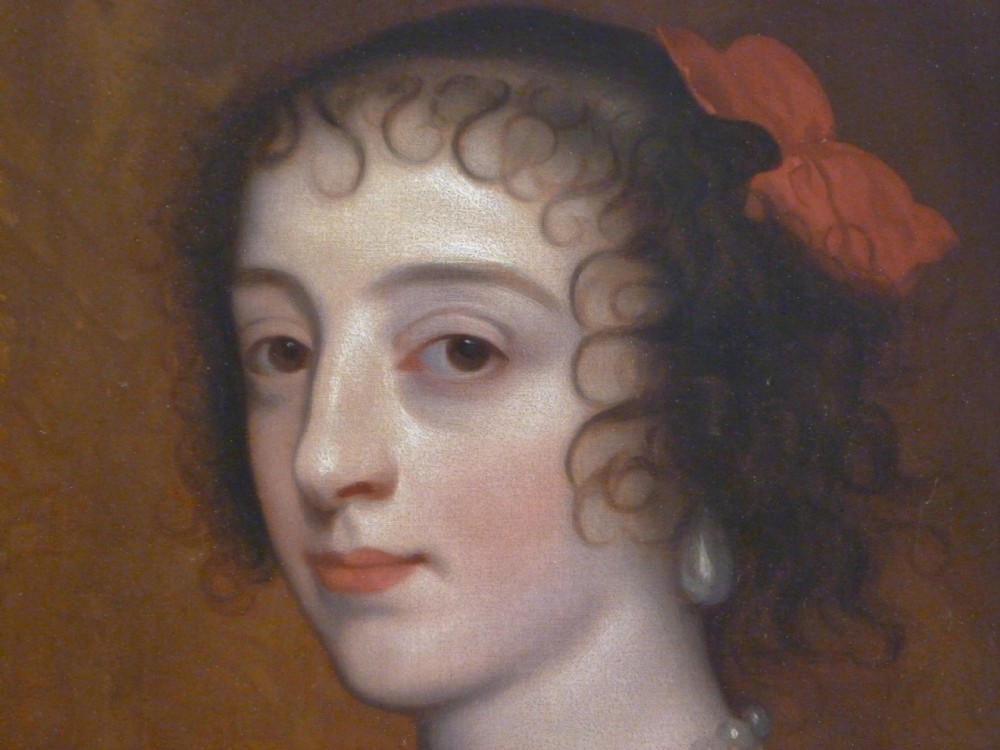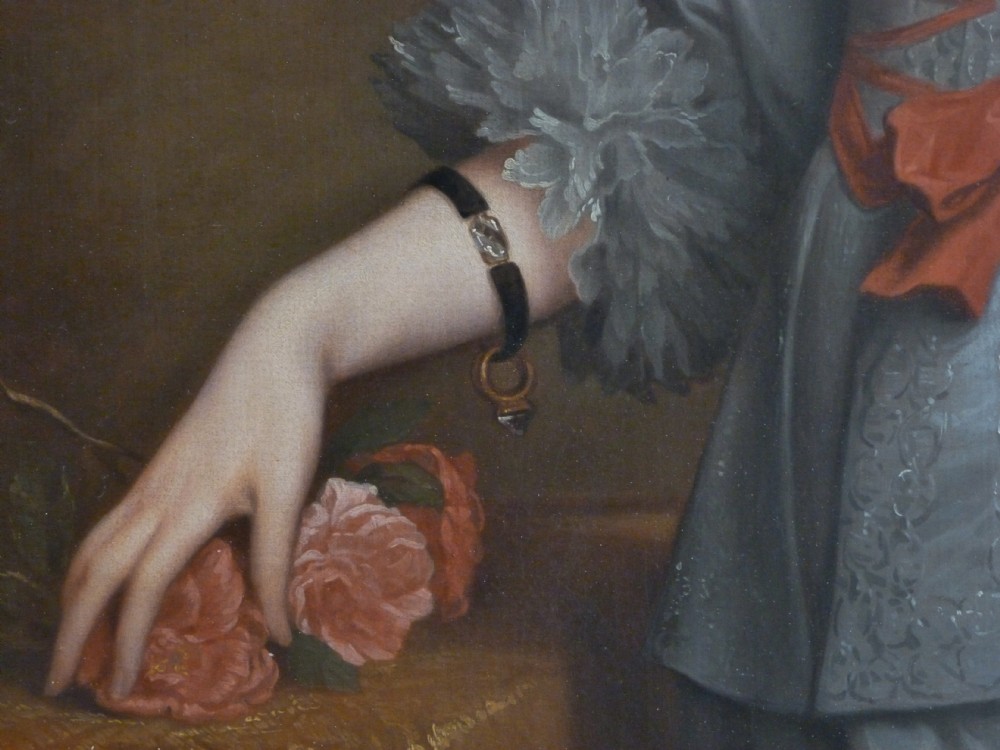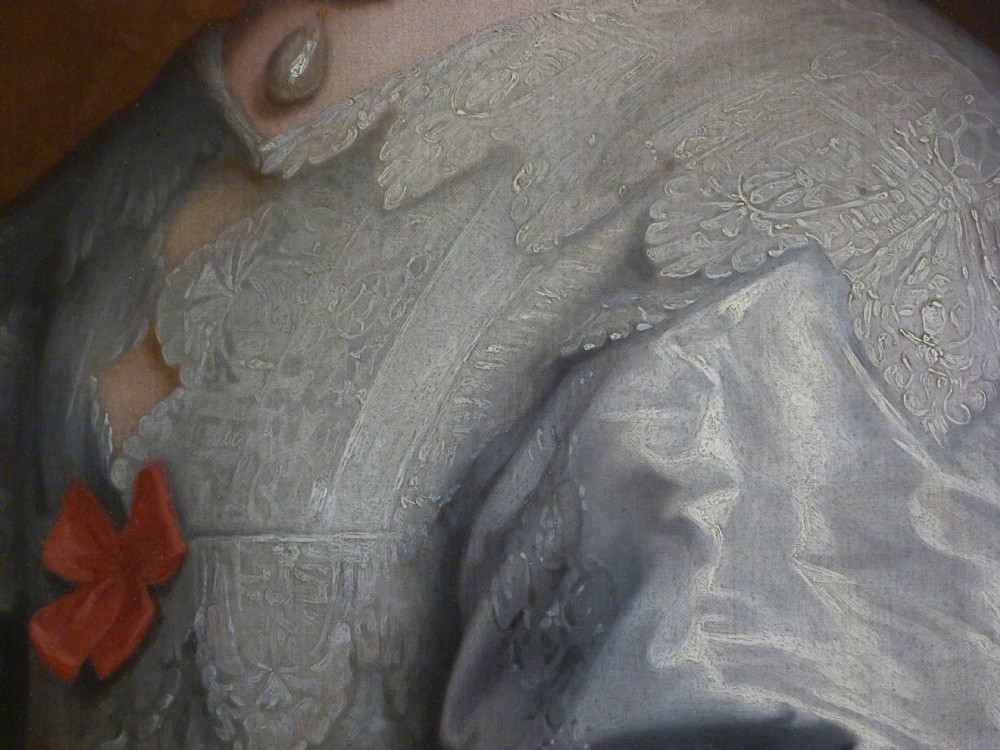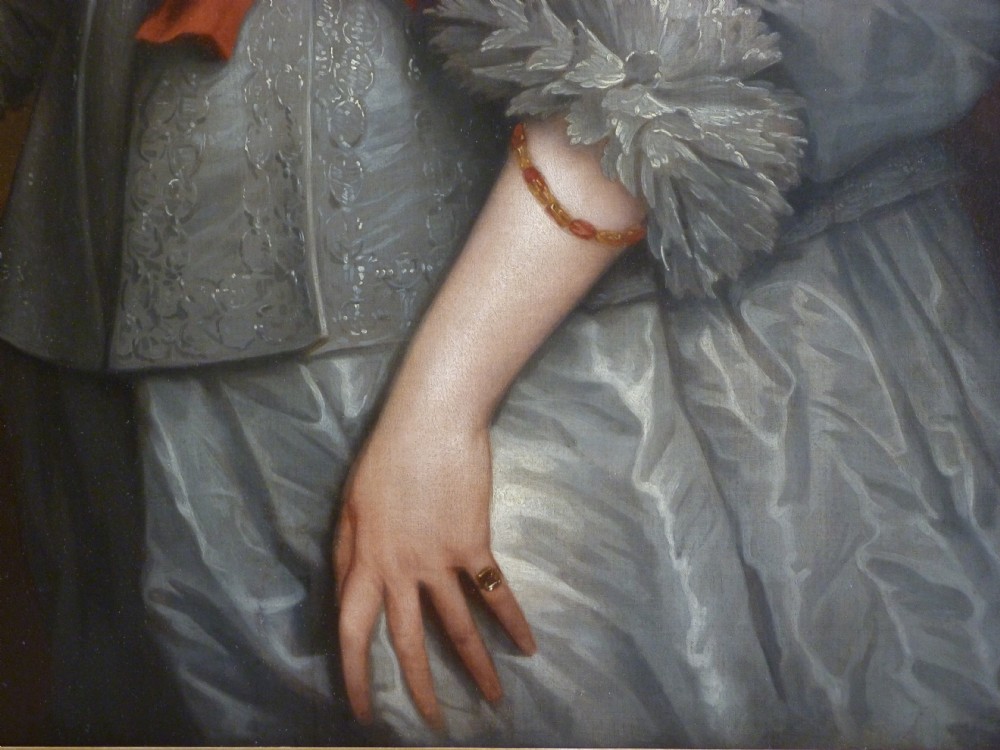
Roy Precious - Antiques & Fine Art has dated this piece to the 1800s.
It originally hung in the King's Bedchamber in Whitehall Palace. King Charles authorised a payment of £20 for this painting 'of our royall Consort’.
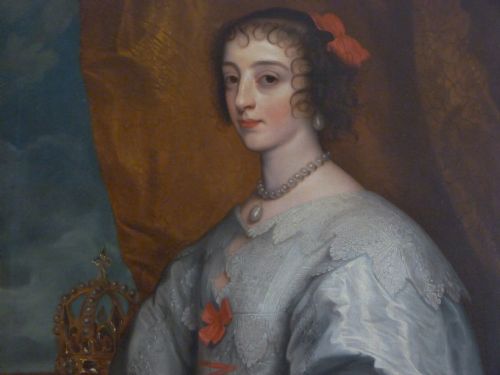
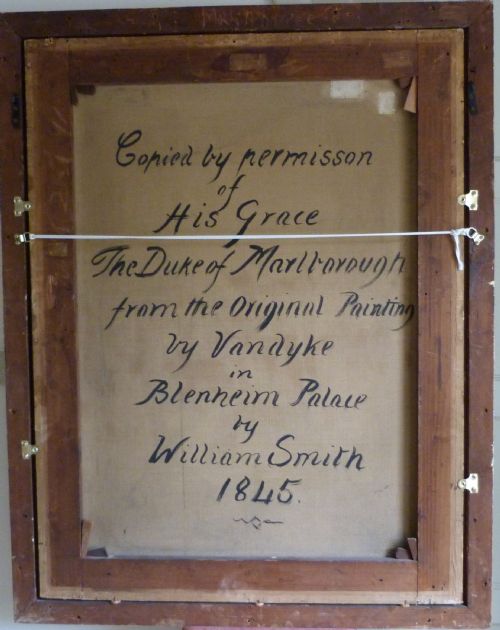
Another 19th century copy is in the collection of the Duke of Norfolk at Arundel Castle.
The artist William Smith is probably the London based W. Smith, working from 1830 to 1851, who was a portraitist and exhibited nine works at the Royal Academy.
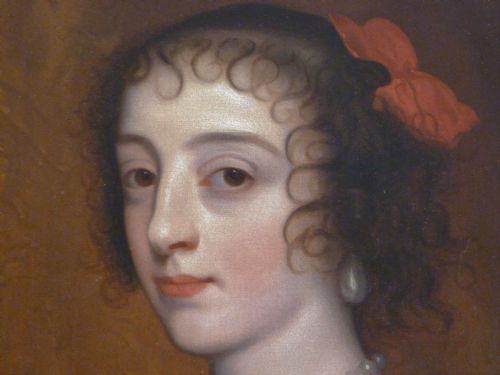
HENRIETTA MARIA of France (1609 – 1669) was the Queen Consort of England, Scotland and Ireland as the wife of King Charles I. She was mother of two kings, Charles II and James II and grandmother of two queens and one king, Mary II, William III and Anne of Great Britain as well as paternal aunt of Louis XIV of France.
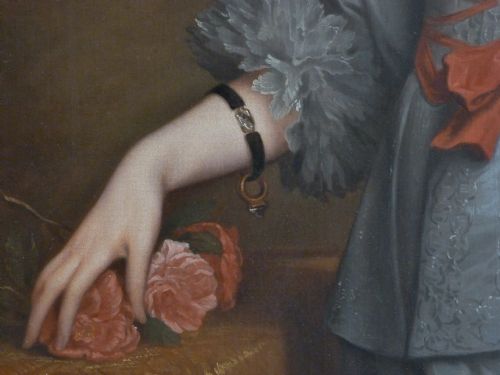
Her Catholic religion made her unpopular in England, and also prohibited her from being crowned in an Anglican service; therefore she never had a coronation. She began to immerse herself in national affairs as civil war loomed on the horizon: when the English Civil War began in 1642, Henrietta Maria was in Europe.
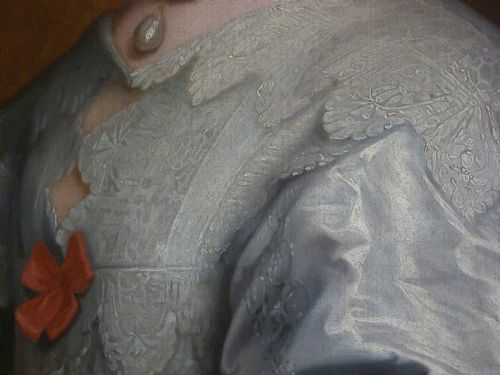
She returned to England in 1643 when she landed in Yorkshire with troops. She joined up with Royalist forces in the north and made her headquarters in York. She moved to Oxford to be with Charles but fled to France in July 1644 following the birth of her youngest daughter, Henrietta Anne, when the position of the Royalists looked bleak; here she remained along with her sons.
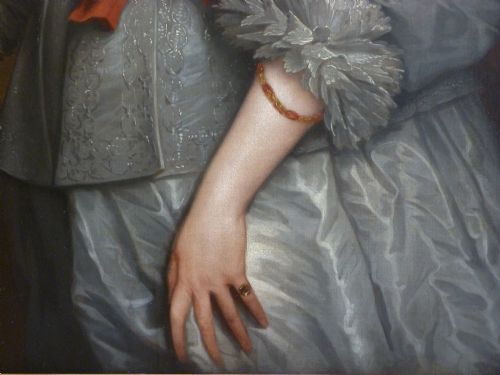
Her husband's execution in 1649 was a terrible blow. She brought up her youngest child Henrietta in her own faith, but her efforts to persuade her youngest son, the Duke of Gloucester, to take the same course only produced discomfort in the exiled family.
After the Restoration she returned to England when she found that she had no place in the new world. She received from Parliament a grant of £30,000 a year in compensation for the loss of her dower-lands, and the King added a similar sum as a pension from himself.
In January 1661 she returned to France to be present at the marriage of her daughter Henrietta to the Duke of Orleans.
In July 1662 she set out again for England, and took up her residence once more at Somerset House. Her health failed her, and on the 24th of June 1665, she departed in search of the clearer air of her native country.
She died on the 31st of August 1666, at Colombes, not far from Paris.
SIR ANTHONY VAN DYKE (1599-1641) was the greatest master of the European baroque portrait. Born in Antwerp, he first visited England in 1620. In 1632 he entered the service of King Charles I as Court Painter, and was knighted in 1633.
His clientele was essentially the aristocratic circle of courtiers, many of whom lived in a romantic royalist dream world which collapsed in ruins in the Civil War, soon after Van Dyck's death.
Sir Anthony Van Dyke's influence on the art of the portrait is almost beyond measure.
SIZE: 47 x 37 inches inc. frame.
PROVENANCE: Oxfordshire Private Collection.
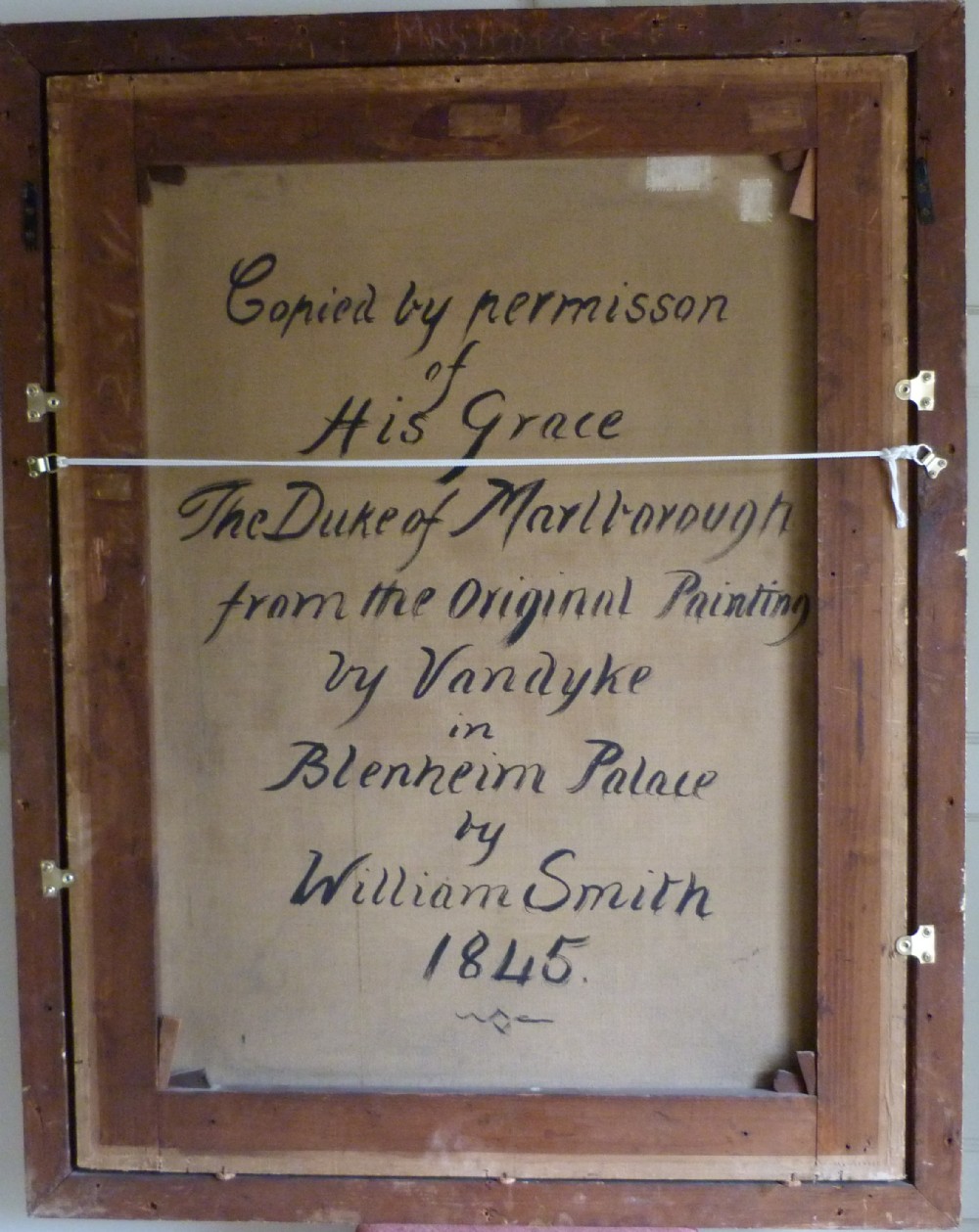
Verso: four old labels and three inscriptions. "Copied by permission of Grace the Duke of Marlborough from the original painting by Van Dyck in Blenheim Palace, by William Smith, 1845" and "Drawing Room, No. 10" being among them.
Roy Precious - Antiques & Fine Art has dated this piece to the 1800s.
Roy and nadine precious: specialists in portraiture from the 16th to the 20th century. Established in 1972.
You can view the stock and full dealer information on the Roy Precious - Antiques & Fine Art Profile Page
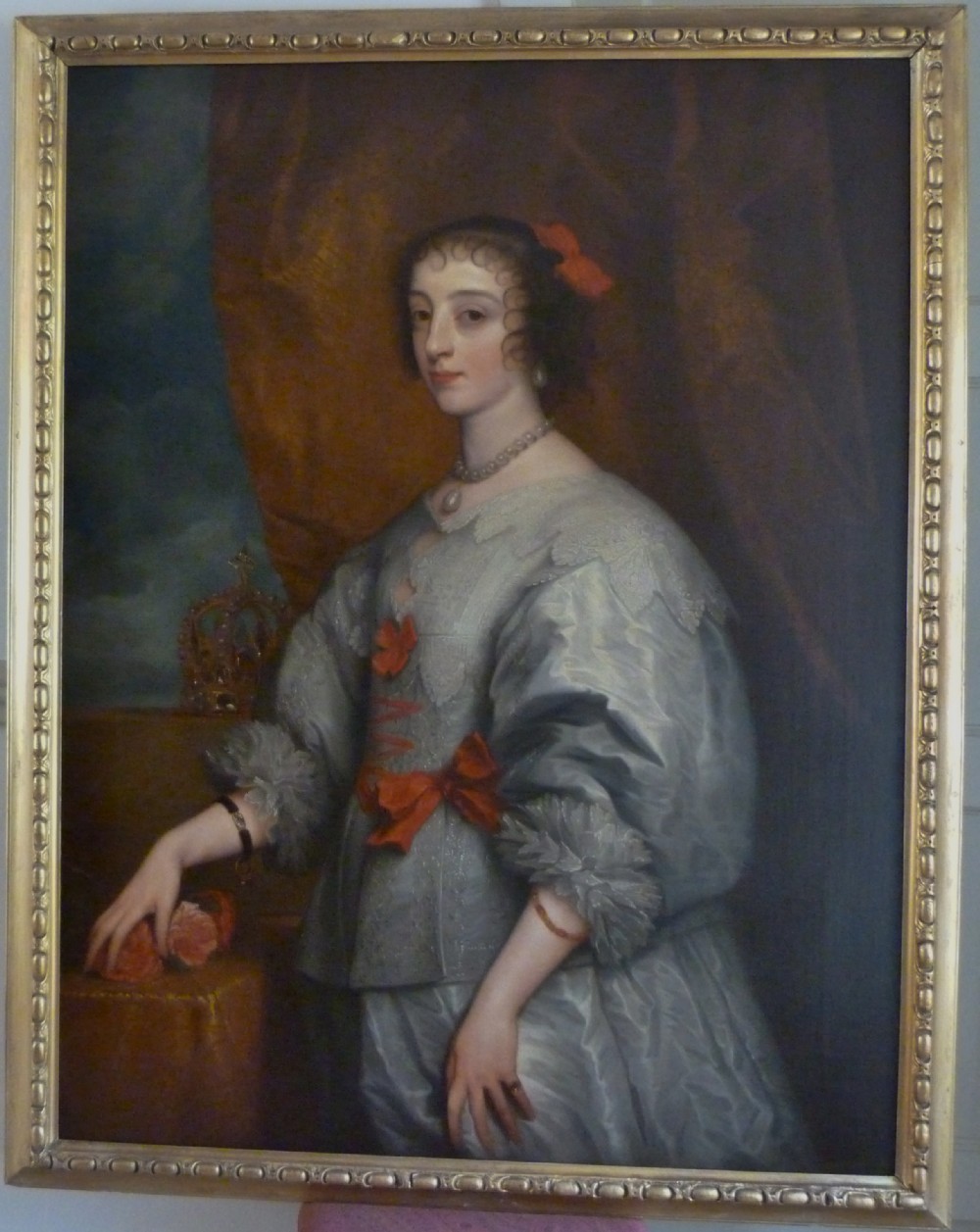
Sold....portrait of Queen Henrietta Maria, After Sir Anthony Van Dyck.