59,970  PAGES BROWSED TODAY PAGES TODAY 206  ANTIQUES UPLOADED TODAY NEW ARRIVALS
Sort Order
Items Per Page
ID #SA221542
SOLD
Email
Save
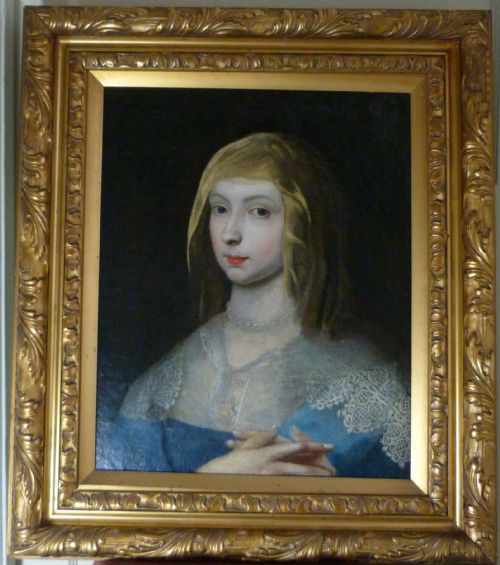
Portrait of a Lady C.1635; Attributed to George Jamesone.
Roy Precious - Antiques & Fine Art
sold SA221542
Sorry, but this item has been sold.
Roy Precious - Antiques & Fine Art

Roy Precious - Antiques & Fine Art

Sellingantiques Verified Since Mar 2003
View Dealers Stock Page
  • About Us
    Roy and nadine precious: specialists in portraiture from the 16th to the 20th century. Established in 1972.
Id #SA221542
PDF SHARE
SAVE

Portrait of a Lady C.1635; Attributed to George Jamesone.

17th century
Description

Oil on canvas in a 19th century gilt frame.

The attractive sitter's hands are elegantly posed in front of her heart as she looks directly at the viewer.

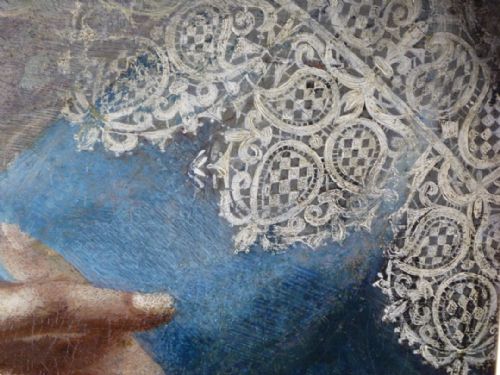
She wears a low cut bodice which was extremely fashionable but the wearer could choose, as has this lady, to preserve her modesty by wearing a diaphanous piece of fabric over the decolletage. Partly covered by this material is the fine quality expensive 'reticella' lace. Also known as 'cutwork' this is the period when it was at its most sophisticated and technically skilled.

Her modesty is further emphasised by the fact that she covers her hair (as does Jamesone's wife in his portrait showing himself, wife and child).

GEORGE JAMESONE (or Jameson) (c. 1587 – 1644) was Scotland's first eminent portrait-painter.

He was born in Aberdeen, where his father, Andrew Jamesone, was a stonemason. Jamesone attended the grammar school near his home on Schoolhill and is thought to have gone on to further education at Marischal College.

Legend has it that Jamesone once studied under Rubens in Antwerp with Anthony van Dyck. This is, however, yet to be proven as his name does not appear to be noted on the Guild registers of the town. Since Rubens was exempt from registering pupils, the absence of Jamesone's name does not mean that the painter definitely did not study there.

Certainly Jamesone's style is influenced by Rubens, and usually painted thinly, with great style.

Jamesone certainly did complete an apprenticeship under the supervision of his uncle, John Anderson, who was a popular decorative painter in Edinburgh at the beginning of the seventeenth century. Jamesone finished this training in 1618. He is not recorded as being in Aberdeen again until 1620. If the Scotsman had gone to Antwerp, it would have had to have been between the years of 1618 to 1620.
Whilst in Aberdeen, Jamesone made a name for himself painting portraits of local academics and scholars from the city's two feuding colleges: King's and Marischal. In 1633, when Charles I made his grand royal visit to Edinburgh, Jamesone rose from local to national fame. For this occasion the painter was asked to decorate a highly elaborate triumphal arch with the portraits of all the past kings of Scotland. He was also given the honour of painting the portrait of Charles himself. It has been said that the king was so pleased with the result that he gave Jamesone a ring off his own finger as a reward.

After hearing of the King's approval, many of the Scottish gentry desired to be painted by the now highly reputable George Jamesone. One of his finest examples is that of Mary Erskine which is on display at the National Gallery of Scotland. Jamesone had homes and studios in Aberdeen (on Schoolhill opposite St. Nicholas Kirk) and in Edinburgh (on the Royal Mile right next door to John Knox House). Having two bases allowed him to meet the demands of hundreds of patrons from the north to the south of the country.

Jamesone's pupil, John Michael Wright, also went on to be a highly important portrait painter in seventeenth century British art.

SIZE: 27.5 x 23.75 inches inc. frame.

20 x 16.5 inches canvas size.

PROVENANCE:

*Collection of Sackville George Pelham, 5th Earl of Yarborough, MC (17 December 1888 – 7 February 1948).

*Collection of a Lady, Northumberland.

VERSO:painted on the canvas "By George Jamesone 1586-1644"

Paper label "The Property of Sackville, 5th Earl of Yarborough".

Two pencil inscriptions on the frame: "The Loyal Lady" and "Portrait of a Lady (Royalist)"

Declaration

Roy Precious - Antiques & Fine Art has dated this piece to the Before 1700 period.

Reference Numbers
Sellingantiques Reference
SA221542
Dealers Internal Reference
8724
Description
Oil on canvas in a 19th century gilt frame.
The attractive sitter's hands are elegantly posed in front of her heart as she looks directly at the viewer.
Roy Precious - Antiques & Fine Art

She wears a low cut bodice which was extremely fashionable but the wearer could choose, as has this lady, to preserve her modesty by wearing a diaphanous piece of fabric over the decolletage. Partly covered by this material is the fine quality expensive 'reticella' lace. Also known as 'cutwork' this is the period when it was at its most sophisticated and technically skilled.

fig 1. Portrait of a Lady c.1635; Attributed to George Jamesone.
fig 1. Portrait of a Lady C.1635; Attributed to George Jamesone.

Her modesty is further emphasised by the fact that she covers her hair (as does Jamesone's wife in his portrait showing himself, wife and child).

GEORGE JAMESONE (or Jameson) (c. 1587 – 1644) was Scotland's first eminent portrait-painter.

fig 2. Portrait of a Lady c.1635; Attributed to George Jamesone.
fig 2. Portrait of a Lady C.1635; Attributed to George Jamesone.

He was born in Aberdeen, where his father, Andrew Jamesone, was a stonemason. Jamesone attended the grammar school near his home on Schoolhill and is thought to have gone on to further education at Marischal College.

fig 3. Portrait of a Lady c.1635; Attributed to George Jamesone.
fig 3. Portrait of a Lady C.1635; Attributed to George Jamesone.

Legend has it that Jamesone once studied under Rubens in Antwerp with Anthony van Dyck. This is, however, yet to be proven as his name does not appear to be noted on the Guild registers of the town. Since Rubens was exempt from registering pupils, the absence of Jamesone's name does not mean that the painter definitely did not study there.

fig 4. Portrait of a Lady c.1635; Attributed to George Jamesone.
fig 4. Portrait of a Lady C.1635; Attributed to George Jamesone.

Certainly Jamesone's style is influenced by Rubens, and usually painted thinly, with great style.

Jamesone certainly did complete an apprenticeship under the supervision of his uncle, John Anderson, who was a popular decorative painter in Edinburgh at the beginning of the seventeenth century. Jamesone finished this training in 1618. He is not recorded as being in Aberdeen again until 1620. If the Scotsman had gone to Antwerp, it would have had to have been between the years of 1618 to 1620.

fig 5. Portrait of a Lady c.1635; Attributed to George Jamesone.
fig 5. Portrait of a Lady C.1635; Attributed to George Jamesone.

Whilst in Aberdeen, Jamesone made a name for himself painting portraits of local academics and scholars from the city's two feuding colleges: King's and Marischal. In 1633, when Charles I made his grand royal visit to Edinburgh, Jamesone rose from local to national fame. For this occasion the painter was asked to decorate a highly elaborate triumphal arch with the portraits of all the past kings of Scotland. He was also given the honour of painting the portrait of Charles himself. It has been said that the king was so pleased with the result that he gave Jamesone a ring off his own finger as a reward.

After hearing of the King's approval, many of the Scottish gentry desired to be painted by the now highly reputable George Jamesone. One of his finest examples is that of Mary Erskine which is on display at the National Gallery of Scotland. Jamesone had homes and studios in Aberdeen (on Schoolhill opposite St. Nicholas Kirk) and in Edinburgh (on the Royal Mile right next door to John Knox House). Having two bases allowed him to meet the demands of hundreds of patrons from the north to the south of the country.

Jamesone's pupil, John Michael Wright, also went on to be a highly important portrait painter in seventeenth century British art.

SIZE: 27.5 x 23.75 inches inc. frame.

20 x 16.5 inches canvas size.

PROVENANCE:

Collection of Sackville George Pelham, 5th Earl of Yarborough, MC (17 December 1888 – 7 February 1948).

Collection of a Lady, Northumberland.

VERSO:painted on the canvas "By George Jamesone 1586-1644"

Paper label "The Property of Sackville, 5th Earl of Yarborough".

Two pencil inscriptions on the frame: "The Loyal Lady" and "Portrait of a Lady (Royalist)"

Date of Manufacture

Roy Precious - Antiques & Fine Art has dated this piece to the Before 1700 period.

Reference Numbers
Sellingantiques Ref
SA221542
Dealers Internal Ref
8724
Roy Precious - Antiques & Fine Art
Sellingantiques verified Since Mar 2003

Roy and nadine precious: specialists in portraiture from the 16th to the 20th century. Established in 1972.

Dealer Profile

You can view the stock and full dealer information on the Roy Precious - Antiques & Fine Art Profile Page
PDF SHARE
SAVE
Portrait of a Lady c.1635; Attributed to George Jamesone.
1 / 6
Archive I Portrait of a Lady c.1635; Attributed to George Jamesone.

Portrait of a Lady C.1635; Attributed to George Jamesone.

Archive II Portrait of a Lady c.1635; Attributed to George Jamesone. View II
Archive III Portrait of a Lady c.1635; Attributed to George Jamesone. View III
Archive IV Portrait of a Lady c.1635; Attributed to George Jamesone. View IV
Archive V Portrait of a Lady c.1635; Attributed to George Jamesone. View V
Archive VI Portrait of a Lady c.1635; Attributed to George Jamesone. View VI
Enlarged Archival View
Location
Wiltshire
United Kingdom
Dealer Profile Page sellingantiques.co.uk/rp
Verified Since Mar 2003
Items For Sale 95
Items Sold 679
Roy Precious - Antiques & Fine Art
Verified Since Mar 2003
View Dealer Info
Location: Wiltshire, United Kingdom
Verified
Mar 2003
For Sale
95
Sold
679
Portrait of a Lady c.1635; Attributed to George Jamesone.
Ref: SA221542
Portrait of a Lady c.1635; Attributed to George Jamesone.
Detail View 1
Detail View 2
Detail View 3
Detail View 4
Detail View 5
Archival Detail
Every single antique dealer on our platform is individually approved by our internal team. We verify their professional trade history, ethical standards, and photographic quality to ensure a secure, high-standard buying environment. Upon joining, every dealer agrees to a strict 9-point code of conduct. While issues can occasionally arise, our dealers typically resolve them swiftly and directly with the buyer. In fact, since our founding in 2002, Sellingantiques has only had to step in to help resolve an issue on roughly five occasions—a true testament to the quality of our dealers and their dedication to your happiness.
Our dealers are highly experienced in packing and shipping fragile, high-value antiques. Because you are in direct contact with the dealer, you will be able to easily go through all available shipping and insurance options together to ensure your item arrives safely.
Antiques are the ultimate green purchase. By choosing historical pieces over newly manufactured goods, you completely eliminate the carbon footprint of modern mass production while preserving exceptional, timeless craftsmanship.
items
Add keywords to the filter
Price
£100
£250000
Era
Movements
Material
Origin
Stock Location
Freshness
Online Payments
Categories