8,892  PAGES BROWSED TODAY PAGES TODAY 36  ANTIQUES UPLOADED TODAY NEW ARRIVALS
ID #SA206180
FOR SALE
£2,500
Email
Save
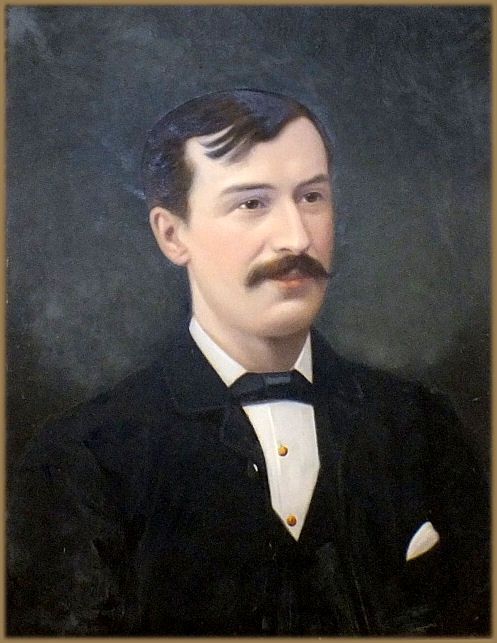
John Ward Dunsmore 1856-1945 Portrait of Sir Frederick Augustus Abel, Bt, Kcb, Frs, 1827-1902
Artware Fineart
Id #SA206180
PDF SHARE
SAVE

John Ward Dunsmore 1856-1945 Portrait of Sir Frederick Augustus Abel, Bt, Kcb, Frs, 1827-1902

19th century
For Sale by Artware Fineart
Description

John Ward Dunsmore 1856-1945

Portrait of Sir Frederick Augustus Abel, Bt, KCB, FRS, 1827-1902

signed with monogram and inscribed and dated "London 1886"

oil on canvas

30 x 25 in. (76.2 x 63.5 cm.)

Born in London, Abel studied chemistry at the Royal Polytechnic Institution and in 1845 became one of the original 26 students of A. W. von Hofmann at the Royal College of Chemistry. In 1852 he was appointed lecturer in chemistry at the Royal Military Academy, Woolwich, succeeding Michael Faraday, who had held that post since 1829. From 1854 until 1888 Abel served as ordnance chemist at the Chemical Establishment of the Royal Arsenal at Woolwich,establishing himself as the leading British authority on explosives. Three years later was appointed chemist to the War Department and chemical referee to the government. During his tenure of this office, which lasted until 1888, he carried out a large amount of work in connection with the chemistry of explosives. One of the most important of his investigations had to do with the manufacture of guncotton, and he developed a process, consisting essentially of reducing the nitrated cotton to fine pulp,[2] which enabled it to be safely manufactured and at the same time yielded the product in a form that increased its usefulness. This work to an important extent prepared the way for the "smokeless powders" which came into general use towards the end of the 19th century; cordite, the type adopted by the British government in 1891, was invented jointly by him and Sir James Dewar. He and Dewar were unsuccessfully sued by Alfred Nobel over infringement of Nobel's patent for a similar explosive called ballistite, the case finally being resolved in the House of Lords in 1895. He also extensively researched the behaviour of black powder when ignited, with the Scottish physicist Sir Andrew Noble. At the request of the British government, he devised the Abel test, a means of determining the flash point of petroleum products. His first instrument, the open-test apparatus, was specified in an Act of Parliament in 1868 for officially specifying petroleum products. It was superseded in August 1879 by the much more reliable Abel close-test instrument. Under the leadership of Sir Frederick Abel, first, Guncotton was developed at Waltham Abbey Royal Gunpowder Mills, patented in 1865, then, the propellant Cordite, patented in 1889. In electricity Abel studied the construction of electrical fuses and other applications of electricity to warlike purposes, and his work on problems of steel manufacture won him in 1897 the Bessemer medal of the Iron and Steel Institute, of which from 1891 to 1893 he was president.

He was president of the Institution of Electrical Engineers (then the Society of Telegraph Engineers) in 1877. He became a fellow of the Royal Society in 1860, he was a Commander of the Bath (CB) by 13 February 1879,he was knighted on 20 April 1883 and received a Royal Medal in 1887. He took an important part in the work of the Inventions Exhibition (London) in 1885, and in 1887 became organizing secretary and first director of the Imperial Institute, a position he held till his death in 1902. He was Rede Lecturer and received an honorary doctorate from Cambridge University in 1888. He was upgraded to a Knight Commander of the Bath (KCB) on 3 February 1891, created a baronet, of Cadogan Place in the Parish of Chelsea in the County of London, on 25 May 1893 and made a Knight Grand Cross of the Royal Victorian Order (GCVO) on 8 March 1901. Abel died in September 1902, aged 75, and was buried in Nunhead Cemetery, London.The baronetcy became extinct on his death.

Physical Dimensions
Height
84cm (33.07")
Width
72cm (28.35")
Depth
4cm (1.57")
Declaration

Artware Fineart has dated this Victorian Oil Portrait Painting to the 19th Century.

Reference Numbers
Sellingantiques Reference
SA206180
Dealers Internal Reference
3563
Description
John Ward Dunsmore 1856-1945

Portrait of Sir Frederick Augustus Abel, Bt, KCB, FRS, 1827-1902

signed with monogram and inscribed and dated "London 1886"

oil on canvas

30 x 25 in. (76.2 x 63.5 cm.)

Born in London, Abel studied chemistry at the Royal Polytechnic Institution and in 1845 became one of the original 26 students of A.
Artware Fineart

W. von Hofmann at the Royal College of Chemistry. In 1852 he was appointed lecturer in chemistry at the Royal Military Academy, Woolwich, succeeding Michael Faraday, who had held that post since 1829. From 1854 until 1888 Abel served as ordnance chemist at the Chemical Establishment of the Royal Arsenal at Woolwich,establishing himself as the leading British authority on explosives. Three years later was appointed chemist to the War Department and chemical referee to the government. During his tenure of this office, which lasted until 1888, he carried out a large amount of work in connection with the chemistry of explosives. One of the most important of his investigations had to do with the manufacture of guncotton, and he developed a process, consisting essentially of reducing the nitrated cotton to fine pulp,[2] which enabled it to be safely manufactured and at the same time yielded the product in a form that increased its usefulness. This work to an important extent prepared the way for the "smokeless powders" which came into general use towards the end of the 19th century; cordite, the type adopted by the British government in 1891, was invented jointly by him and Sir James Dewar. He and Dewar were unsuccessfully sued by Alfred Nobel over infringement of Nobel's patent for a similar explosive called ballistite, the case finally being resolved in the House of Lords in 1895. He also extensively researched the behaviour of black powder when ignited, with the Scottish physicist Sir Andrew Noble. At the request of the British government, he devised the Abel test, a means of determining the flash point of petroleum products. His first instrument, the open-test apparatus, was specified in an Act of Parliament in 1868 for officially specifying petroleum products. It was superseded in August 1879 by the much more reliable Abel close-test instrument. Under the leadership of Sir Frederick Abel, first, Guncotton was developed at Waltham Abbey Royal Gunpowder Mills, patented in 1865, then, the propellant Cordite, patented in 1889. In electricity Abel studied the construction of electrical fuses and other applications of electricity to warlike purposes, and his work on problems of steel manufacture won him in 1897 the Bessemer medal of the Iron and Steel Institute, of which from 1891 to 1893 he was president.

fig 1. An oval 19th-century oil painting depicting a grey-haired man with sideburns wearing a dark suit jacket and tie against a brown background.
fig 1. John Ward Dunsmore 1856-1945 Portrait of Sir Frederick Augustus Abel, Bt, Kcb, Frs, 1827-1902

He was president of the Institution of Electrical Engineers (then the Society of Telegraph Engineers) in 1877. He became a fellow of the Royal Society in 1860, he was a Commander of the Bath (CB) by 13 February 1879,he was knighted on 20 April 1883 and received a Royal Medal in 1887. He took an important part in the work of the Inventions Exhibition (London) in 1885, and in 1887 became organizing secretary and first director of the Imperial Institute, a position he held till his death in 1902. He was Rede Lecturer and received an honorary doctorate from Cambridge University in 1888. He was upgraded to a Knight Commander of the Bath (KCB) on 3 February 1891, created a baronet, of Cadogan Place in the Parish of Chelsea in the County of London, on 25 May 1893 and made a Knight Grand Cross of the Royal Victorian Order (GCVO) on 8 March 1901. Abel died in September 1902, aged 75, and was buried in Nunhead Cemetery, London.The baronetcy became extinct on his death.

Height
84cm (33.07")
Width
72cm (28.35")
Depth
4cm (1.57")
Date of Manufacture

Artware Fineart has dated this Victorian Oil Portrait Painting to the 19th Century.

Reference Numbers
Sellingantiques Ref
SA206180
Dealers Internal Ref
3563
Artware Fineart
Sellingantiques verified Since Sep 2008
Dealer Profile

You can view the stock and full dealer information on the Artware Fineart Profile Page

PDF SHARE
SAVE
An oval 19th-century oil painting depicting a grey-haired man with sideburns wearing a dark suit jacket and tie against a brown background.
1 / 4
Archive I An oval 19th-century oil painting depicting a grey-haired man with sideburns wearing a dark suit jacket and tie against a brown background.

John Ward Dunsmore 1856-1945 Portrait of Sir Frederick Augustus Abel, Bt, Kcb, Frs, 1827-1902

Archive II An oval 19th-century oil painting depicting a grey-haired man with sideburns wearing a dark suit jacket and tie against a brown background. View II
Archive III An oval 19th-century oil painting depicting a grey-haired man with sideburns wearing a dark suit jacket and tie against a brown background. View III
Archive IV An oval 19th-century oil painting depicting a grey-haired man with sideburns wearing a dark suit jacket and tie against a brown background. View IV
FURTHER BROWSING

Visitors also looked at these ⇣

Enlarged Archival View
Telephone 07958 699 645
Location
18 La Gare
51 Surrey Row
London
SE1 0BZ
United Kingdom
Verified Since Sep 2008
Items For Sale 243
Items Sold 223
Artware Fineart
Verified Since Sep 2008
View Dealer Info
Location: 18 La Gare , 51 Surrey Row , London , SE1 0BZ , United Kingdom
Verified
Sep 2008
For Sale
243
Sold
223
An oval 19th-century oil painting depicting a grey-haired man with sideburns wearing a dark suit jacket and tie against a brown background.
John Ward Dunsmore 1856-1945 Portrait of Sir Frederick Augustus Abel, Bt, KCB, FRS, 1827-1902
Ref: SA206180
An oval 19th-century oil painting depicting a grey-haired man with sideburns wearing a dark suit jacket and tie against a brown background.
Detail View 1
Detail View 2
Detail View 3
Archival Detail
Every single antique dealer on our platform is individually approved by our internal team. We verify their professional trade history, ethical standards, and photographic quality to ensure a secure, high-standard buying environment. Upon joining, every dealer agrees to a strict 9-point code of conduct. While issues can occasionally arise, our dealers typically resolve them swiftly and directly with the buyer. In fact, since our founding in 2002, Sellingantiques has only had to step in to help resolve an issue on roughly five occasions—a true testament to the quality of our dealers and their dedication to your happiness.
Our dealers are highly experienced in packing and shipping fragile, high-value antiques. Because you are in direct contact with the dealer, you will be able to easily go through all available shipping and insurance options together to ensure your item arrives safely.
Antiques are the ultimate green purchase. By choosing historical pieces over newly manufactured goods, you completely eliminate the carbon footprint of modern mass production while preserving exceptional, timeless craftsmanship.

Victorian portraiture typically features realistic depictions of prominent figures, focusing on formal attire and solemn expressions to convey social status. These works were predominantly rendered in oil on canvas, utilizing subtle chiaroscuro to emphasize the sitter against dark backgrounds.

Artists during this era applied oil-based pigments to natural linen or cotton canvas stretched over wooden frames. Oval or rectangular formats were common, often finished with varnish and housed in gilt wood or dark timber mouldings.

Authentic pieces from this period exhibit natural surface craquelure, age-appropriate darkening of the varnish, and hand-stretched canvas construction. Period inscriptions, signatures, or framer labels on the reverse also aid in identification.

A formal Victorian portrait can serve as a focal point when hung above a sideboard or console table to add historical contrast to contemporary spaces. Alternatively, grouping smaller framed portraits together on a gallery wall creates a curated traditional aesthetic.

Keep the painting away from direct sunlight, extreme humidity, and direct heat sources to prevent canvas movement and paint cracking. Surface dust should be gently removed with a soft, dry camel-hair brush rather than liquid cleaning agents.
items
Add keywords to the filter
Price
£100
£250000
Era
Movements
Material
Origin
Stock Location
Freshness
Online Payments
Categories