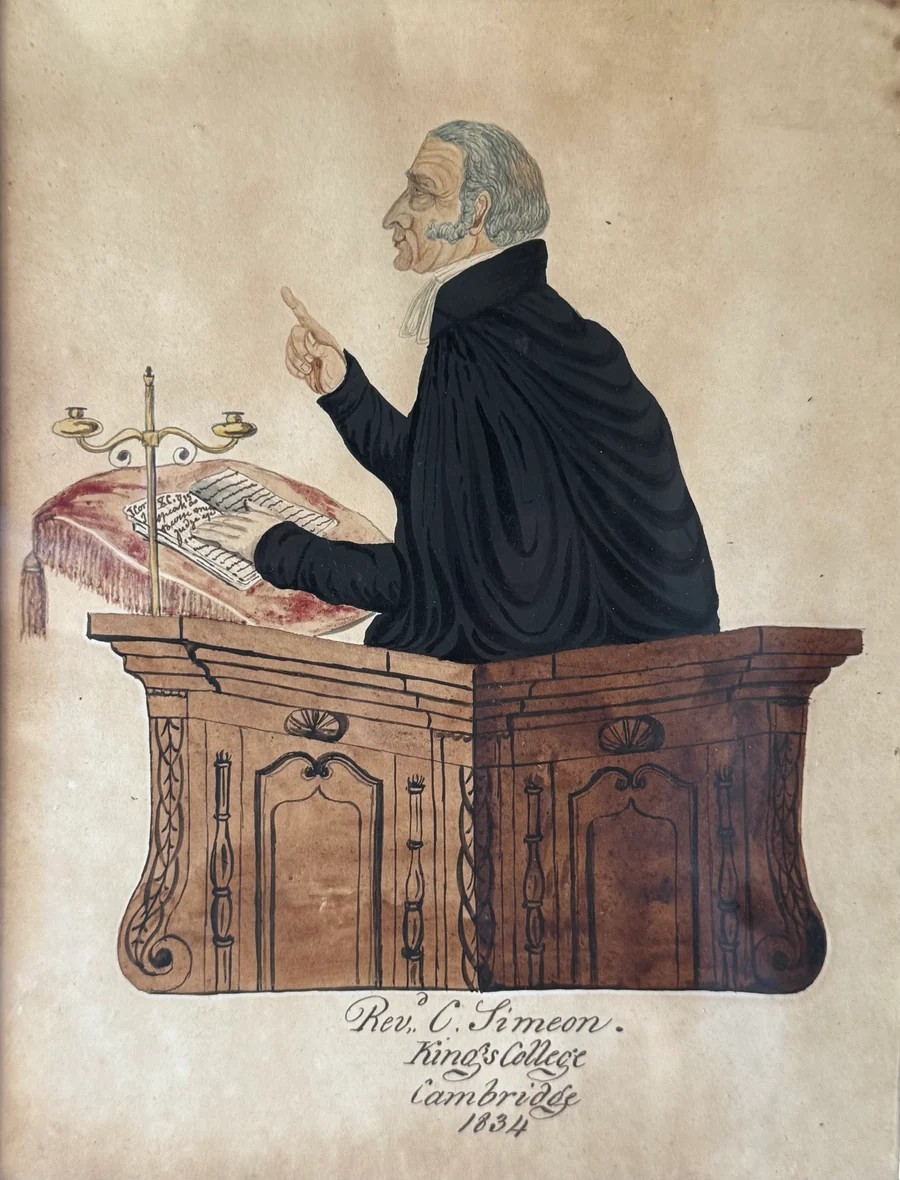
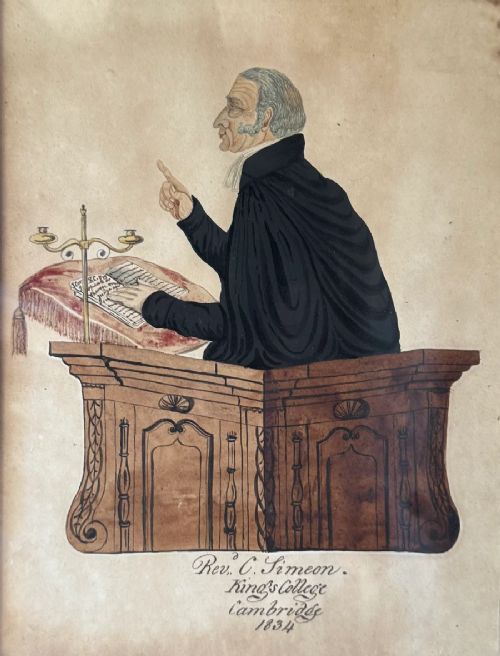
Rob Hall Antiques has dated this 19th Century Watercolour Portrait to the 19th Century.
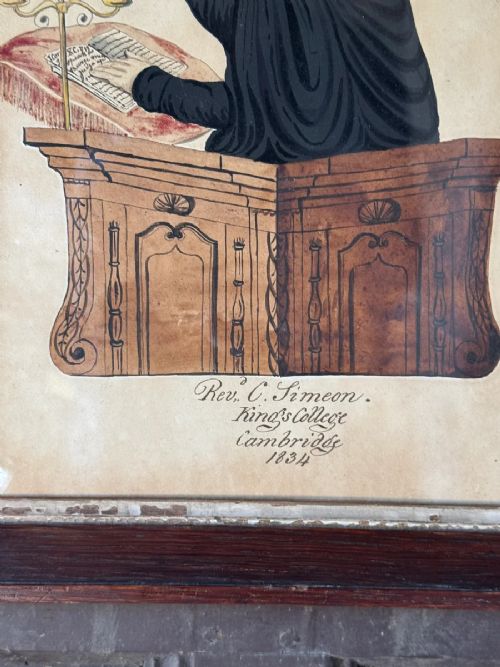
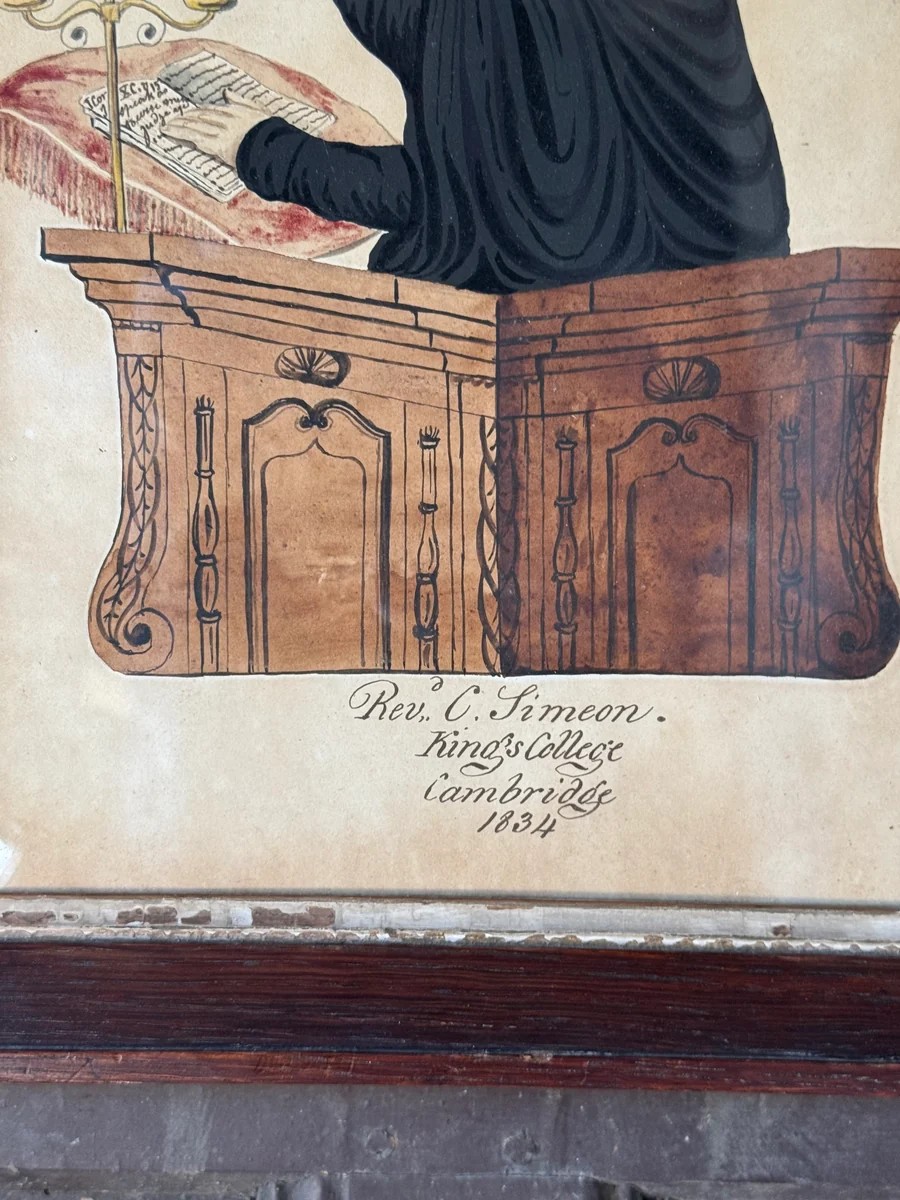
The portrait is inscribed beneath:
“Rev. C. Simeon, King’s College Cambridge 1834”
Before him is an open manuscript resting upon a fringed cushion, with a brass candle fitting rising alongside.
Educated at Eton, Simeon entered King’s College, Cambridge in 1779, becoming a Fellow in 1782. The following year he took up the living of Holy Trinity Church, Cambridge, a position he would hold for the remainder of his life.
His appointment was initially deeply unpopular. Parishioners opposed to Simeon famously locked their pews to prevent those coming to hear him from using them, while additional seating provided by Simeon was removed by the churchwardens. Over the following decades, however, his position was transformed. He became one of the best-known clergymen in Cambridge and attracted such large congregations that an additional gallery was installed at Holy Trinity.
Simeon’s position at Cambridge gave him considerable influence within the early 19th-century Church of England. Numerous clergymen who subsequently held positions throughout Britain and overseas had studied or come under his influence at Cambridge, while his published works on preaching were widely circulated. He was also among the founder members of the Church Missionary Society in 1799, advised on the appointment of East India Company chaplains and was associated with figures including the missionary and scholar Henry Martyn (1781–1812).
Perhaps the clearest measure of Simeon’s importance — and the most remarkable aspect of his continuing legacy — lies in the system of church patronage he established.
Simeon purchased advowsons, the legal rights to nominate clergy to particular Church of England parishes, with the intention that this patronage should continue beyond his own lifetime. From this developed Simeon’s Trustees, which still operates today.
Simeon’s standing was already considerable during his own lifetime. The historian and politician Thomas Babington Macaulay famously considered his effective influence within the Church greater than that of any Archbishop of his age.
Simeon died on 13 November 1836, having spent more than half a century at Holy Trinity. More than 2,000 people attended his funeral in King’s College Chapel.
The present watercolour, dated 1834, therefore depicts Simeon in the final years of his life.
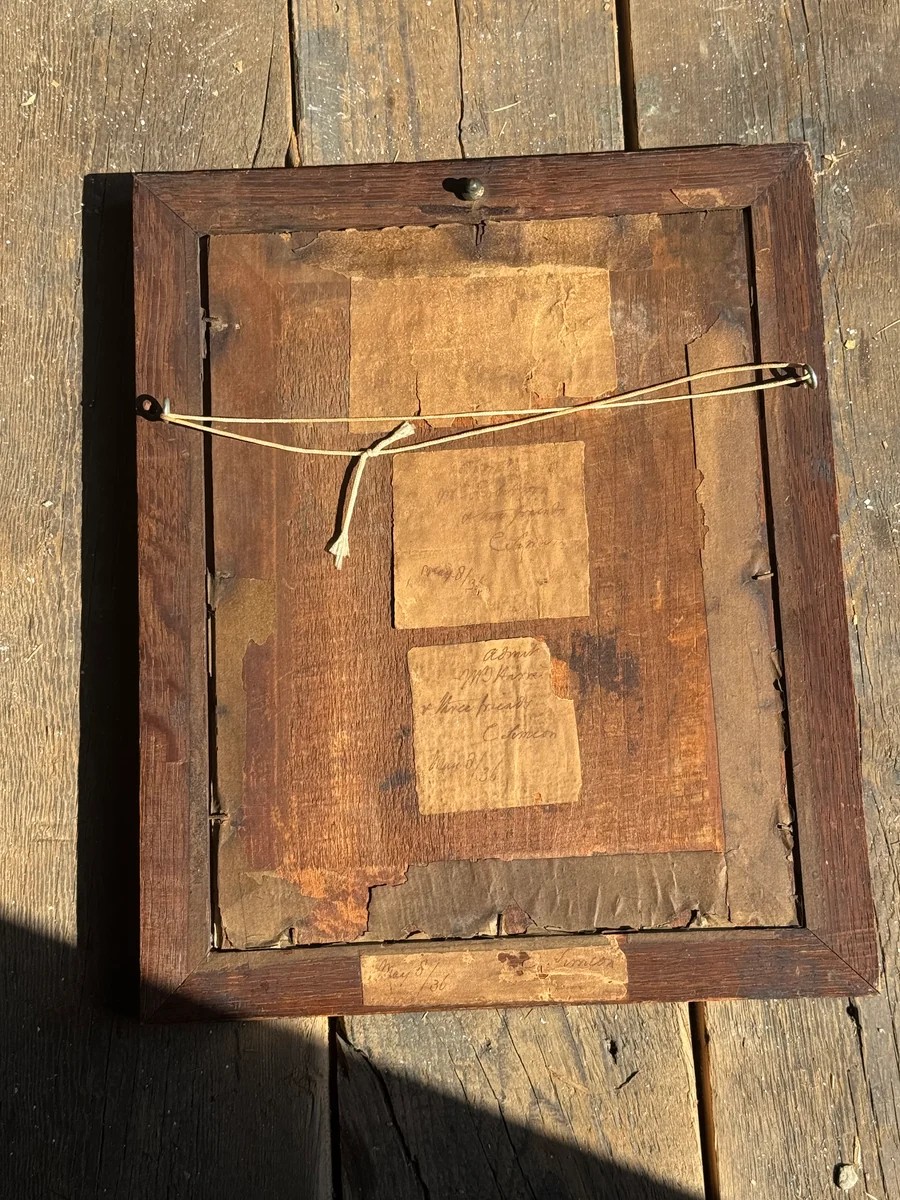
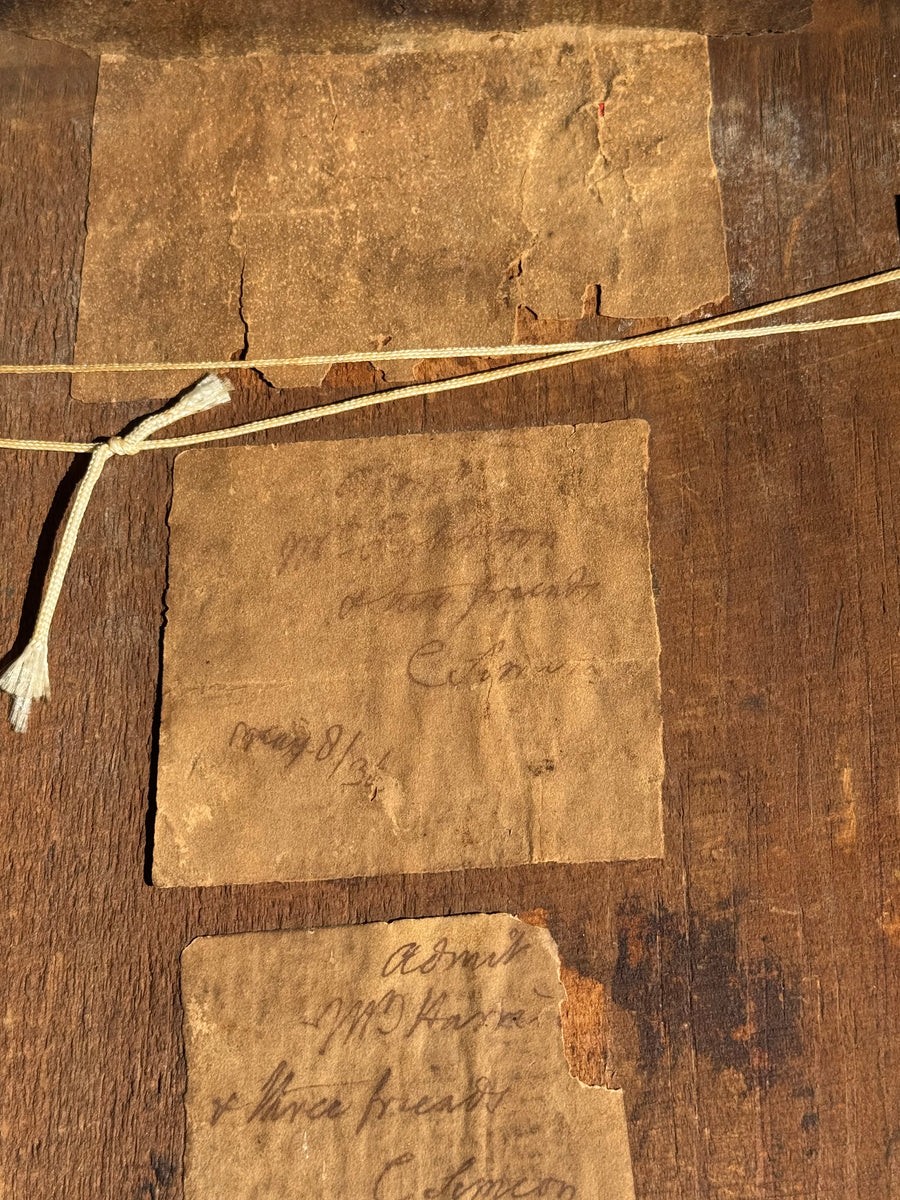
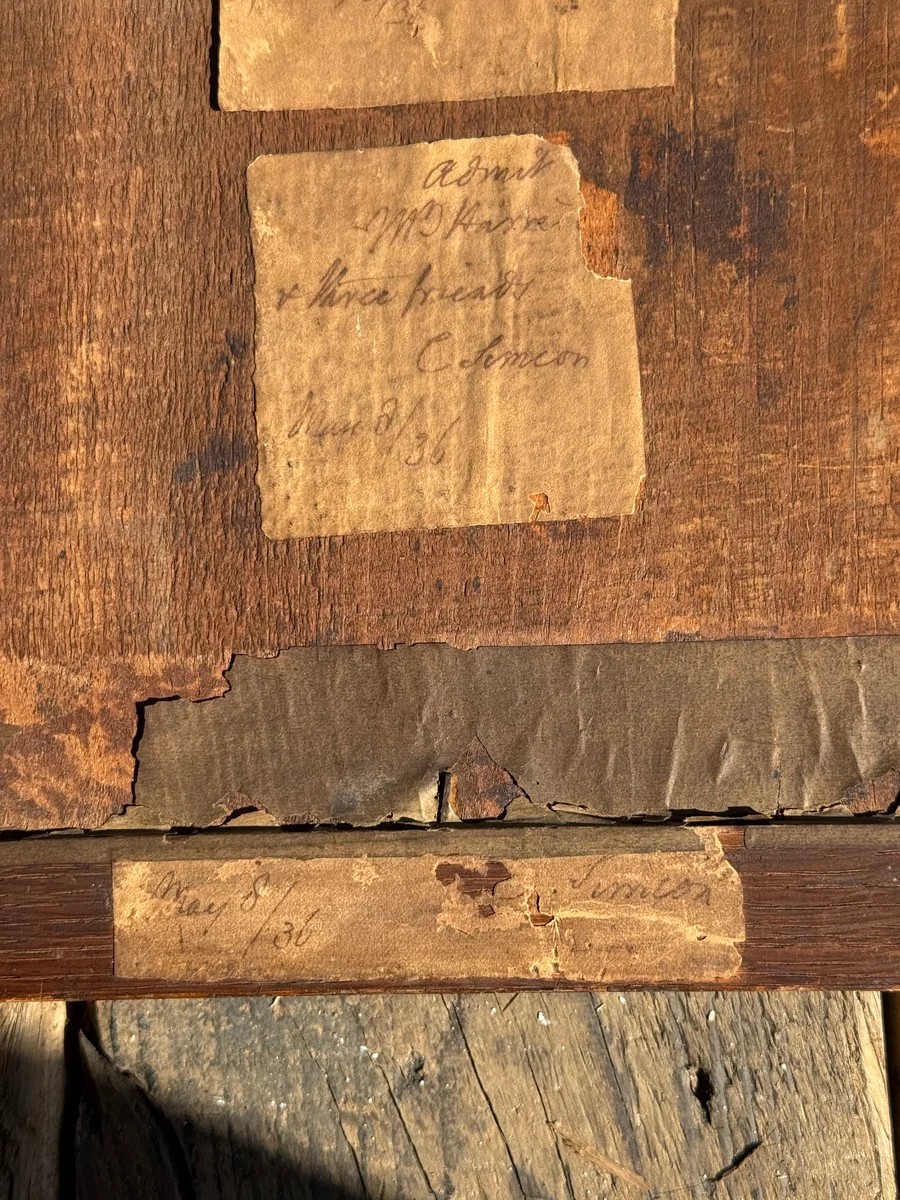
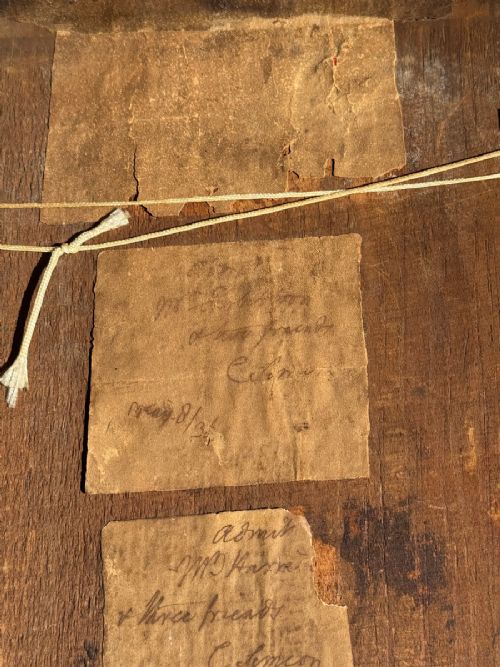
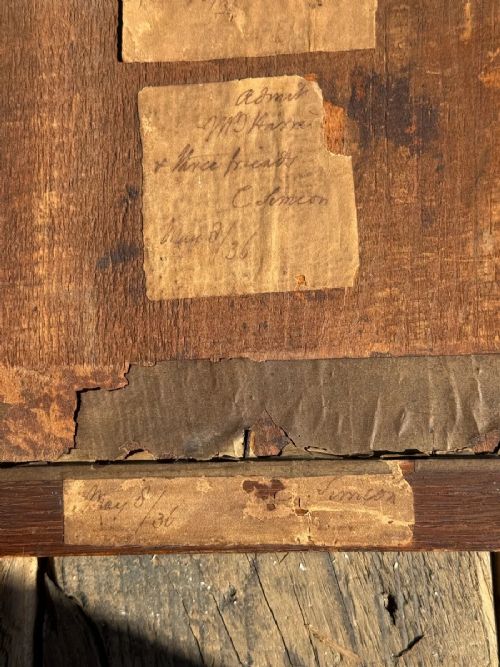
Of particular interest are two original manuscript admission tickets, preserved on the reverse of the portrait and both dated 8 May 1836, only six months before Simeon’s death. The tickets begin “Admit”, name those being admitted together with accompanying friends, and bear Simeon’s name. Their precise purpose has not yet been established, but their date and association with Simeon make them a particularly interesting documentary survival from the final year of his life.
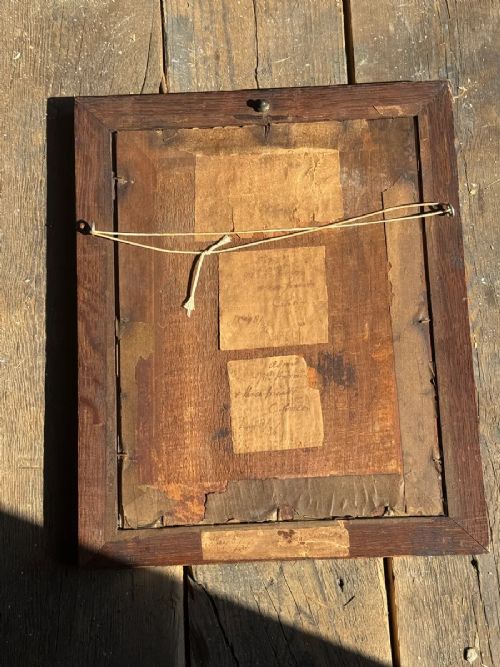
The tickets remain attached to the old wooden backboard together with further early manuscript labels. Their survival with the portrait provides an unusual additional documentary connection with Simeon and Cambridge during the closing months of his life.
The portrait remains in its early 19th-century hardwood frame with gilt slip, retaining the old wooden backboard, paper sealing and manuscript labels to the reverse.
There is some age-related discolouration and wear to the watercolour, while the old paper and manuscript labels to the reverse show the expected deterioration and losses. The frame likewise has minor knocks and wear consistent with age.
Frame measuring: 35.5 cm x 29.5 cm.
English, dated 1834
Rob Hall Antiques has dated this 19th Century Watercolour Portrait to the 19th Century.
You can view the stock and full dealer information on the Rob Hall Antiques Profile Page
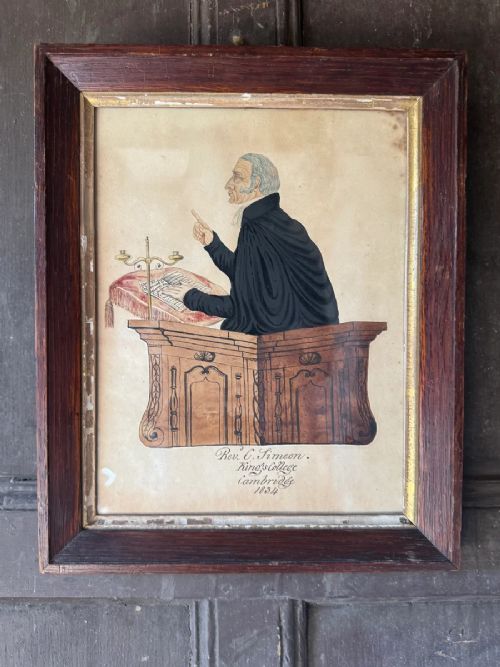
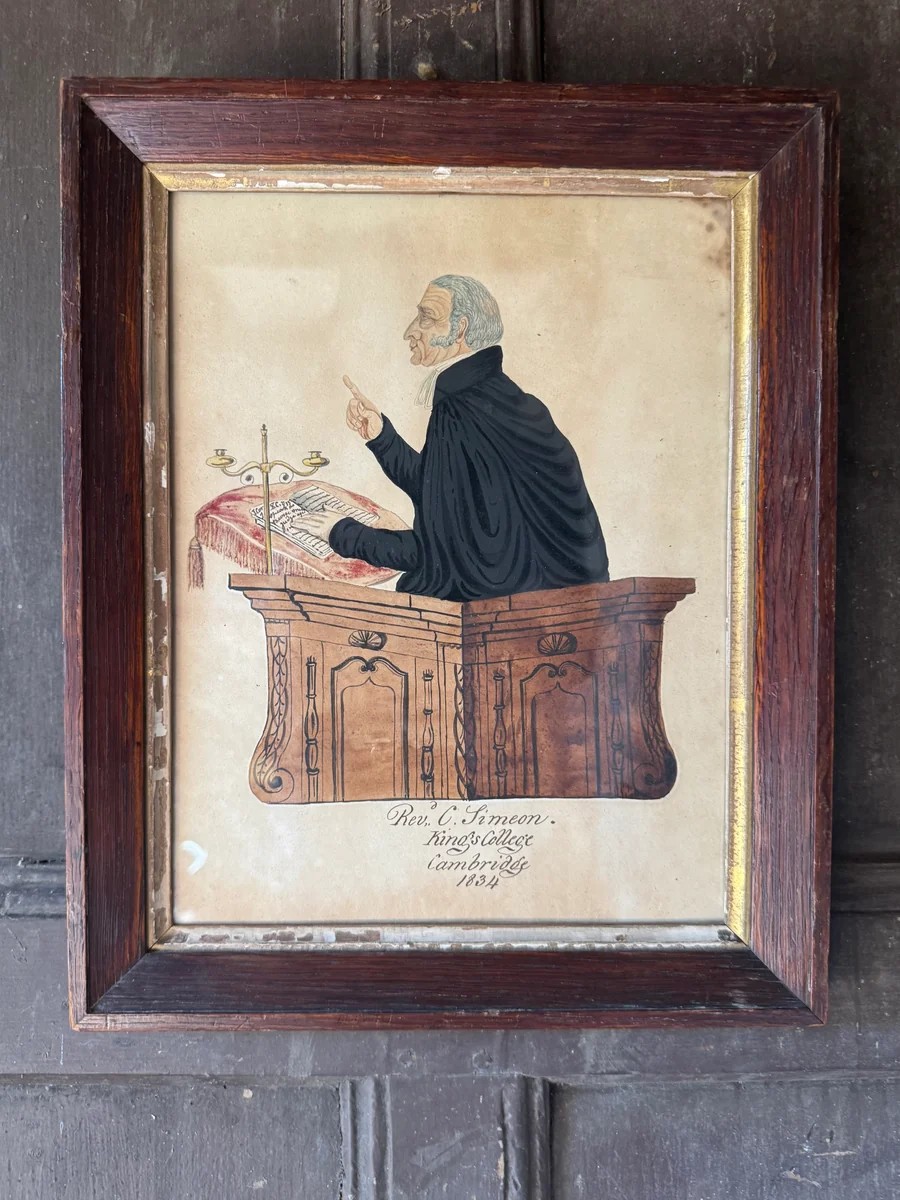
Rev. Charles Simeon of King’s College, Cambridge – Watercolour Portrait with Admission Tickets, 1834