14,943  PAGES BROWSED TODAY PAGES TODAY 24  ANTIQUES UPLOADED TODAY NEW ARRIVALS
ID #SA1227884
FOR SALE
£18,000
Email
Save
17th Century Portrait of a Military Officer in a Red Coat - Anglo Dutch School C. 1655.
Period Portraits
for sale €21,060     $22,860
£18,000
Period Portraits

Period Portraits

Sellingantiques Verified Since Jan 2017
View Dealers Stock Page
  • About Us
    Specialist dealer in portraits from the 17th century to the 20th century. Our stock includes quality oil paintings, drawings, and mezzotints
Id #SA1227884
PDF SHARE
SAVE

17th Century Portrait of a Military Officer in a Red Coat - Anglo Dutch School C. 1655.

17th century
For Sale by Period Portraits
Description

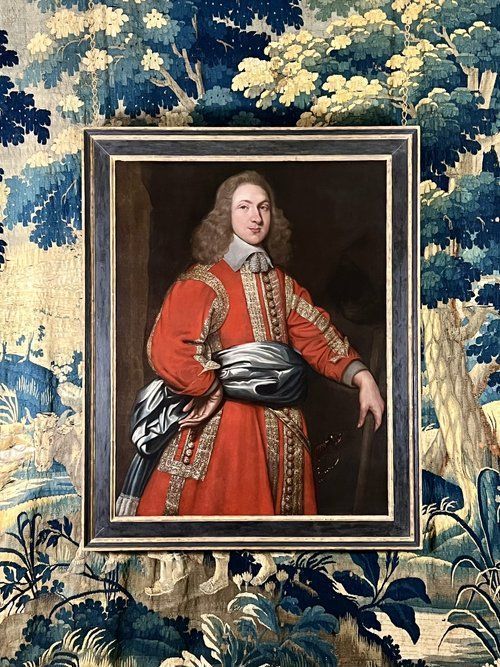
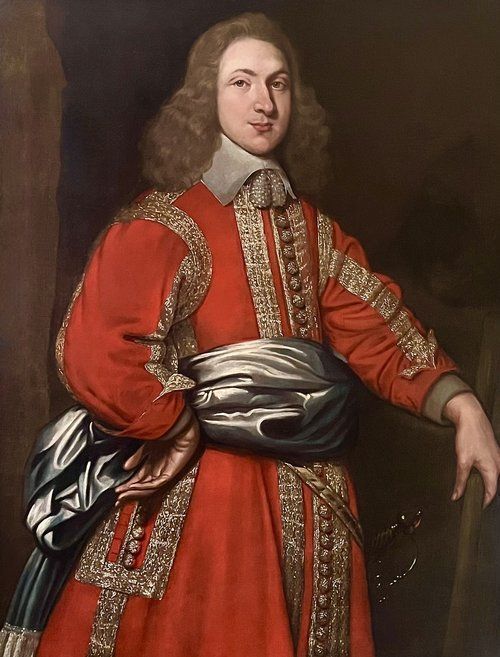
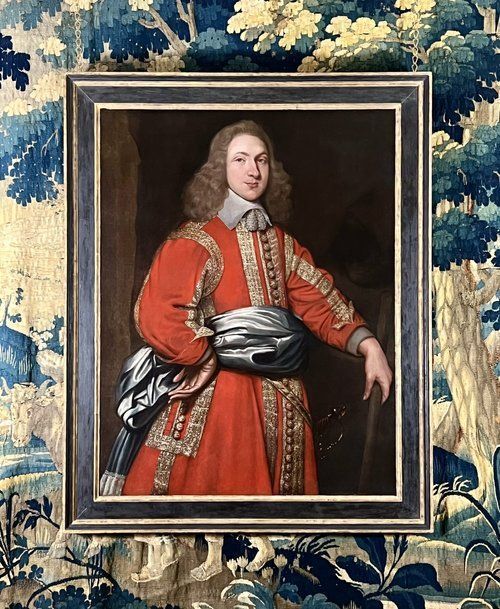
A fine imposing and richly coloured mid 17th century Anglo Dutch school portrait of a military officer, by an artist in the circle of Bartholomeus van Der Helst (1613-1670).

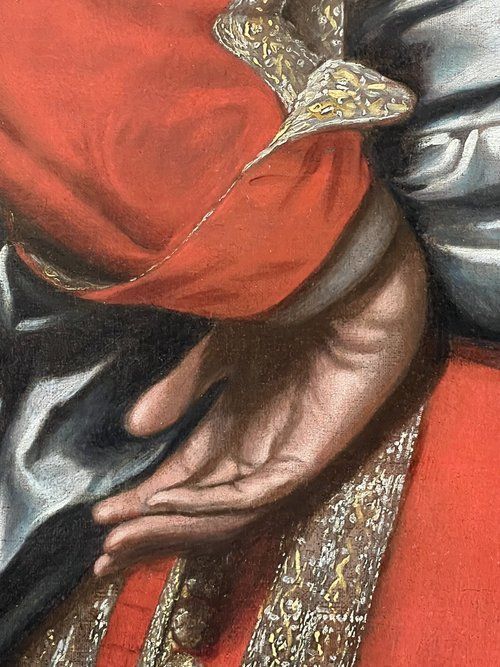
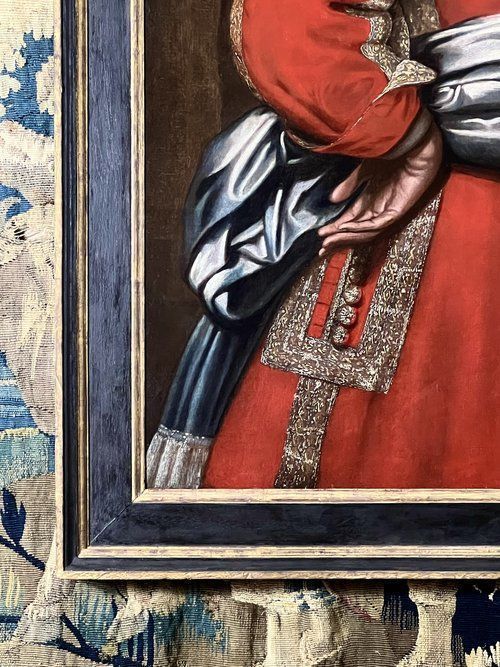
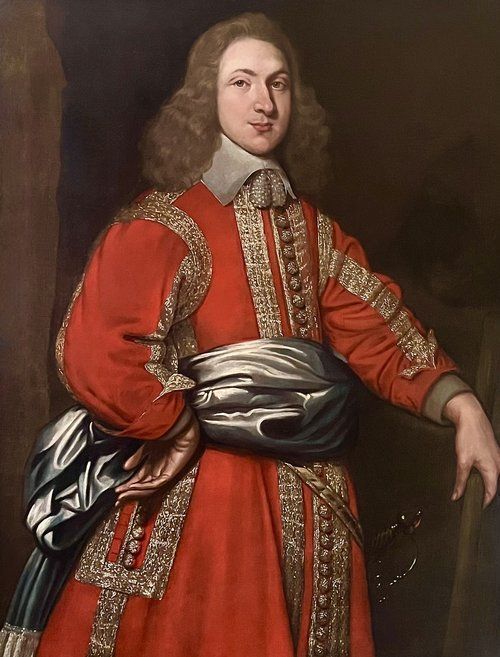
The noble sitter is depicted three quarter length against rock work standing in a fashionable and confident hand on hip pose.The most striking element of his costume is a long scarlet coat which is profusely embroidered in gold and silver thread and matching multiple spherical buttons which are aligned down its front. Under this he wears a white shirt with wide starched collar
Red was an expensive dye and a colour that was popular in fashionable clothing for outer wear (cassocks or cloaks) in this period and it was also associated with the military in the Netherlands. In Rembrandts portrait of Jan Six from 1654 for example, Jan Six wears an elegant scarlet cloak over his shoulder. Whilst in Johannes Vermeer’s 'Officer and Laughing Girl’ c.1657, (Frick Collection, New York. ) The sitter wears a similar garment to our sitter and even has the same hand on hip pose.
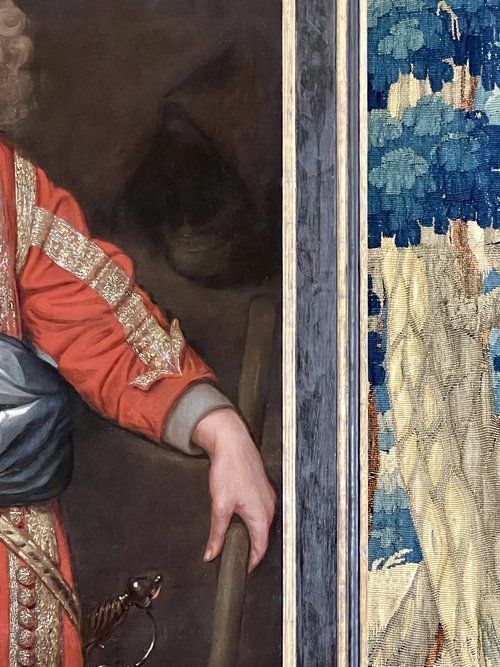
In contrast to his elegant costume, the sitter wears his own natural hair, which is shoulder length and becomes bushier at the ends.This style which is typical of the 1650s as is his crown which is flattened by the hat or perhaps helmet that he has worn. His accessories of an extravagant silk sash and sword hanging form his waist as well as his commander’s baton are entirely consistent with an identification of him as a military officer and as the early 1650s saw the first Anglo-Dutch trade wars and it is likely that the costume we see here is associated with such action.
Bartholomeus van der Helst (Haarlem, ca. 1613-Amsterdam, 1670) Bartholomeus van der Helst was born in Haarlem in 1613. He moved to Amsterdam around 1627 where he probably trained in the workshop of Nicolaes Eliasz. Pickenoy.Van der Helst married Anna du Pire in 1636. His first known work,The Regents of the Walloon Orphanage (Maison Decartes, Amsterdam) of 1637 reveals the marked influence of his master on his early style.Van der Helst achieved success at an early date and in 1639 received the prestigious commission to paint a large group portrait of The Civic Guard Company of Captain Roelof Bicker and Lieutenant Jan Michielsz. Blaeuw (Rijksmuseum, Amsterdam), for the same series as The Night Watch by Rembrandt.The completion of that work in 1643 sawVan der Helst’s reputation completely established and he succeeded Rembrandt as the portraitist to Amsterdam’s wealthy classes.
From 1642 until 1670 Van der Helst received numerous commissions for individual portraits. His technique became smoother and the depiction of clothes and accessories increasingly detailed. His second group portrait,The Celebration of the Peace of Munster at the Crossbowmen’s Guild (Rijksmuseum, Amsterdam), marks the culmination of his technical evolution, and the smooth handling of the brush and fine modelling of the figures evident in this work continued to prevail in all his later works.Van der Helst received important commissions from patrons outside Amsterdam. In 1652 he executed the official portrait of Maria Henrietta Stuart (Rijksmuseum,Amsterdam), widow of William II of Orange Nassau. In addition to portraits,Van der Helst painted genre scenes and biblical and mythological subjects.
Little is known of the artist’s activities as a teacher, although his son Lodewijk seems to have trained in his studio.Van der Helst’s style had a significant influence on his contemporaries, and his most important followers include Abraham van den Tempel, Nicolaas van Helt Stocade, and Paulus Hennekyn.

This work is in an excellent taste of conservation and is ready to hang in a quality ebonised frame with gilt highlights.

Physical Dimensions
Height
132cm (51.97")
Width
105cm (41.34")
Depth
5cm (1.97")
Declaration

Period Portraits has dated this 17th Century Oil Portrait to the 17th Century.

Reference Numbers
Sellingantiques Reference
SA1227884
Description
A fine imposing and richly coloured mid 17th century Anglo Dutch school portrait of a military officer, by an artist in the circle of Bartholomeus van Der Helst (1613-1670).
The noble sitter is depicted three quarter length against rock work standing in a fashionable and confident hand on hip pose.
Period Portraits

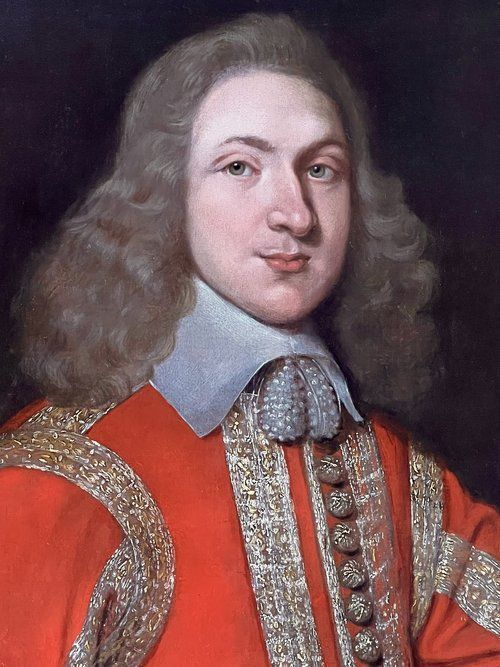
The most striking element of his costume is a long scarlet coat which is profusely embroidered in gold and silver thread and matching multiple spherical buttons which are aligned down its front. Under this he wears a white shirt with wide starched collar

fig 1. A 17th-century oil portrait depicting a male military officer in an embellished red tunic with a wide collar and silver waist sash.
fig 1. 17th Century Portrait of a Military Officer in a Red Coat - Anglo Dutch School C. 1655.

Red was an expensive dye and a colour that was popular in fashionable clothing for outer wear (cassocks or cloaks) in this period and it was also associated with the military in the Netherlands. In Rembrandts portrait of Jan Six from 1654 for example, Jan Six wears an elegant scarlet cloak over his shoulder. Whilst in Johannes Vermeer’s 'Officer and Laughing Girl’ c.1657, (Frick Collection, New York. ) The sitter wears a similar garment to our sitter and even has the same hand on hip pose.

fig 2. A 17th-century oil portrait depicting a male military officer in an embellished red tunic with a wide collar and silver waist sash.
fig 2. 17th Century Portrait of a Military Officer in a Red Coat - Anglo Dutch School C. 1655.

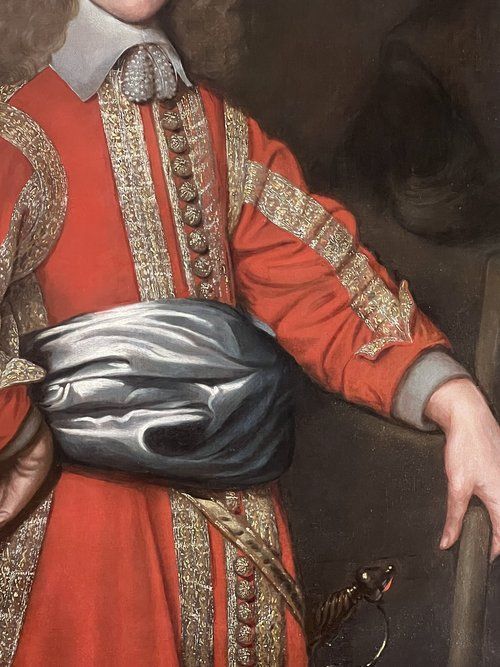
In contrast to his elegant costume, the sitter wears his own natural hair, which is shoulder length and becomes bushier at the ends.This style which is typical of the 1650s as is his crown which is flattened by the hat or perhaps helmet that he has worn. His accessories of an extravagant silk sash and sword hanging form his waist as well as his commander’s baton are entirely consistent with an identification of him as a military officer and as the early 1650s saw the first Anglo-Dutch trade wars and it is likely that the costume we see here is associated with such action.

fig 3. A 17th-century oil portrait depicting a male military officer in an embellished red tunic with a wide collar and silver waist sash.
fig 3. 17th Century Portrait of a Military Officer in a Red Coat - Anglo Dutch School C. 1655.

Bartholomeus van der Helst (Haarlem, ca. 1613-Amsterdam, 1670) Bartholomeus van der Helst was born in Haarlem in 1613. He moved to Amsterdam around 1627 where he probably trained in the workshop of Nicolaes Eliasz. Pickenoy.Van der Helst married Anna du Pire in 1636. His first known work,The Regents of the Walloon Orphanage (Maison Decartes, Amsterdam) of 1637 reveals the marked influence of his master on his early style.Van der Helst achieved success at an early date and in 1639 received the prestigious commission to paint a large group portrait of The Civic Guard Company of Captain Roelof Bicker and Lieutenant Jan Michielsz. Blaeuw (Rijksmuseum, Amsterdam), for the same series as The Night Watch by Rembrandt.The completion of that work in 1643 sawVan der Helst’s reputation completely established and he succeeded Rembrandt as the portraitist to Amsterdam’s wealthy classes.

fig 4. A 17th-century oil portrait depicting a male military officer in an embellished red tunic with a wide collar and silver waist sash.
fig 4. 17th Century Portrait of a Military Officer in a Red Coat - Anglo Dutch School C. 1655.

From 1642 until 1670 Van der Helst received numerous commissions for individual portraits. His technique became smoother and the depiction of clothes and accessories increasingly detailed. His second group portrait,The Celebration of the Peace of Munster at the Crossbowmen’s Guild (Rijksmuseum, Amsterdam), marks the culmination of his technical evolution, and the smooth handling of the brush and fine modelling of the figures evident in this work continued to prevail in all his later works.Van der Helst received important commissions from patrons outside Amsterdam. In 1652 he executed the official portrait of Maria Henrietta Stuart (Rijksmuseum,Amsterdam), widow of William II of Orange Nassau. In addition to portraits,Van der Helst painted genre scenes and biblical and mythological subjects.

fig 5. A 17th-century oil portrait depicting a male military officer in an embellished red tunic with a wide collar and silver waist sash.
fig 5. 17th Century Portrait of a Military Officer in a Red Coat - Anglo Dutch School C. 1655.

Little is known of the artist’s activities as a teacher, although his son Lodewijk seems to have trained in his studio.Van der Helst’s style had a significant influence on his contemporaries, and his most important followers include Abraham van den Tempel, Nicolaas van Helt Stocade, and Paulus Hennekyn.

This work is in an excellent taste of conservation and is ready to hang in a quality ebonised frame with gilt highlights.

Height
132cm (51.97")
Width
105cm (41.34")
Depth
5cm (1.97")
Date of Manufacture

Period Portraits has dated this 17th Century Oil Portrait to the 17th Century.

Reference Numbers
Sellingantiques Ref
SA1227884
Period Portraits
Period Portraits
Sellingantiques verified Since Jan 2017

Specialist dealer in portraits from the 17th century to the 20th century. Our stock includes quality oil paintings, drawings, and mezzotints

Dealer Profile

You can view the stock and full dealer information on the Period Portraits Profile Page
PDF SHARE
SAVE
A 17th-century oil portrait depicting a male military officer in an embellished red tunic with a wide collar and silver waist sash.
1 / 9
Archive I A 17th-century oil portrait depicting a male military officer in an embellished red tunic with a wide collar and silver waist sash.

17TH CENTURY PORTRAIT OF A MILITARY OFFICER IN A RED COAT - ANGLO DUTCH SCHOOL c. 1655.
Archive II A 17th-century oil portrait depicting a male military officer in an embellished red tunic with a wide collar and silver waist sash. View II
Archive III A 17th-century oil portrait depicting a male military officer in an embellished red tunic with a wide collar and silver waist sash. View III
Archive IV A 17th-century oil portrait depicting a male military officer in an embellished red tunic with a wide collar and silver waist sash. View IV
Archive V A 17th-century oil portrait depicting a male military officer in an embellished red tunic with a wide collar and silver waist sash. View V
Archive VI A 17th-century oil portrait depicting a male military officer in an embellished red tunic with a wide collar and silver waist sash. View VI
Archive VII A 17th-century oil portrait depicting a male military officer in an embellished red tunic with a wide collar and silver waist sash. View VII
Archive VIII A 17th-century oil portrait depicting a male military officer in an embellished red tunic with a wide collar and silver waist sash. View VIII
Archive IX A 17th-century oil portrait depicting a male military officer in an embellished red tunic with a wide collar and silver waist sash. View IX
FURTHER BROWSING

Visitors also looked at these ⇣

Enlarged Archival View
Telephone 07889 859729
Location
North Yorkshire
United Kingdom
Verified Since Jan 2017
Items For Sale 47
Items Sold 62
Period Portraits
Period Portraits
Verified Since Jan 2017
View Dealer Info
Location: North Yorkshire, United Kingdom
Verified
Jan 2017
For Sale
47
Sold
62
A 17th-century oil portrait depicting a male military officer in an embellished red tunic with a wide collar and silver waist sash.
17TH CENTURY PORTRAIT OF A MILITARY OFFICER IN A RED COAT - ANGLO DUTCH SCHOOL c. 1655.
Ref: SA1227884
A 17th-century oil portrait depicting a male military officer in an embellished red tunic with a wide collar and silver waist sash.
Detail View 1
Detail View 2
Detail View 3
Detail View 4
Detail View 5
Detail View 6
Detail View 7
Detail View 8
Archival Detail
Every single antique dealer on our platform is individually approved by our internal team. We verify their professional trade history, ethical standards, and photographic quality to ensure a secure, high-standard buying environment. Upon joining, every dealer agrees to a strict 9-point code of conduct. While issues can occasionally arise, our dealers typically resolve them swiftly and directly with the buyer. In fact, since our founding in 2002, Sellingantiques has only had to step in to help resolve an issue on roughly five occasions—a true testament to the quality of our dealers and their dedication to your happiness.
Our dealers are highly experienced in packing and shipping fragile, high-value antiques. Because you are in direct contact with the dealer, you will be able to easily go through all available shipping and insurance options together to ensure your item arrives safely.
Antiques are the ultimate green purchase. By choosing historical pieces over newly manufactured goods, you completely eliminate the carbon footprint of modern mass production while preserving exceptional, timeless craftsmanship.

Mid-17th-century Anglo-Dutch portraiture reflects the artistic exchange between England and the Netherlands, characterised by formal posture, precise rendering of textiles, and distinct chiaroscuro lighting.

Artists typically used hand-ground oil pigments on woven linen canvas stretched onto timber strainers, often finished with natural resin varnishes such as dammar or mastic.

Authentication involves examining craquelure patterns in the paint layer, studying timber stretcher construction, and utilising ultraviolet light to identify historic restoration or overpainting.

A historic portrait can serve as a focal point above a mantelpiece or sideboard, creating visual contrast when paired with modern architectural lines or classic dark wood furnishings.

Canvas paintings require stable relative humidity, protection from direct sunlight, regular light dusting with a soft brush, and professional conservation for varnish removal.
items
Add keywords to the filter
Price
£100
£250000
Era
Movements
Material
Origin
Stock Location
Freshness
Online Payments
Categories