

Period Portraits has dated this 17th Century Cavalier Portrait to the 17th Century.
The light bouncing off the metal is softened by the sitters dark brown full-bottomed wig, and a vibrant silver fringed red sash winds through the portrait providing a rich, theatrical burst of colour.
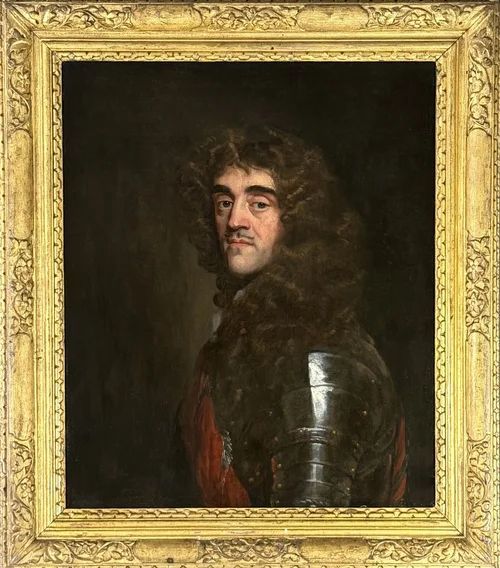
It is perhaps worth noting that during the 17th century, standardised military uniforms in the modern sense did not exist Naval and military leaders as well as member of the aristocracy were depicted in polished plate armour combined with high-status court fashion (such as massive wigs and lace cravats) to denote their rank and authority.
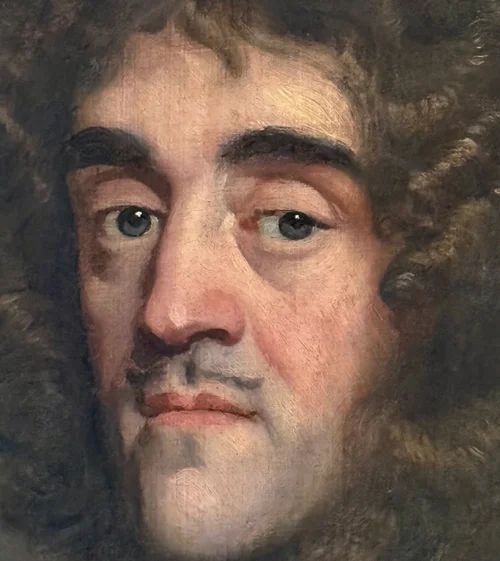
During the Restoration of King Charles II (starting in 1660), portraits like those painted by John Greenhill were far more than simple family keepsakes. They were crucial instruments of political propaganda, social climbing, and cultural rebuilding.
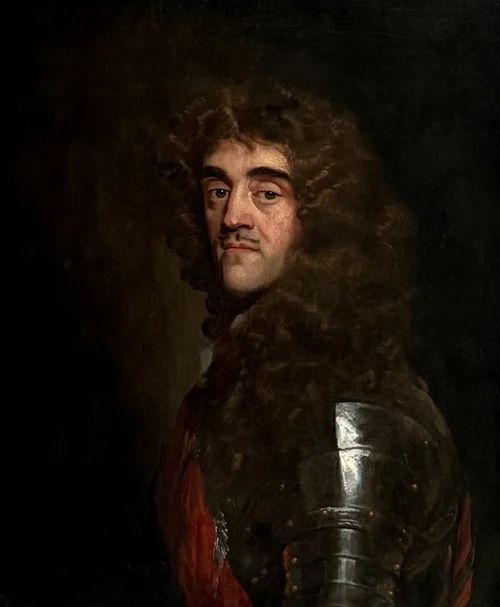
Commissiong a portrait such as the one we see her enabled a gentleman to publicly declare his allegiance to the newly restored King and legitimise the the new regime.
The dramatic lighting, rich textures of silk and lace, and flowing wigs depicted in portraits of this period were an intentional and defiant rejection of the plain, somber "Roundhead" aesthetic of the Commonwealth era. t this period in history to look luxurious was to look loyal!
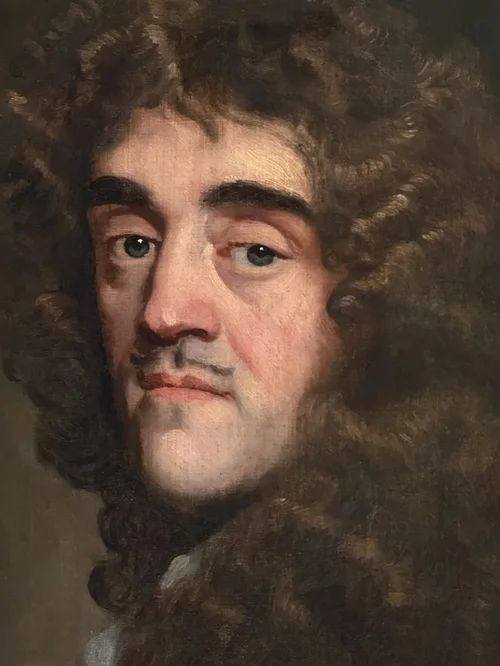
The Restoration era also saw the rise of a new class of professional administrative leaders—men of talent rather than just inherited land (such as Samuel Pepys or Anthony Deane). So portraits also allowed these self-made men to visually align themselves with the traditional aristocracy. By being painted with the same Baroque grandiosity, armour, and dramatic draping as dukes and princes, they could also cement their high status in the new social hierarchy.
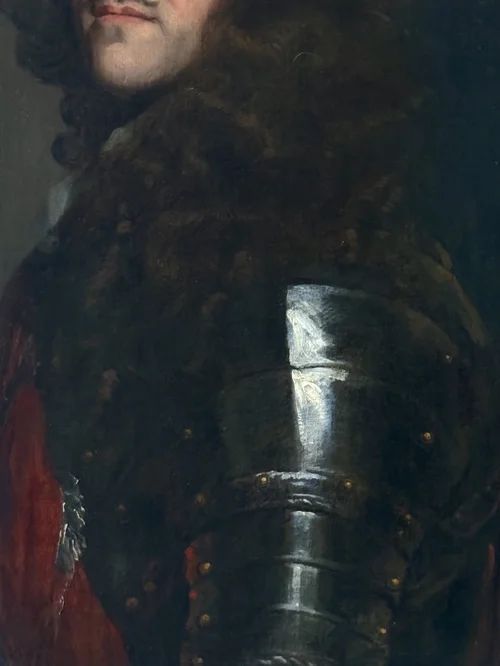
John Greenhill (c. 1644–1676) was one of the most talented English painters of the Restoration Baroque era. As the star pupil of Sir Peter Lely (court painter to Charles II), Greenhill inherited a dramatic, fluid style influenced by Anthony van Dyck.
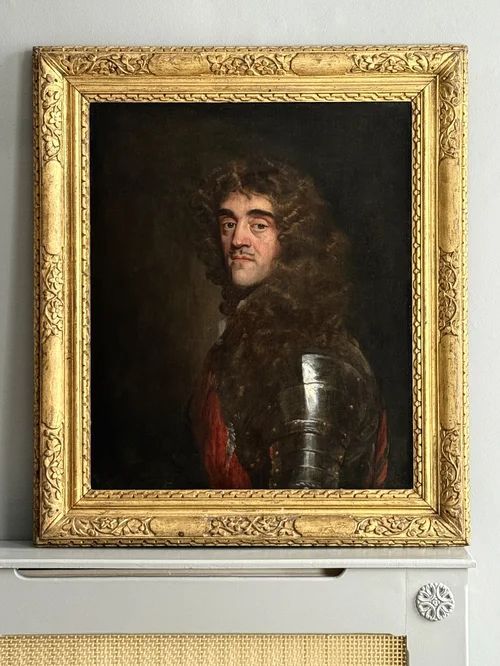
A portrait painter and draughtsman his first work is thought to be a portrait of his uncle, James Abbot of Salisbury. Born in Somerset, by 1662 he had moved to London. He joined the studio of Peter Lely, but soon established his own studio.

Greenhill painted a wide variety of people, many of them actors and playwrights. His early works consisted chiefly of theatrical drawings of actors as characters, executed in crayons and pastel. Greenhill’s promising career was brought to an abrupt end at age 31 due to a dissolute lifestyle which saw him tragically drowned in a gutter after a drinking spree. Happily he left behind exceptional portraits such as this.
This painting is housed in a later antique ‘lely’ stye frame.
Higher resolution images on request.
Worldwide shipping available.
Period Portraits has dated this 17th Century Cavalier Portrait to the 17th Century.
Specialist dealer in portraits from the 17th century to the 20th century. Our stock includes quality oil paintings, drawings, and mezzotints
You can view the stock and full dealer information on the Period Portraits Profile Page
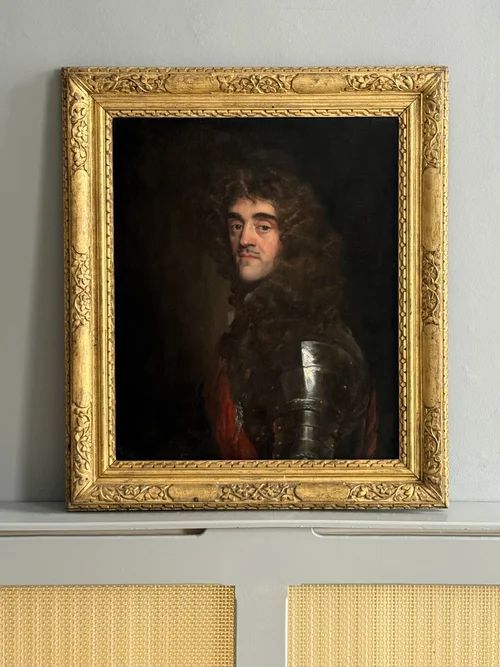
JOHN GREENHILL (c.1644-1676) - A CAVALIER HALF-LENGTH IN ARMOUR AND A RED SASH.
