8,714  PAGES BROWSED TODAY PAGES TODAY 36  ANTIQUES UPLOADED TODAY NEW ARRIVALS
ID #SA1224555
FOR SALE
£7,200
Email
Save
Oil Painting of Smugglers with Horses on a Coastal Path by Abraham Cooper Ra
Benton Fine Art
for sale €8,424     $9,144
£7,200
Benton Fine Art

Benton Fine Art

Sellingantiques Verified Since Sep 2012
View Dealers Stock Page
  • About Us
    Specialists in 19th & early 20th century original oil paintings by listed artists
  • Trade Associations
    Benton Fine Art is a registered member of LAPADA  BADA  CINOA
Id #SA1224555
PDF SHARE
SAVE

Oil Painting of Smugglers with Horses on a Coastal Path by Abraham Cooper Ra

19th century
For Sale by Benton Fine Art
Description

Abraham Cooper RA

British, (1787-1868)

The Smugglers

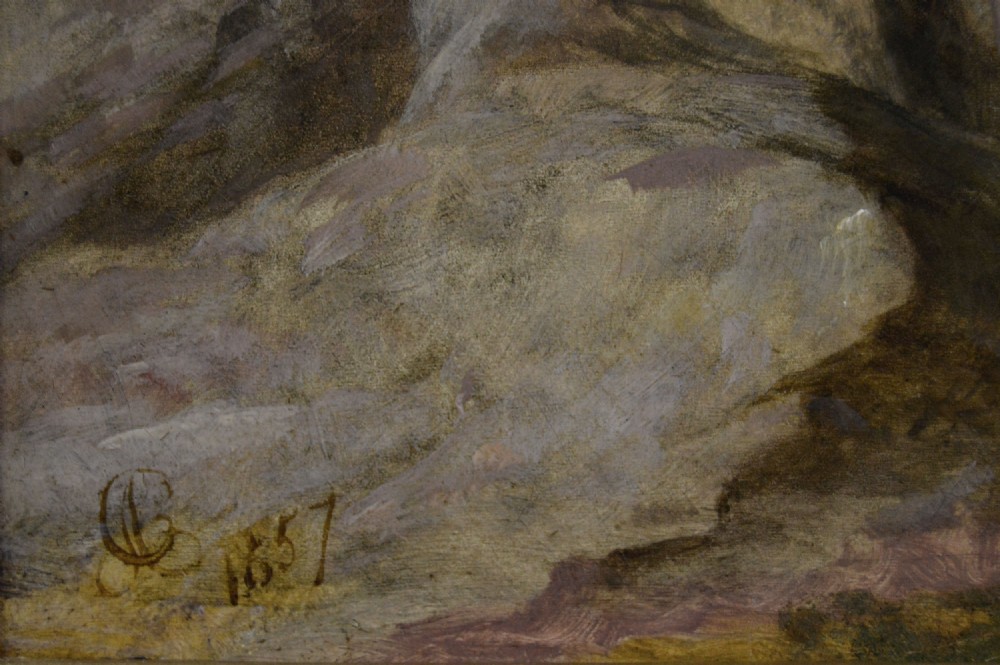
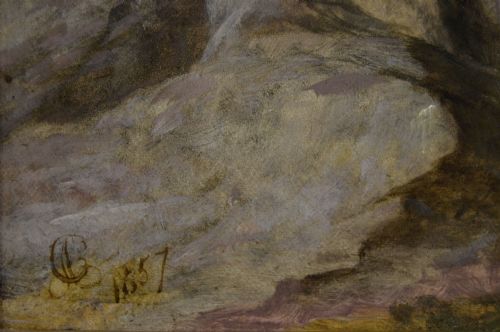
Oil on canvas, signed with monogram & dated 1857

Image size: 19.5 inches x 23.5 inches

Size including frame: 27.5 inches x 31.5 inches

Exhibited at the RA in 1857, no. 124

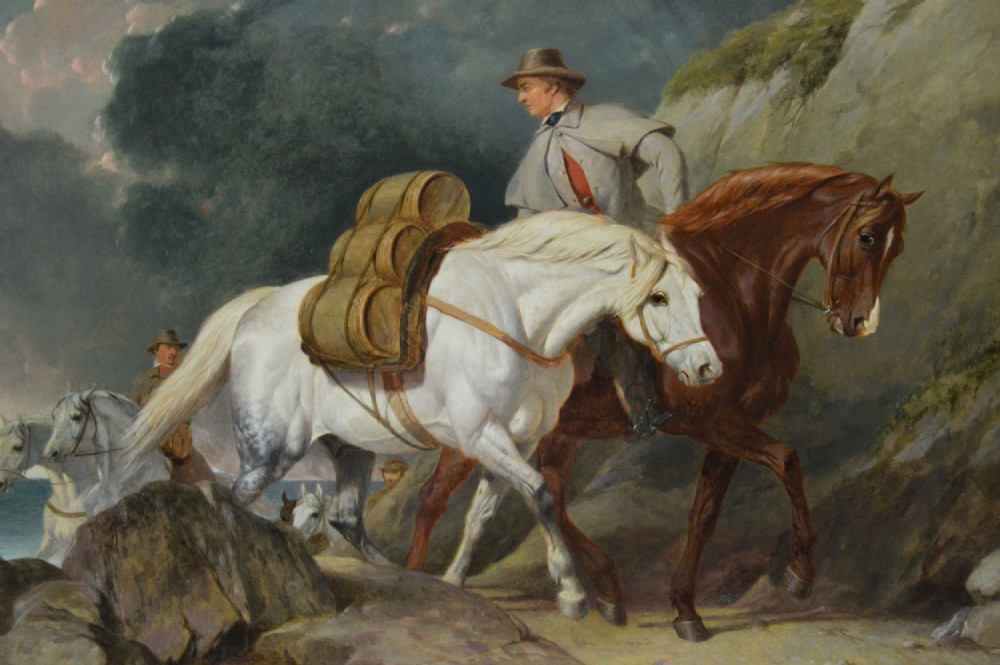
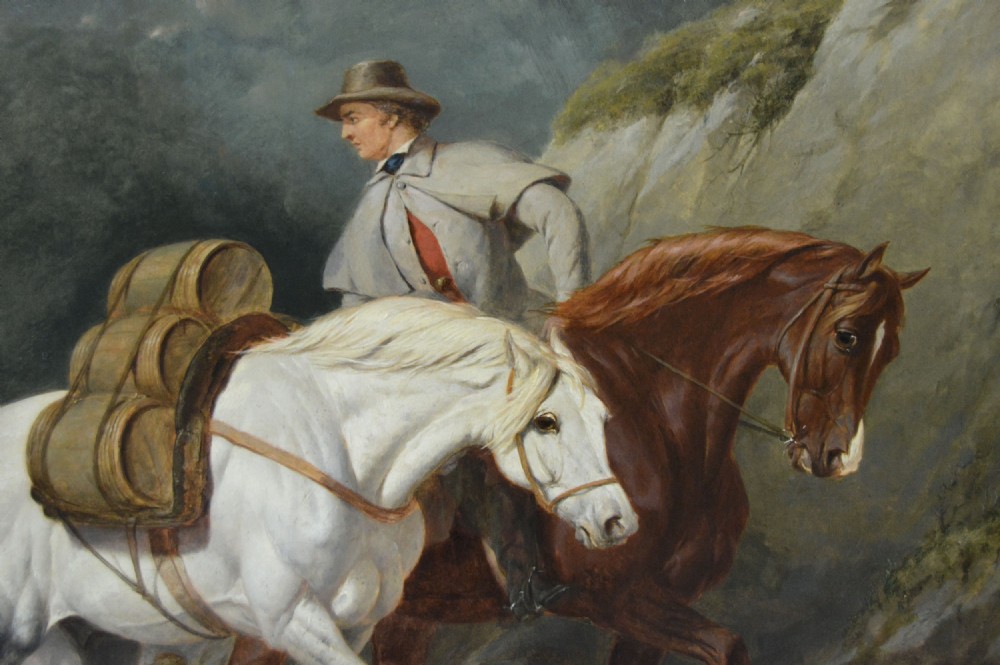
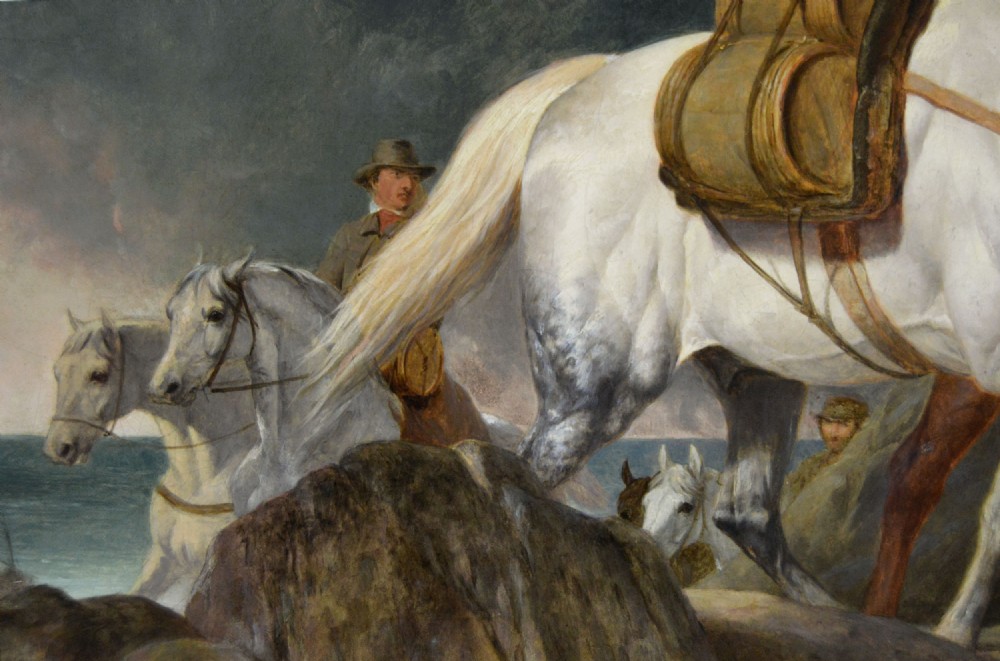
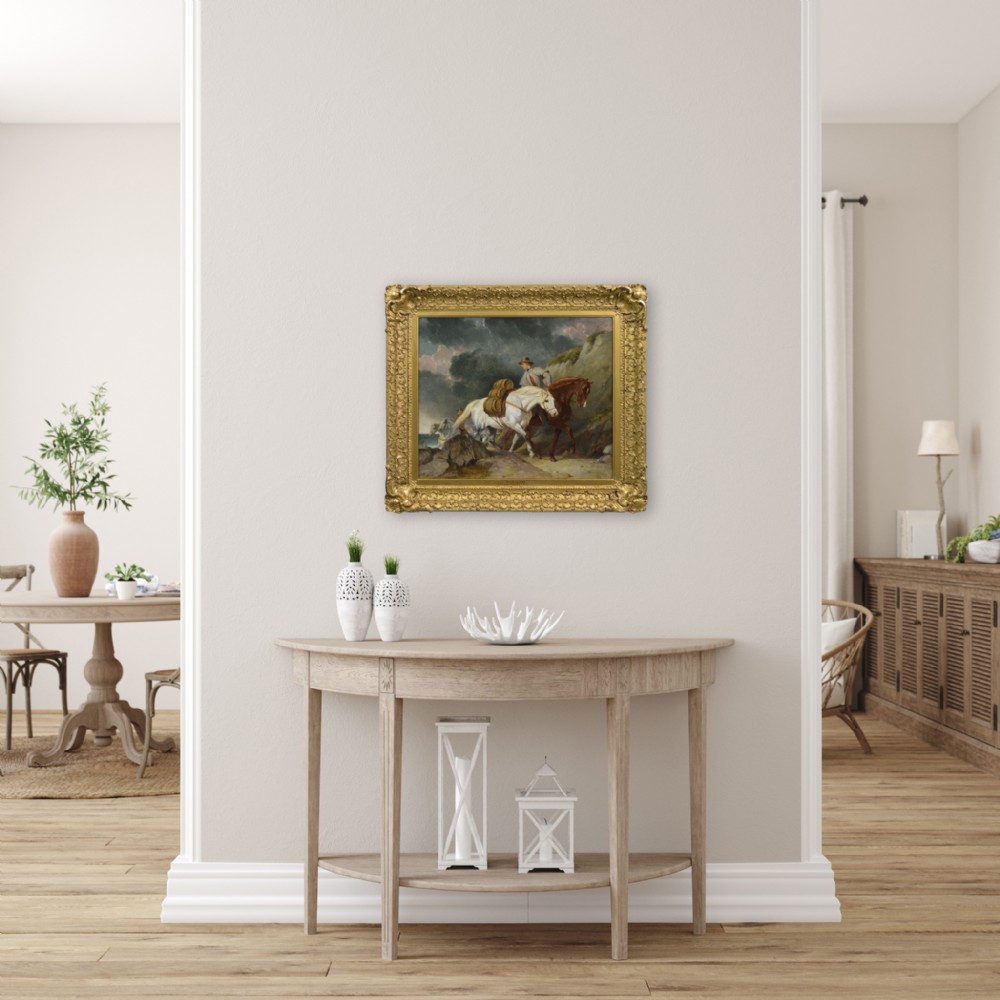
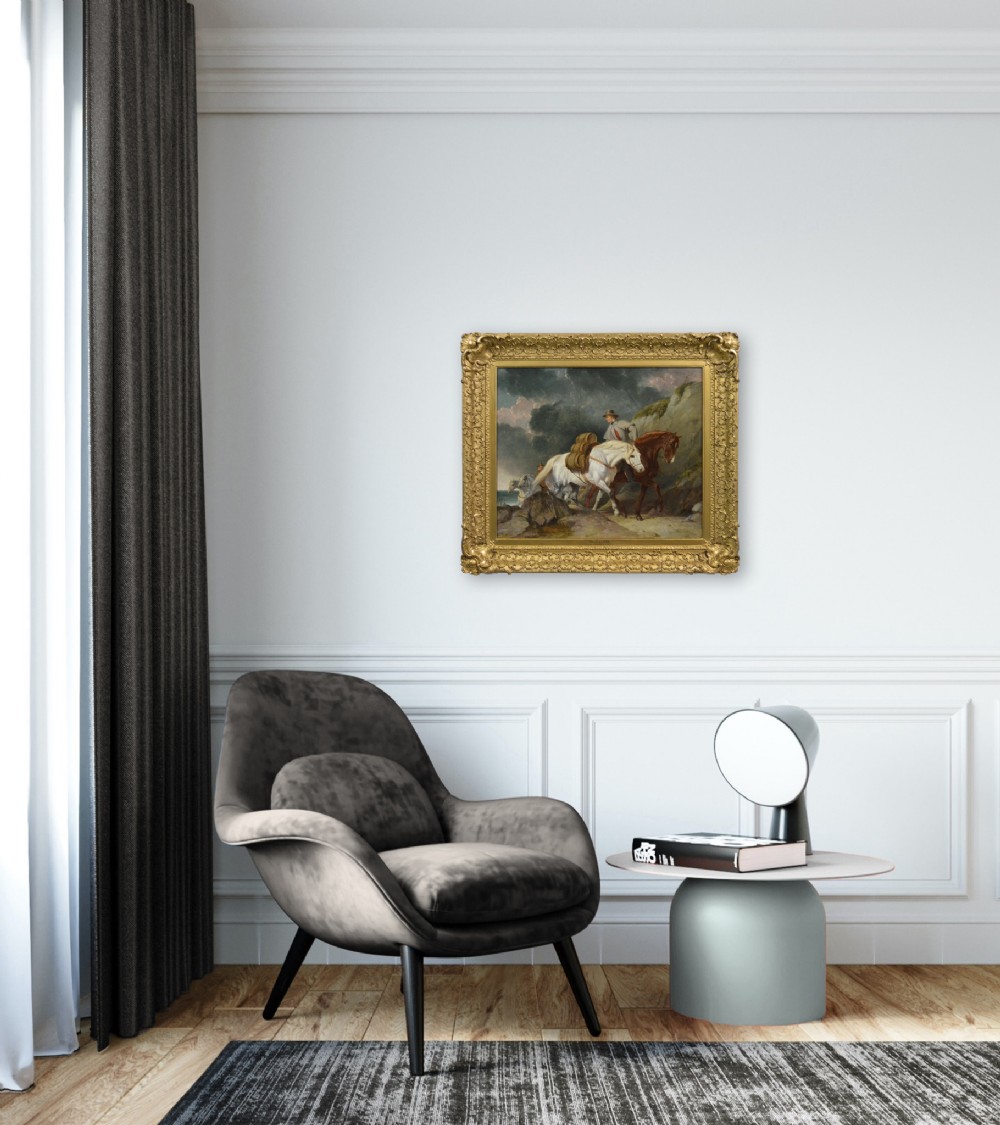
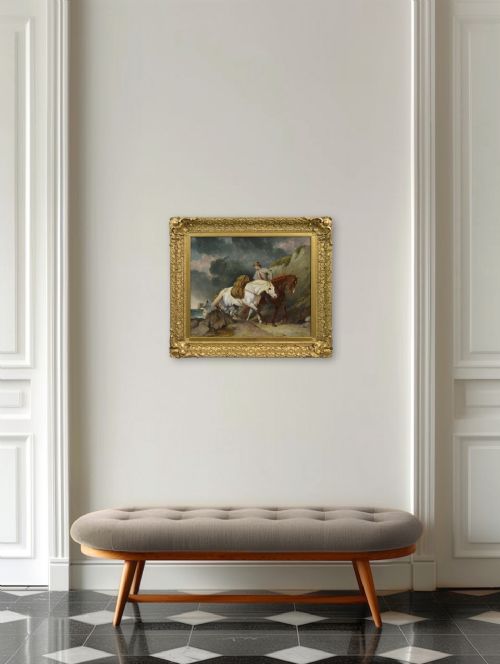
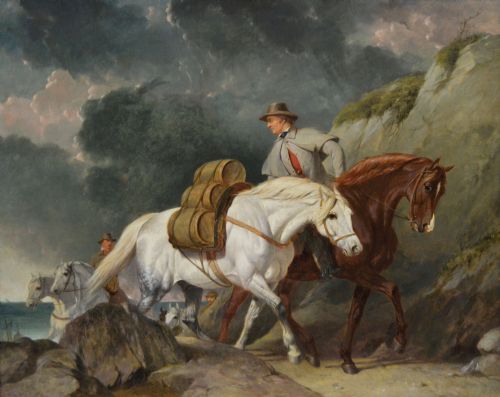
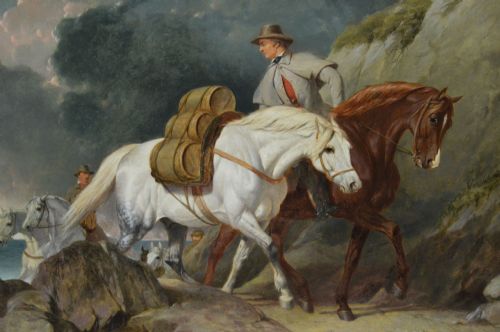
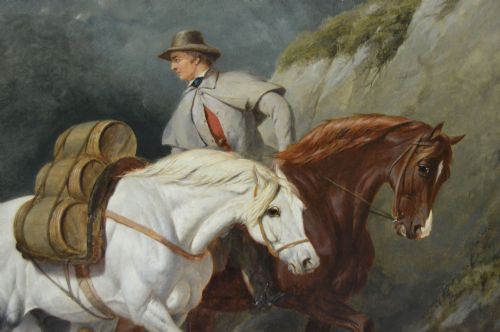
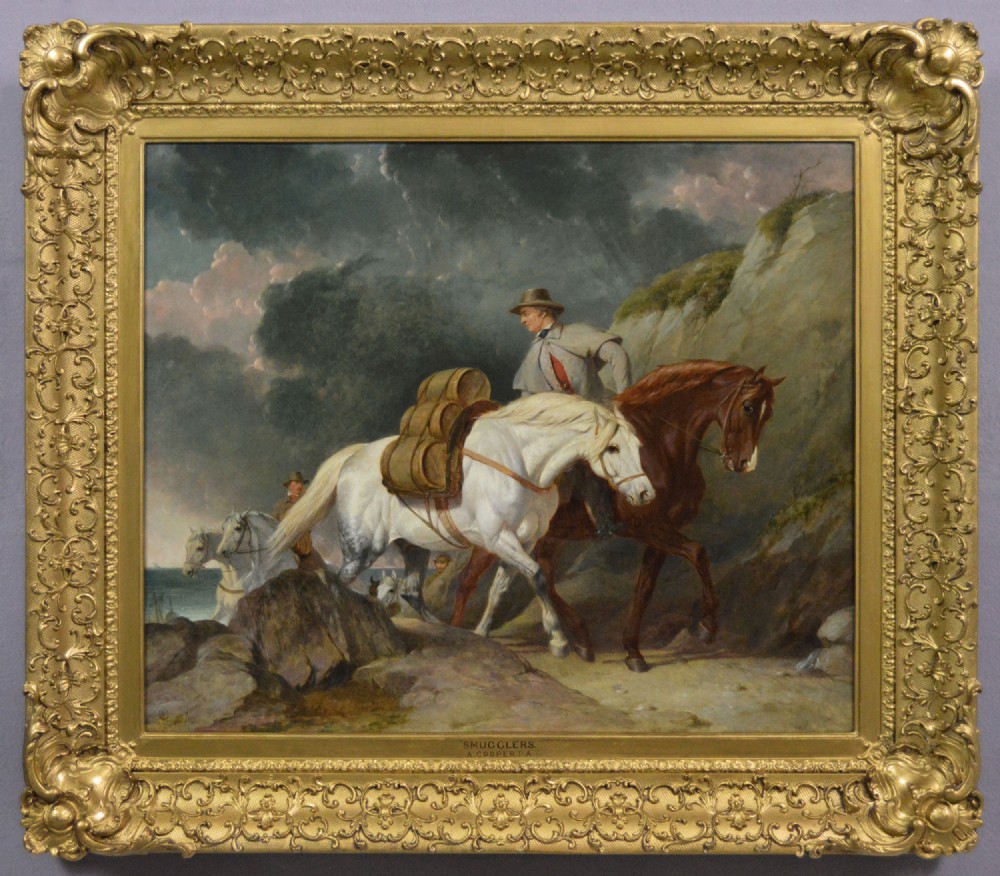
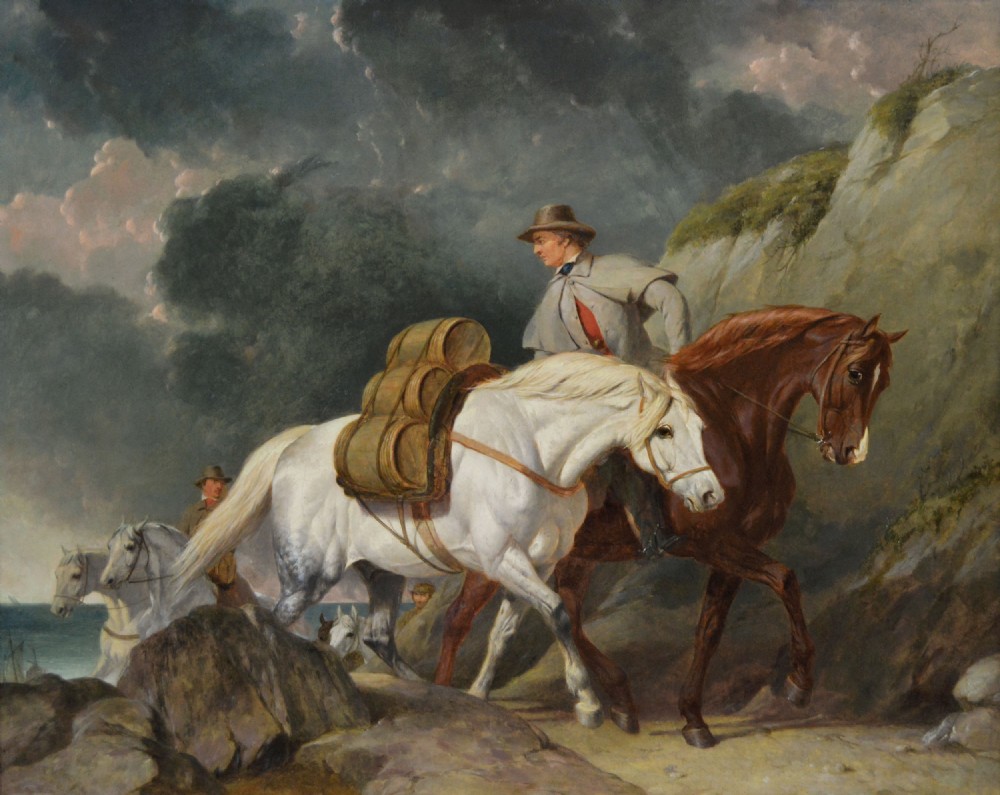
A dramatic painting of smugglers travelling along a coastal path at night by Abraham Cooper. A man in a grey overcoat is shown riding a chestnut horse, whilst leading a white horse loaded with barrels up a secluded track beneath a cliff. As he makes his way along, he turns to check on his companions following behind him, exchanging a silent look. In the distance, the sails of a boat can be seen on the shore as another ship makes its way along the horizon. The play of moonlight on the night sky adds to the tension of the unfolding scene. This painting was exhibited at the RA in 1857, no. 124 under the title ‘Smugglers on the Northumberland coast in the early part of the present century, as often seen by the artist when a boy’.
Abraham Cooper was born in Holborn, London on 8 September, 1787 to Alexander and Susanna Cooper. His father was an inn keeper and the family lived at Red Lion Street in Holborn. Although little is recorded about his early education, he is known to have started working at Astley’s Amphitheatre at the age of 13 before becoming a groom for the brewer Henry Meux. His close work with horses inspired him to learn how to paint and he began producing paintings of the horses in his care. Encouraged by Meux, he became a pupil of the animal painter Benjamin Marshall (1768-1835) who took him into his studio.
Under Marshall’s tutelage he flourished as an artist and developed a lifelong interest in historical scenes particularly of battles, which earned him the nickname ‘Battle Cooper’. In 1812, he made his debut at Royal Academy in 1812, becoming a prolific exhibitor there. In the same year he also began exhibiting at the British Institute.
He married Maria Goom on the 23 April, 1813. The couple lived in Robert Street, Holborn and went on to have 3 children together. Their son Alfred William Cooper (1829-1916) studied at the RA and became a well-known artist and illustrator. By 1817, he had moved to New Millman Street in Holborn where he remained for over 30 years. In 1817, he was made Associate of the Royal Academy and in 1820 was elected fully Academician.
In 1853, a few years after the death of his first wife, he married Francis McArthy D’Ebro a widow and the daughter of an artist. The couple continued living at Cooper’s home in Millman Street until sometime after 1861 when they moved to Woodbine Cottage, Woodland Street, Greenwich.
Cooper died aged 81 at his home in Woodland Street on 24 December, 1868. He was buried at Highgate Cemetery. Examples of his work can be found in many public collections including the Ashmolean Museum, Cromwell Museum, English Heritage, Government Art Collection, Harris Museum, National Trust, The Wilson, V&A and Yale Center for British Art.
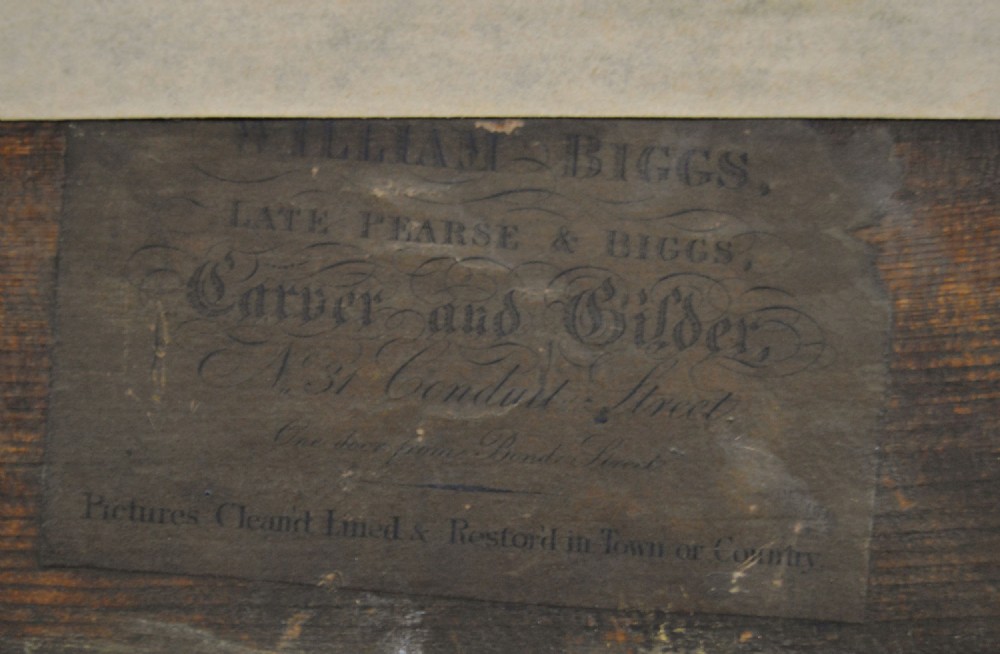
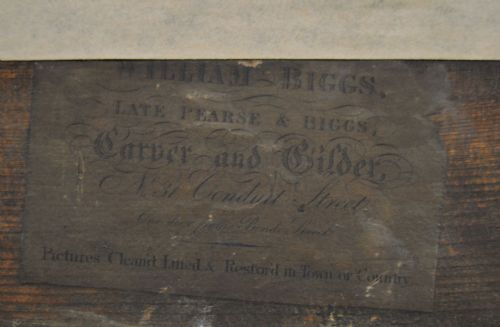
Presentation: The work is housed in its original gilt frame which is in excellent condition. The reverse of painting bears an old label for William Biggs a carver and gilder who became a partner at Harris & Pearce, the picture restorers, around 1834. The company was originally founded by John Harris in 1787 at 38 Dean Street, London moving to Conduit Street in 1805 and was continued by his partner Samuel Pearce after his death. When Biggs joined, the company became Pearce & Biggs and later William Biggs, Biggs & Son and W H Biggs & Co. During the 1850’s it also operated as a picture dealer. The business was located at 31 Conduit Street from 1810 to 1878 and at 7 Maddox St from 1879 until it’s closure around 1884.

Condition: As with all of our original antique oil paintings, this work is offered in ready to hang gallery condition, having been professionally cleaned, restored and revarnished.

© Benton Fine Art

Physical Dimensions
Height
70cm (27.56")
Width
80cm (31.50")
Depth
7.5cm (2.95")
Declaration

Benton Fine Art has dated this Antique Equestrian Oil Painting to the 1860s.

Reference Numbers
Sellingantiques Reference
SA1224555
Dealers Notes

Members of the British Antique Dealers Association (BADA) the London and Provincial Antique Dealers Association (LAPADA).

We use a professional, fully insured and tracked door to door service for our UK and international deliveries. Please contact us for further information and shipping quotes.

Viewing is by APPOINTMENT ONLY. However, we can also arrange for you to view the item in your home, depending on the location.

For a wider range of stock please visit www.bentonfineart.com.

If you would like to purchase this item or have any questions, please email us at pictures@bentonfineart.com or call 07710 540549.

© Benton Fine Art

Description
Abraham Cooper RA

British, (1787-1868)

The Smugglers

Oil on canvas, signed with monogram & dated 1857

Image size: 19.5 inches x 23.5 inches

Size including frame: 27.5 inches x 31.5 inches

Exhibited at the RA in 1857, no. 124

A dramatic painting of smugglers travelling along a coastal path at night by Abraham Cooper.

A man in a grey overcoat is shown riding a chestnut horse, whilst leading a white horse loaded with barrels up a secluded track beneath a cliff.
Benton Fine Art

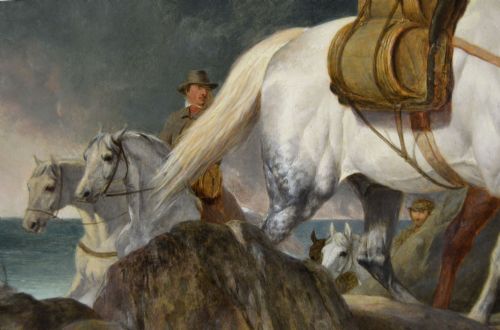
As he makes his way along, he turns to check on his companions following behind him, exchanging a silent look. In the distance, the sails of a boat can be seen on the shore as another ship makes its way along the horizon. The play of moonlight on the night sky adds to the tension of the unfolding scene. This painting was exhibited at the RA in 1857, no. 124 under the title ‘Smugglers on the Northumberland coast in the early part of the present century, as often seen by the artist when a boy’.

fig 1. A nineteenth-century oil painting depicting smugglers leading pack horses along a rocky coastal path under dramatic clouds, encased in an ornate gold gilt frame.
fig 1. Oil Painting of Smugglers with Horses on a Coastal Path by Abraham Cooper Ra

Abraham Cooper was born in Holborn, London on 8 September, 1787 to Alexander and Susanna Cooper. His father was an inn keeper and the family lived at Red Lion Street in Holborn. Although little is recorded about his early education, he is known to have started working at Astley’s Amphitheatre at the age of 13 before becoming a groom for the brewer Henry Meux. His close work with horses inspired him to learn how to paint and he began producing paintings of the horses in his care. Encouraged by Meux, he became a pupil of the animal painter Benjamin Marshall (1768-1835) who took him into his studio.

fig 2. A nineteenth-century oil painting depicting smugglers leading pack horses along a rocky coastal path under dramatic clouds, encased in an ornate gold gilt frame.
fig 2. Oil Painting of Smugglers with Horses on a Coastal Path by Abraham Cooper Ra

Under Marshall’s tutelage he flourished as an artist and developed a lifelong interest in historical scenes particularly of battles, which earned him the nickname ‘Battle Cooper’. In 1812, he made his debut at Royal Academy in 1812, becoming a prolific exhibitor there. In the same year he also began exhibiting at the British Institute.

fig 3. A nineteenth-century oil painting depicting smugglers leading pack horses along a rocky coastal path under dramatic clouds, encased in an ornate gold gilt frame.
fig 3. Oil Painting of Smugglers with Horses on a Coastal Path by Abraham Cooper Ra

He married Maria Goom on the 23 April, 1813. The couple lived in Robert Street, Holborn and went on to have 3 children together. Their son Alfred William Cooper (1829-1916) studied at the RA and became a well-known artist and illustrator. By 1817, he had moved to New Millman Street in Holborn where he remained for over 30 years. In 1817, he was made Associate of the Royal Academy and in 1820 was elected fully Academician.

fig 4. A nineteenth-century oil painting depicting smugglers leading pack horses along a rocky coastal path under dramatic clouds, encased in an ornate gold gilt frame.
fig 4. Oil Painting of Smugglers with Horses on a Coastal Path by Abraham Cooper Ra

In 1853, a few years after the death of his first wife, he married Francis McArthy D’Ebro a widow and the daughter of an artist. The couple continued living at Cooper’s home in Millman Street until sometime after 1861 when they moved to Woodbine Cottage, Woodland Street, Greenwich.

fig 5. A nineteenth-century oil painting depicting smugglers leading pack horses along a rocky coastal path under dramatic clouds, encased in an ornate gold gilt frame.
fig 5. Oil Painting of Smugglers with Horses on a Coastal Path by Abraham Cooper Ra

Cooper died aged 81 at his home in Woodland Street on 24 December, 1868. He was buried at Highgate Cemetery. Examples of his work can be found in many public collections including the Ashmolean Museum, Cromwell Museum, English Heritage, Government Art Collection, Harris Museum, National Trust, The Wilson, V&A and Yale Center for British Art.

fig 6. A nineteenth-century oil painting depicting smugglers leading pack horses along a rocky coastal path under dramatic clouds, encased in an ornate gold gilt frame.
fig 6. Oil Painting of Smugglers with Horses on a Coastal Path by Abraham Cooper Ra

Presentation: The work is housed in its original gilt frame which is in excellent condition. The reverse of painting bears an old label for William Biggs a carver and gilder who became a partner at Harris & Pearce, the picture restorers, around 1834. The company was originally founded by John Harris in 1787 at 38 Dean Street, London moving to Conduit Street in 1805 and was continued by his partner Samuel Pearce after his death. When Biggs joined, the company became Pearce & Biggs and later William Biggs, Biggs & Son and W H Biggs & Co. During the 1850’s it also operated as a picture dealer. The business was located at 31 Conduit Street from 1810 to 1878 and at 7 Maddox St from 1879 until it’s closure around 1884.

Condition: As with all of our original antique oil paintings, this work is offered in ready to hang gallery condition, having been professionally cleaned, restored and revarnished.

© Benton Fine Art

Height
70cm (27.56")
Width
80cm (31.50")
Depth
7.5cm (2.95")
Date of Manufacture

Benton Fine Art has dated this Antique Equestrian Oil Painting to the 1860s.

Reference Numbers
Sellingantiques Ref
SA1224555
Benton Fine Art
Benton Fine Art
Sellingantiques verified Since Sep 2012

Specialists in 19th & early 20th century original oil paintings by listed artists

Dealer Profile

You can view the stock and full dealer information on the Benton Fine Art Profile Page

Trade Associations

Benton Fine Art is a registered member of LAPADA  BADA  CINOA
PDF SHARE
SAVE
A nineteenth-century oil painting depicting smugglers leading pack horses along a rocky coastal path under dramatic clouds, encased in an ornate gold gilt frame.
1 / 10
Archive I A nineteenth-century oil painting depicting smugglers leading pack horses along a rocky coastal path under dramatic clouds, encased in an ornate gold gilt frame.

Oil Painting of Smugglers with Horses on a Coastal Path by Abraham Cooper Ra
Archive II A nineteenth-century oil painting depicting smugglers leading pack horses along a rocky coastal path under dramatic clouds, encased in an ornate gold gilt frame. View II
Archive III A nineteenth-century oil painting depicting smugglers leading pack horses along a rocky coastal path under dramatic clouds, encased in an ornate gold gilt frame. View III
Archive IV A nineteenth-century oil painting depicting smugglers leading pack horses along a rocky coastal path under dramatic clouds, encased in an ornate gold gilt frame. View IV
Archive V A nineteenth-century oil painting depicting smugglers leading pack horses along a rocky coastal path under dramatic clouds, encased in an ornate gold gilt frame. View V
Archive VI A nineteenth-century oil painting depicting smugglers leading pack horses along a rocky coastal path under dramatic clouds, encased in an ornate gold gilt frame. View VI
Archive VII A nineteenth-century oil painting depicting smugglers leading pack horses along a rocky coastal path under dramatic clouds, encased in an ornate gold gilt frame. View VII
Archive VIII A nineteenth-century oil painting depicting smugglers leading pack horses along a rocky coastal path under dramatic clouds, encased in an ornate gold gilt frame. View VIII
Archive IX A nineteenth-century oil painting depicting smugglers leading pack horses along a rocky coastal path under dramatic clouds, encased in an ornate gold gilt frame. View IX
Archive X A nineteenth-century oil painting depicting smugglers leading pack horses along a rocky coastal path under dramatic clouds, encased in an ornate gold gilt frame. View X
FURTHER BROWSING

Visitors also looked at these ⇣

Enlarged Archival View
Telephone 07710 540 549
Location
Near Broadway
Worcestershire
United Kingdom

By appointment only.
Verified Since Sep 2012
Items For Sale 210
Benton Fine Art
Benton Fine Art
Verified Since Sep 2012
View Dealer Info
Location: Near Broadway, Worcestershire, United Kingdom, , By appointment only.
Verified
Sep 2012
For Sale
210
A nineteenth-century oil painting depicting smugglers leading pack horses along a rocky coastal path under dramatic clouds, encased in an ornate gold gilt frame.
Oil painting of smugglers with horses on a coastal path by Abraham Cooper RA
Ref: SA1224555
A nineteenth-century oil painting depicting smugglers leading pack horses along a rocky coastal path under dramatic clouds, encased in an ornate gold gilt frame.
Detail View 1
Detail View 2
Detail View 3
Detail View 4
Detail View 5
Detail View 6
Detail View 7
Detail View 8
Detail View 9
Archival Detail
Every single antique dealer on our platform is individually approved by our internal team. We verify their professional trade history, ethical standards, and photographic quality to ensure a secure, high-standard buying environment. Upon joining, every dealer agrees to a strict 9-point code of conduct. While issues can occasionally arise, our dealers typically resolve them swiftly and directly with the buyer. In fact, since our founding in 2002, Sellingantiques has only had to step in to help resolve an issue on roughly five occasions—a true testament to the quality of our dealers and their dedication to your happiness.
Our dealers are highly experienced in packing and shipping fragile, high-value antiques. Because you are in direct contact with the dealer, you will be able to easily go through all available shipping and insurance options together to ensure your item arrives safely.
Antiques are the ultimate green purchase. By choosing historical pieces over newly manufactured goods, you completely eliminate the carbon footprint of modern mass production while preserving exceptional, timeless craftsmanship.

Nineteenth-century British narrative and equestrian paintings focused on figurative storytelling, sporting scenes, and dramatic landscapes. Artists like Abraham Cooper RA depicted anatomical precision in horses, realistic natural lighting, and atmospheric weather effects, often framed in elaborate plaster or gilt wood frames.

Paintings from this era were created using oil-based pigments applied to linen canvas stretched over wooden stretcher bars. Frames were crafted from timber with molded gesso ornament and finished with applied gold leaf.

Authenticity is evaluated through physical examination of age-appropriate craquelure, canvas oxidisation, period stretchers, artist signatures or inscriptions, and historical exhibition labels on the frame reverse.

A gilt-framed period canvas works well as a focal point above a fireplace mantelpiece, console table, or within a gallery wall, creating visual contrast against modern neutral paint tones or dark accent walls.

Paintings should be kept in climate-controlled environments away from direct sunlight, dampness, and heat sources. Frames and canvases require dusting with a soft brush and professional conservator intervention for cleaning or varnish replacement.
items
Add keywords to the filter
Price
£100
£250000
Era
Movements
Material
Origin
Stock Location
Freshness
Online Payments
Categories