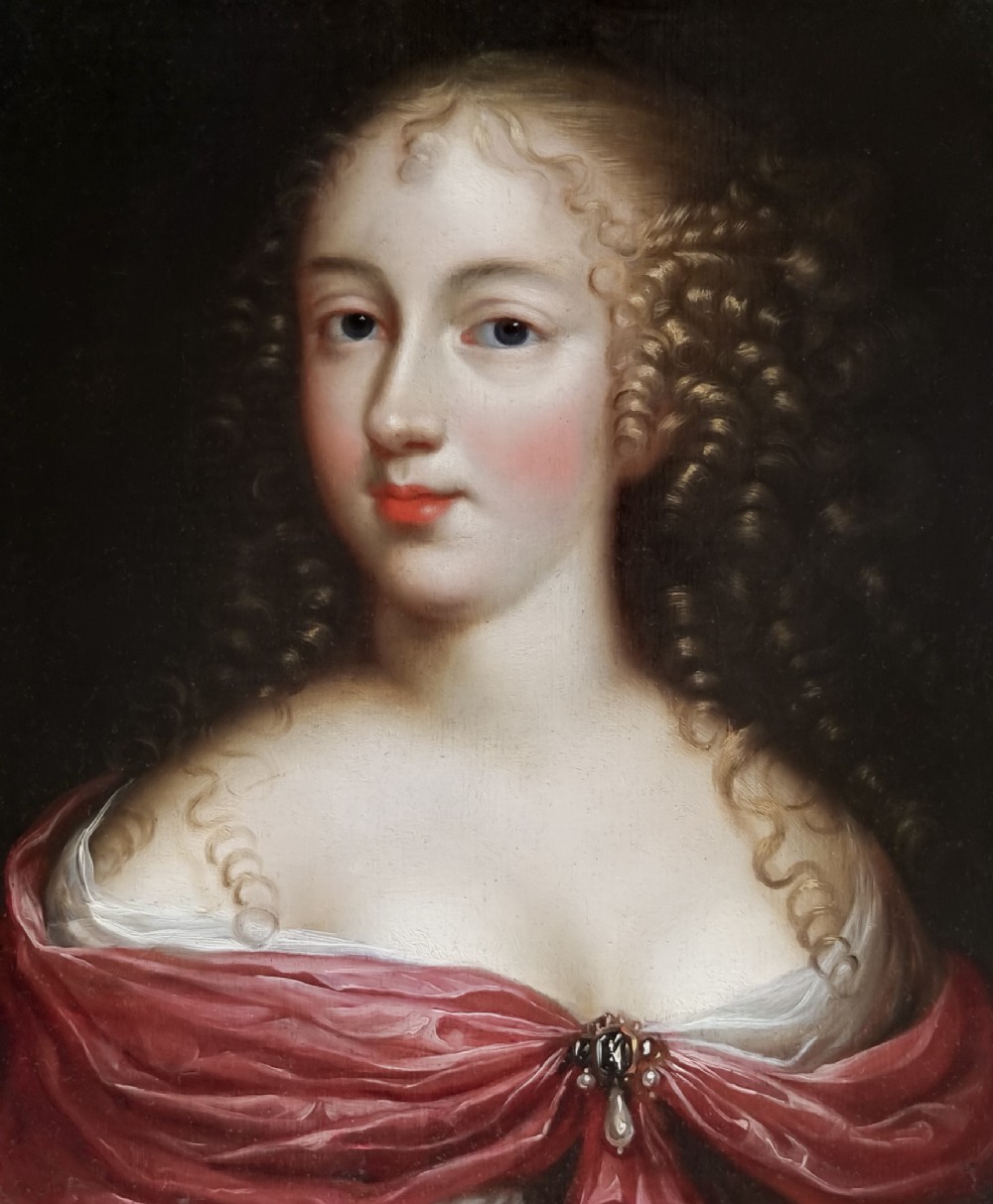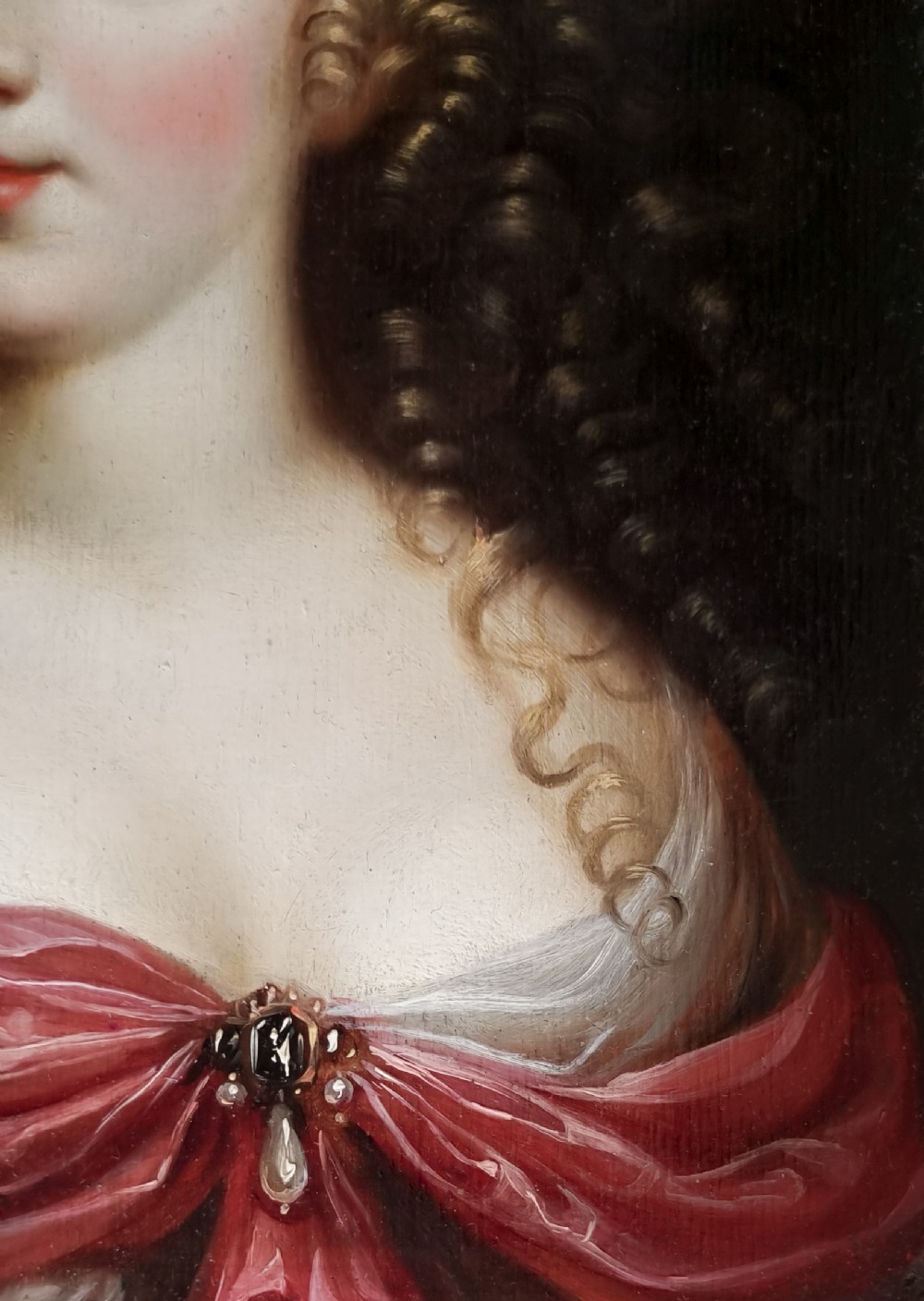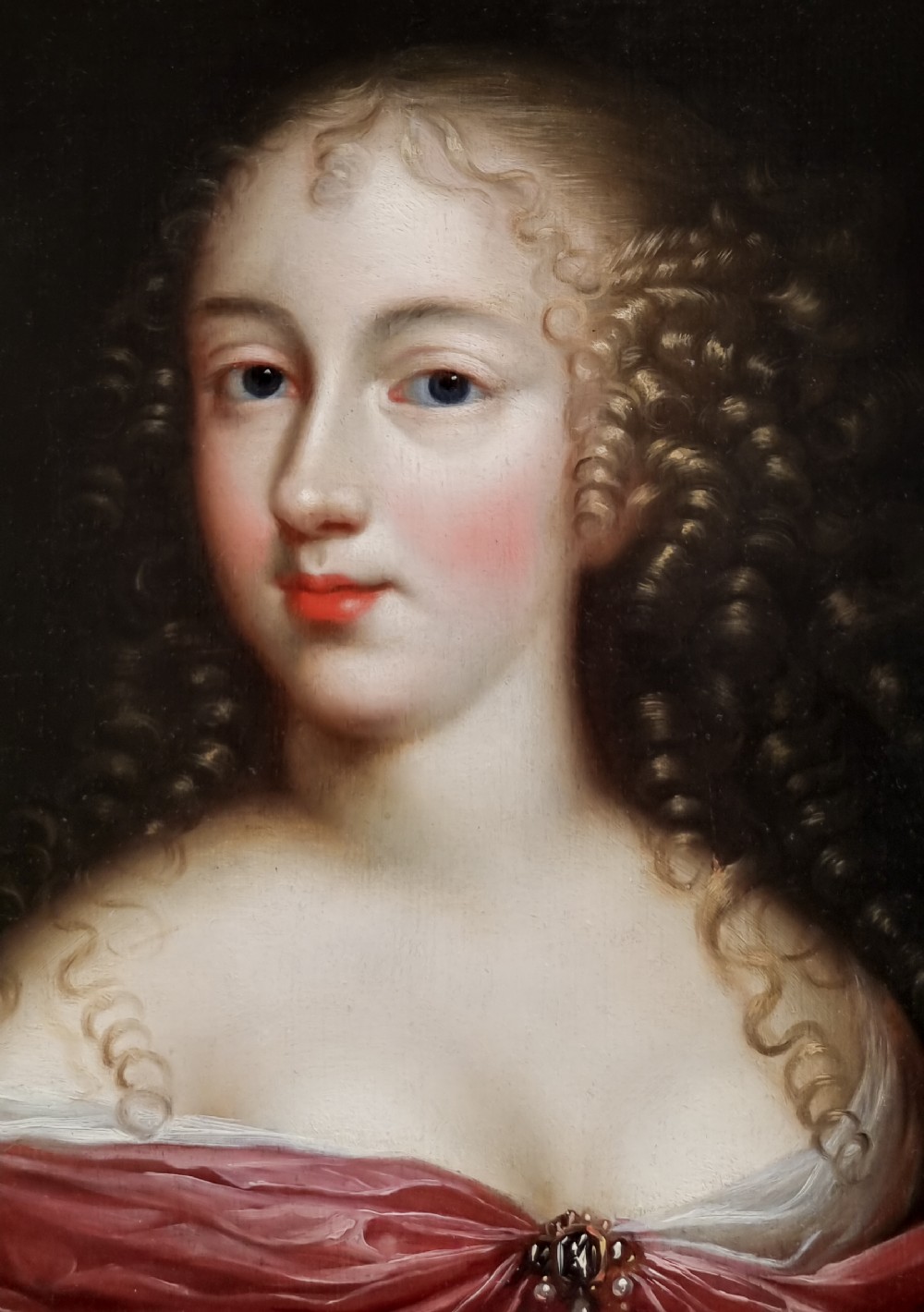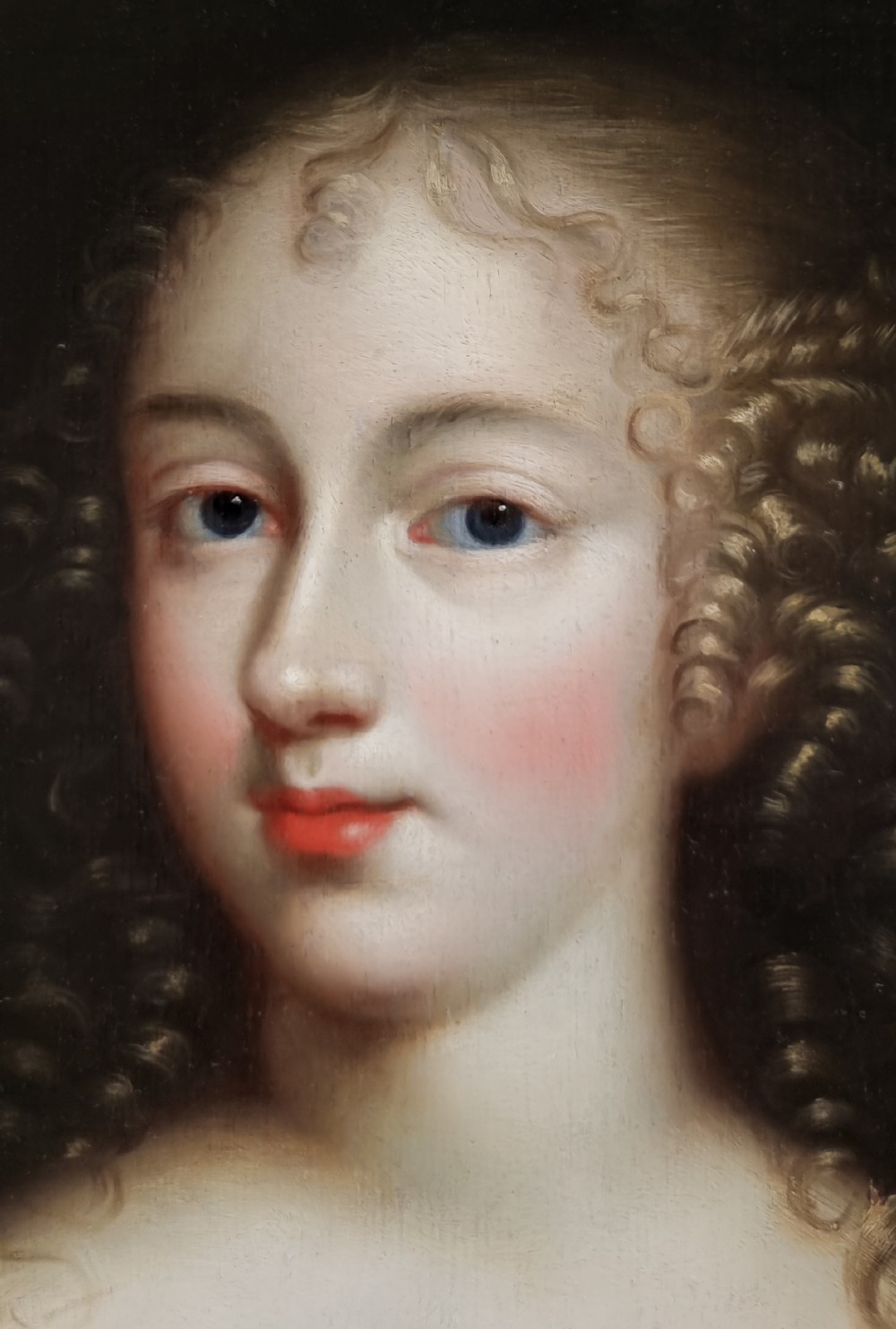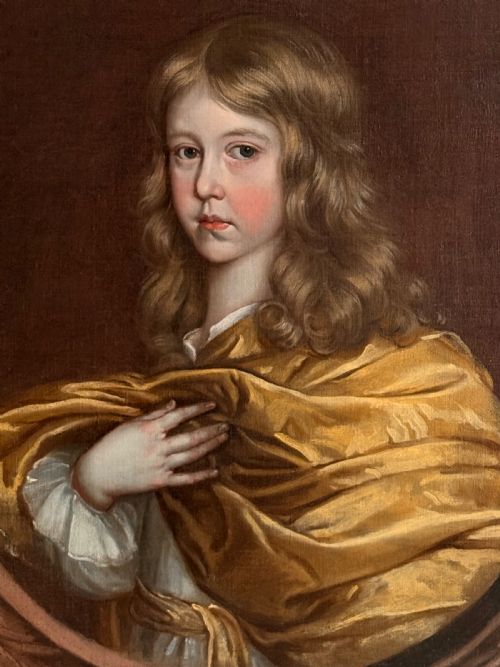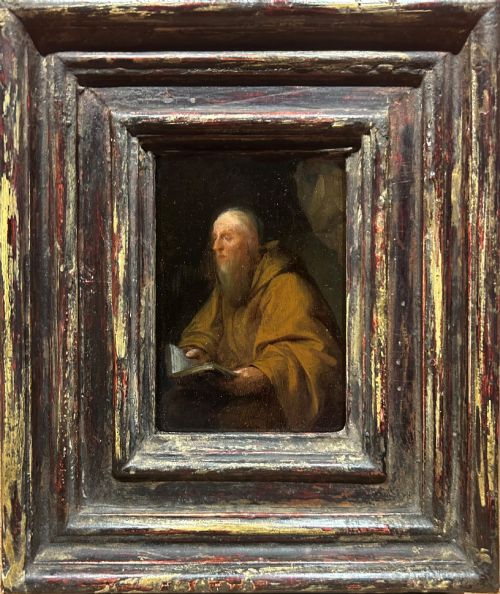
Titan Fine Art has dated this 17th Century Oil Portrait to the 17th Century.
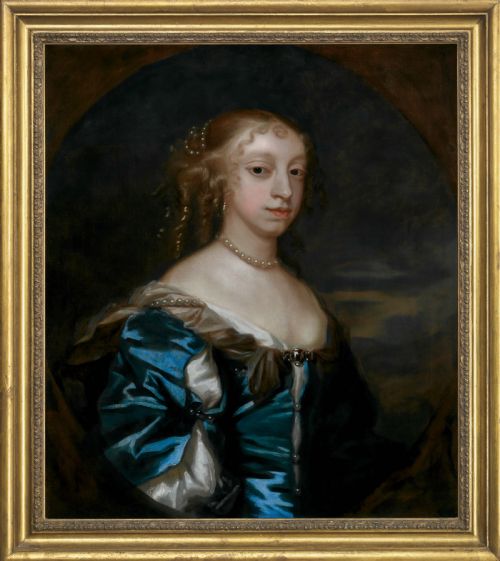
The portrait is especially appealing because its sitter is not anonymous.
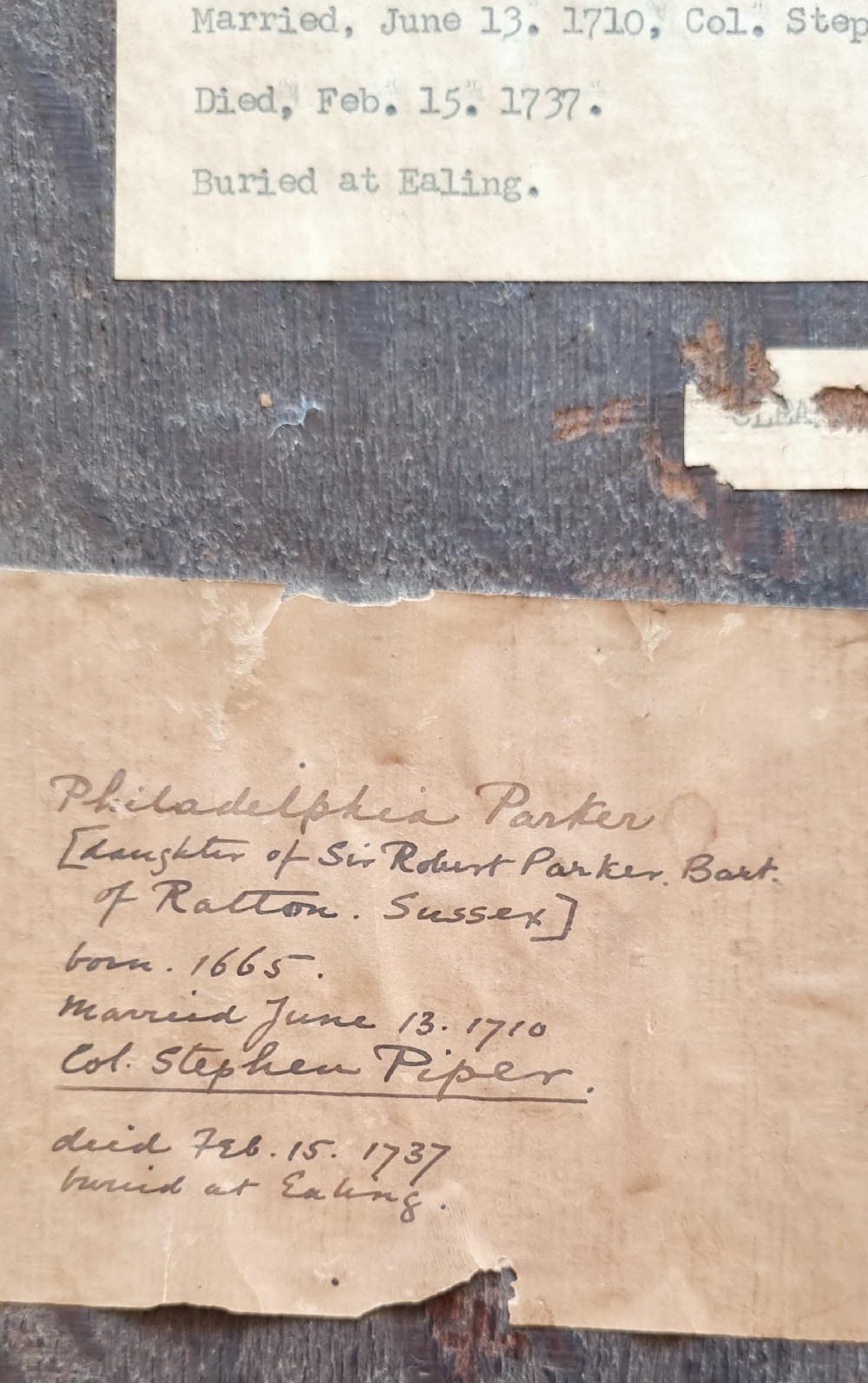
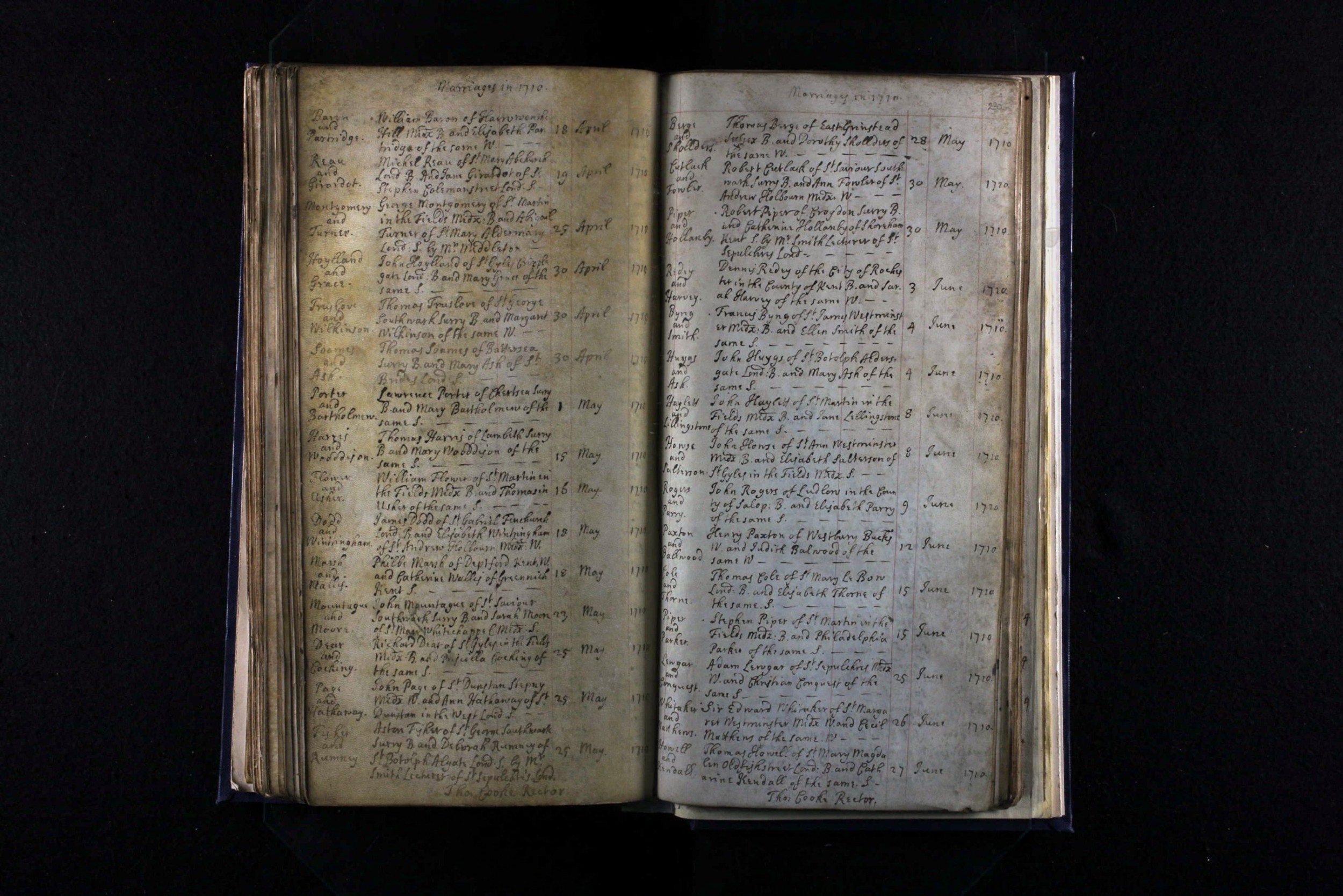
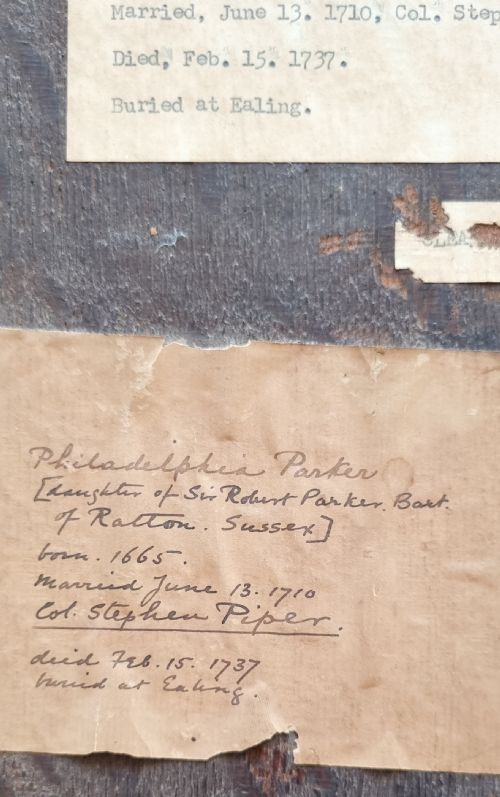
Burke’s Extinct and Dormant Baronetcies records Philadelphia as a daughter of Sir Robert Parker of Ratton and states that she married “Colonel Piper, of Essex.” Her baptism is recorded at Willingdon, Sussex, on 10 December 1674, correcting the erroneous birth date preserved on one of the old labels. Her marriage is also confirmed by the register of St Benet Paul’s Wharf, London, where Stephen Piper of St Martin-in-the-Fields, Middlesex, bachelor, and Philadelphia Parker of the same parish, spinster, were married on 15 June 1710.
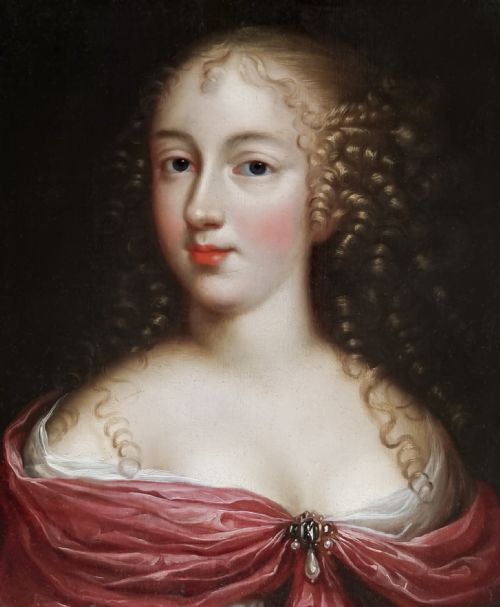
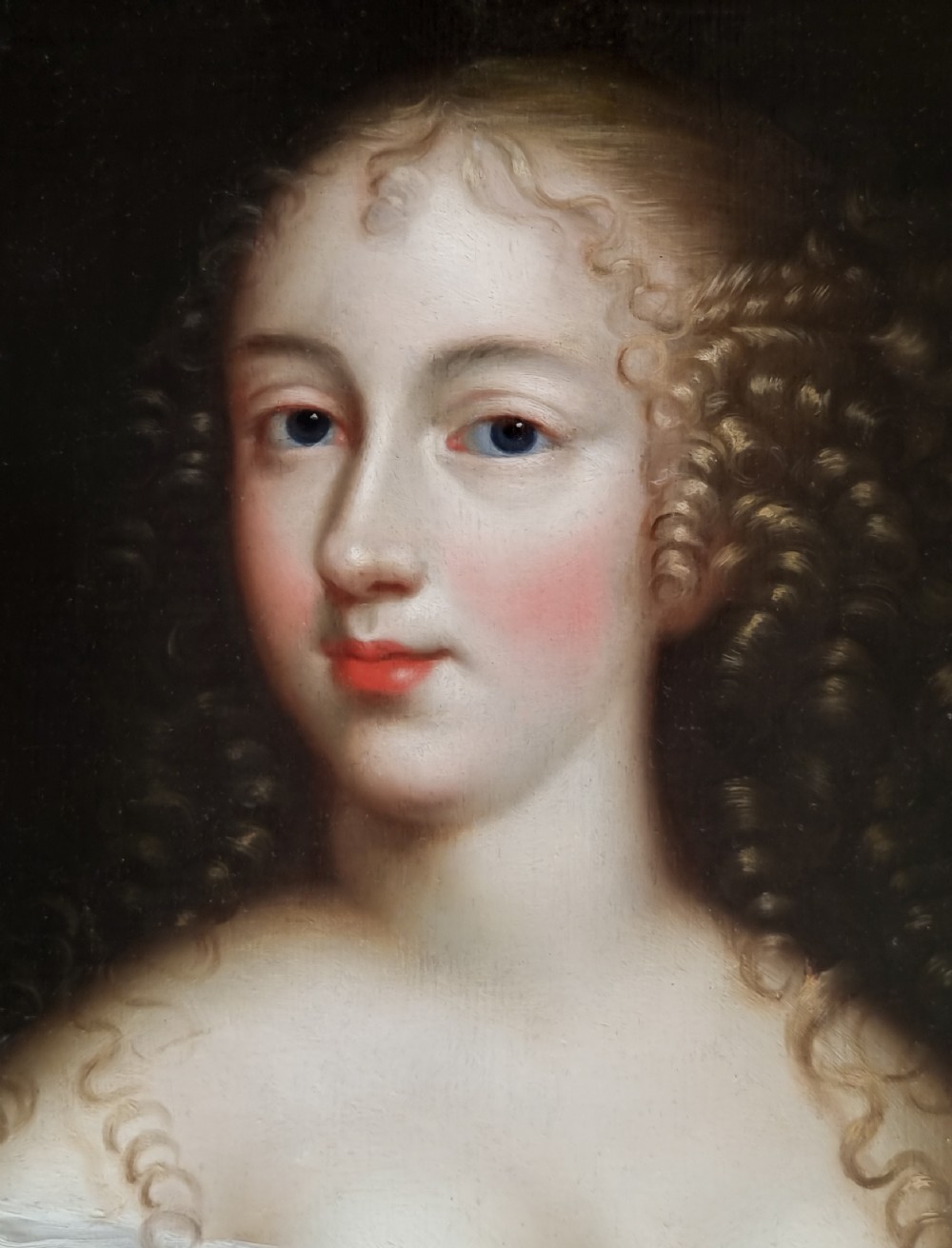
The likely date of the portrait is circa 1690–1695, when Philadelphia would have been in her late teens or early twenties. Although the hairstyle and costume evoke the celebrated court beauties of the previous generation, this is best understood as a deliberate and flattering portrait formula, derived from the French and Restoration court mode popularised by artists such as Pierre Mignard and the Beaubrun brothers. Such imagery presented young women as timeless embodiments of refinement, beauty, lineage, and marriageability.
Philadelphia belonged to the established Sussex gentry. The Parkers of Ratton were a family of standing, and her father’s baronetcy, created in 1674, placed the family firmly within the Restoration hierarchy. Her later marriage to Stephen Piper connected her to a military and county family associated with Essex, particularly Ashen. Piper’s career links the couple to the turbulent politics of late Stuart England, spanning the reign of James II, the Glorious Revolution, and the military world of William III and Queen Anne.
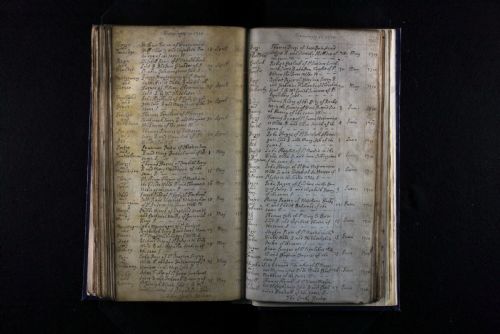
Philadelphia survived her husband, who died in 1721/2 and was commemorated at Ashen. Her own will identifies her as Philadelphia Piper, widow, living at Knightsbridge in the parish of St Margaret Westminster, and gives an unusually intimate glimpse of her later life as a genteel widow disposing of personal effects, securities, and household matters. An old label on the reverse reading “To go to Mrs Gould, Fulbeck” provides a further nineteenth-century provenance clue, linking the portrait to Fulbeck, Lincolnshire.
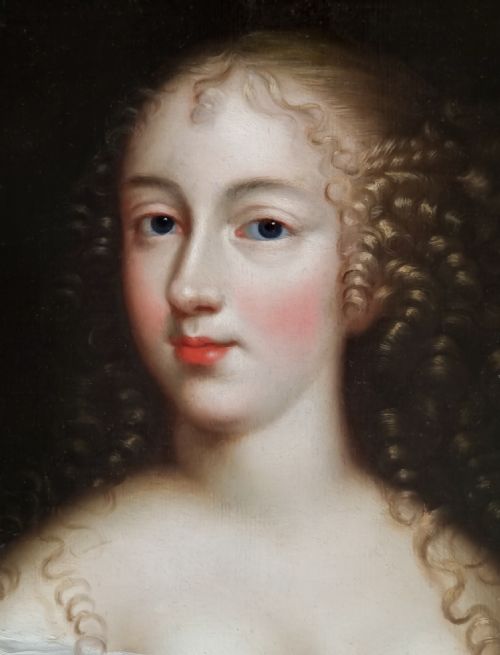
Combining beauty, condition, scale, French courtly elegance, and unusually strong documentary identity, this is a rare and highly engaging late seventeenth-century portrait whose sitter’s life can still be meaningfully reconstructed.
Full description at: www.titanfineart.com
Titan Fine Art has dated this 17th Century Oil Portrait to the 17th Century.
Specialist in 17th & 18thc portraits. Highly curated selection, museum-level research & pro conservation. Exceptional art, expertly vetted.
You can view the stock and full dealer information on the Titan Fine Art Profile Page
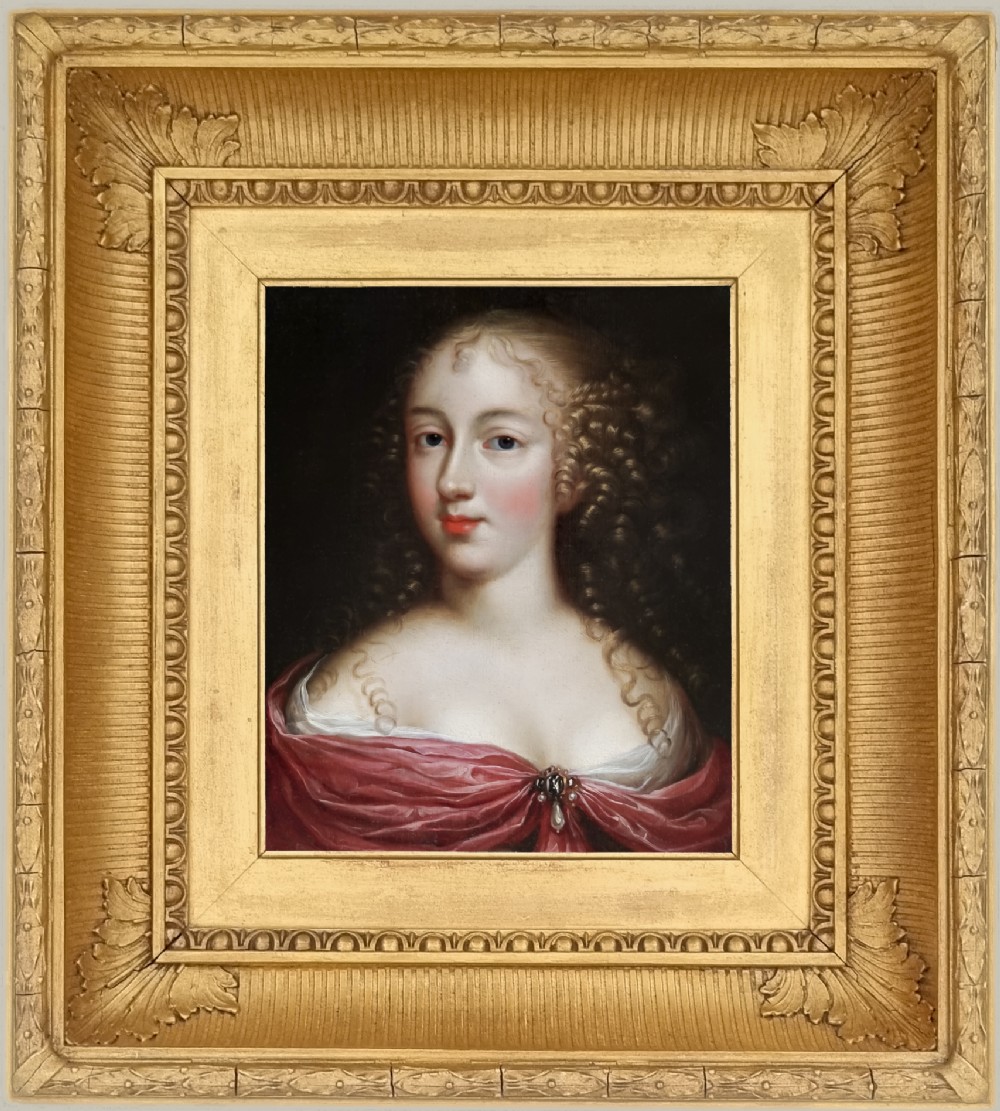
Portrait of Philadelphia Parker, Later Mrs Stephen Piper C.1690; Follower of Pierre Mignard (1612-1695), Oil on Panel Painting